
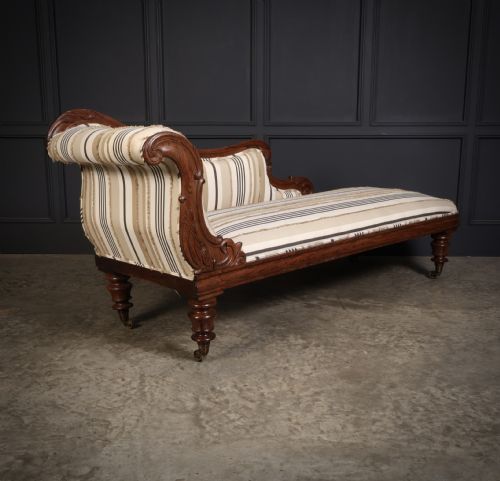


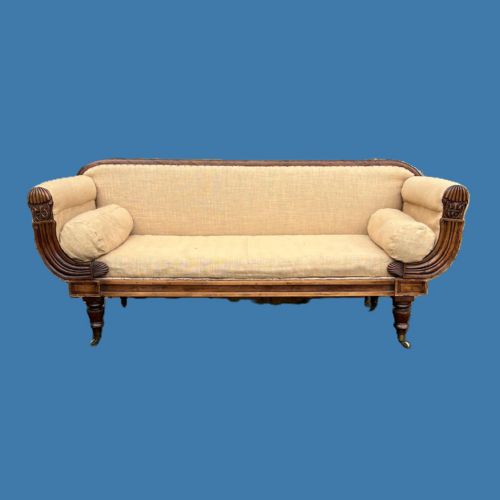

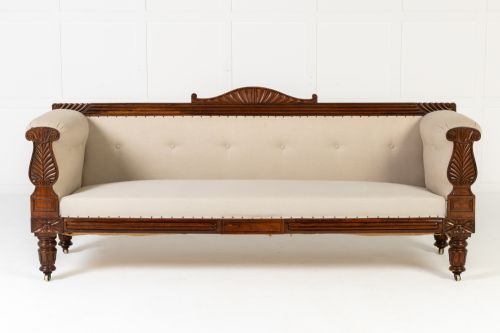


Carved Scroll Sofa
A carved scroll sofa brings architectural weight and sweeping lines to a room, uniting nineteenth-century timber frames with generous upholstered seating.
Carved Scroll Sofa
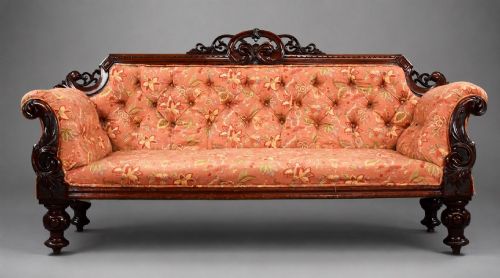
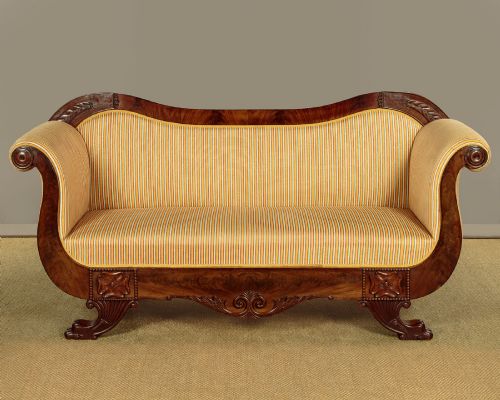
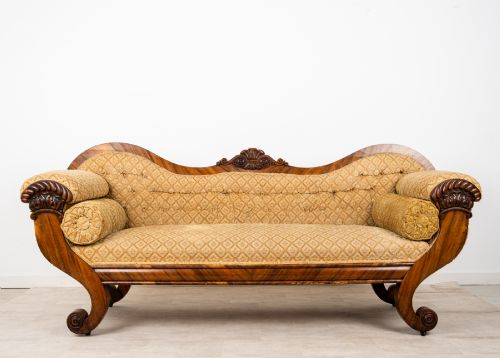
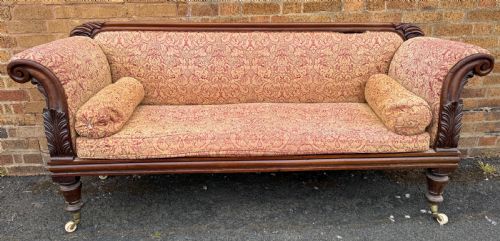
When you search for a carved scroll sofa, you encounter seating forms spanning the Regency, William IV, and Victorian periods, alongside later nineteenth-century interpretations. These pieces typically feature sweeping scroll ends or arms, paired with substantial wooden frames designed for formal reception rooms.
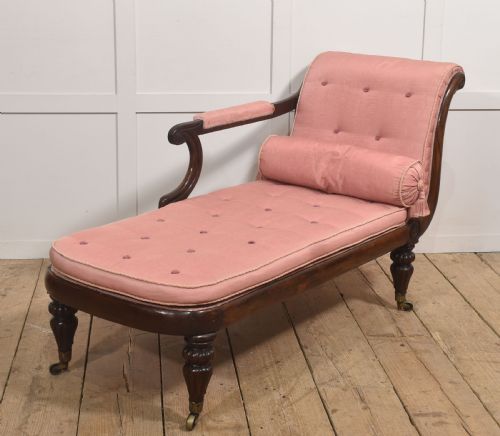
The version you are most likely to meet on this page is a nineteenth-century mahogany or rosewood sofa or settee, often incorporating double scroll ends or chaise longue configurations. Examples range from vernacular country house pieces to grander metropolitan commissions.
Beyond standard sofas, the selection includes related forms such as day beds, double-ended settees, and Anglo-Indian variants that share the defining carved scroll vocabulary. Each piece reflects the shifting domestic fashions of the eighteen-hundreds.
Materials and construction methods
Frames are constructed predominantly from dense hardwoods such as mahogany and rosewood, occasionally utilising walnut, burr oak, or ebonised timber for decorative impact. Cabinetmakers shaped these woods by hand, turning supports and carving structural scrollwork directly into the structural chassis.
Upholstery forms an integral part of the construction, utilising traditional webbing, stuffing, and springs beneath coverings of velvet, fabric, or specialised upholstery material. Brass castors frequently support the feet, allowing these heavy frames to move across carpets and floorboards.
One exceptional nineteenth-century day bed carries the design authority of Thomas Hope, translating ancient furniture models straight into Regency parlours.
Distinctions in quality and execution
The distinction between ordinary and exceptional pieces rests upon the crispness of the timber carving and the architectural ambition of the frame. Superior examples display deeply chiselled scroll terminals, balanced proportions, and careful selection of figured veneers such as rosewood.
Constructional integrity also separates the tier of pieces, visible in the joinery of the frame and the retention of original timber components rather than later replacements. The fluency of the scrollwork and the harmony between showwood frame and upholstery dictate the standing of an individual sofa.
James Mein of Kelso·Thomas Hope
The Carved Scroll Sofa Glossary
- Scroll end
- A sweeping, voluted wooden terminal that forms the arm or end of a sofa, frequently carved from solid mahogany or rosewood. This architectural feature defines the silhouette of nineteenth-century couches.
- Chaise longue
- An upholstered day bed or elongated chair designed for reclining, combining a single scroll back with an extended seat. These pieces appear frequently across Regency and Victorian inventories.
- Showwood
- The exposed polished timber frame of an upholstered seat, distinguishing it from fully covered designs. Cabinetmakers lavished carving and veneer work upon these visible wooden elements.
- Double-ended sofa
- A symmetric couch featuring matching scroll ends at both extremities rather than a traditional headboard arrangement. This symmetrical form gained popularity during the William IV period.
- Campaign sofa
- A portable seating form constructed for travel, utilising collapsible or dismantling elements. These pieces reflect military utility adapted for nineteenth-century journeys.
Carved Scroll Sofa: Frequently Asked Questions
What is a carved scroll sofa?
A carved scroll sofa is a nineteenth-century seating form characterised by wooden scroll-shaped arms or ends and a timber frame. These pieces developed through the Regency, William IV, and Victorian eras as principal drawing room furnishings.
They combine structural woodwork with upholstered surfaces, ranging from simple mahogany settees to elaborate rosewood double-ended couches and chaise longues.
How do I date a scroll sofa?
Dating relies upon examining the timber species, carved ornament, and overall structural proportions of the frame. Regency examples often display restrained classical lines in mahogany, while later Victorian pieces tend towards heavier burr walnut or rosewood with dense carving.
Secondary woods, castors, and upholstery methods also provide clues to the exact decade of manufacture during the nineteenth century.
Where were these sofas used?
These sofas served primarily in the formal drawing rooms, libraries, and country house reception spaces of nineteenth-century residences. Their architectural presence suited large, high-ceilinged rooms designed for entertaining.
Reclining variants like chaise longues and day beds were additionally placed in private boudoirs or morning rooms for resting.
How do I care for rosewood and mahogany?
Maintenance involves protecting the polished timber surfaces from direct sunlight and extreme fluctuations in humidity. Regular dusting with a soft, dry cloth preserves the finish of the wood without requiring heavy polishes.
Upholstery requires gentle vacuuming and professional cleaning according to the specific fabric type used on the couch.