




Carved Rosewood Urn
A carved rosewood urn offers a sturdy platform for displaying decorative vessels, bringing dense timber and traditional joinery into domestic spaces.
Carved Rosewood Urn
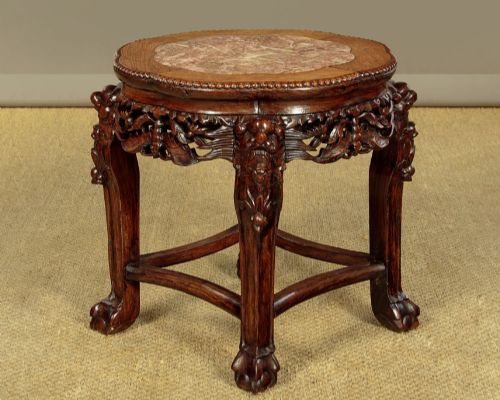
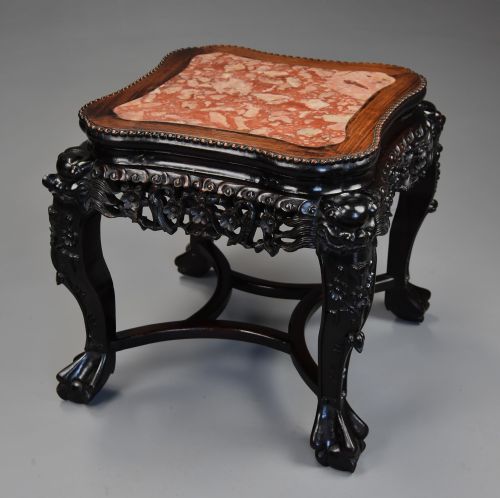
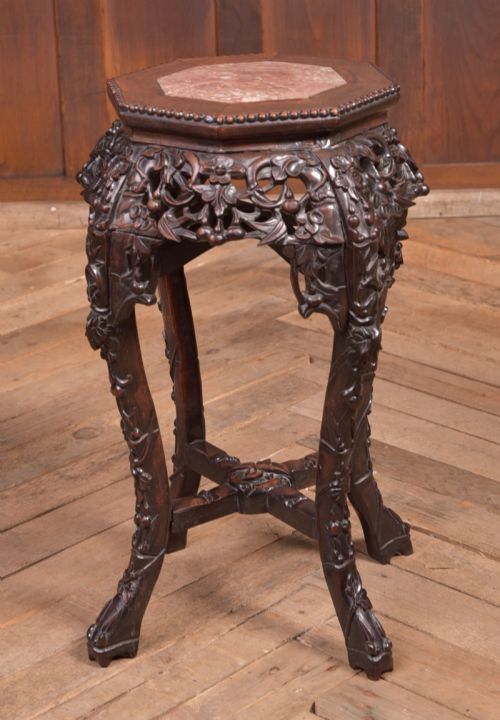
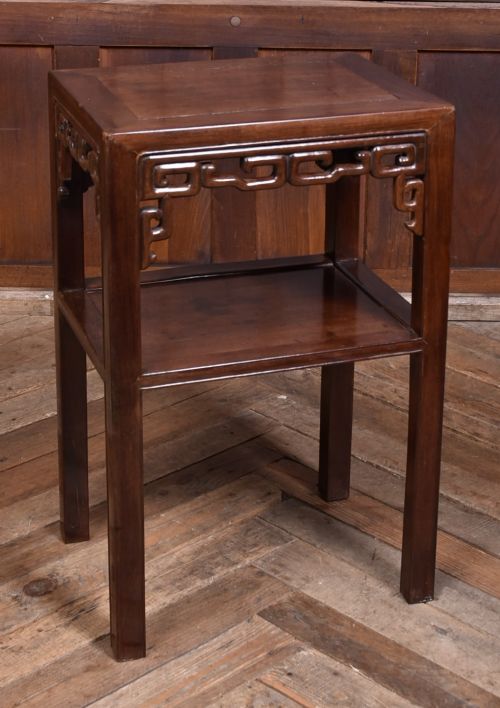
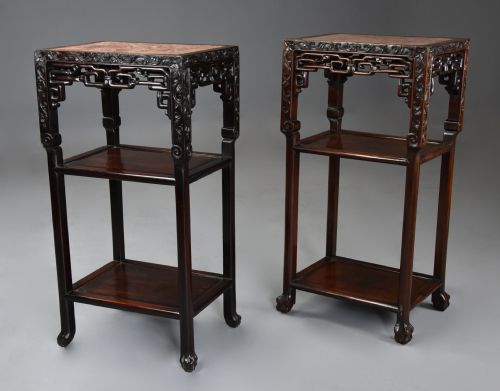
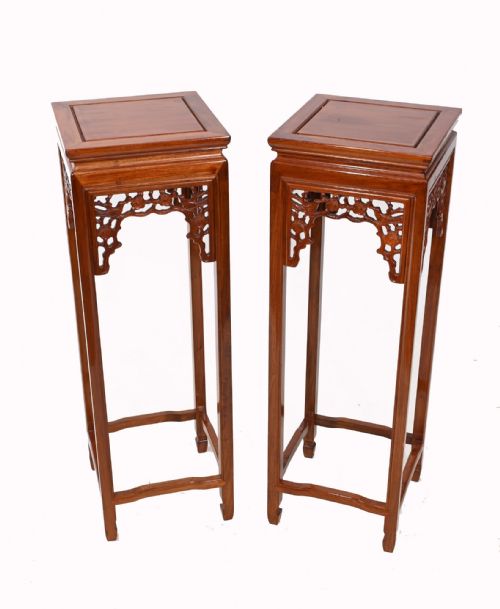
A carved rosewood urn search brings up low tables, pot stands, and pedestal supports primarily originating from Chinese workshops and Anglo-Indian makers during the nineteenth century. These forms function chiefly to elevate vases, planters, and decorative urns within a room.
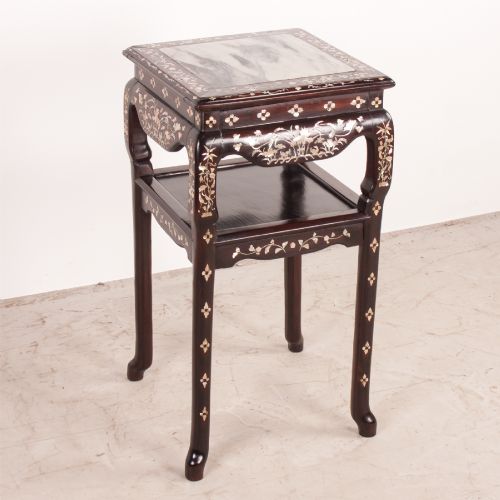
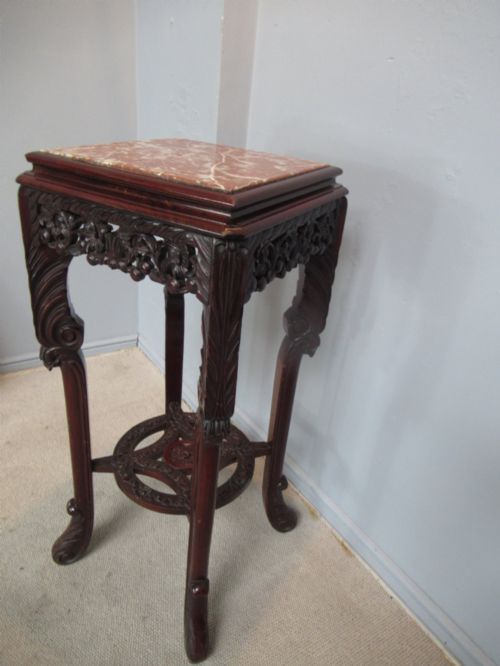
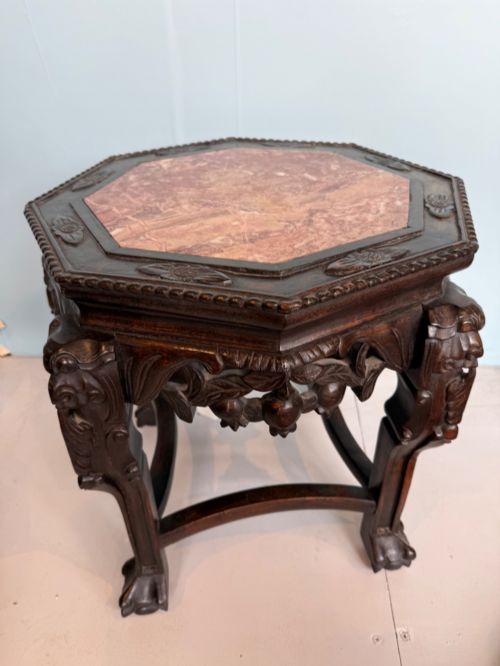
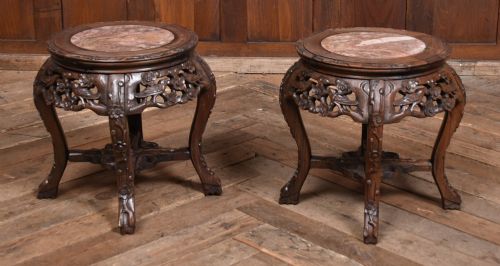
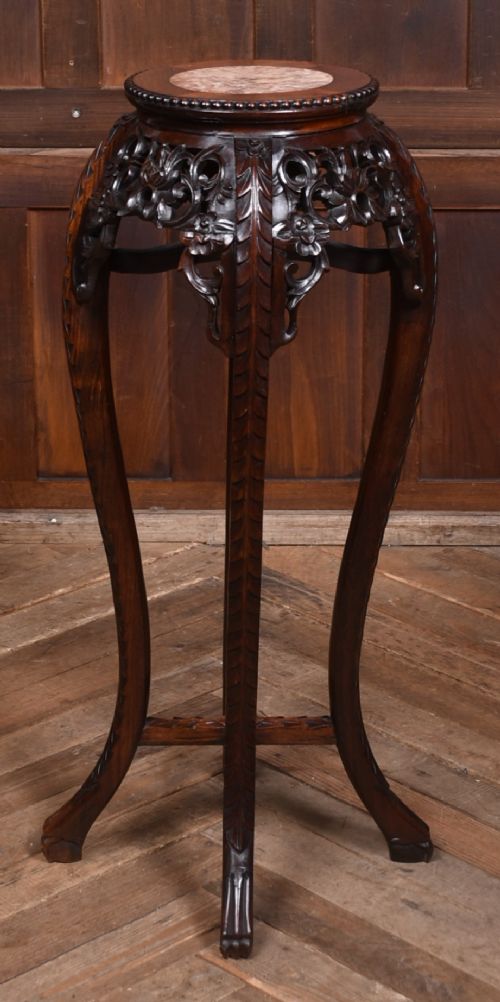
The objects frequently feature shaped tops inset with marble or mother of pearl inlay, supported by carved frames representing traditional Chinese and Victorian aesthetics. Buyers often encounter low side tables alongside tall plant stands and torchère supports.
What varies in quality
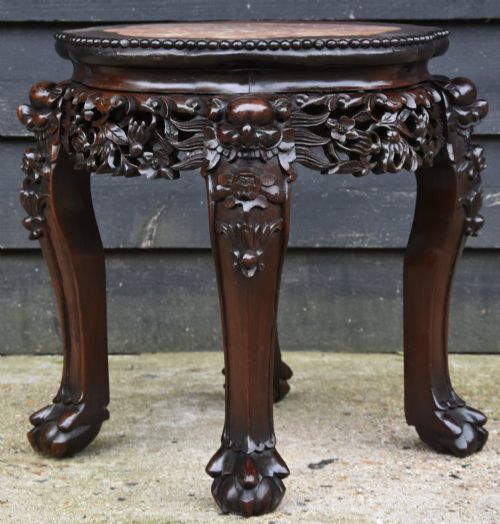
The depth and crispness of the hand carving distinguish standard production from superior examples, with finer pieces displaying undercut foliage and distinct facial expressions on figurative motifs. The selection of the timber grain and the precision of the joinery further separate workshops.
The integration of the marble insert and the complexity of peripheral details, such as mother of pearl floral inlay or shaped aprons, indicate the original tier of manufacture.
Carved Rosewood Urn Retail Price Guide 2026
Typical asking prices for carved rosewood urn among the pieces listed under this phrase on Sellingantiques today, from the lower quarter to the upper quarter. They describe what is for sale here now, not the wider market.
Certain pot stands feature intricately carved centipede feet, demonstrating the carver's humorous attention to hidden structural details.
Gillows
The Carved Rosewood Urn Glossary
- Rosewood
- A dense, heavily grained hardwood prized for its dark colour and ability to take fine carving details. It forms the primary structural material for many nineteenth-century stand furniture pieces.
- Jardiniere stand
- A tall or low table specifically constructed to hold a plant pot or floral container. These pieces often feature water-resistant stone or marble inserts.
- Torchère
- A tall standing pedestal or column designed to support a lamp or decorative urn. They frequently appear in nineteenth-century formal interiors.
- Hongmu
- A traditional Chinese term denoting dense red or black hardwoods used in high-status furniture production. It encompasses several heavy timber species.
- Padouk
- A durable tropical hardwood exhibiting reddish-brown tones that darken with age. It provides a stable base for heavy carved furnishings.
Carved Rosewood Urn: Frequently Asked Questions
What is a carved rosewood urn stand used for?
These pieces serve primarily as elevated platforms for heavy ceramic vessels, flower pots, and decorative lamps within a room. Their sturdy construction supports substantial weight while adding architectural interest to empty corners.
Historically, homeowners placed them strategically to display prized ornamental objects at eye level. Today, they function effectively as standalone display surfaces or compact side tables.
How do I identify a nineteenth-century piece?
Nineteenth-century examples typically display dense tropical hardwoods like rosewood or padouk, combined with traditional mortise and tenon joinery. Surface wear and patination on the timber offer visual indicators of age.
The inclusion of hand-carved floral motifs and inset marble slabs points directly to production methods common during the Victorian and Qing Dynasty periods.
Are these stands suitable for heavy planters?
The original design of these stands specifically accounts for heavy loads, particularly variants featuring inset marble tops. The dense structure of rosewood provides exceptional load-bearing capacity.
Water-resistant stone inserts prevent moisture damage from plant pots placed directly on the surface. This practical feature makes them ideal for indoor horticulture.
What distinguishes Chinese export styles from Victorian designs?
Chinese export pieces frequently incorporate traditional motifs such as prunus blossom, key-fret borders, and naturalistic tree root carvings. These items often utilise hongmu or rosewood with integrated marble panels.
Victorian interpretations may blend oriental forms with domestic European revival styles like Sheraton or Gothic influences. Both traditions rely on exceptional carving skill and heavy tropical timbers.