

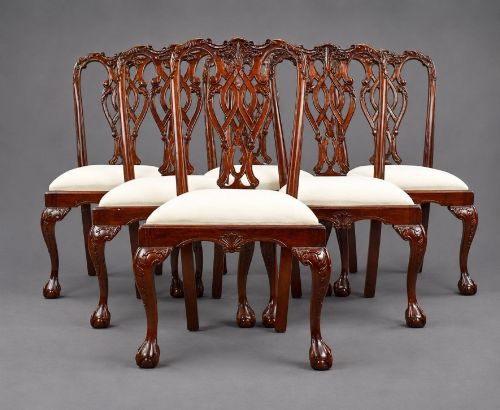
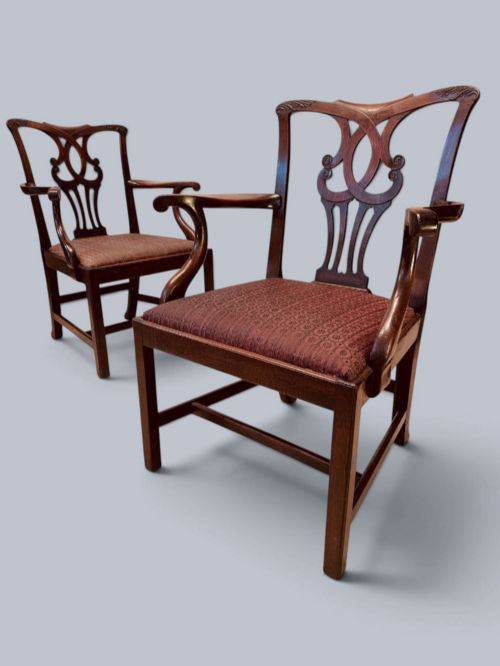

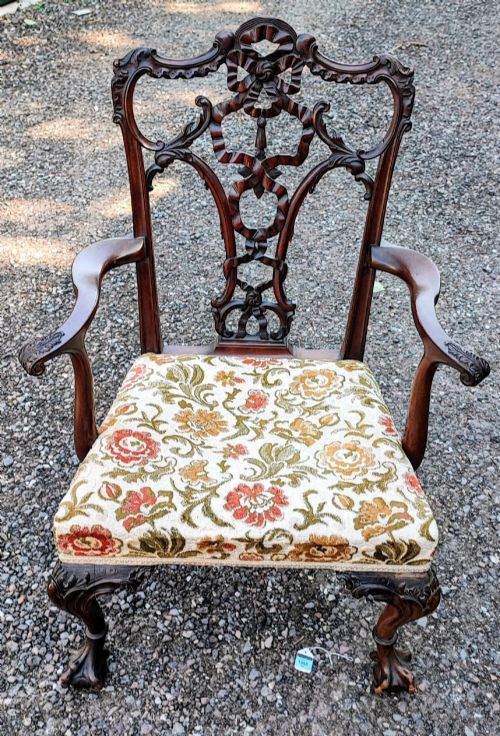
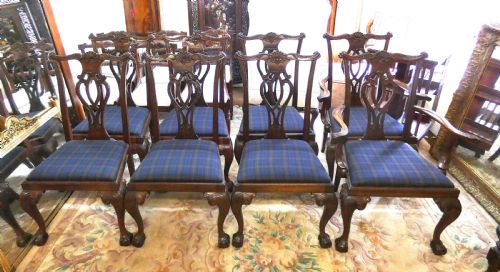
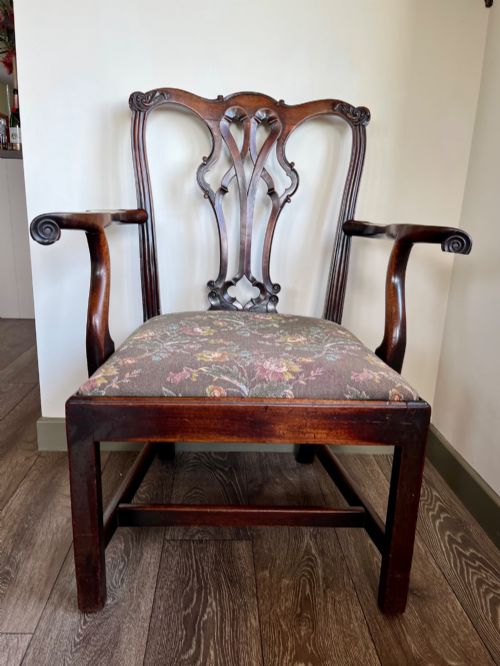
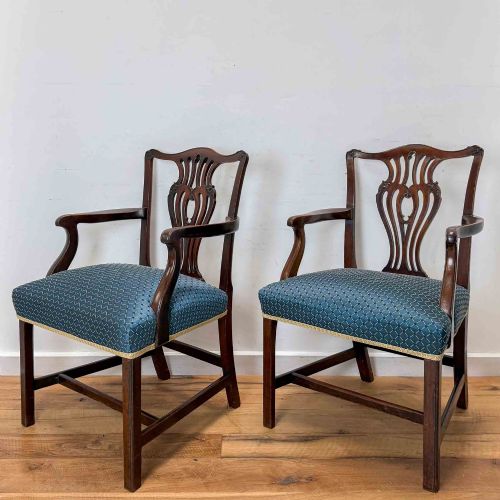


Carved Ribbon Back
These carved ribbon back chairs and tie-backs draw the eye with intricate pierced splats and sinuous woodwork.
Carved Ribbon Back
When you search for a carved ribbon back, you encounter seating and hardware designed to mimic flowing textile loops in solid timber or metal. Dining chairs and armchairs dominate this selection, frequently appearing in sets intended for formal reception rooms.
Most examples visible here date from the nineteenth century, including revivals of earlier eighteenth-century Georgian and George II motifs. You also find practical desk chairs and gilt brass curtain tie-backs sharing the same decorative vocabulary.
The defining characteristic across these objects is the central splat or mount formed to resemble a tied ribbon, often combined with mahogany or walnut construction. These pieces range from single occasional seats to matched dining sets numbering up to twelve.
How they were made
Cabinetmakers relied primarily on dense hardwoods like mahogany and walnut to achieve the crisp, deep relief work required for looped ribbons and acanthus details. Timber selection mattered because the intricate pierced splats needed structural strength alongside delicate carving.
Upholstery materials varied from traditional textiles and leather to later velvet and woven fabrics, secured over padded drop-in or fixed seats. Metal elements such as French gilded brass tie-backs utilised casting techniques to render fine botanical and ribbon motifs.
Carved Ribbon Back Retail Price Guide 2026
Typical asking prices for carved ribbon back among the pieces listed under this phrase on Sellingantiques today, from the lower quarter to the upper quarter. They describe what is for sale here now, not the wider market.
Listings span the eighteenth, nineteenth, and twentieth centuries, uniting Georgian originals with Victorian and later revival interpretations in mahogany and walnut.
What varies in quality
The depth and crispness of the timber carving set superior examples apart, where the ribbon folds appear fluid rather than flat or stiff. Hand-pierced splats requiring intricate chisel work indicate higher workshop skill than simpler moulded alternatives.
Proportion and wood figure also determine desirability, with well-figured grain enhancing the architectural lines of the frame. Original timber surfaces and cohesive sets maintain greater integrity than mismatched collections assembled later.
The Carved Ribbon Back Glossary
- Ribbon back
- A chair splat carved to resemble looped and knotted textile ribbons, popularised during the Georgian era and revived later.
- Chippendale style
- Furniture designs drawing on the eighteenth-century pattern books associated with Thomas Chippendale, featuring carved splats and cabriole legs.
- Splatt
- The central vertical upright piece within the back of a chair, frequently shaped and pierced in revival dining seating.
- Drop-in seat
- A removable framed seat unit upholstered separately before being dropped into the chair rail rebate.
- Tie-back
- Hardware mounted beside a window frame to hold fabric curtains open, formed here in gilded brass.
Carved Ribbon Back: Frequently Asked Questions
How do I date a ribbon back chair?
Dating relies on timber characteristics, construction methods, and secondary woods visible beneath the seat frame. Eighteenth-century originals differ subtly in joinery and patina from nineteenth-century revival pieces.
Nineteenth-century makers often utilised denser mahogany and machine-assisted tooling alongside hand carving. Examining the wear patterns and block joints helps distinguish original Georgian work from later interpretations.
Are these chairs suitable for daily use?
Most solid mahogany and walnut dining chairs handle regular daily seating when structurally sound. Period frames benefit from periodic checks of the glue joints beneath the drop-in seats.
Original upholstery may require replacement for modern comfort, though the underlying timber frames endure decades of domestic dining. Care should be taken with delicate pierced splats when moving the chairs.
How should I care for mahogany ribbon back furniture?
Maintain mahogany surfaces with gentle dusting using a soft, dry cloth. Avoid placing timber furniture near direct heat sources or strong sunlight to prevent wood shrinkage and fading.
Feed dry wood occasionally with appropriate wax polish rather than silicone sprays. Ensure fabric upholstery is vacuumed lightly with a brush attachment to preserve textile integrity.