




Carved Rail Dining Chairs
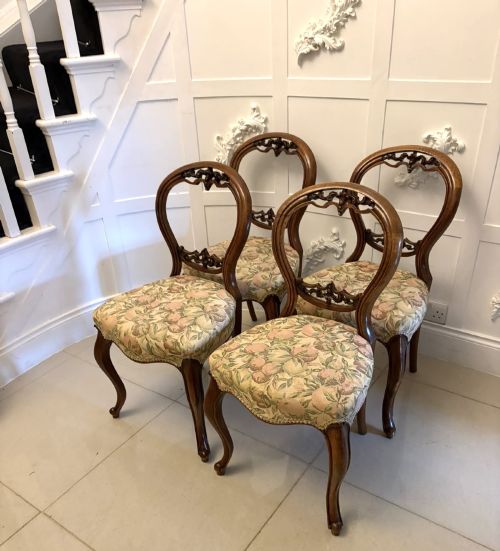
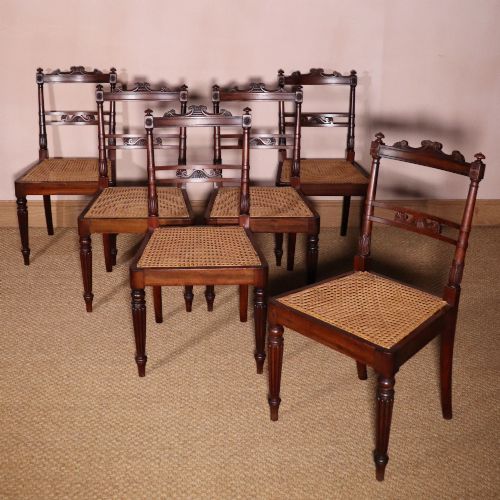
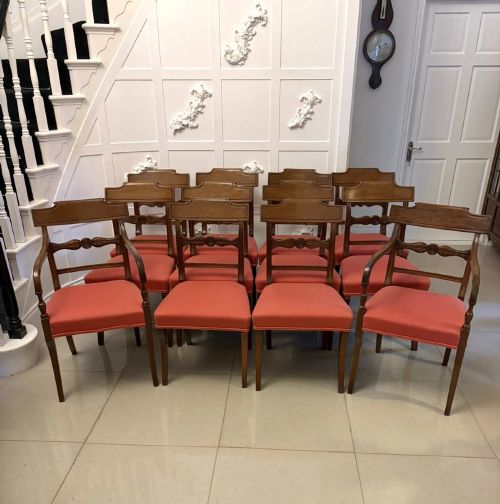
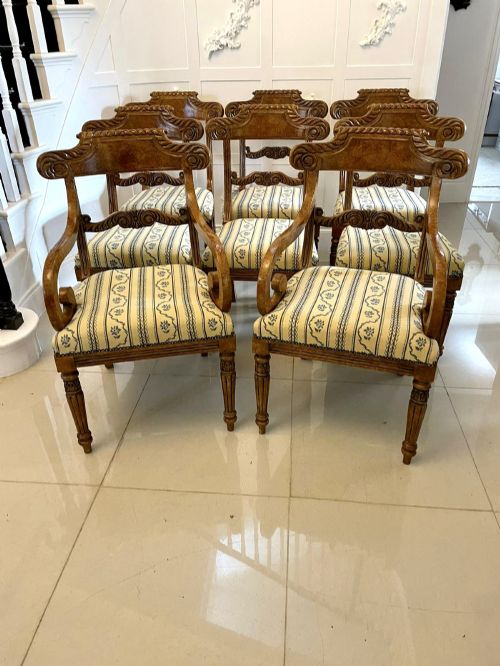
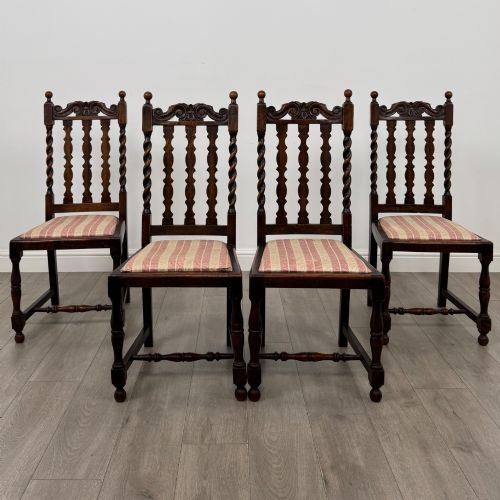
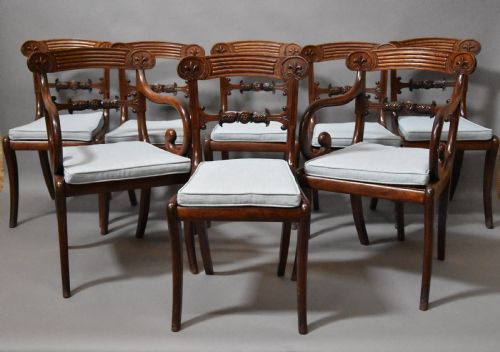
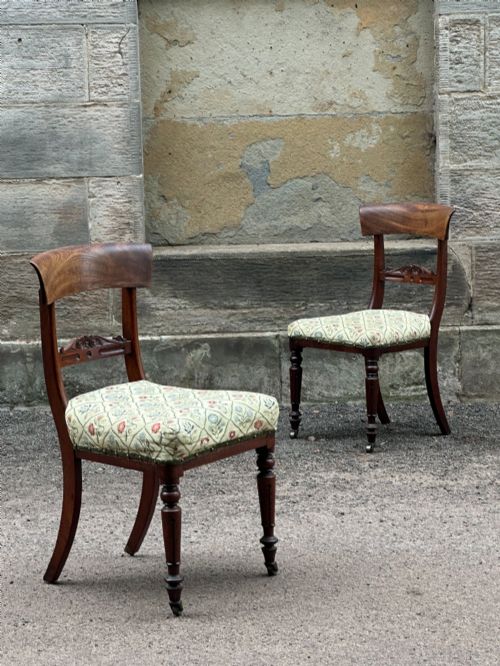
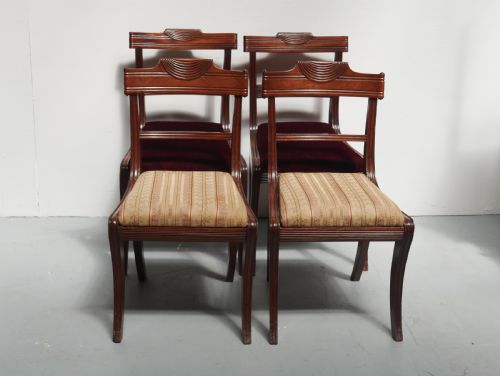
Carved rail dining chairs bring character to a room through sturdy timbers and detailed top rails shaped by period cabinet makers.
Carved Rail Dining Chairs
Carved rail dining chairs span multiple centuries, appearing in forms from 17th century joined oak backstools to Regency mahogany seating and Victorian balloon back examples. You will frequently encounter dining chairs, side chairs, armchairs, and hall chairs fashioned in these traditional styles.
The materials used across these pieces include mahogany, oak, walnut, faux rosewood, and pitch pine, often paired with cane, fabric, brass, leather, or velvet upholstery. Origins stretch from local English workshops to Scottish makers, encompassing periods like the Regency, Victorian, Edwardian, and Carolean eras.
Materials and Construction
Timbers such as mahogany, oak, and walnut form the structural backbone of these chairs, shaped through traditional joinery and detailed hand carving on the back rails. Decorative elements integrate brass inlay, lacquer finishes, and simulated or faux rosewood surfaces alongside turned wooden components.
Seating portions rely on diverse techniques, incorporating solid wood panels, caning, bergere weave, and upholstered pads covered in velvet, leather, or woven fabric. These varied construction methods reflect the stylistic shifts from heavy 17th century joined oak to the refined curves of Regency and Victorian designs.
Carved Rail Dining Chairs Retail Price Guide 2026
Typical asking prices for carved rail dining chairs among the pieces listed under this phrase on Sellingantiques today, from the lower quarter to the upper quarter. They describe what is for sale here now, not the wider market.
The listings span 17th Century, Regency, Victorian, and Edwardian periods, utilising mahogany, oak, walnut, and cane.
Assessing the Standard
The standard of a chair rests upon the crispness of the hand carving on the rail and the integrity of the underlying timber frame. Finer examples show thoughtful selection of grain patterns in mahogany, oak, or walnut, whereas simpler utilitarian seating relies on plain stock.
Original finishes and intact structural elements elevate a piece, while later alterations or replacement components alter the historical cohesion. Matching sets display greater consistency in proportion and timber selection across all items compared to assembled groupings.
Liberty & Co
The Carved Rail Dining Chairs Glossary
- Backstool
- An early form of chair without arms, featuring a tall upright back and a solid or upholstered seat.
- Klismos
- An ancient Greek chair shape with curved legs curving outward and a concave back rail, revived during the Regency period.
- Bergere
- An enclosed upholstered armchair with cane or webbed sides and back panels.
- Caning
- Woven rattan plant material used to create light, flexible panels for chair seats and backs.
Carved Rail Dining Chairs: Frequently Asked Questions
How do I identify a Regency carved rail chair?
Regency chairs typically feature dark timbers such as mahogany or simulated rosewood, accompanied by classical Greek revival motifs and brass inlay details.
Their proportions remain lean and geometric, often incorporating curved top rails designed to support the back comfortably.
Are these chairs suitable for daily dining use?
Most antique wooden dining chairs are built with solid joinery that withstands regular daily use, provided the frame remains tight and stable.
Pieces with delicate caning or antique fabric upholstery require more careful handling than solid wood or leather seat pads.
What is the difference between an armchair and a side chair?
Armchairs include structural arm supports flanking the seat, making them traditionally suited for the heads of a dining table.
Side chairs lack arms, allowing multiple pieces to tuck neatly along the sides of a dining table or line a hallway.
How do 17th century oak chairs differ from Victorian ones?
Seventeenth-century oak chairs rely on heavy joined construction, dark patinated wood, and sparse, robust carved elements.
Victorian chairs utilise walnut, mahogany, or pine with softer lines, curved balloon backs, and elaborate serpentine seats.