

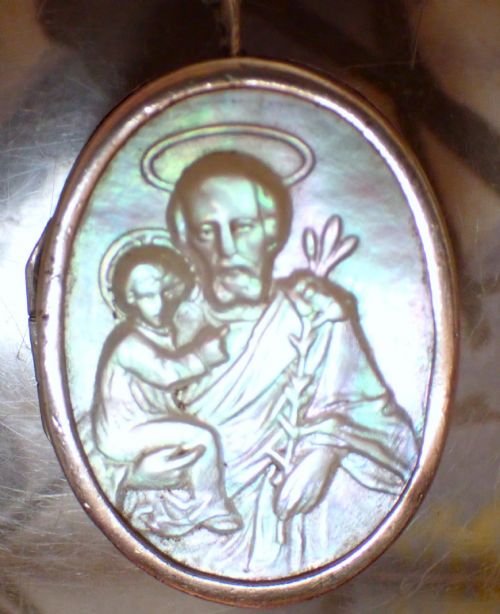
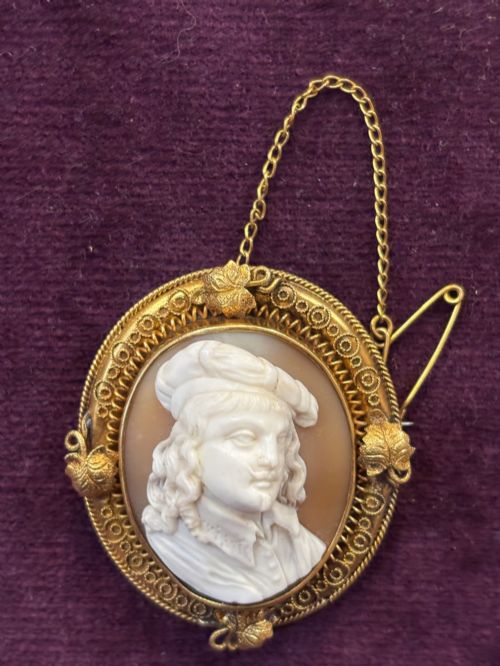
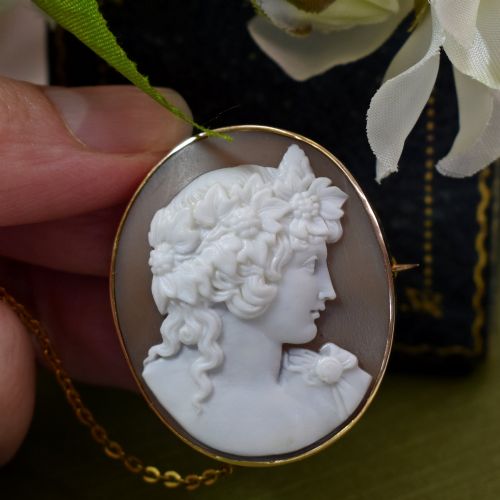

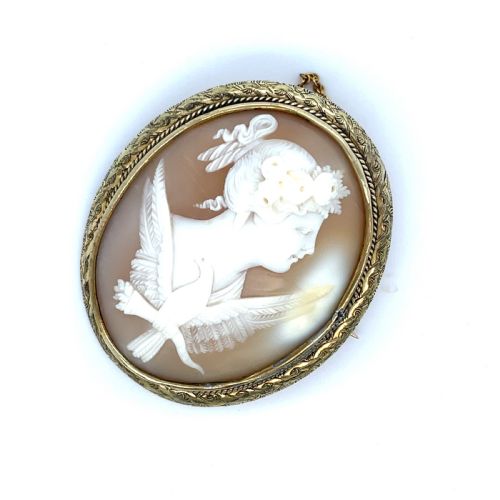
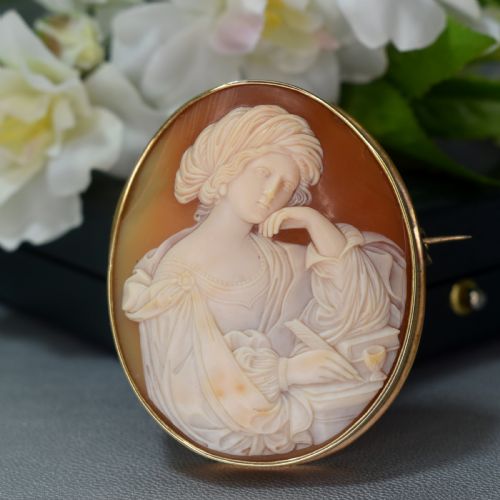


Carved Portrait Shell Jewellery
Carved portrait shell jewellery brings classical profiles and fine carving to wearable form, offering collectors tangible links to Victorian and Edwardian craftsmanship.
Carved Portrait Shell Jewellery
Carved portrait shell jewellery comprises brooches, earrings, pendants, and rings featuring relief portraits carved directly into natural shell layers. Buyers exploring this category encounter pieces predominantly from the Victorian and Edwardian eras, alongside mid-century examples.
The subjects range from classical deities such as Aphrodite and Flora to historical and mythological figures like Antinous Vertumnus and the Persian Sibyl. These items frequently appear mounted in gold frames, ranging from nine carat to higher purities, as well as silver and pinchbeck.
Most examples on this page are Victorian brooches and pendants, often showcasing classical revival and neoclassical styles. Collectors also find matching suites, lockets, and articulated bracelets linking multiple carved shell panels together.
Determinants of quality
The setting and metal weight contribute significantly to a piece's standing, with solid gold frames and detailed filigree work elevating the overall object. Pieces signed by known makers or retaining original mountings generally command greater appreciation among collectors.
Carved Portrait Shell Jewellery Retail Price Guide 2026
Typical asking prices for carved portrait shell jewellery among the pieces listed under this phrase on Sellingantiques today, from the lower quarter to the upper quarter. They describe what is for sale here now, not the wider market.
R. Pernice
The Carved Portrait Shell Jewellery Glossary
- Cameo
- A method of carving an object such as a engraved gem, item of shell, or piece of stone where a relief image is created by cutting away surrounding material. This technique contrasts two distinct colour layers to make the subject stand out.
- Pinchbeck
- An alloy of copper and zinc invented in the eighteenth century to imitate gold. It provides a warm yellow lustre commonly found on period jewellery mounts.
- Queen Conch Shell
- A large marine mollusc shell featuring distinct pink and white layers. Carvers favour it for its depth of colour and durability in relief work.
- Filigree
- Delicate jewellery ornamentation made from fine gold or silver wire twisted and soldered into openwork patterns. It frequently surrounds Victorian and Edwardian stone and shell settings.
Carved Portrait Shell Jewellery: Frequently Asked Questions
How do I care for shell jewellery?
Shell is a natural, organic material that requires gentle handling to preserve its delicate surface and mounting. Keep pieces away from water, perfumes, and harsh chemicals, and store them separately in lined boxes to prevent scratching.
Clean only with a soft, dry cloth. Avoid ultrasonic cleaners or liquid dips, as these substances damage both the shell and the integrity of historic metal settings.
Are these pieces meant for daily wear?
While historic jewellery was made to be worn, carved shell is relatively soft compared to gemstones. Regular daily use increases the risk of accidental knocks, which can crack or chip the thin relief layers.
Reserve these items for careful, occasional wear. Fasten brooches securely and check that the shell remains firmly seated within its metal claws or bezel.
How do I distinguish Victorian from Edwardian pieces?
Victorian pieces often display heavier, more elaborate gold mounts, sometimes featuring neoclassical motifs, intricate filigree, or mourning elements. The carving styles tend toward robust classical profiles and deep relief work.
Edwardian items frequently lean towards lighter silver or lower-carat gold settings, reflecting a shift towards airier, more delicate designs following the turn of the twentieth century.
What subjects are most common?
Classical mythology provides the vast majority of portraits, including deities like Aphrodite, Flora, and classical heroes or sibyls. These reflected nineteenth-century interests in antiquity and the Grand Tour.
Portraiture also includes romantic depictions, historical figures like Bonnie Prince Charlie, and occasional religious subjects such as Saint Christopher set into lockets.