

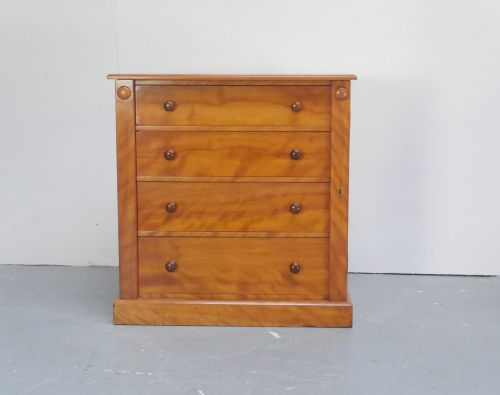
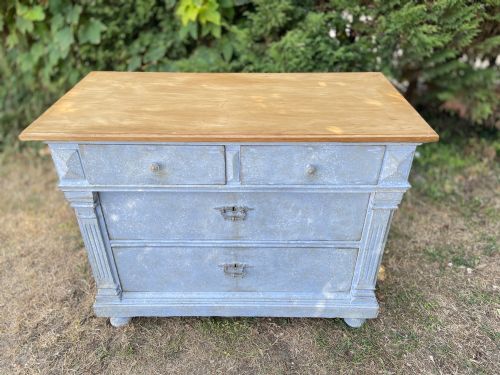

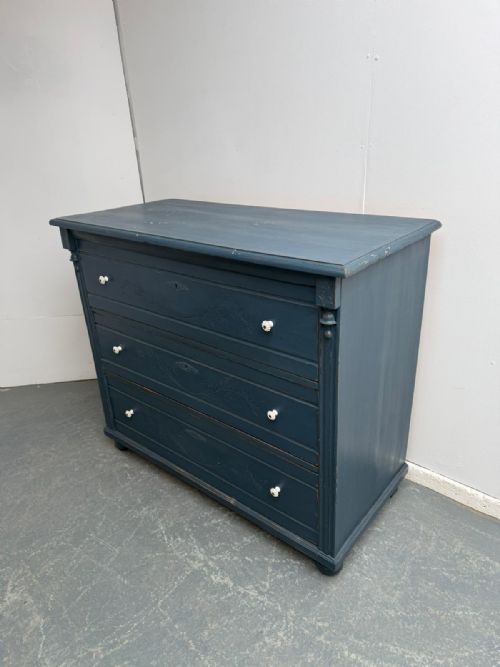
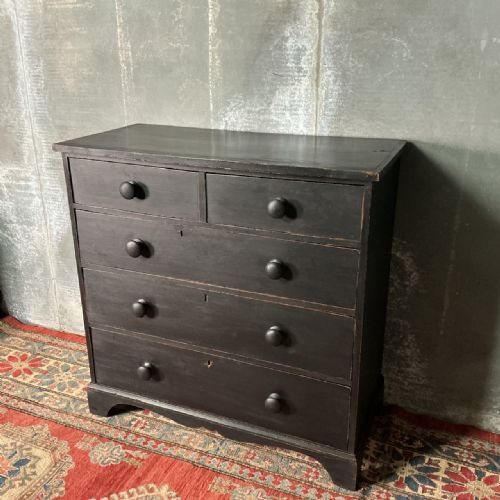

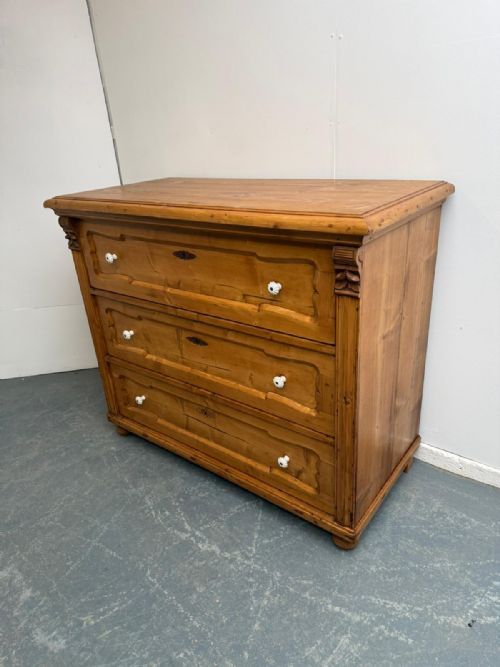


Carved Pine Commode
A carved pine commode brings robust, rustic character into a room through generous proportions and tactile timber.
Carved Pine Commode
A carved pine commode serves primarily as a substantial chest of drawers or cupboard, offering practical storage with distinct regional flair. When you search for carved pine commode, you encounter sturdy pieces primarily originating from the nineteenth century, including Victorian examples alongside Scandinavian, French Gustavian, and continental country styles.
The forms range from three-drawer chests to painted cupboards, reflecting domestic storage traditions across Europe. Many pieces display regional characteristics such as Swedish Baroque Revival details, diamond-point panels, or columned frames.
The selection leans heavily toward Victorian craftsmanship and European country workshops, balancing utilitarian storage needs with decorative carved elements. Buyers frequently find items featuring either original paint finishes or traditional waxed surfaces that highlight the grain.
How they were made
Makers utilised solid pine as the primary timber, shaping the material with hand tools to create panels, drawers, and structural frames. Carpenters incorporated secondary elements of oak, metal, and brass fittings alongside ceramic details.
Surface treatments define much of the construction, with artisans applying original paint or traditional wax finishes to protect the softwood. Decorative techniques include intricate diamond-point carving and columned moulding applied to the drawer fronts and cabinetry.
Carved Pine Commode Retail Price Guide 2026
Typical asking prices for carved pine commode among the pieces listed under this phrase on Sellingantiques today, from the lower quarter to the upper quarter. They describe what is for sale here now, not the wider market.
Several pieces arrive straight from Hungarian workshops carrying decades of traditional wax.
What varies in quality
The sophistication of the joinery and the depth of the carving set exceptional examples apart from simpler utilitarian chests. Superior pieces display harmonious proportions and crisply executed decorative details such as columned supports or geometric panel work.
The preservation of original surface finishes dictates much of the distinction between average items and desirable collector pieces. Original paint or well-maintained waxed patination significantly enhances the visual coherence of the timber.
The Carved Pine Commode Glossary
- Commode
- A low chest of drawers or cabinet. The term frequently applies to decorative European case furniture from the nineteenth century.
- Baroque Revival
- A nineteenth-century historicist style that revives seventeenth-century exuberance. It incorporates bold, sculptural forms and dramatic ornamentation.
- Diamond-Point
- A decorative geometric carving style resembling projecting pyramids. This technique adds tactile relief to drawer fronts and cabinet doors.
- Waxed
- A traditional timber finish applied to nourish and protect the wood. It produces a soft lustre that develops patina over time.
Carved Pine Commode: Frequently Asked Questions
What is a carved pine commode?
A carved pine commode is a nineteenth-century storage chest or cupboard constructed from softwood and embellished with decorative woodwork.
These pieces originate from various European traditions, encompassing Victorian British workshops as well as Scandinavian and French country makers.
Where were these commodes made?
The pieces span various regions including Britain, France, Scandinavia, and wider northern Europe. Each area imparted distinct stylistic preferences, from Swedish Baroque Revival forms to French Gustavian aesthetics.
Makers adapted local softwood timbers to create robust furniture suited to domestic storage.
How do I care for antique pine?
Antique pine benefits from stable indoor humidity and protection from direct sunlight to prevent timber movement. Maintaining waxed surfaces requires occasional gentle polishing with traditional beeswax.
Original painted finishes need minimal intervention, avoiding harsh cleaning agents that might damage the historic pigment.
Are these pieces painted or waxed?
Surfaces vary significantly between items, featuring either original historic paint or traditional waxed timber treatments. Waxed examples highlight the natural grain and knots of the pine.
Painted variants display regional colours such as blue or pale Gustavian tones applied by past makers.