

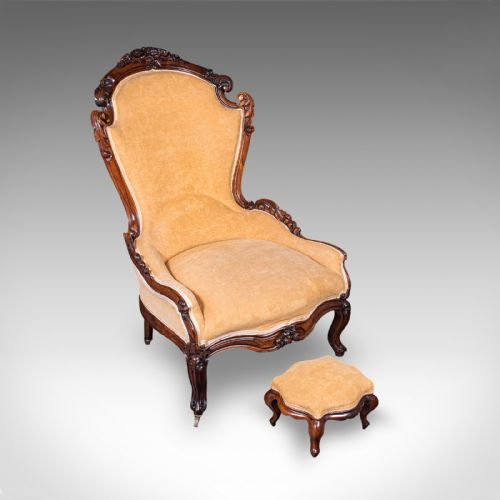
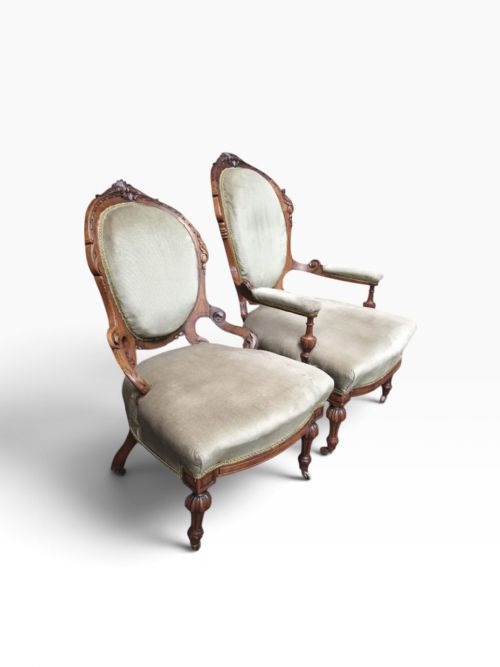
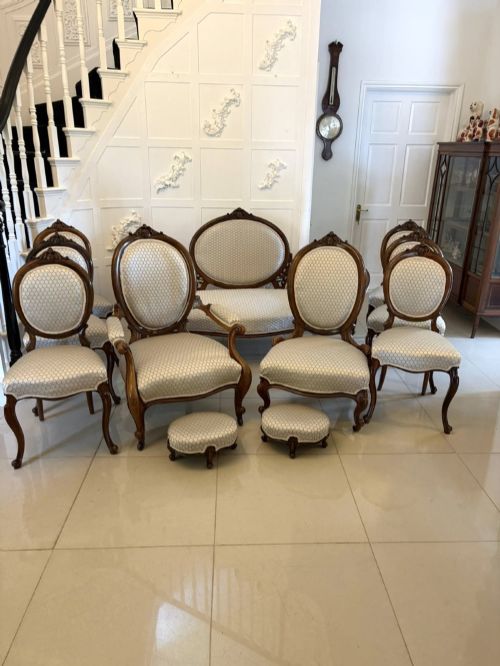
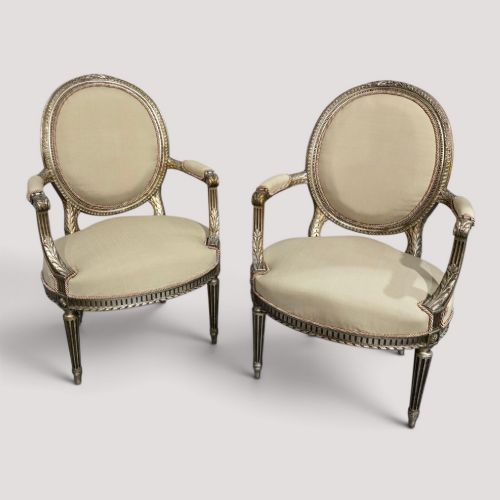
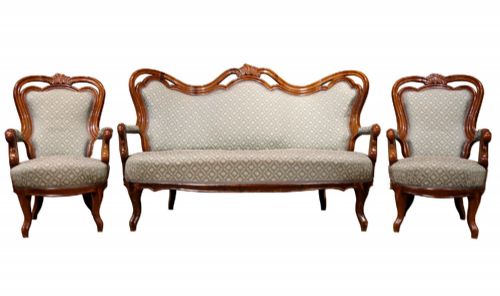
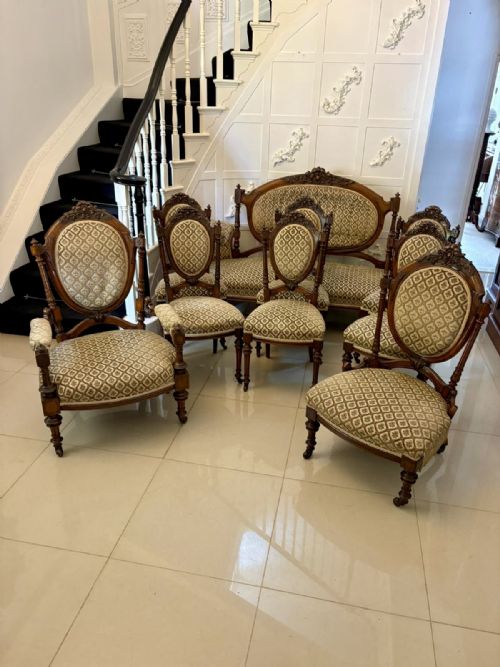
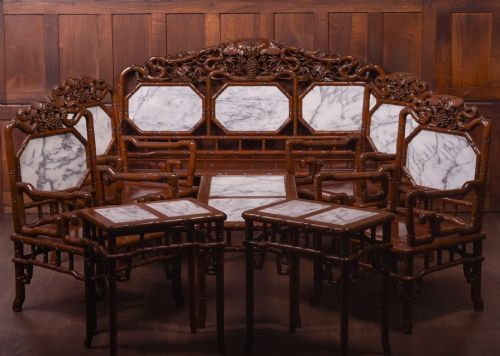

Carved Parlour Armchair
A carved parlour armchair brings formal nineteenth-century elegance into a room with richly worked timber and deep upholstery.
Carved Parlour Armchair
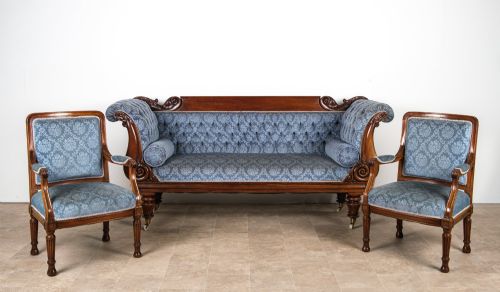
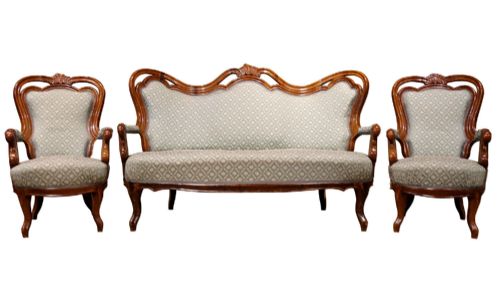
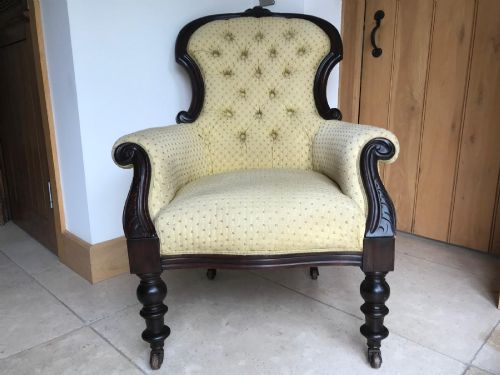
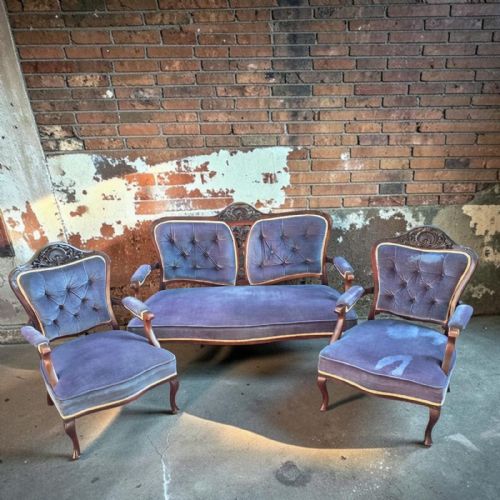
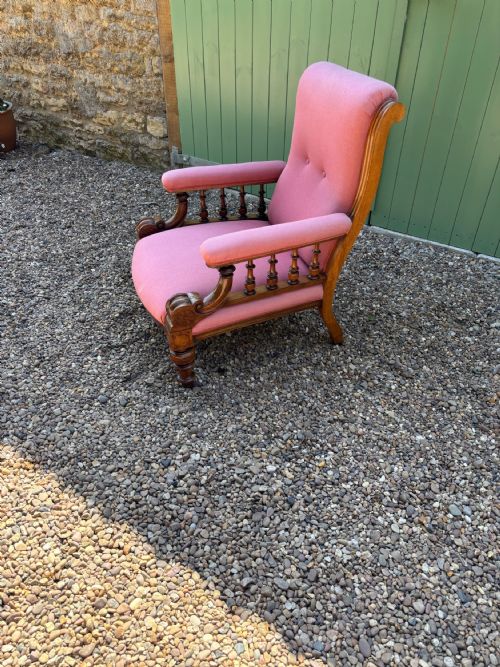
A carved parlour armchair is a formal seat designed for reception rooms during the Victorian and Edwardian periods. These chairs frequently appear as single occasional pieces or as part of larger salon suites.
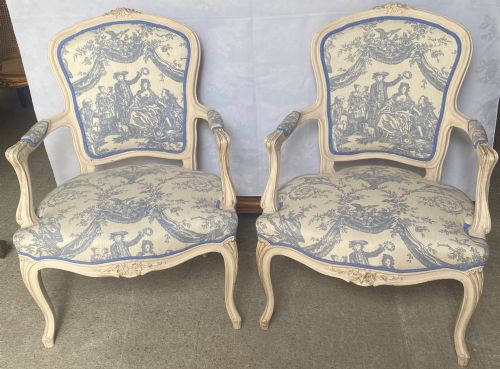
Buyers will encounter various stylistic influences ranging from early Victorian mahogany frames to later Edwardian walnut designs and French revival models. The form prioritises ornate carving and comfortable upholstered seating suited to domestic entertaining.
Origins span British workshops alongside Continental and Chinese export examples, showing diverse regional interpretations of nineteenth-century revival styles. Walnut and mahogany serve as the primary foundational timbers for these elaborate frames.
How they were made
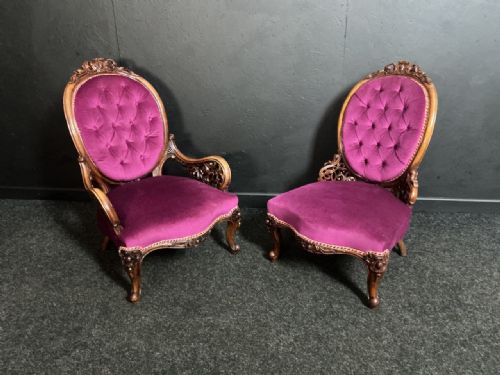
Cabinetmakers shaped dense hardwoods like walnut, mahogany, and rosewood to form the structural frames and intricate showwood borders. Skilled carvers then applied relief work, cabriole legs, and scroll details directly onto the exposed timber.
Upholstery techniques involved traditional stuffing secured over webbed bases, finished with fabrics such as velvet, textile, and deep buttoning. Brass accents and giltwood treatments occasionally added further decorative enrichment to French revival pieces.
Carved Parlour Armchair Retail Price Guide 2026
Typical asking prices for carved parlour armchair among the pieces listed under this phrase on Sellingantiques today, from the lower quarter to the upper quarter. They describe what is for sale here now, not the wider market.
Some Victorian seating includes dedicated musician's chairs designed with low backs to let violinists play unhindered.
What varies in quality
The crispness and depth of the timber carving separate standard production from exhibition pieces. Superior examples display fluent, hand-chiselled detail across the crest rails and cabriole legs rather than shallow or mechanical stamping.
Frame integrity and timber selection dictate long-term durability. Denser cuts of walnut and mahogany with well-joined structural joints maintain their rigidity far better than lesser woods prone to movement.
The Carved Parlour Armchair Glossary
- Showwood
- Timber framework left visible around the upholstered sections of a chair. It usually receives detailed carving and polishing.
- Cabriole leg
- An S-curved furniture leg inspired by animal limbs, commonly found on Victorian and Edwardian seating.
- Deep buttoning
- An upholstery method where stitches pull the fabric inward in a geometric diamond pattern, securing the internal stuffing.
- Bergere
- An enclosed upholstered armchair featuring exposed wooden framing and woven cane or padded sides.
- Salon suite
- A coordinated set of reception furniture containing a settee and matching armchairs or occasional chairs.
Carved Parlour Armchair: Frequently Asked Questions
Where were carved parlour armchairs placed?
These seats belonged in formal reception spaces such as parlours, drawing rooms, and private salons where hosts received visitors.
They functioned as decorative occasional seating rather than heavy everyday lounging chairs.
How do I identify a Victorian parlour chair?
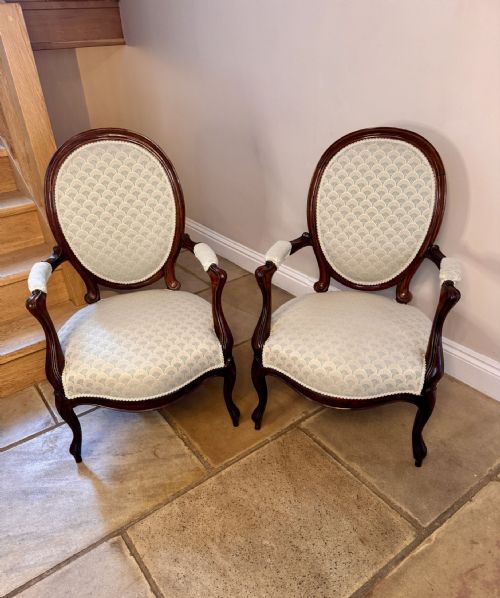
Victorian examples generally rely on solid mahogany or walnut frames with pronounced carving and dark polish.
They often feature either open arms or fully upholstered tub designs reflecting mid to late nineteenth-century tastes.
What is an Edwardian parlour armchair?
Edwardian versions tend to display lighter proportions, sometimes incorporating inlaid stringing or softer satinwood highlights alongside walnut.
These pieces lean towards refined comfort while retaining traditional revival styling.
Can I use these chairs daily?
Historic frames handle normal sitting well provided the internal webbing and joints remain sound.
Careful placement away from direct heat sources protects the antique timber and traditional upholstery.