
Carved Panelled Coffer
When you search for a carved panelled coffer, you are looking at sturdy wooden storage chests built with framed panels and ornamental relief work.
Carved Panelled Coffer
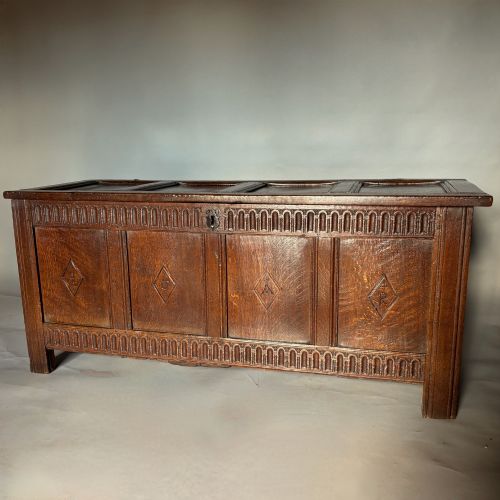
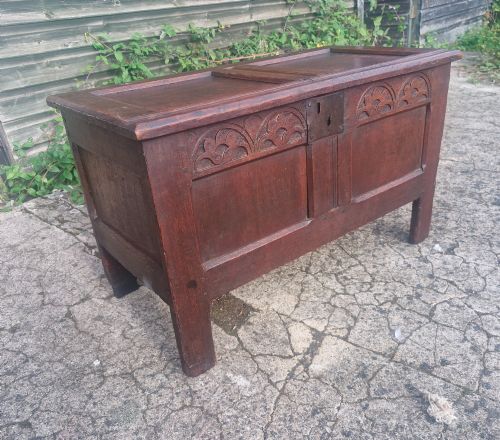
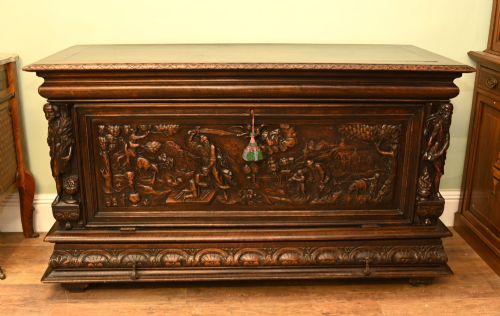
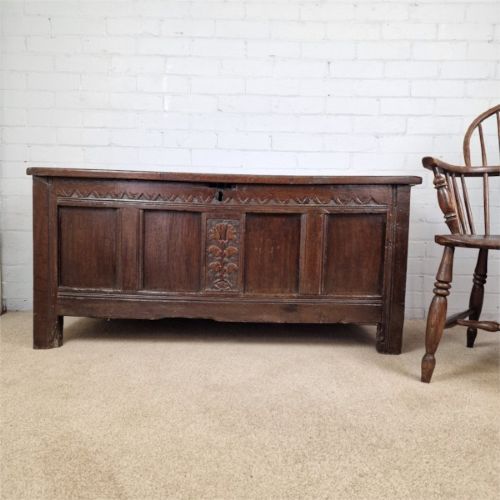
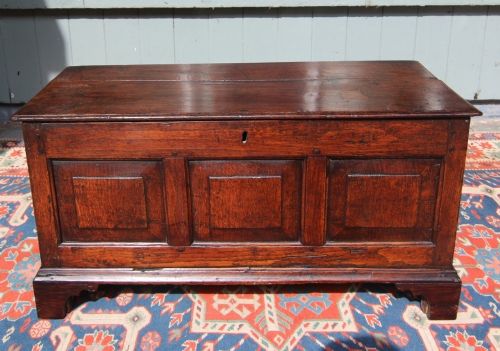
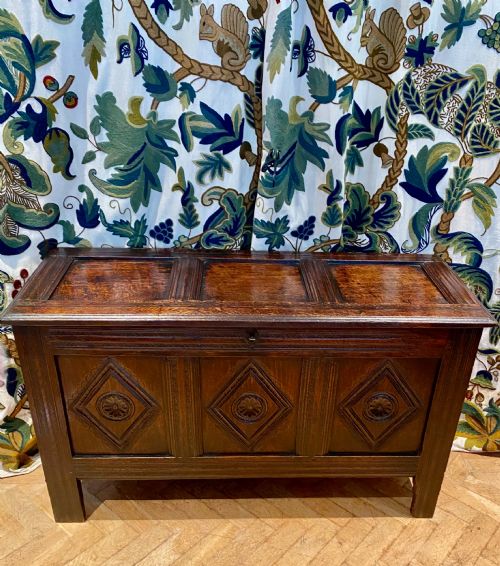
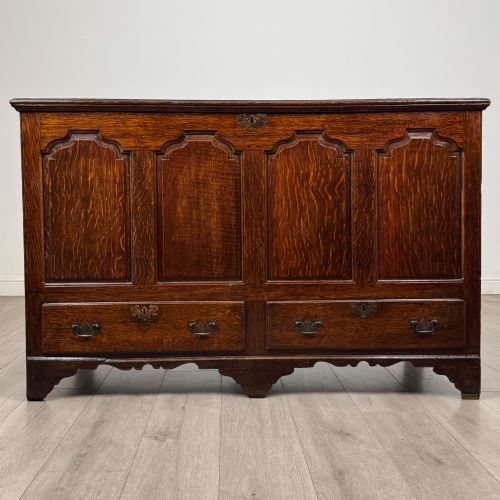
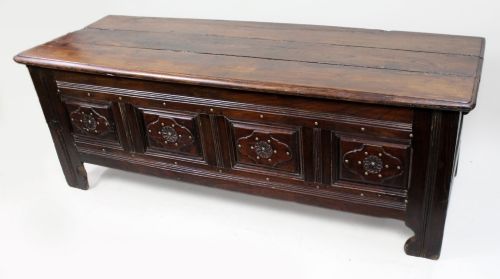
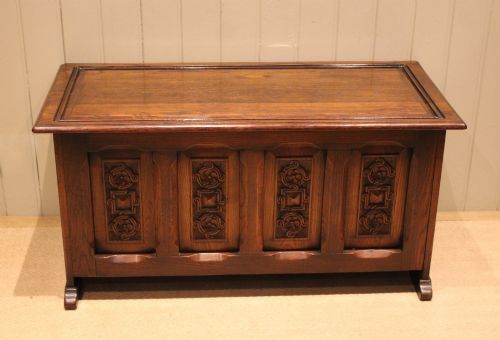
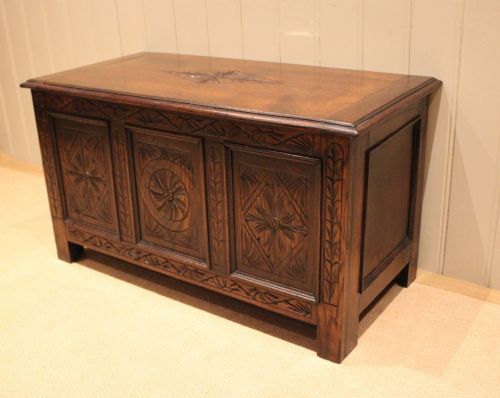
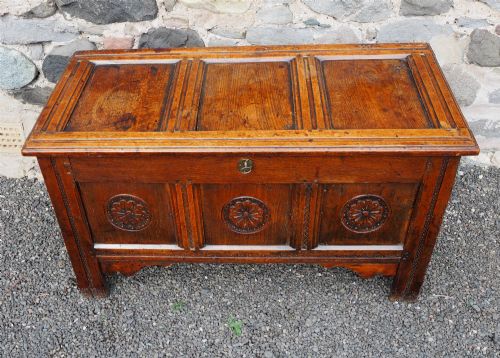
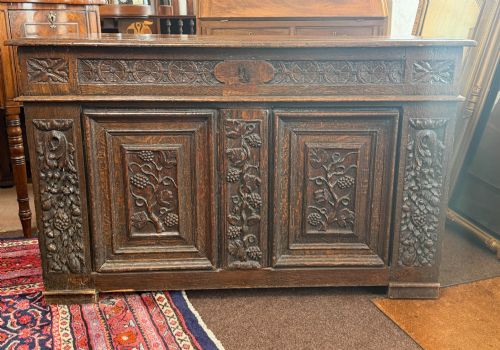
A carved panelled coffer is a heavy wooden chest constructed with vertical and horizontal framing holding thinner inset panels, decorated on the front with carved ornamentation. These pieces served historically for domestic storage of textiles, valuables, and household goods, doubling occasionally as seating.
The versions you meet most frequently on this page date from the seventeenth and eighteenth centuries, predominantly built from oak with hinged lids and stile supports. Later revivals from the nineteenth and twentieth centuries also appear, alongside regional variations such as Welsh mule chests and French provincial examples.
How they were made
Joiners built these chests using frame-and-panel construction, which allowed the solid oak timber to expand and contract with seasonal humidity changes without splitting the structure. Iron nails and wooden pegs secured the joints, while the lids were fashioned from heavy solid planks or panelled construction.
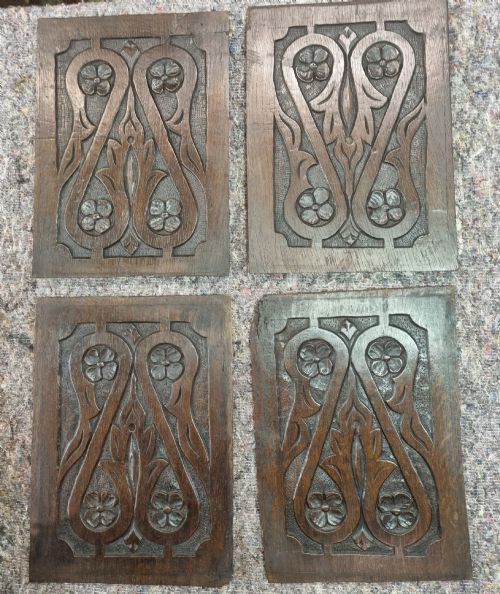
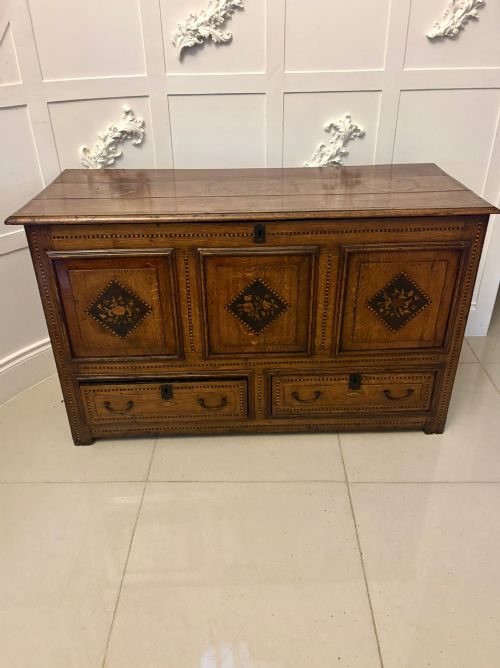
Decorators applied low or high-relief carving directly onto the wood, featuring motifs such as running strapwork, arches, and geometric patterns. Marquetry and wood inlay appear on select pieces, adding contrasting tones using various timber species.
Some seventeenth-century chests still retain traces of seventeenth-century candle wax spilled by users searching for blankets in the dark.
What varies in quality
Quality in a carved panelled coffer depends heavily on the crispness and depth of the original carving, along with the proportion and balance of the framed panels. Pieces retain greater value when the timber exhibits a deep, untouched surface patination built up over centuries of use.
Construction details also separate standard examples from superior ones, such as the survival of original panelled lids, sturdy stile supports, and untouched internal till boxes rather than extensive modern replacements.
The Carved Panelled Coffer Glossary
- Stile supports
- The extended vertical corner posts of a chest that rest directly on the floor, raising the body of the coffer above ground level. These structural legs often suffer from damp rot and subsequent trimming in older pieces.
- Mule chest
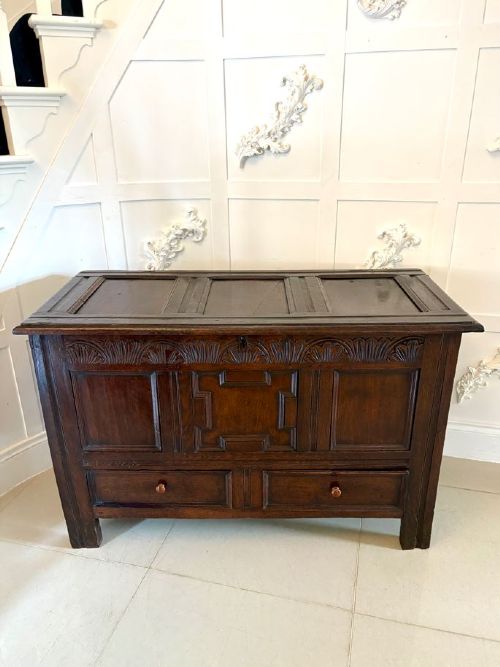
- A storage chest featuring one or more drawers built into the base beneath the main compartment. This form bridges the traditional coffer and the modern chest of drawers.
- Linenfold
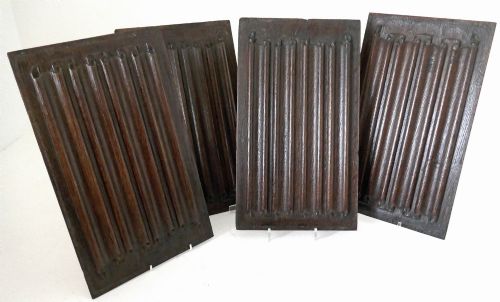
- A style of carved wooden panel popular in the sixteenth century resembling folded cloth or parchment. This motif gives a distinct textile-like texture to the front elevation.
- Strapwork
- A carved decorative band of flat, interlaced ribbons or straps often found running across the frieze of seventeenth-century woodwork. It creates a rhythmic geometric pattern across the timber.
- Till
- A small internal lidded compartment built inside a chest to keep small valuables separate from the main storage area.
Carved Panelled Coffer: Frequently Asked Questions
What did people store in a carved panelled coffer?
These chests primarily held household textiles, heavy woolen blankets, winter garments, and valuable family documents before fitted wardrobes became common.
They also served secure functions for storing church plate, silver, and trading goods depending on the household.
How do I tell seventeenth-century coffers from later revivals?
Early pieces display hand-riven oak with pegged mortise and tenon joints, tool marks from adzes, and natural timber shrinkage over centuries.
Revival pieces from the nineteenth and twentieth centuries often use machine-sawn timber, standardised fixings, and artificial distressing to mimic age.
Where should I place a heavy oak coffer at home?
A coffer sits well along a hallway wall, at the foot of a bed, or serving as a low coffee table in a living room.
Keep wooden chests away from direct heat sources and radiators to prevent the dry air from splitting the old oak panels.
What is the difference between a coffer and a mule chest?
A standard coffer opens only from the top lid and provides one deep, undivided internal storage well.
A mule chest incorporates one or more functional drawers beneath the main upper compartment for easier access to smaller garments.