
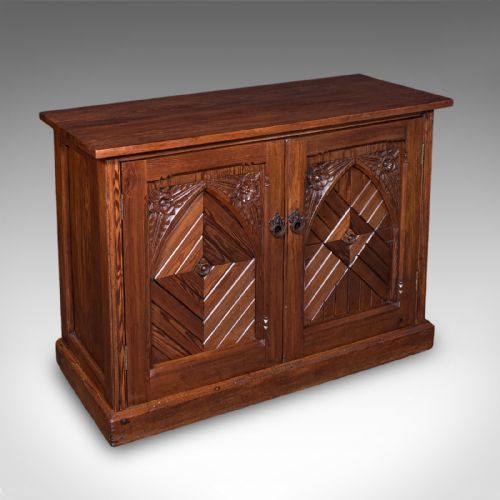
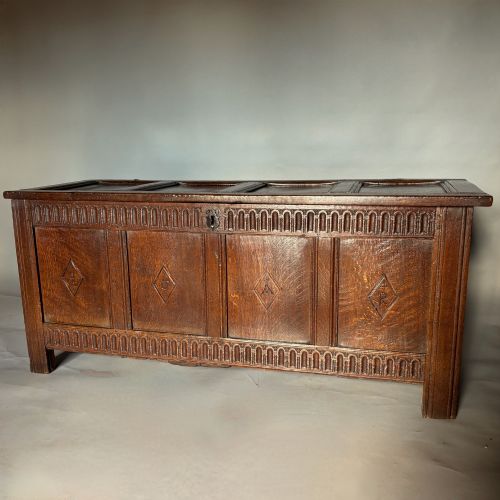
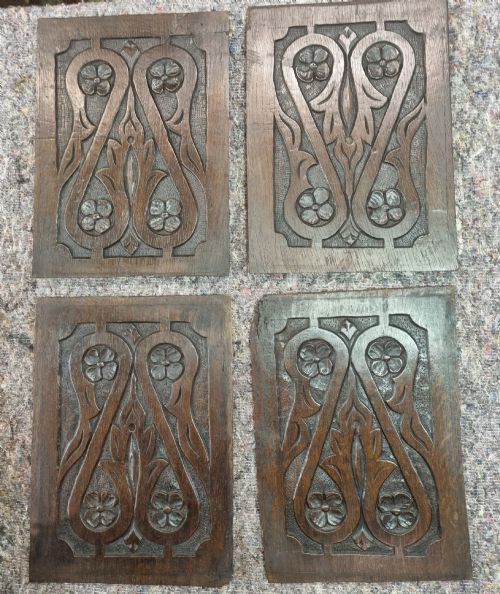
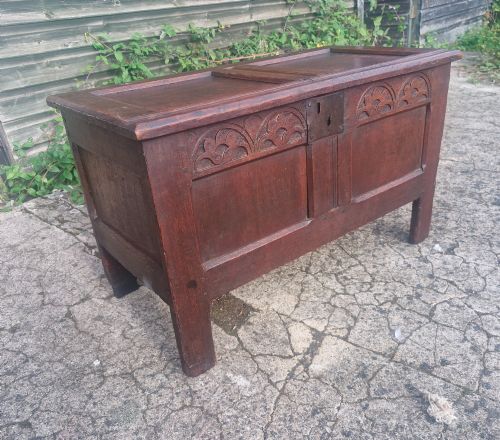
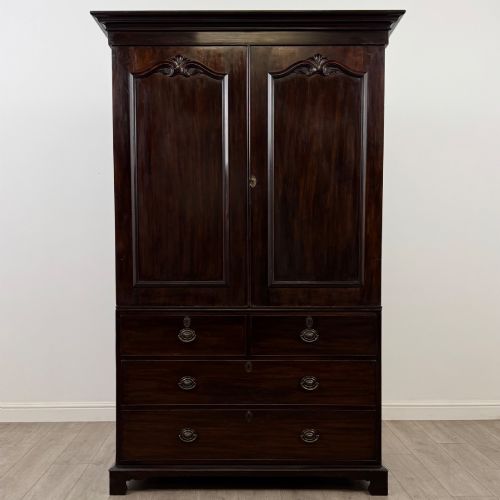
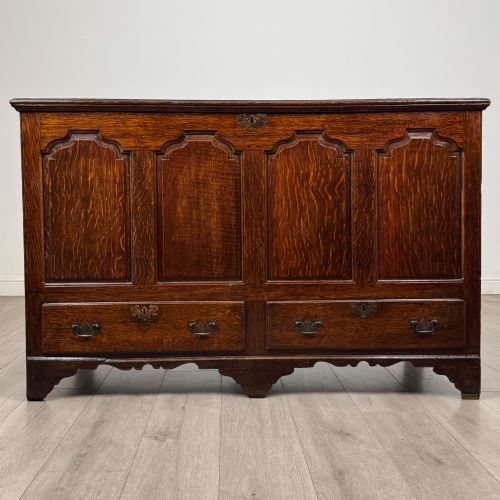
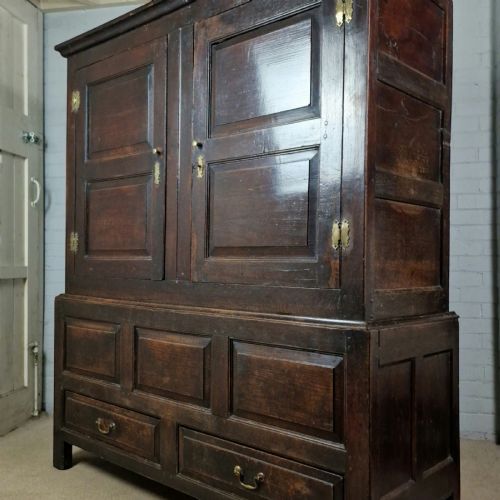
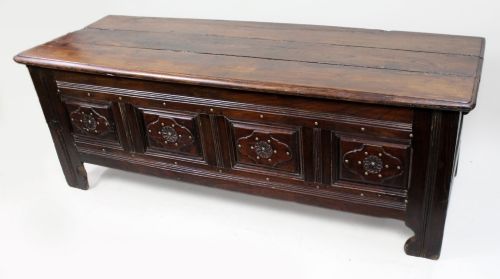
Carved Panel Wooden Chest
A carved panel wooden chest is a sturdy storage box shaped by centuries of domestic use, offering tactile history and enduring utility.
Carved Panel Wooden Chest
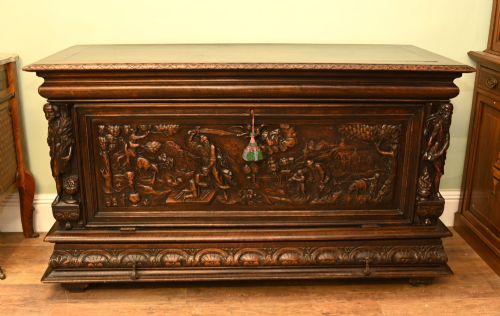
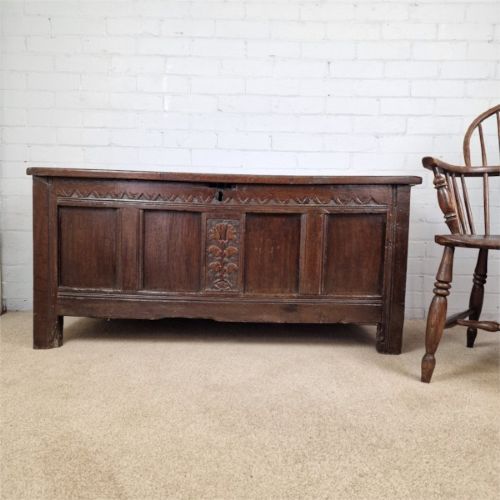
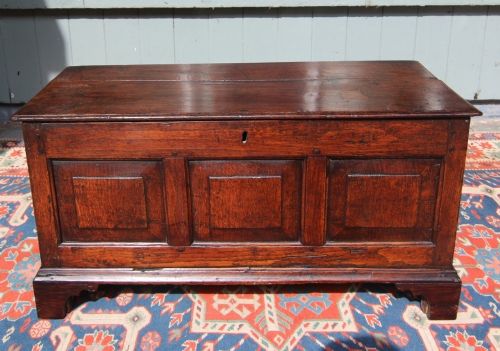
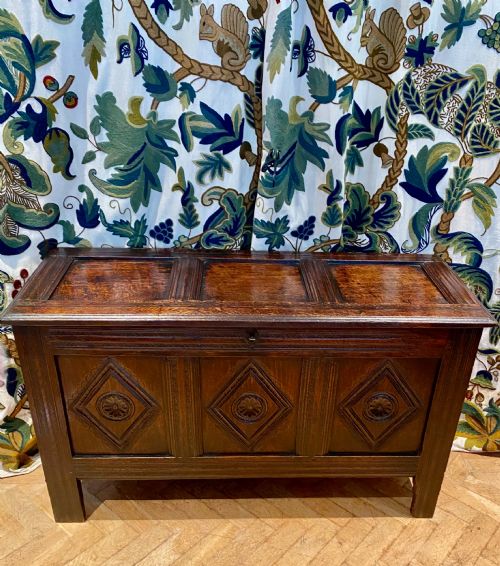
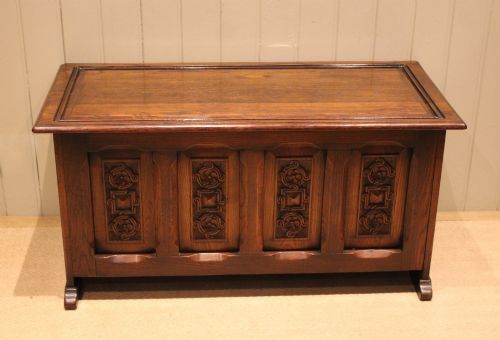
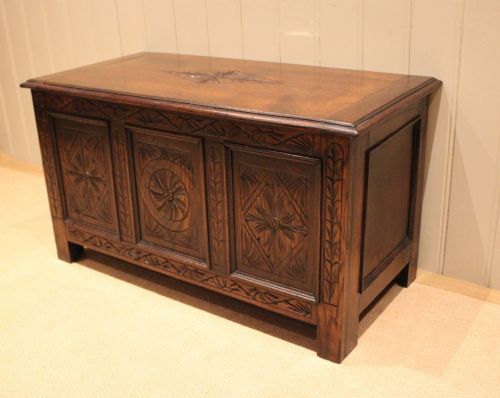
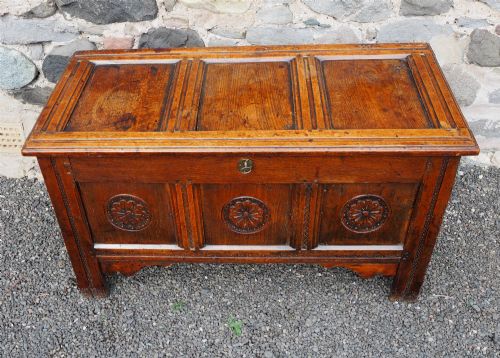
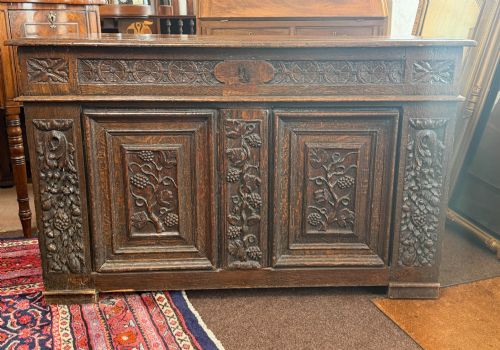
A carved panel wooden chest is primarily found in solid oak, spanning periods from the seventeenth century through the Georgian era and into early twentieth-century revivals. These utilitarian storage pieces appear in forms such as coffers, mule chests with lower drawers, and blanket boxes.
The selection ranges from provincial French and Welsh examples to English regional pieces featuring panelled construction. Makers utilised heavy timbers to build robust receptacles designed for storing household linens and valuables.
How they were made
Carpenters constructed these items using solid oak joined with mortise and tenon frames, enclosing thin panels that allowed timber to expand and contract naturally. Iron and brass hardware such as hinges, straps, and locks reinforced the heavy structural joints.
Surface enrichment involved gouge carving directly into the timber, sometimes complemented by marquetry or wood inlay using contrasting materials. Certain regional pieces also incorporated ebonised wood details or applied mouldings to create depth across the panelled facades.
Materials appearing across the inventory include solid oak, walnut, mahogany, and brass, alongside decorative marquetry and ebonised wood details.
What varies in quality
The distinction between standard utility boxes and superior examples lies in the crispness and depth of the carved panels, alongside the proportion of the timber frame. Early seventeenth-century pieces display deeply chiselled geometric or figural motifs executed with confident irregularity, whereas later revivals can exhibit mechanical uniformity.
Material selection dictates much of the stature, with dense, quarter-sawn oak showing pronounced medullary rays outlasting plainer timber boards. Intact original hardware and unblemished board lids further elevate the integrity of a survivor.
The Carved Panel Wooden Chest Glossary
- Coffer
- A heavy wooden box with a hinged lid used historically for storing valuables and documents. These pieces often sat at the foot of a bed or against a hall wall.
- Mule chest
- A storage chest featuring one or more drawers built into the base beneath the main compartment. This form bridges the evolution between the traditional coffer and the modern chest of drawers.
- Marquetry inlay
- Decorative patterns formed by fitting contrasting pieces of wood veneer into the primary surface. This technique creates elaborate pictorial or geometric designs across panels.
- Panelled construction
- A method where a solid wooden frame holds a thinner floating central panel in a groove. This design accommodates seasonal wood movement without splitting the timber.
- Jacobean style
- The architectural and furniture aesthetic prevalent during the early seventeenth century. It is characterised by dark oak, heavy proportions, and geometric strapwork carving.
Carved Panel Wooden Chest: Frequently Asked Questions
What were carved panel wooden chests used for?
These receptacles served primarily to store valuable textiles, household linens, and documents securely away from damp floors and pests.
Over generations, they also functioned as impromptu seating, tables, or resting places within domestic interiors.
How do I date an old wooden chest?
Dating relies on observing construction methods, tool marks, timber species, and stylistic carving motifs relative to known historical periods.
Hand-split boards, pegged joints, and primary use of solid oak typically point towards seventeenth or eighteenth-century origins.
Where should I place a chest in my home?
These substantial items fit well in hallways, living rooms, or at the end of a bedroom as functional storage furniture.
Keep them away from direct heat sources and strong sunlight to protect the aged timber and prevent warping.
What is the difference between a coffer and a mule chest?
A standard coffer consists of a single top-opening compartment enclosed by panelled sides and a lid.
A mule chest incorporates one or more drawers built into the base below the main box section.