



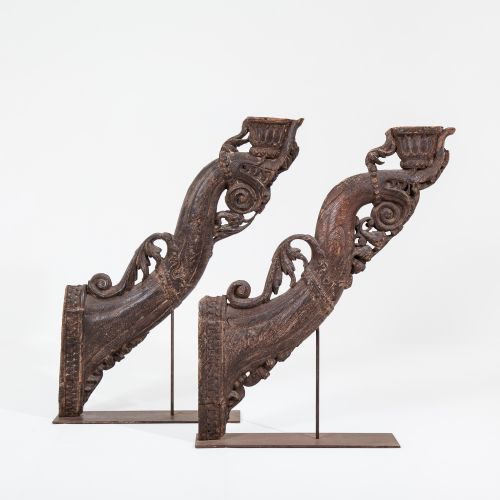

Carved Oak Wall Shelves
These carved oak wall shelves bring historic timber and robust joinery into modern rooms, offering practical display space with distinct period character.
Carved Oak Wall Shelves
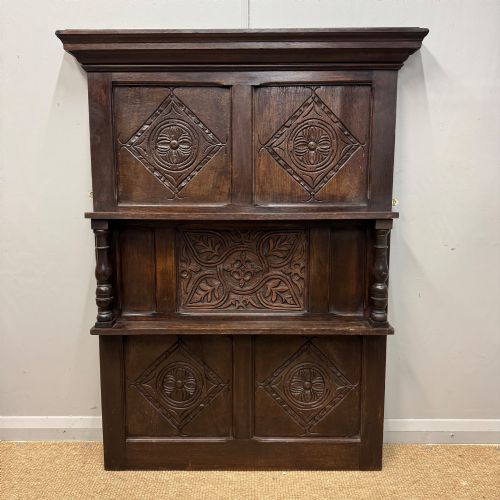
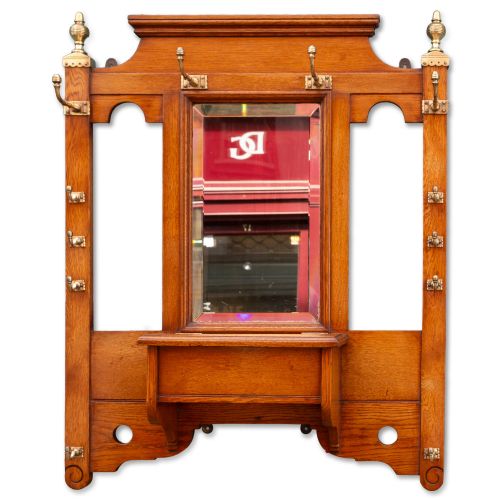
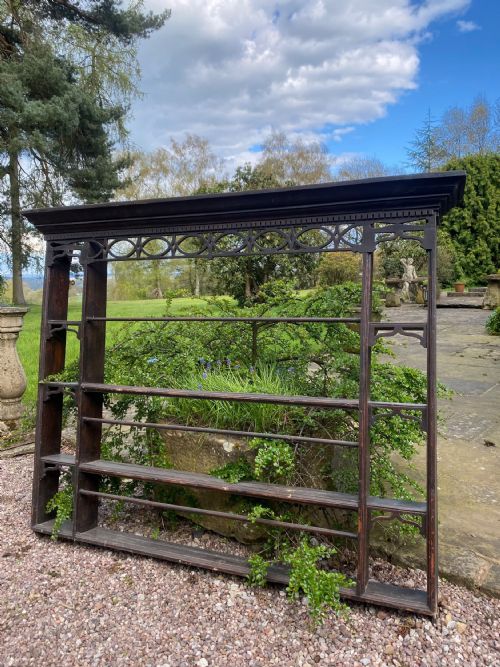
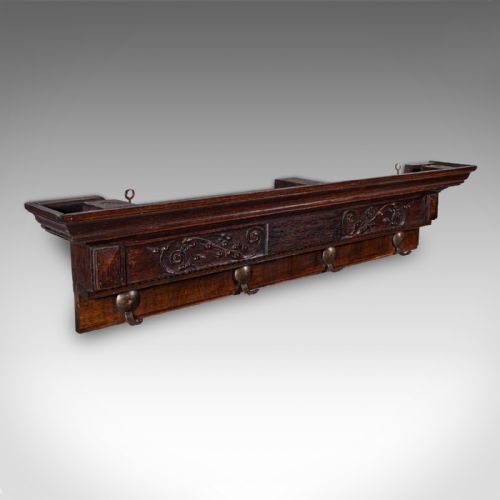
Carved oak wall shelves span practical domestic storage and decorative display furniture from the seventeenth century onwards. When you search for carved oak wall shelves, you encounter formats ranging from simple hanging tiers to complex Victorian Gothic Revival architectural brackets.
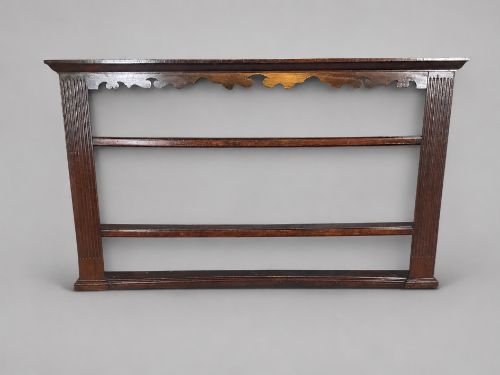
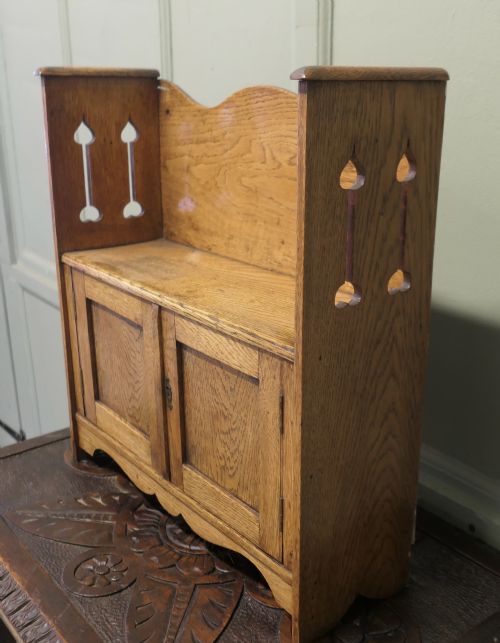
The nineteenth century yields the highest volume of surviving examples, often reflecting Arts and Crafts or Victorian design tendencies. Earlier pieces from the eighteenth and seventeenth centuries tend towards vernacular country furniture such as plate racks and simple wall brackets.
How they were made
Makers utilised solid oak, frequently augmented by secondary timbers like pine or beech, shaping the wood with hand planes, saws and gouges for relief carving. Brass hooks, iron fittings and mirrored glass often integrate into the structures to serve specific domestic functions like coat hanging or display.
Surface treatments vary from polished golden tones to dark stained finishes, reflecting the period preference from seventeenth-century vernacular dark oak to the lighter waxed surfaces of the Edwardian era.
Carved Oak Wall Shelves Retail Price Guide 2026
Typical asking prices for carved oak wall shelves among the pieces listed under this phrase on Sellingantiques today, from the lower quarter to the upper quarter. They describe what is for sale here now, not the wider market.
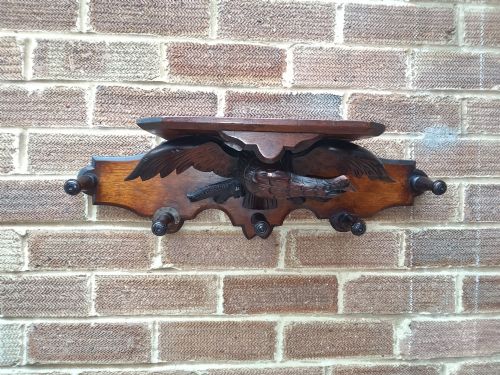
One unexpected wall sconce combines solid oak with an American eagle, proving that transatlantic patriotic display reached deep into Victorian interiors.
What varies in quality
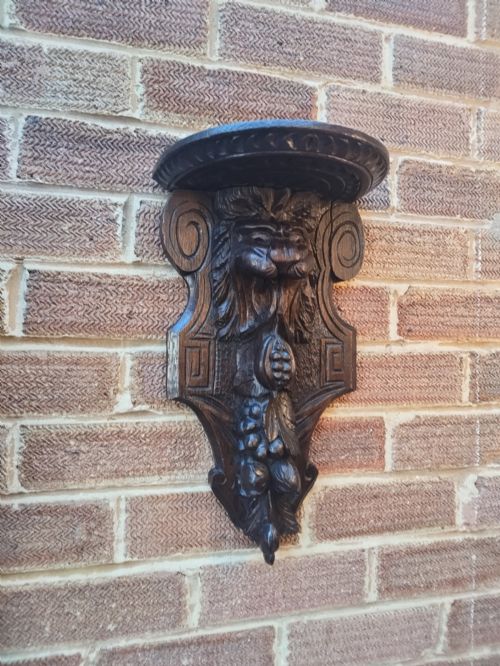
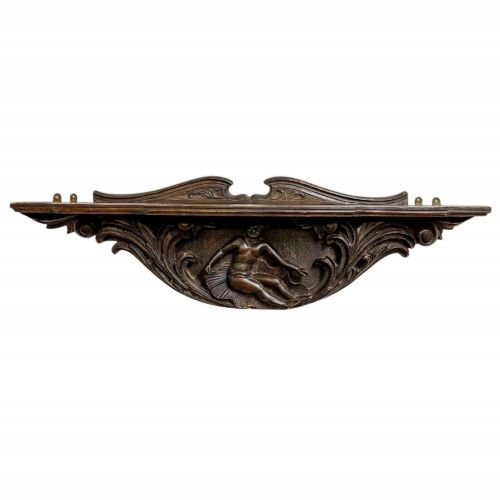
The depth and crispness of the carving distinguish ordinary production work from superior pieces, particularly in figurative or floral motifs. Superior examples display harmonious proportions where the shelf boards and backplates balance the weight of the ornamentation.
Integrity of the timber and original mounting points also dictate the standing of a piece, as alterations to hanging systems or replaced boards diminish historical cohesion.
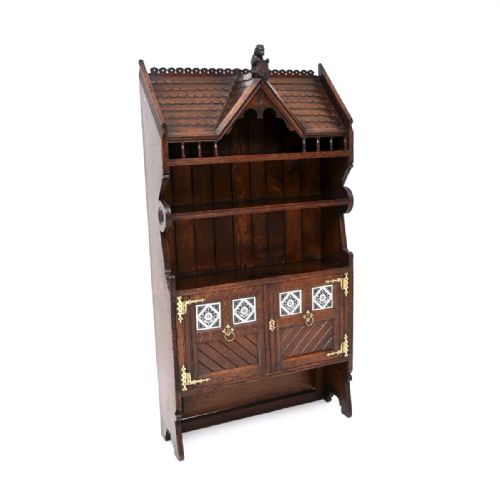
John Moyr Smith·Liberty & Co
The Carved Oak Wall Shelves Glossary
- Overmantel
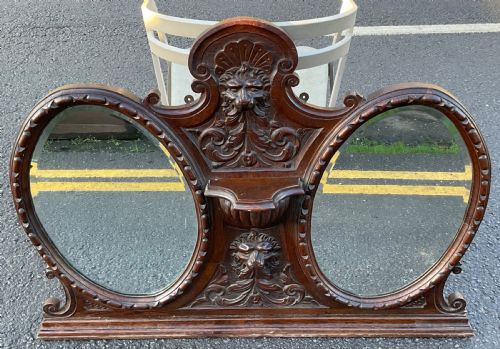
- A mirror or decorative structure designed to sit directly above a fireplace mantelpiece. These often incorporate small display shelves.
- Delft rack
- A wall-mounted plate rack featuring narrow shelving and plate grooves, traditionally used for displaying ceramic tableware. Georgian and eighteenth-century examples frequently include shaped friezes.
- Aesthetic Movement
- A late nineteenth-century design style focusing on visual beauty over narrative content, often seen in refined cabinetwork. John Moyr Smith and Liberty & Co produced notable works in related decorative spheres.
- Gothic Revival
- An architectural and decorative style drawing on medieval forms, characterised by pointed arches, heavy mouldings and deep relief carving. Pieces from this movement often utilise robust oak construction.
Carved Oak Wall Shelves: Frequently Asked Questions
How do I hang antique oak wall shelves safely?
Most antique wall shelves rely on original hanging brackets or mounting holes set into the back frame. Use wall fixings appropriate for the weight of solid oak and masonry or stud placement.
Distribute weight evenly across the tiers to avoid straining historical joints and timber screws.
What rooms suit carved oak wall shelves?
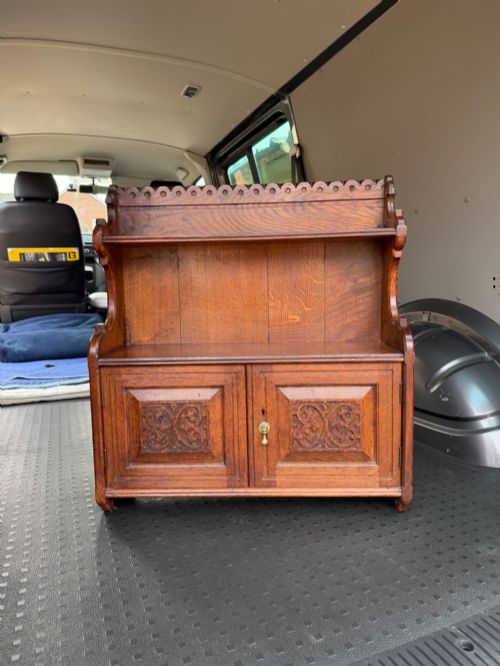
Kitchens and dining spaces accommodate plate racks and small hanging cabinets, following their original domestic utility. Hallways and studies benefit from brackets, coat racks and mirrored ledges.
The dark tones and carved textures work well against neutral or richly painted walls alike.
How can I tell a seventeenth-century shelf from a nineteenth-century revival piece?
Seventeenth-century examples feature hand-riven timber, peg joinery and deep patination acquired through centuries of use. Revival pieces from the Victorian era often employ machine-sawn backing boards and standardised fixings even when hand-carved.
Examine the tool marks and timber shrinkage to determine age.
How do I care for antique oak timber?
Dust the carved surfaces regularly with a dry, soft cloth to prevent particulate buildup in the recesses. Apply a traditional beeswax sparingly to nourish the oak without creating a sticky film.
Keep the shelves away from direct heat sources and strong sunlight to prevent warping and splitting.