

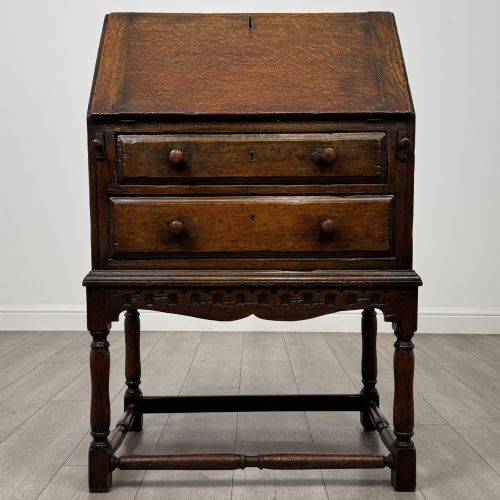
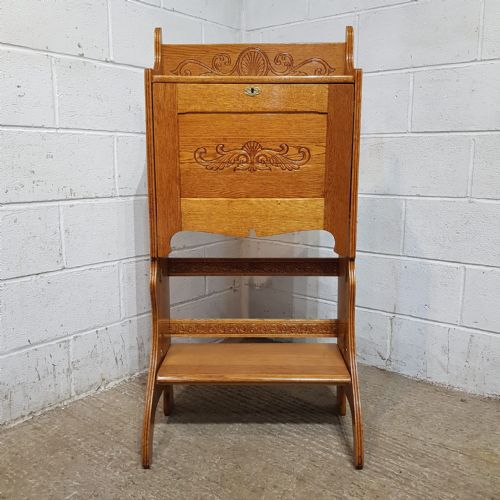


Carved Oak Secretary
A carved oak secretary brings solid timber and a drop-front writing surface into a room, offering practical storage alongside traditional craft.
Carved Oak Secretary
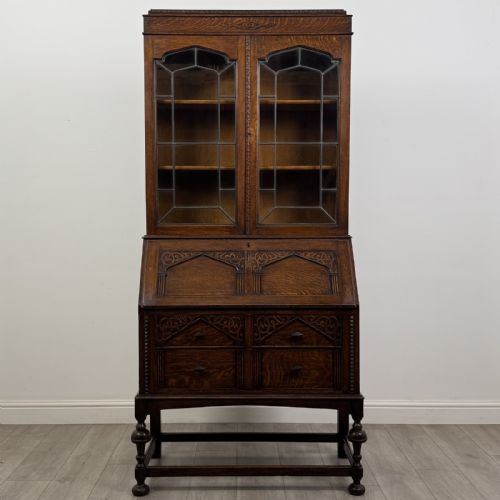
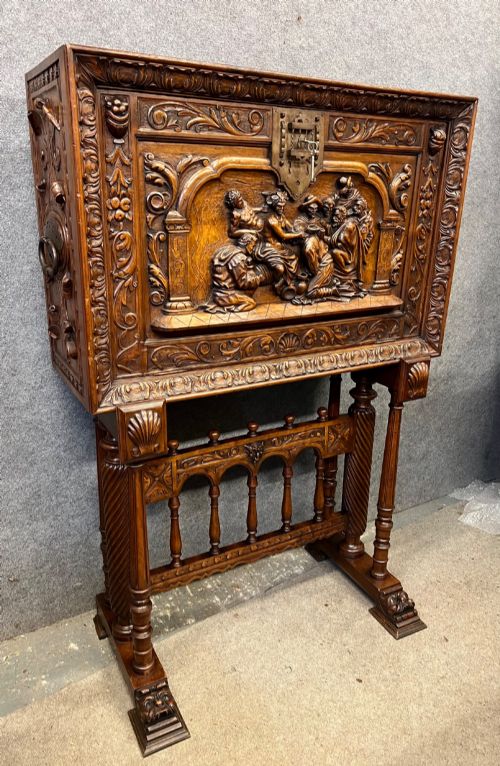
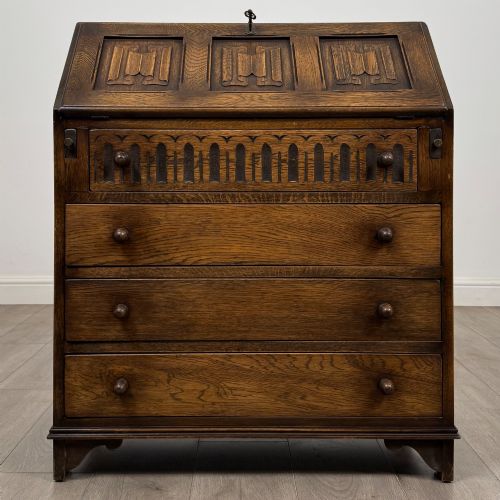
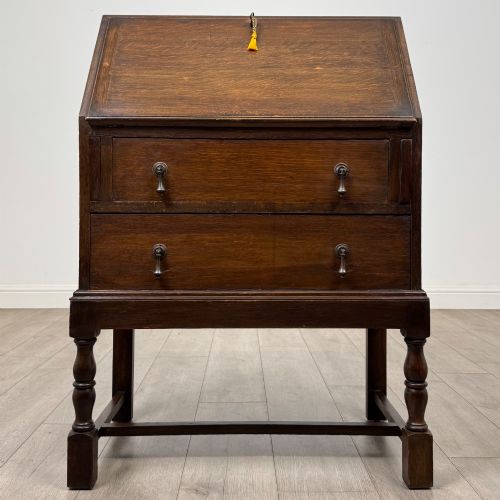
A carved oak secretary combines a desk and a cabinet, often appearing as a bureau with a sloping drop-front or a secretaire bookcase fitted with internal pigeonholes and drawers. Buyers searching for a carved oak secretary will find pieces ranging from eighteenth-century examples to Edwardian and 1920s revivals.
Tall bureau bookcases with glazed upper cabinets appear alongside compact writing desks and narrow floor models. Many retain fitted interiors with hidden compartments or moving parts designed for correspondence and document storage.
Judging quality and craftsmanship
Depth and crispness of the carving distinguish standard production from superior workshops, particularly on linenfold panels and geometric mouldings. The weight and selection of the oak timber, including figured grain or pollard sections, elevate the presence of the piece.
Internal complexity sets finer examples apart, such as fitted writing compartments with secret drawers, sliding sections, and hand-cut dovetailing on internal small drawers. The integration of period-appropriate brass hardware and original glazed doors further defines the upper tier.
Carved Oak Secretary Retail Price Guide 2026
Typical asking prices for carved oak secretary among the pieces listed under this phrase on Sellingantiques today, from the lower quarter to the upper quarter. They describe what is for sale here now, not the wider market.
Listings span from the 18th century through the Victorian era and into the 1920s, with a strong concentration of Edwardian revival pieces.
Morris & Co·George W Jack·Robert Mouseman Thompson·Liberty & Co
The Carved Oak Secretary Glossary
- Bureau
- A writing desk featuring a sloping hinged lid that opens to reveal compartments for stationery. It typically sits atop a chest of drawers.
- Secretaire bookcase
- A tall cabinet combining a upper bookcase with glazed doors and a lower section containing a pull-out writing drawer or drop-front desk.
- Linenfold
- A style of relief carving used on wooden panels to imitate folded linen fabric. It appears frequently on Edwardian oak furniture.
- Barley twist
- A type of turned wooden leg or column resembling a twisted rope. This detail characterises Jacobean revival pieces.
- Pigeonhole
- A small open compartment inside a desk used for sorting letters and papers. These compartments form the core of fitted writing interiors.
Carved Oak Secretary: Frequently Asked Questions
What is a carved oak secretary?
A carved oak secretary is a wooden writing cabinet featuring a fall-front desk lid or pull-out drawer mechanism. These units combine enclosed shelving or a bookcase top with a functional writing surface.
Most examples use solid oak or oak veneers, incorporating carved decorative motifs like linenfold panels or geometric mouldings.
How do I date an oak bureau?
Dating relies on architectural styles, hardware, and construction methods. Eighteenth-century pieces display hand-cut dovetails and simpler structural lines, while Edwardian and 1920s versions often use revival motifs like barley twist legs and machine-planed timbers.
Makers' marks, presentation inscriptions, and receipts can also pinpoint the exact year of manufacture.
How were these desks used originally?
Owners used them for private correspondence, storing ledgers, and keeping valuable documents secure behind locked drop-front panels. The internal pigeonholes and small drawers kept writing materials organised.
When closed, the sloping lid concealed the paperwork, maintaining a tidy room.
How do I care for antique oak furniture?
Keep oak furniture away from direct sunlight and heat sources to prevent the timber from drying out and splitting. Apply natural beeswax periodically to nourish the wood and maintain its finish.
Avoid excessive moisture and use soft cloths for dusting carved details.