

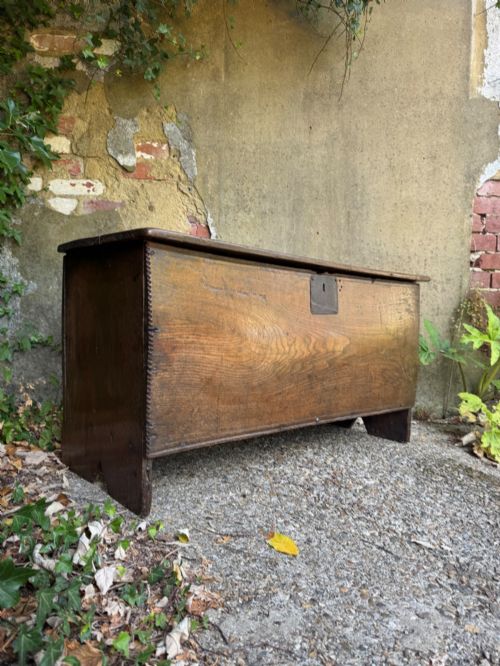
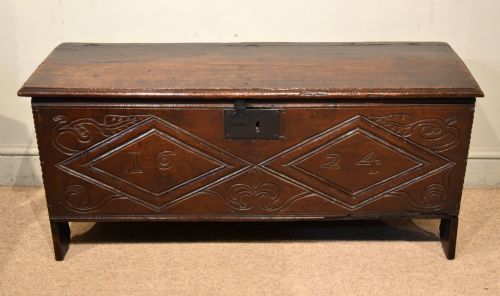
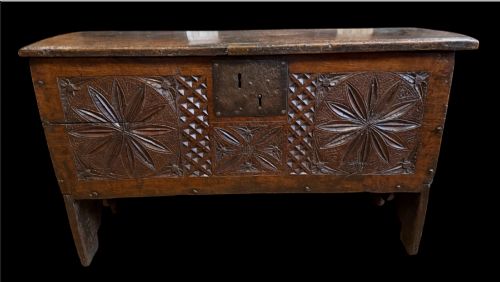


Carved Oak Plank Chest
A carved oak plank chest is a sturdy early storage piece built from solid boards, offering rustic charm and historic utility.
Carved Oak Plank Chest
When you search for a carved oak plank chest, you find substantial vernacular storage furniture constructed directly from heavy vertical boards rather than panel-and-frame assemblies. These pieces span multiple historic periods, with examples appearing from the sixteenth, seventeenth, and eighteenth centuries alongside later revival works.
The most common form on this page is the simple plank coffer, often utilising heavy iron hardware and straightforward board construction. You will also encounter specialised regional variations, such as West Country pieces or specific sword chests designed for particular storage needs.
How they were made
These chests rely entirely on solid oak and pollard oak boards joined securely at the corners, frequently reinforced with wrought iron straps and hinges. The primary method involves fixing thick side planks together to form a deep receptacle, occasionally elevated on extended board feet.
Carving and fluting adorn the front boards of selected examples, reflecting Tudor, Jacobean, and later Arts and Crafts design motifs. Makers carved directly into the dense timber surface using simple gouges and chisels to create geometric patterns and architectural details.
Carved Oak Plank Chest Retail Price Guide 2026
Typical asking prices for carved oak plank chest among the pieces listed under this phrase on Sellingantiques today, from the lower quarter to the upper quarter. They describe what is for sale here now, not the wider market.
Some seventeenth-century chests still retain traces of old tallow candle drippings inside their storage tills.
What varies in quality
The distinction between standard utility boxes and superior examples lies in the integrity of the original timber and the depth of the carving. Heavier gauge oak planks and untouched early surfaces elevate an individual chest above later utility pieces.
Originality of ironwork and hinges plays a major role in determining the character of a piece. Retaining period wrought iron mounts without modern replacements preserves the historical authenticity of the construction.
Jack Grimble
The Carved Oak Plank Chest Glossary
- Plank coffer
- A simple storage chest constructed from vertical boards joined at the edges rather than set within a framed panel structure. This method represents an early and direct form of cabinetmaking.
- Sword chest
- A long, narrow variation of a coffer specifically proportioned to accommodate edged weapons. These pieces often feature distinctive length-to-depth ratios.
- Fluted
- Surface decoration carved with parallel vertical grooves. This classical motif appears frequently on sixteenth and seventeenth century woodwork.
- Pollard oak
- Timber taken from trees that have been pollarded, producing a highly figured grain with distinctive knot clusters. This decorative wood appears in later Arts and Crafts interpretations.
Carved Oak Plank Chest: Frequently Asked Questions
What is a plank chest used for?
Historically, these robust chests served secure storage purposes for household valuables, textiles, and documents in domestic or ecclesiastical settings. Their heavy construction provided reliable security before fitted closets became common.
Today, they function well as blanket boxes at the foot of a bed or as coffee tables in living spaces, providing practical enclosed storage while adding rustic historical character to a room.
How do I identify a 17th century chest?
Seventeenth-century pieces typically exhibit hand- cleft oak boards, pegged joints, and simple geometric or chip-carved decoration characteristic of the period. Ironwork on these examples is usually hand-forged and attached with early handmade nails.
Comparing the board thickness and tool marks underneath the lid helps distinguish genuine early vernacular work from later revival interpretations or twentieth-century adaptations.
Are all these chests made from oak?
The overwhelming majority of pieces utilise native British oak as the primary structural timber, chosen for its strength, durability, and availability. Certain later revival pieces incorporate pollard oak for decorative effect.
Secondary woods sometimes appear in internal till compartments or base boards, but the primary exterior structure relies entirely on solid oak planks.
How should I care for an old oak chest?
Keep the timber away from direct heat sources and rapid temperature fluctuations to prevent the heavy oak boards from splitting or warping. Natural beeswax applied sparingly helps nourish the dry historic surface.
Avoid modern liquid polishes containing silicone, which can penetrate open grain pores and alter the natural patina developed over centuries of handling.