


Carved Oak Mirror Chiffonier
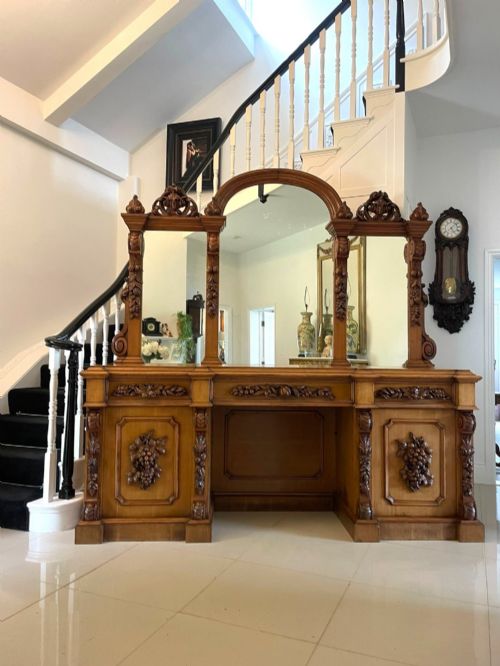
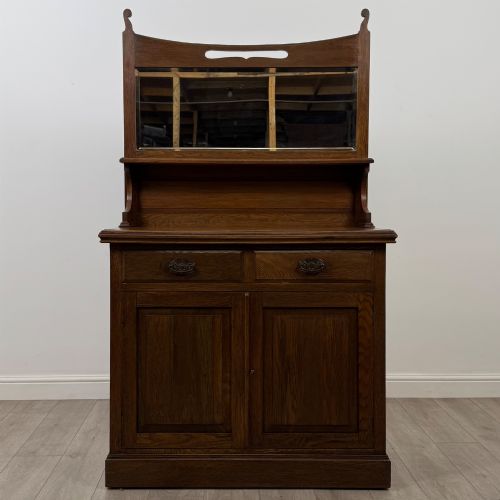
A carved oak mirror chiffonier brings weight and practicality to a room, combining a low cabinet with a tall back and glass.
Carved Oak Mirror Chiffonier
A carved oak mirror chiffonier merges the storage of a sideboard with an upright back plate containing a reflective plate, functioning as both a display surface and a functional cabinet. These pieces belong predominantly to the Victorian and Edwardian eras, stretching from the late nineteenth century into the early twentieth century.
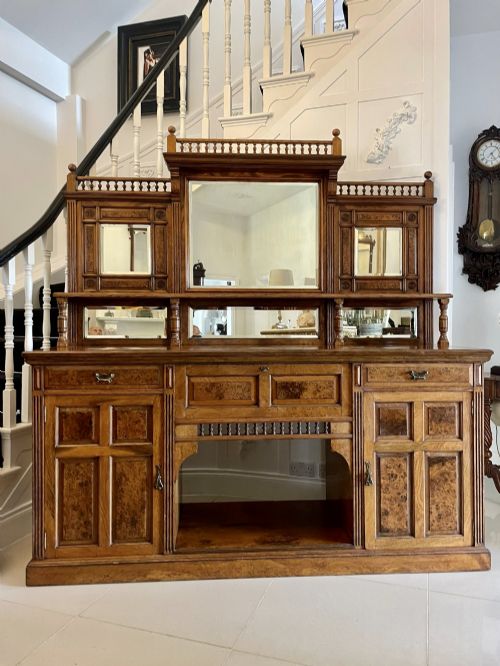
The form typically comprises a low timber base with doors and drawers, surmounted by a wooden superstructure housing mirror glass, sometimes flanked by shelves or carved panels. Examples span plain light oak utility through to heavier Victorian formats.
Buyers encountering this group will frequently find items classified broadly under sideboards and buffers, reflecting the overlapping terminology of the period. Oak is the primary structural timber, occasionally substituted with pollard oak for distinct grain patterns.
How they were made
Makers utilised solid oak and pollard oak timber, shaping the material with hand and machine tools to build heavy foundational frames and panelled doors. Brass, copper, and iron components appear as functional hardware, including hinges, handles, and locking escutcheons.
Mirror glass is set securely into carved wooden frames on the superstructure, reflecting light across the room and echoing the decorative styles of Victorian, Edwardian, and Arts and Crafts movements.
Listings feature oak, pollard oak, glass, and brass across Victorian, Edwardian, and Arts and Crafts styles.
What varies in quality
Quality rests upon the selection of timber and the depth of the carving, with pollard oak presenting intricate burr patterns that demand greater skill in handling than plain timber. The integration of the mirror back into the main cabinet structure dictates the overall solidity of the piece.
Refinement in hardware execution and the crispness of decorative mouldings separate standard production items from more ambitious workshops of the period.
The Carved Oak Mirror Chiffonier Glossary
- Chiffonier
- A low sideboard or cabinet, typically featuring cupboards beneath a surface used for serving or display. The addition of a mirror back distinguishes many variants in this category.
- Pollard Oak
- Timber harvested from trees that have been pollarded, yielding a densely grained and highly figured wood surface. This material appears frequently on the finer Victorian examples.
- Arts and Crafts
- A design movement prioritising traditional craftsmanship, simple forms, and visible construction methods over mass-produced ornamentation. Pieces from this tradition favour golden oak tones and restrained carving.
- Mirror Back
- A tall wooden superstructure fitted with glass, attached to the rear of a sideboard to reflect light and objects in the room. This component defines the visual weight of the furniture.
- Edwardian
- Pertaining to the reign of King Edward VII, spanning the early twentieth century. Furniture from this era often lighter in proportion than its Victorian predecessor.
Carved Oak Mirror Chiffonier: Frequently Asked Questions
What is a mirror chiffonier?
A mirror chiffonier is a low wooden cabinet featuring an attached upright backboard inset with glass. It combines storage space with a decorative reflective surface.
Such furniture served dining rooms and parlours for storing tableware while brightening the surrounding interior.
How do I date an oak chiffonier?
Dating relies on stylistic markers, timber choice, and construction methods. Victorian pieces tend to be heavier with dark finishes, whereas Edwardian items often use lighter oak.
Arts and Crafts examples show simplified forms and focus on the natural grain of the wood rather than heavy surface carving.
What is pollard oak?
Pollard oak comes from trees pruned near the trunk to encourage dense, knotty branch growth. This pruning creates highly figured timber with rich swirling patterns.
Cabinet makers used these distinctive veneers on prominent surfaces to showcase visual depth.
Where were these pieces used?
These items belonged primarily in Victorian and Edwardian dining rooms and formal reception spaces. They held glassware, cutlery, and serving items.
The mirror element helped bounce natural daylight around rooms that often featured heavy curtains and dark wall treatments.