
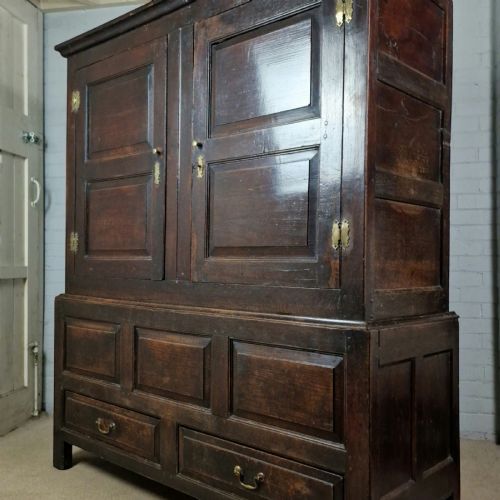
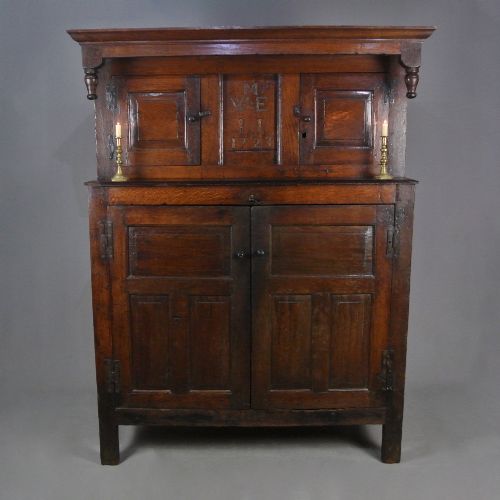
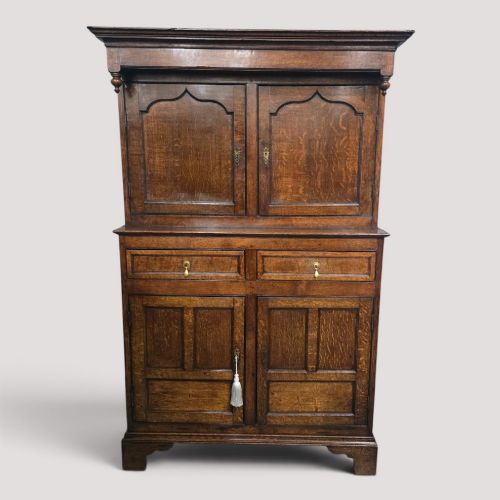
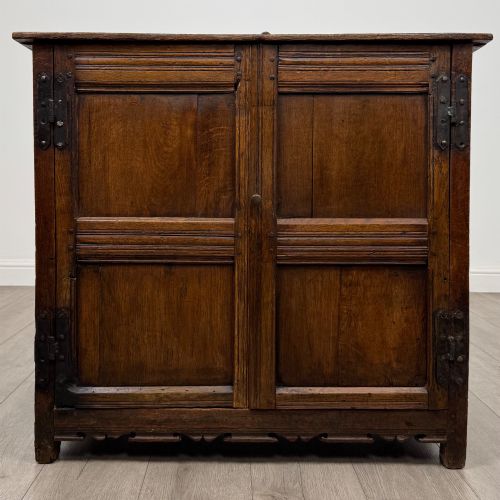



Carved Oak Livery Press
A carved oak livery press brings honest country timber and centuries of storage history straight into a room.
Carved Oak Livery Press
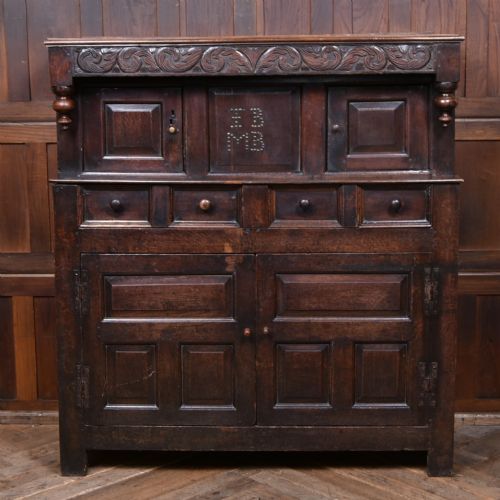
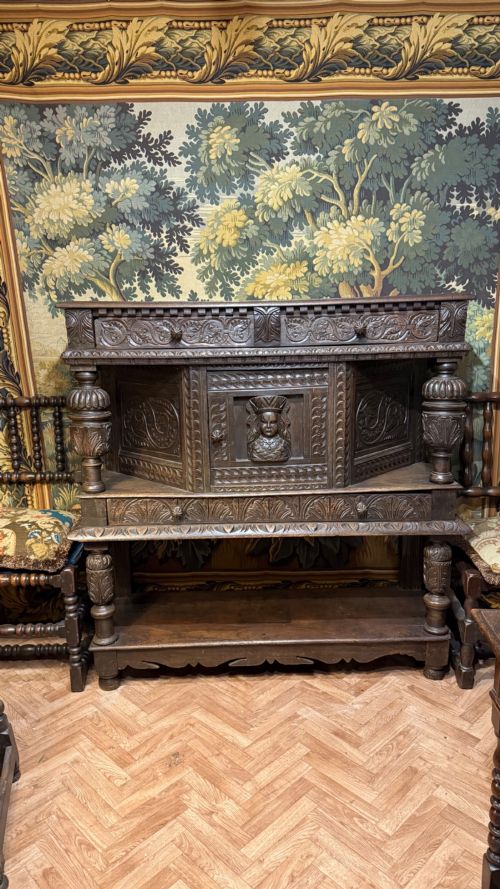
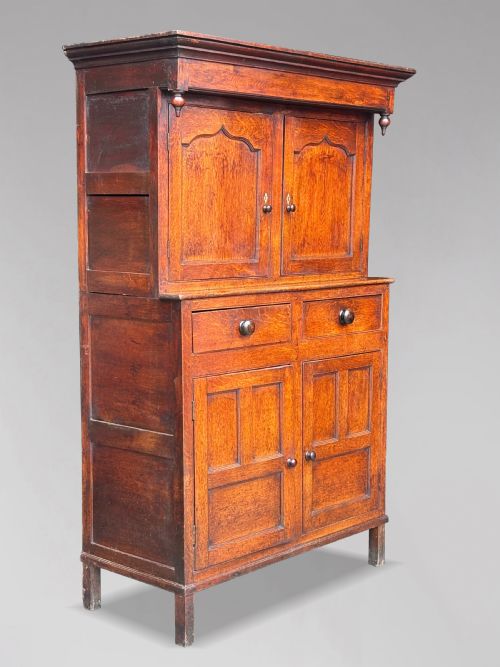
When you search for a carved oak livery press, you encounter substantial storage furniture built primarily during the seventeenth and eighteenth centuries. These pieces combine closed cupboards with display stages, often crossing paths with court cupboards and deuddarns.
The examples met most frequently on this page span the Jacobean, Georgian, and English country traditions. They reflect domestic storage needs from eras when linen, food, and valuables required secure, ventilated timber housing.
Makers constructed these cabinets with deep recesses, panelled doors, and heavy cornices designed to anchor a traditional interior. Their proportions range from modest cottage cupboards to imposing structures intended for grander halls.
What varies in quality
The depth and crispness of the original carving distinguish superior examples from simpler provincial work. Cleanly executed punchwork and well-defined mouldings show the hand of a confident joiner rather than a hurried village carpenter.
The survival of original timber, including backboards, floorboards, and hardware, determines the integrity of the piece. Replacements to cornices or feet alter the balance of the proportions, while undisturbed surfaces retain the warmth built up through centuries of handling.
Materials recorded across these cabinets include solid oak, wrought iron, brass, and occasional fruitwood inlay.
The Carved Oak Livery Press Glossary
- Livery cupboard
- A traditional storage cabinet originally used for rations or provisions before evolving into general household furniture. These pieces typically feature panelled doors and internal shelving.
- Court cupboard
- A two-stage cabinet with a recessed upper section supported by turned balusters or columns. They often display intricate carved panels and date inscriptions from the seventeenth century.
- Deuddarn
- A traditional Welsh two-part cupboard featuring enclosed upper and lower sections. This regional form provides substantial storage while maintaining a distinct architectural silhouette.
- Mortise and tenon
- A traditional woodworking joint where a projecting tongue fits snugly into a corresponding cavity and is secured with wooden pegs. This method creates strong, durable connections without modern fasteners.
- Fruitwood inlay
- Contrasting timber inserts set flush into the oak surface to create geometric patterns or floral motifs. This technique adds decorative detail to panels and friezes.
Carved Oak Livery Press: Frequently Asked Questions
What is a livery press used for?
These cabinets served historically for storing household provisions, garments, and valuable linens securely away from damp walls. Today they function effectively as principal storage furniture in dining rooms, hallways, or living spaces.
Their deep shelves and enclosed compartments accommodate modern tableware, books, or dry goods while maintaining a strong historical presence in the room.
How do I date an oak cupboard?
Dating relies on examining the construction methods, tool marks left by hand chisels, and the style of the carved ornamentation. Seventeenth-century examples often display heavy geometric mouldings and pegged frames, while eighteenth-century pieces lean towards cleaner Georgian proportions.
Inscribed dates and maker marks occasionally appear carved directly into the frieze, though these must be assessed alongside the general wear and timber shrinkage of the structure.
Are these cupboards made of solid oak?
Most traditional pieces utilise solid oak for the primary framework, panels, doors, and structural uprights. Secondary timbers such as pine or fruitwood sometimes appear in less visible areas like internal partitions or drawer linings.
The heavy weight of the timber requires sturdy floor placement and careful handling during relocation.
How do I care for antique oak furniture?
Maintain the timber by applying traditional beeswax periodically to nourish the dry grain and preserve the surface sheen. Avoid placing the cupboard near direct heat sources or in fluctuating humidity to prevent the oak planks from splitting.
Clean surfaces gently with a soft, dry cloth rather than modern chemical polishes that can degrade the historic finish.