



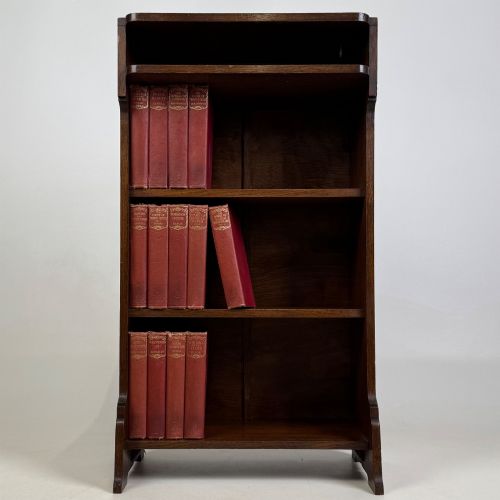
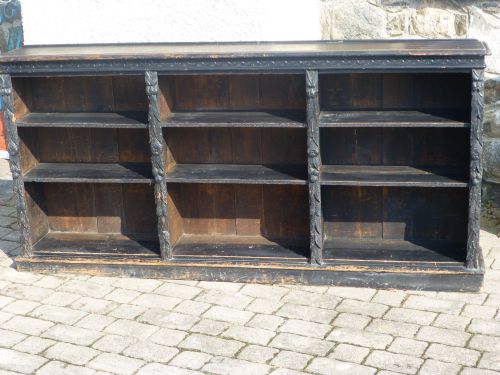
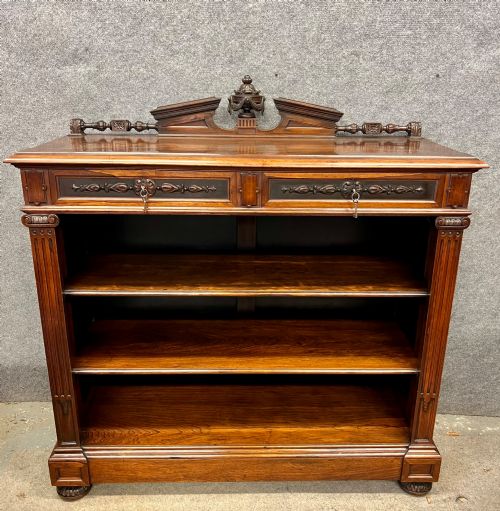
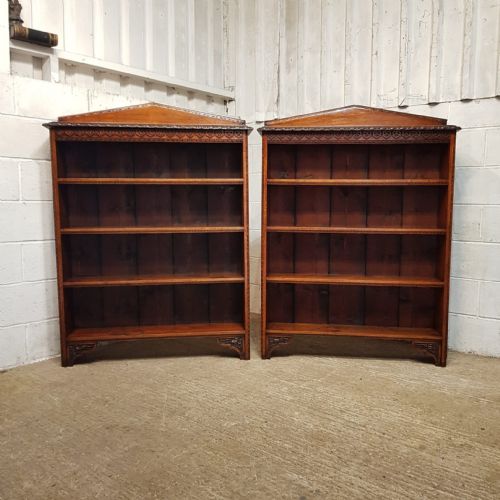
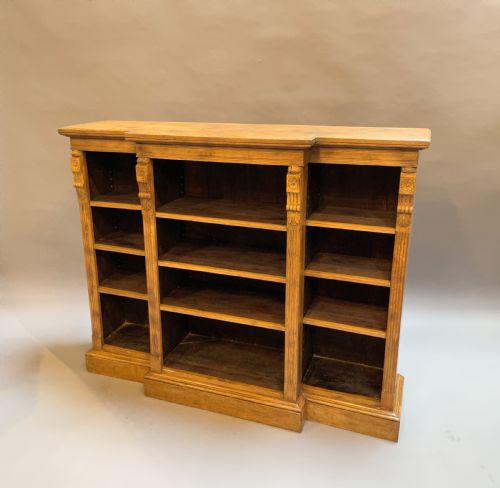


Carved Oak Library Shelf
A carved oak library shelf provides sturdy, architectural storage for working collections, combining robust timber with disciplined carving.
Carved Oak Library Shelf
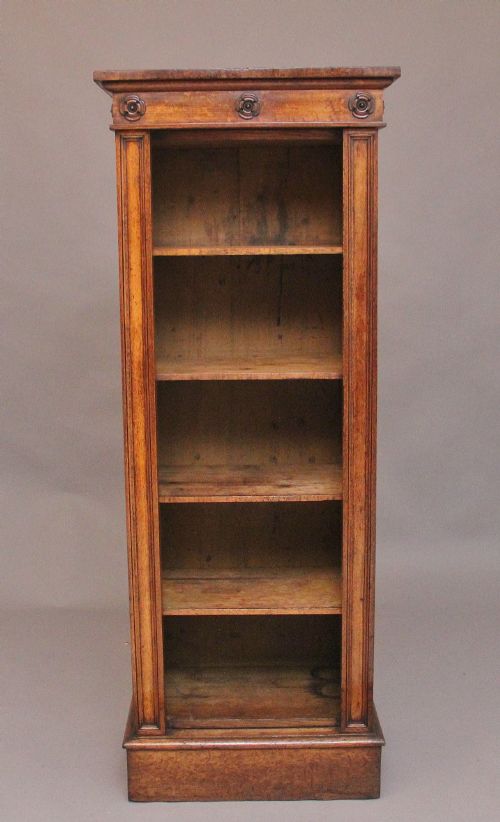
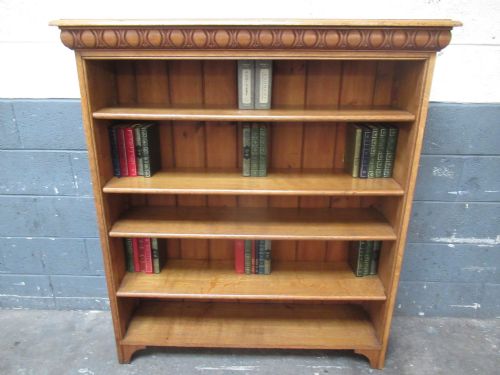
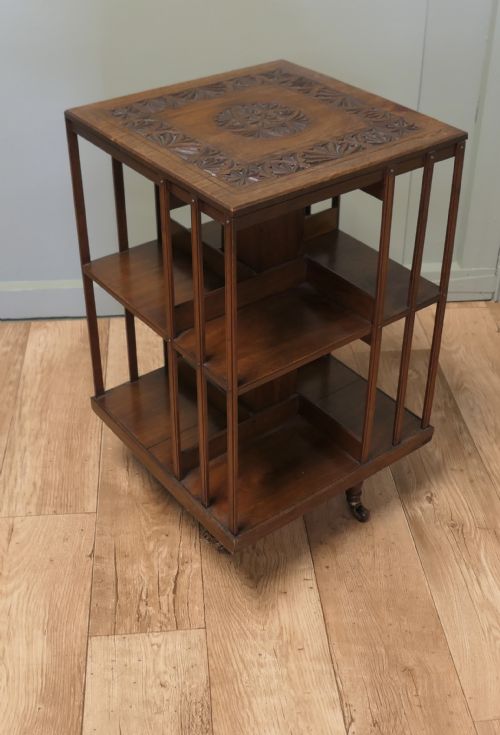
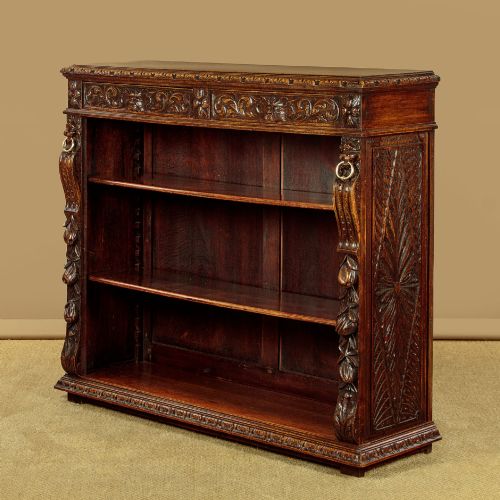
When searching for a carved oak library shelf, collectors encounter open bookcases, adjustable display units, and low dwarf forms dating primarily from the Victorian and Edwardian eras. These pieces function as working furniture designed to hold substantial volumes within domestic or institutional studies.
The prevailing format on this page is the open-front bookcase, often fitted with adjustable wooden shelves to accommodate varying octavos and folios. Examples range from compact country house styles to tall, architectural breakfront compositions.
Origins span the nineteenth and early twentieth centuries, drawing on revivalist aesthetics such as Gothic, Jacobean, and Renaissance styles. The resulting forms integrate functional utility with deliberate decorative carving along cornices, panels, and edges.
Determinants of quality
Distinctions in quality arise from the depth and precision of the carved detail, separating standard production furniture from bespoke commissions by notable firms. Crisp relief work along the cornices and stiles indicates skilled bench joinery rather than hurried factory output.
The selection of timber grain and the integrity of the adjustable shelf hardware further define the tier of a piece. Uniformity in the oak planks and robust internal engineering elevate the standing of an upright or low library bookcase.
Carved Oak Library Shelf Retail Price Guide 2026
Typical asking prices for carved oak library shelf among the pieces listed under this phrase on Sellingantiques today, from the lower quarter to the upper quarter. They describe what is for sale here now, not the wider market.
Listings feature materials including solid oak, ebonised oak, bleached oak, walnut, brass, and iron across various nineteenth and twentieth-century formats.
Bowman Brothers, London·Waring and Gillows·Richard Bridgens·Gillows
The Carved Oak Library Shelf Glossary
- Breakfront
- A piece of furniture where the central section projects forward from the flanking wings. This architectural arrangement creates depth and shadow across large library bookcases.
- Dwarf bookcase
- A low open shelving unit designed to sit beneath dado height. These pieces keep books accessible while preserving wall space above.
- Green man
- A sculptural face carved from foliage or branches, symbolising rebirth. This motif frequently appears on nineteenth-century revivalist oak library furniture.
- Adjustable shelf
- A horizontal board supported by movable pins or racks rather than fixed dadoes. This system allows custom spacing for varying book heights.
Carved Oak Library Shelf: Frequently Asked Questions
How do I adjust the shelves?
Most period library shelves utilise wooden support strips or metal peg systems set into the interior uprights. You simply lift the board and reposition the supports into adjacent slots.
Ensure the weight distributes evenly across the new placement to maintain the stability of the oak carcass.
Where should I place an open bookcase?
Position your oak bookcase against interior walls away from direct sunlight and heating vents. Timber reacts to extreme temperature shifts by expanding or contracting.
Leave a small gap behind the back panels to allow air circulation around heavy volumes.
How do I clean carved oak?
Dust the carved recesses regularly using a soft natural bristle brush to prevent particle buildup. Avoid silicone sprays or wet cloths that can damage traditional wax finishes.
Apply a neutral beeswax sparingly once or twice a year to nourish the timber grain.
How do I identify the period?
Examine the hardware, joinery marks, and decorative vocabulary employed across the frame. Gothic and Renaissance revival motifs strongly indicate Victorian production.
Later Edwardian examples often display lighter proportions and simpler linear carving compared to nineteenth-century predecessors.