



Carved Oak Flap Table
A carved oak flap table gives you folding leaves and sturdy timber, pairing centuries of utility with rich grain.
Carved Oak Flap Table
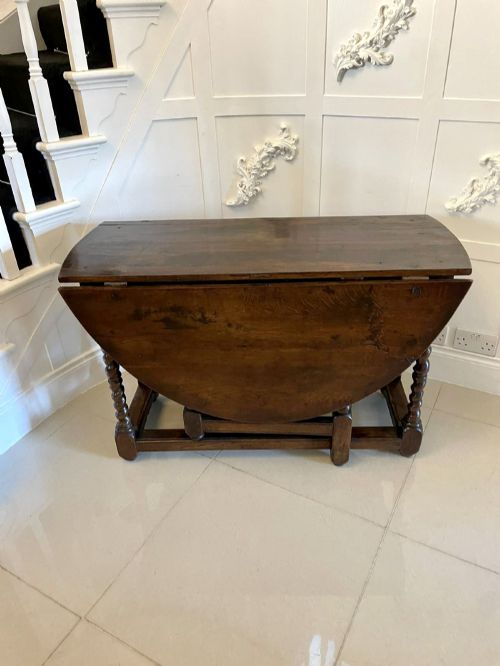
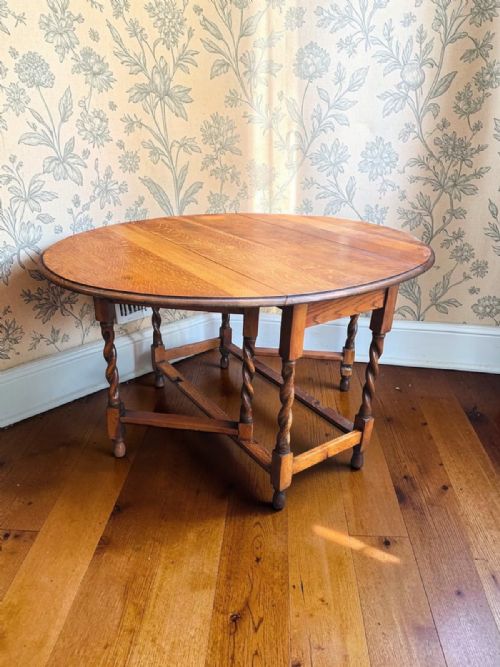
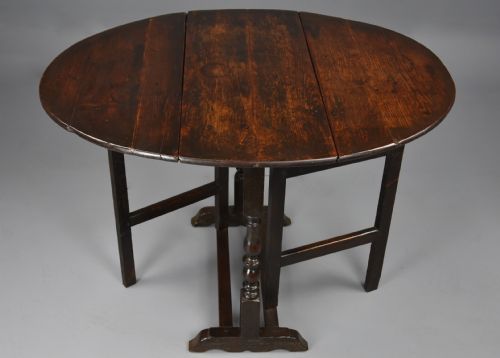
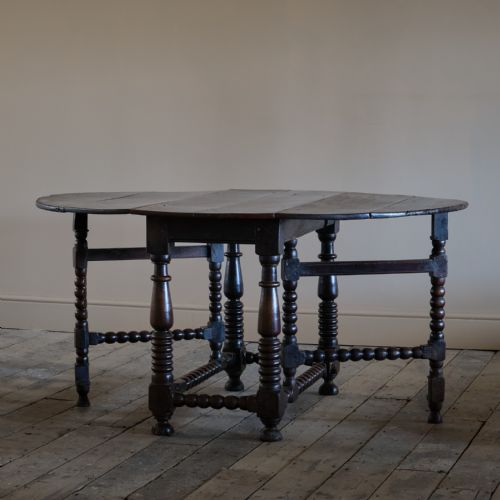
A carved oak flap table is a folding table with hinged leaves, spanning forms from compact side tables to large six-seater dining tables. Buyers searching for a carved oak flap table encounter gateleg and drop-leaf constructions designed to save space when the flaps drop down.
The selections on this page draw from the seventeenth century, eighteenth century, Victorian era, Edwardian period, and early twentieth century. Gateleg tables predominate, alongside drop-side coffee tables, dropleaf side tables, work tables, and dining tables.
Origins include English and French traditions, utilising solid timber alongside styles such as Jacobean, Jacobean revival, and eighteenth-century English country. These pieces offer practical surfaces that expand for dining and fold away against a wall.
Factors that define quality
Quality rests in the proportion of the piece, from small proportions to large dining formats, and the integrity of the original timber surface and patina. The crispness of turning on bobbin and barley twist legs marks the skill of the maker.
The smoothness of the drop-leaf action and the sturdy alignment of the gateleg mechanism indicate how well the table has survived centuries of daily use. Finer examples retain their structural stability and original brass or iron hardware without excessive restoration.
Carved Oak Flap Table Retail Price Guide 2026
Typical asking prices for carved oak flap table among the pieces listed under this phrase on Sellingantiques today, from the lower quarter to the upper quarter. They describe what is for sale here now, not the wider market.
Listings span seventeenth-century origins up to nineteen-twenty productions, utilising oak, pollard oak, brass, iron, and fabric.
The Carved Oak Flap Table Glossary
- Gateleg table
- A table with hinged flaps and swinging legs that pull out to support them. These legs pivot on a frame much like a gate.
- Drop-leaf table
- A table featuring a fixed centre section and two hinged flaps that fold down. The flaps require separate supports when raised.
- Bobbin turned
- A style of leg or stretcher shaped on a lathe to resemble a series of wooden bobbins or spools stacked end to end.
- Barley twist
- A spiral turning resembling a twisted rope, common on legs and supports of seventeenth-century and revival furniture.
- Pollard oak
- Oak timber taken from pollarded trees, yielding a mottled, highly decorative grain pattern used for fine surfaces.
Carved Oak Flap Table: Frequently Asked Questions
How do gateleg tables work?
Gateleg tables use hinged flaps supported by pivoting legs that swing out from the central frame. When the legs are pushed back, the flaps drop down.
This mechanism allowed households to clear floor space by folding the leaves against the room boundaries when dining concluded.
Where were these tables used?
These tables served primarily in dining rooms, parlours, and kitchens as flexible surfaces for meals and daily tasks. Smaller versions functioned as work tables or side tables.
The folding design made them adaptable for rooms requiring multi-use furniture throughout the day.
How do I care for oak surfaces?
Oak timber benefits from gentle dusting and occasional applications of beeswax to nourish the grain and protect the patina. Avoid placing solid oak near direct heat sources.
Proper humidity levels in the room prevent the wood from splitting or warping over time.
How do I spot a later revival piece?
Revival pieces from the Edwardian period or nineteen-twenty often feature machine turning and standardised hardware that differ from seventeenth-century hand tools. Examining the underside and joint construction reveals age indicators.
Timber colour, wear patterns, and fastener types help distinguish earlier examples from later copies.