



Carved Oak Fireplace
These pieces for a carved oak fireplace span centuries of domestic warmth, bringing solid timber, brass and carved detail directly to the hearth.
Carved Oak Fireplace
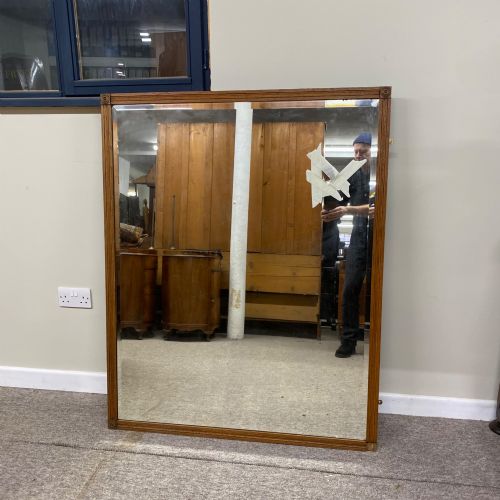
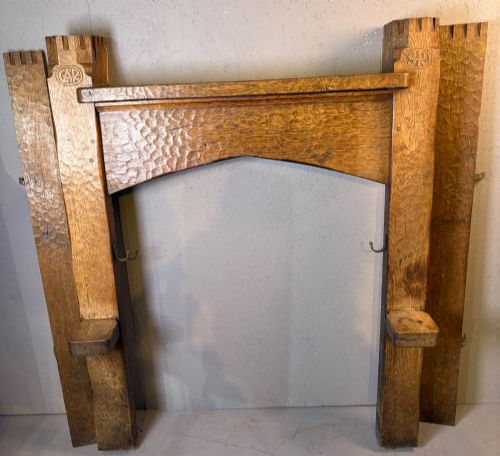
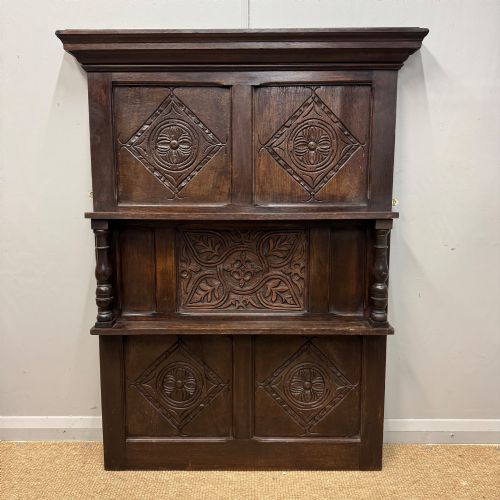
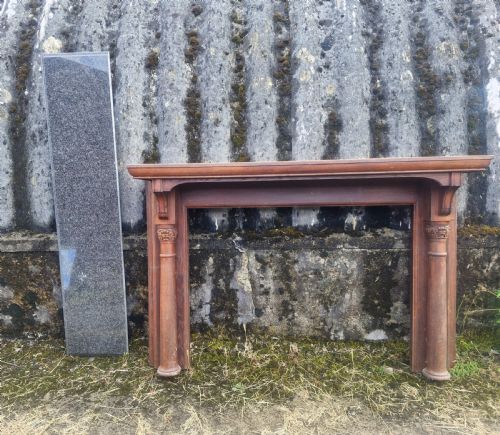
A carved oak fireplace gathering covers a diverse domestic group, ranging from structural surrounds and overmantel mirrors to practical fireside accessories. Buyers browsing this selection meet everything from substantial Edwardian and Victorian fire surrounds to portable foot warmers, coal boxes and fireside screens.
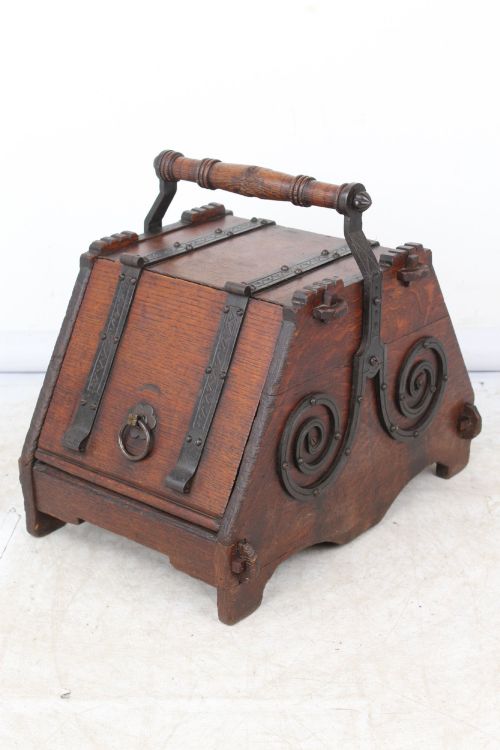
The objects stem from various periods, stretching from the seventeenth century through to the early twentieth century. Forms include Arts and Crafts purdoniums, Gothic Revival coal scuttles, and rustic country log boxes alongside large mirrors designed to sit above the mantelpiece.
Origins span English country houses, Dutch workshops and Frisian folk art traditions. Each object relates directly to the hearth, combining utility with decorative carving, metalwork and textiles.
How they were made
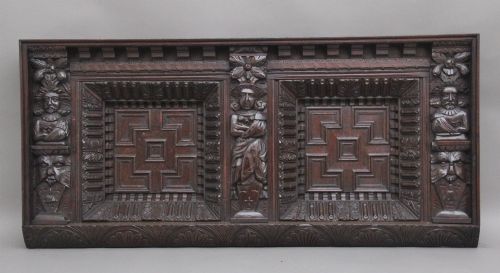
Makers relied primarily on solid oak and timber frames, enhanced through chip carving, relief work and panel construction. Metal elements such as brass, wrought iron and copper appear frequently as mounts, liners, shovels and hinges.
Additional materials include glass for mirror plates, leather, granite tops, and textile panels featuring silk embroidery or figural tapestry. Surface treatments range from polished timber and parcel-gilt details to partly painted finishes and limed oak treatments.
Carved Oak Fireplace Retail Price Guide 2026
Typical asking prices for carved oak fireplace among the pieces listed under this phrase on Sellingantiques today, from the lower quarter to the upper quarter. They describe what is for sale here now, not the wider market.
Listings feature oak combined with brass, wrought iron, granite and textile panels across items dating from the seventeenth century to the twentieth century.
What varies in quality
The depth and clarity of the carving distinguish standard utilitarian items from exceptional pieces. Crisp chip carving, well-defined figural elements and balanced proportions indicate superior craftsmanship.
The preservation of original components, such as brass liners in coal scuttles, glass plates in overmantel mirrors, and matching shovels, influences the overall integrity of the object.
Christopher Dresser·Liberty and Co·Old Charm
The Carved Oak Fireplace Glossary
- Purdonium
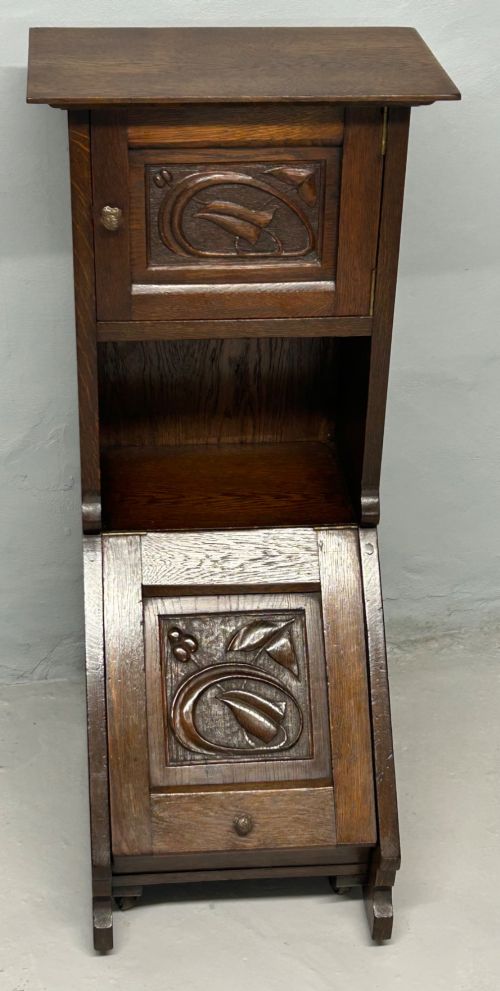
- A specialised coal box or scuttle, typically featuring a sloping front door and a built-in compartment for a shovel. These containers kept fuel tidy beside the hearth in Edwardian and Victorian homes.
- Overmantel mirror
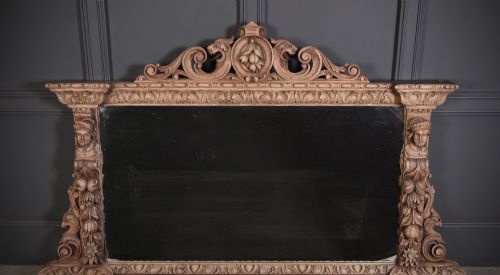
- A large looking glass designed to hang directly above the fireplace mantel. They often incorporate carved oak frames, multiple mirror plates and architectural pediments.
- Club fender
- A low, padded seat placed around the hearth, combining metal frames with leather or upholstered cushions. They provide comfortable seating close to the fire.
- Foot stove
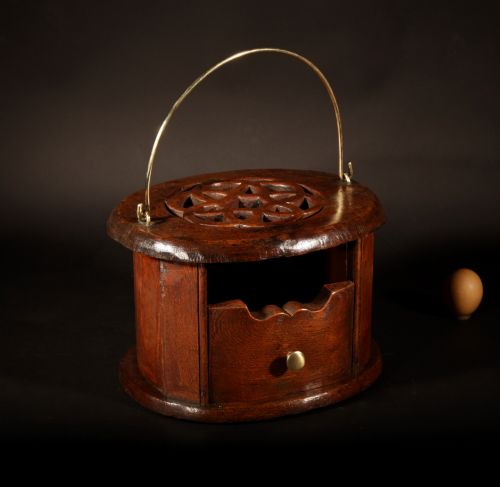
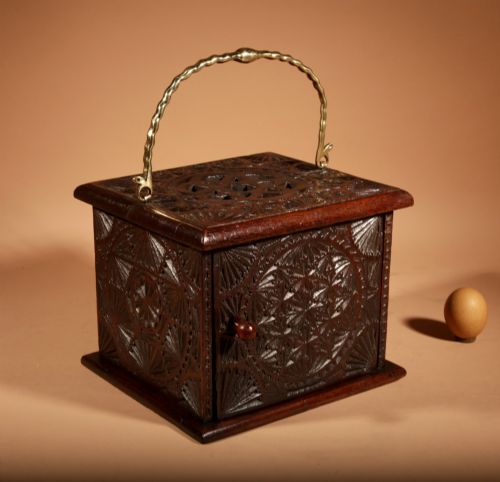
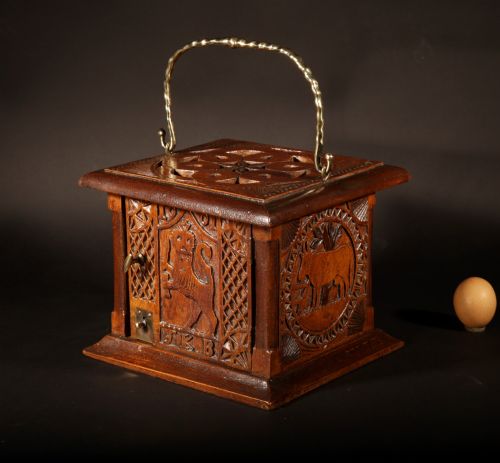
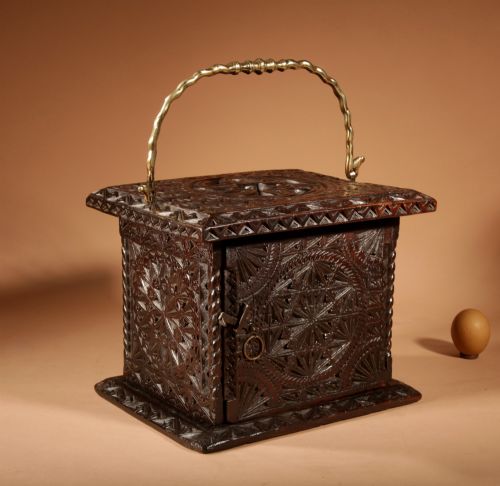
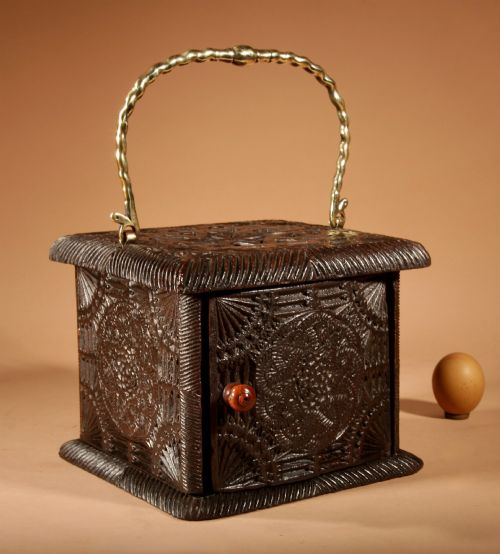
- A small wooden box with pierced holes, designed to hold hot embers inside a metal liner. People placed their feet on top of these portable heaters to stay warm in cold rooms.
- Fire screen
- A movable decorative panel placed in front of the fireplace when the fire was unlit. They frequently display needlework, tapestry or embossed brass.
Carved Oak Fireplace: Frequently Asked Questions
What is a purdonium?
A purdonium is an enclosed wooden coal box designed to hold fuel neatly beside the hearth. They usually include a hinged drop-down front and an internal metal liner.
Victorian and Edwardian versions often incorporate brass handles and matching coal shovels, combining practical storage with decorative cabinetwork.
How do I date a carved oak overmantel?
Dating relies on stylistic clues, mirror plate construction and timber characteristics. Gothic Revival and Victorian examples frequently feature heavy architectural moulding and parcel-gilt accents.
Earlier seventeenth and eighteenth-century pieces display simpler hand-carved panels and pegged joints reflecting period joinery techniques.
What is a foot stove used for?
A foot stove is a small pierced wooden box containing a metal pan for hot coals. Historical households used them to warm feet during long periods sitting in unheated rooms.
Many surviving examples feature intricate chip carving or folk art motifs across the top surface.
Are club fenders adjustable?
Certain club fenders feature an engineered mechanism allowing the width to be altered to fit different hearth dimensions. They combine brass or iron framing with upholstered leather seats.
This adaptability made them popular for various domestic room layouts across the late nineteenth and early twentieth centuries.