
Carved Oak Dining Seating
Carved oak dining seating encompasses robust chairs, benches and suites shaped in the seventeenth, nineteenth and early twentieth centuries for daily gatherings.
Carved Oak Dining Seating
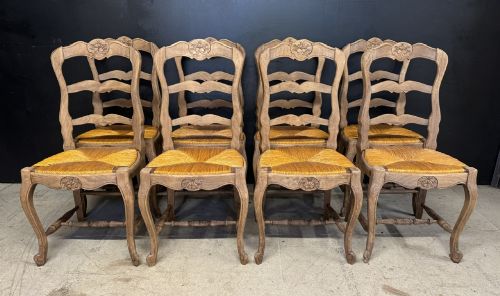
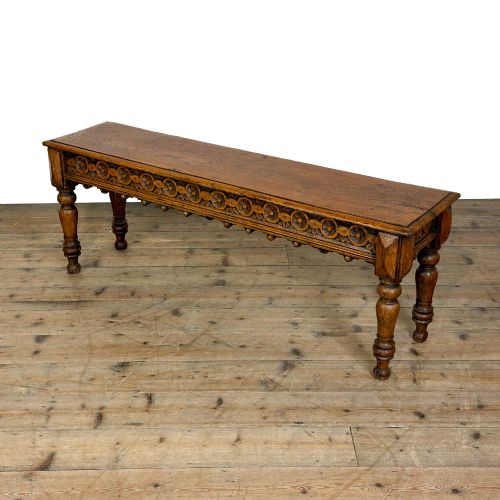
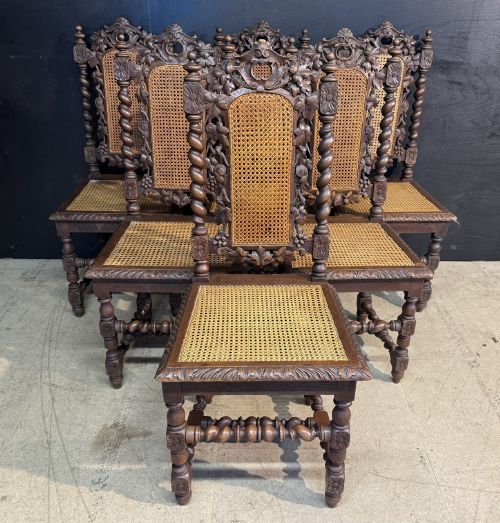
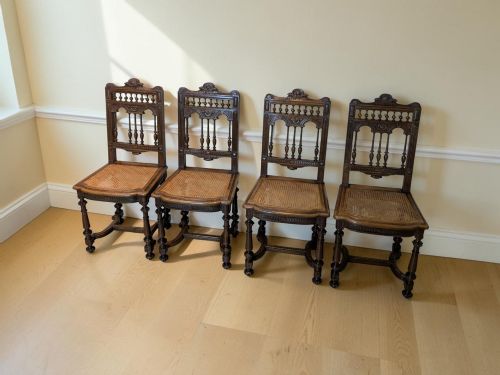
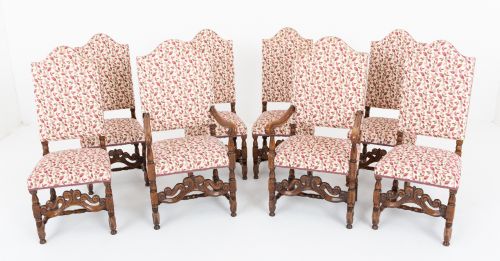
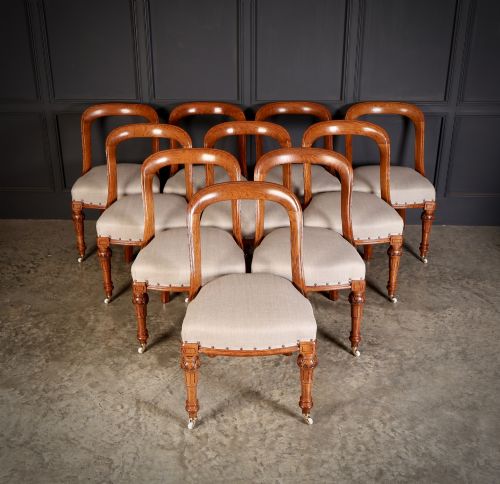
Carved oak dining seating covers dining chairs, armchairs, benches, and hall chairs produced across the seventeenth, nineteenth, and early twentieth centuries. Buyers frequently encounter sets of four, six, eight, ten, or twelve chairs alongside single benches and matched pairs.
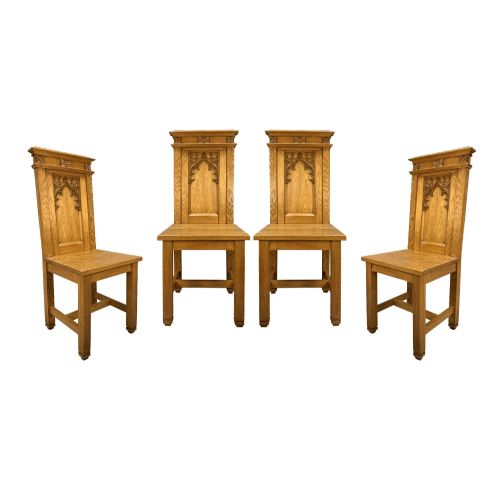
The selection spans formal dining sets, kitchen chairs, windsor forms, and parlour suites originating in English, Scottish, Irish, and continental workshops. Revival movements strongly influence these pieces, drawing heavily on jacobean, gothic, and arts and crafts design vocabularies.
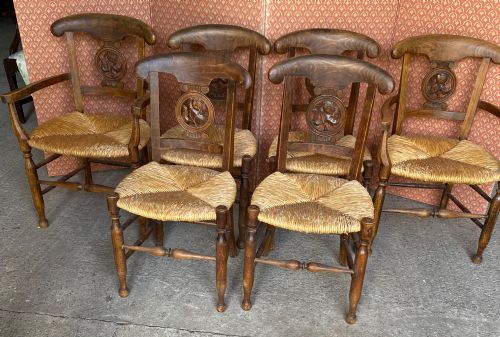
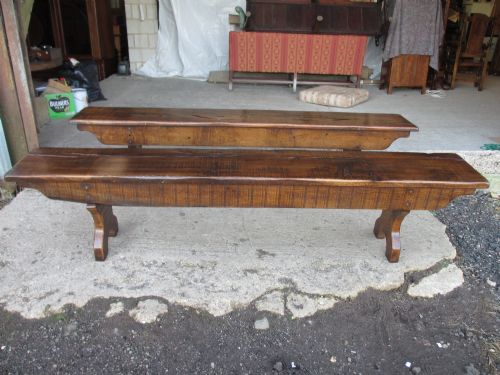
Earlier seventeenth-century examples sit alongside nineteenth-century gothic revival interpretations and Edwardian production. Dining seating ranges from high-backed carved chairs to low country kitchen seating fitted with leather, fabric, or solid timber seats.
Materials and Technique
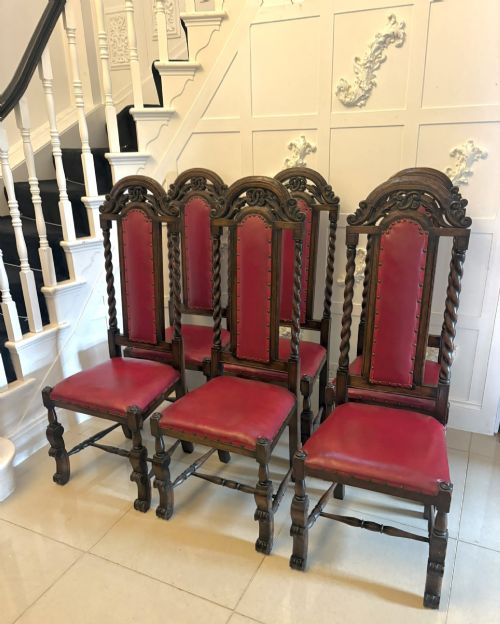
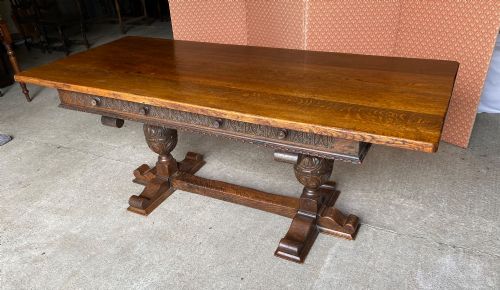
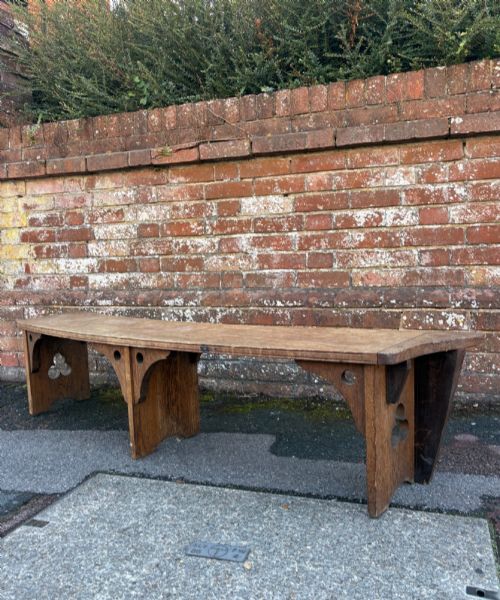
Carpenters utilised solid oak, often complemented by secondary timbers such as elm and beech, constructing frames through traditional joinery methods. Surface decoration relies on hand-carved details, trefoil supports, twist legs, and shaped trestle ends.
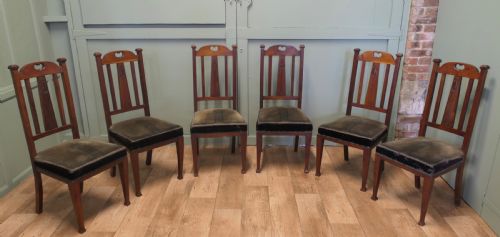
Upholstery materials include brass studs, leather, velvet, and various woven fabrics fixed to seats and backs. Heraldic crests, armorial carvings, and stamped maker details occasionally punctuate the structural woodwork.
Upholstered elements incorporate diverse materials including brass studs, red leather, velvet, and heraldic embroidered fabrics.
Judging Quality
Quality rests upon the crispness of the hand-carving and the structural integrity of the timber framework. Coarser production utilises simpler turned components and shallower relief, whereas superior sets demonstrate dense grain selection and deeply sculpted ornament.
Consistency across larger sets distinguishes finer dining seating from assembled matches. Original upholstery details, period leather, and stamped maker attribution elevate individual pieces above standard utilitarian production.
Strahan
The Carved Oak Dining Seating Glossary
- Gothic Revival
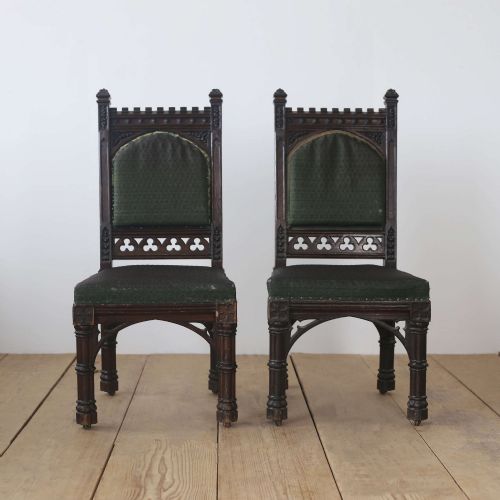
- An architectural and decorative style utilising pointed arches, trefoils, and ecclesiastical motifs. Furniture in this tradition displays strong vertical lines and solemn carved details.
- Windsor Chair
- A seating form constructed with a solid wooden seat into which legs and spindle backs are wedged directly. Regional variations include high backs and lyre-shaped splats.
- Derbyshire Chair
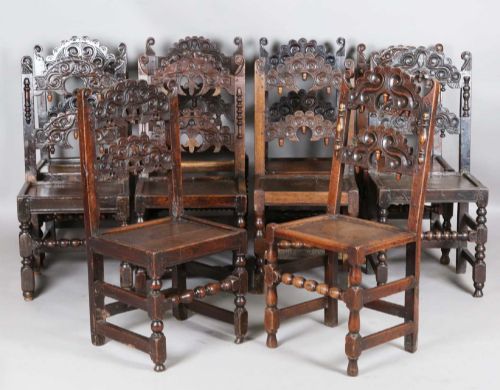
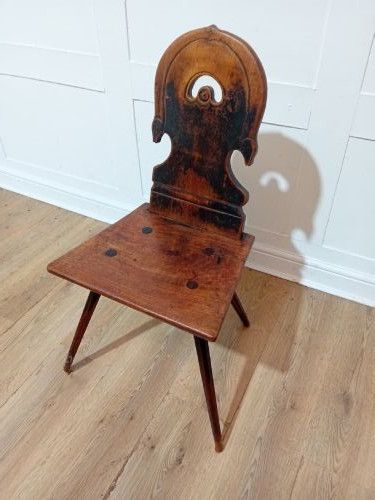
- A seventeenth-century style of oak chair characterised by open carved crest rails and pierced back panels. Originals and later revivals feature substantial upright posts.
- Trefoil
- A three-lobed decorative ornamentation resembling clover leaves. Carvers frequently applied this motif to bench supports and chair backs during gothic revival periods.
Carved Oak Dining Seating: Frequently Asked Questions
How do I care for antique oak dining seats?
Maintain the timber by applying traditional beeswax sparingly to nourish the grain without attracting dust. Avoid placing chairs near direct heat sources to prevent the oak from splitting.
Protect leather and fabric upholstery by keeping pieces out of direct sunlight. Professional cleaning preserves delicate textiles and studded trim.
Are these chairs comfortable for daily dining?
Many nineteenth and twentieth century dining chairs provide sturdy support, though seat heights and depths reflect earlier domestic ergonomics. High-backed gothic and jacobean styles encourage upright posture during meals.
Armchairs and upholstered versions offer softer seating for extended dining. Checking seat depths ensures compatibility with modern dining tables.
How do I date carved oak seating?
Examine the tool marks, construction joints, and fastener types visible beneath and behind the frame. Hand-cut joinery and dense oak patination typically indicate earlier seventeenth-century origins or faithful nineteenth-century revival work.
Stylistic cues such as arts and crafts simplicity or heavy Victorian gothic moulding narrow down the production era. Maker stamps and upholstery remnants also help establish a reliable timeline.
Can I mix different oak chair styles?
Combining matched pairs or blending similar revival periods around a table creates an eclectic dining arrangement. Matching timber tones and shared design motifs like twist legs or carved crests unify mixed sets.
Keeping seat heights consistent ensures guests sit comfortably at an even level. Armchairs work well placed at the head and foot of a table alongside side chairs.