
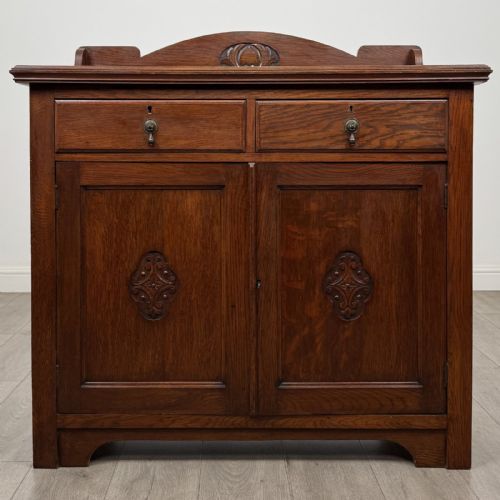
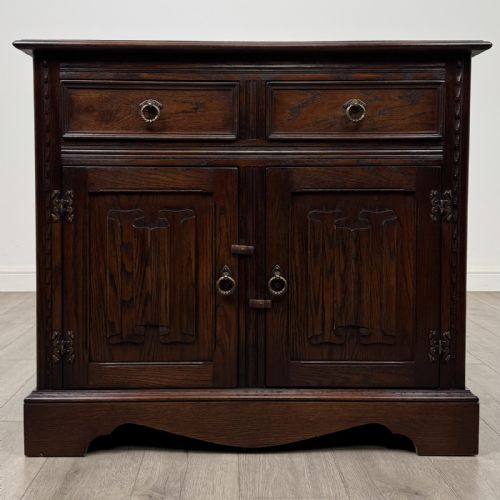
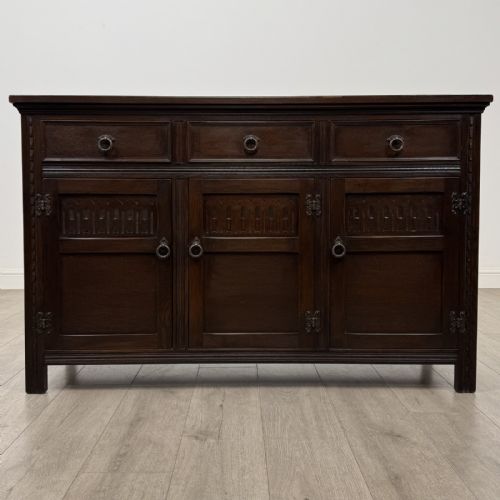
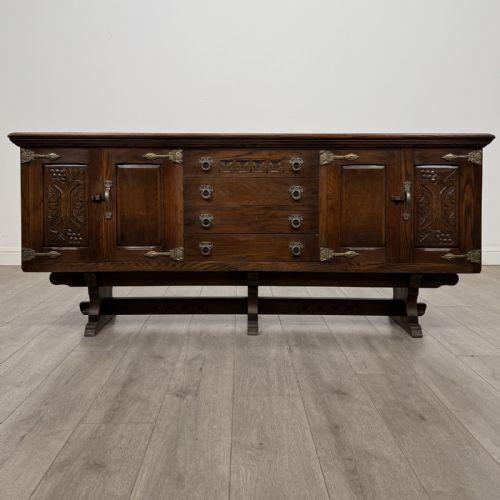
Carved Oak Buffet Credenza
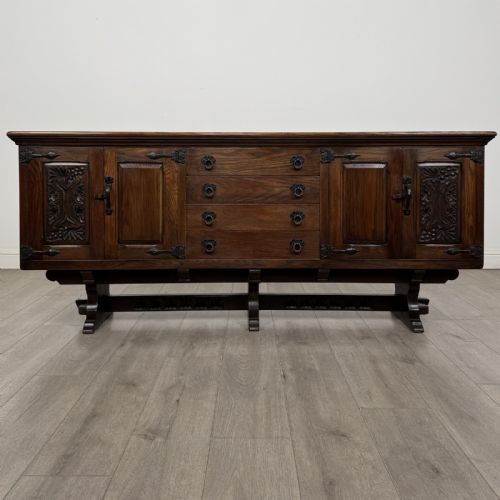
A carved oak buffet credenza brings robust timber and substantial storage into a room, offering deep drawers and heavy panelled doors.
Carved Oak Buffet Credenza
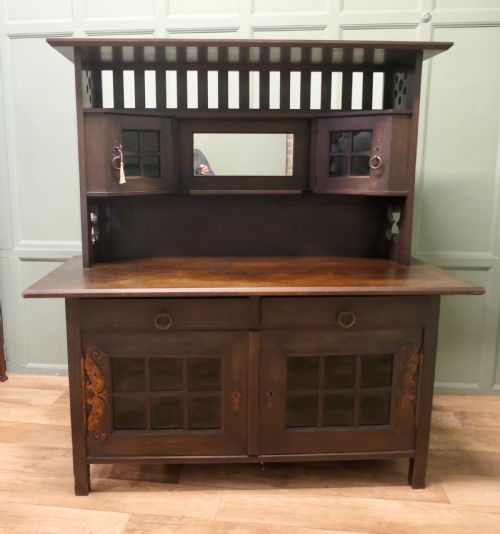
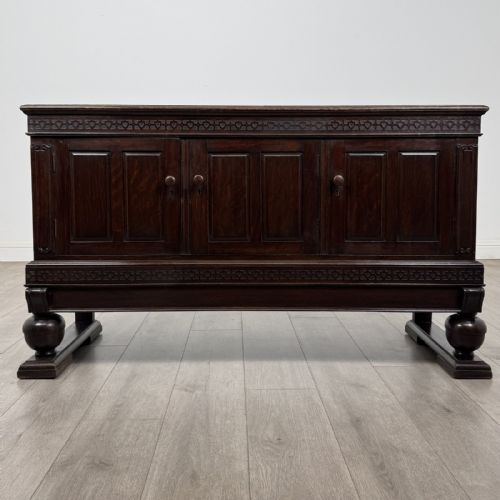
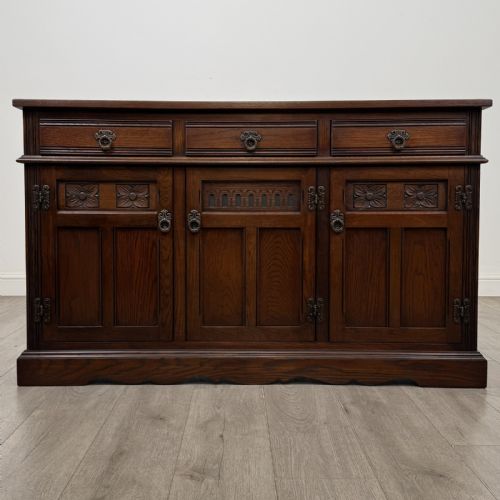
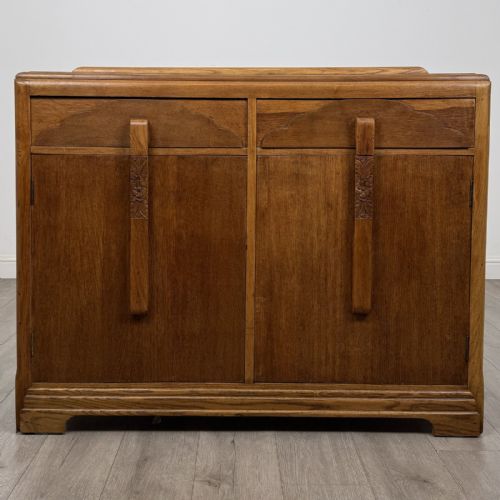
When searching for a carved oak buffet credenza, a buyer encounters heavy timber storage furniture spanning several centuries, including Victorian, Edwardian, and nineteenth-century examples. These pieces serve primarily as substantial dining room or hallway storage, combining cupboards, drawers, and sometimes raised display galleries.
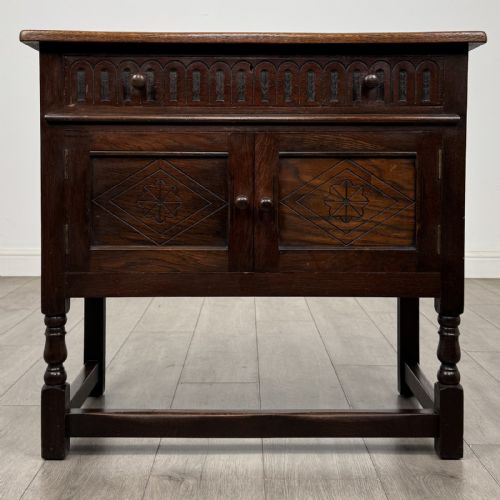
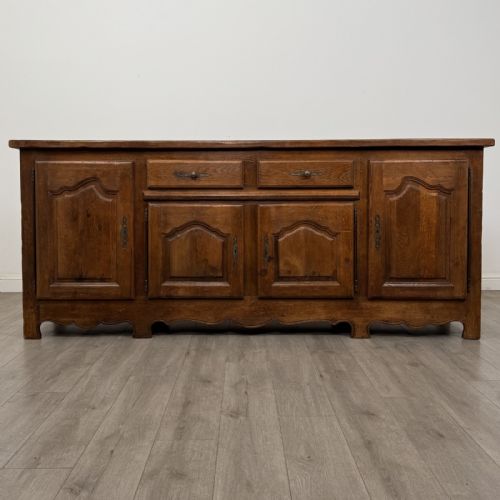
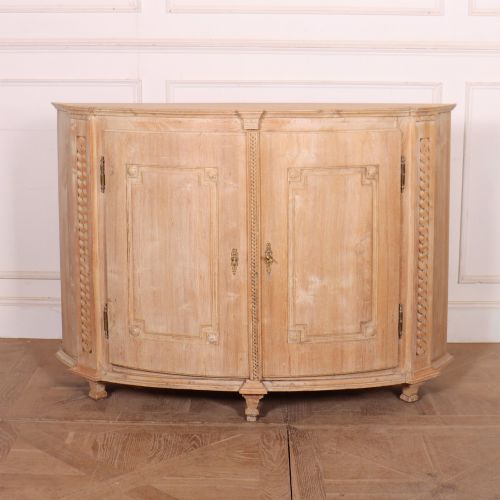
The selection here draws heavily upon revival styles such as Jacobean, Gothic, and Arts and Crafts movements, alongside French provincial forms like enfilades and hunting cabinets. Sideboards and dresser bases dominate the inventory, offering practical storage solutions rooted in traditional craftsmanship.
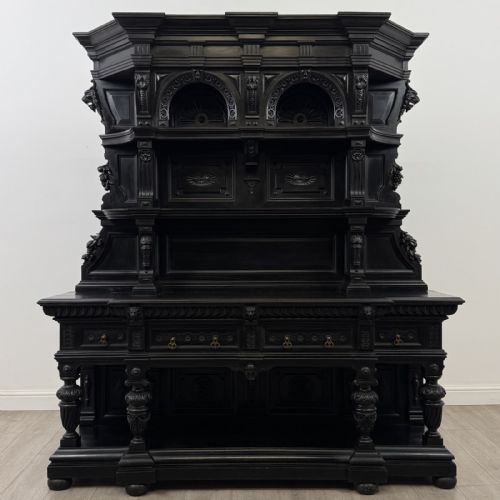
Most items rely on solid oak construction, often enhanced by specialised timbers like pollard oak or ebonised wood details. Metal hardware in brass and iron, alongside mirror backs and glass panels, frequently complement the heavy wooden structures.
Materials and Construction
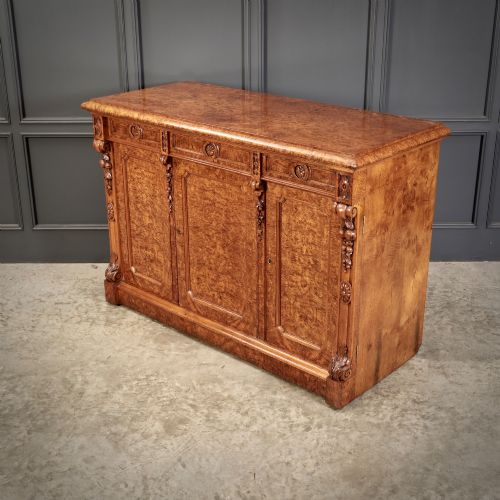
Makers utilised solid oak as the primary structural and decorative medium, often selecting figured pollard oak for distinct grain patterns and visual depth. Ebonised wood and bleached finishes appear across various pieces to alter the natural tone of the timber.
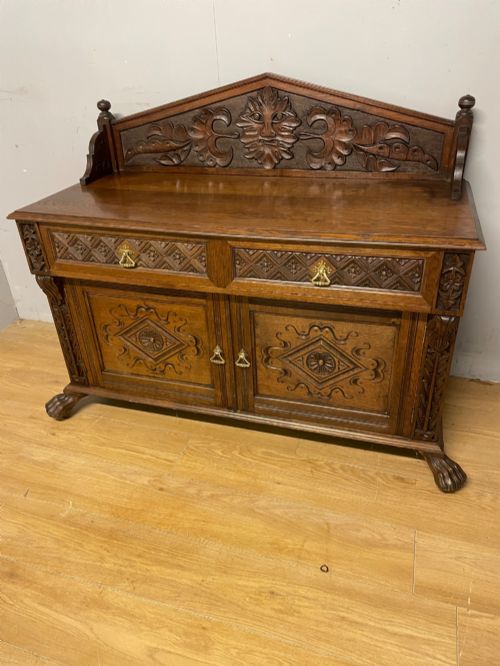
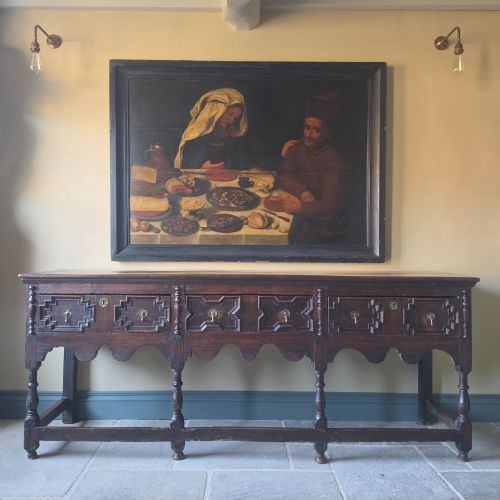
Construction techniques rely on traditional joinery to support large frames, heavy doors, and structural stretcher bases. Carved detailing, including linenfold panels, lion masks, and green man motifs, punctuates the flat surfaces alongside applied geometric mouldings.
Metal fittings such as brass handles and iron hardware provide functional contrast to the dark timber surfaces, while integrated mirrors and marble tops add weight and reflective texture to later nineteenth-century variations.
Listings feature oak alongside pollard oak, ebonised wood, and marble tops across styles ranging from seventeenth-century dressers to Art Deco sideboards.
Evaluating the Range
The standard of carving defines much of the distinction between standard production and exceptional examples, where deep relief work and deliberate hand-tooling create sharp definition in figures and foliage. Pieces bearing specific workshop attribution demonstrate superior joinery and integrated design cohesion.
The choice of secondary materials, such as figured pollard oak veneers or substantial marble slab tops, separates standard utilitarian storage from high-status decorative furniture. Hardware integration and the retention of original brass handles further influence the integrity of each item.
Shapland and Petter·Charles Dudouyt
The Carved Oak Buffet Credenza Glossary
- Credenza
- A sideboard or buffet cabinet typically used for storing dining china and serving food. These pieces sit low to the ground and often feature extensive door storage.
- Enfilade
- A long cabinet or sideboard of French origin designed to stand against a wall, frequently incorporating multiple doors and a stone or marble top.
- Linenfold
- A style of wood carving that imitates folded linen, commonly found on fifteenth-century and later revival panels.
- Pollard oak
- Timber taken from trees that have been pollarded, producing a highly figured and speckled grain pattern prized for cabinetwork.
- Stretcher base
- A system of horizontal wooden bars connecting the lower legs of a table or cabinet to provide structural stability.
Carved Oak Buffet Credenza: Frequently Asked Questions
What is a carved oak buffet credenza used for?
These pieces function as primary storage units for dining rooms, holding tableware, linens, and serving dishes within enclosed cupboards and drawers.
They also provide a surface for displaying decorative objects, serving food during gatherings, or mounting a mirror back for visual depth.
How do I date an oak sideboard?
Dating relies on identifying stylistic revival markers, construction methods, and hardware types that correspond to periods like the Victorian era or the 1920s.
Details such as ebonised accents, geometric panels, or specific carved motifs like the green man point towards particular decades of manufacture.
Where were these cabinets made?
The inventory includes items originating from British workshops as well as continental European pieces, notably French provincial enfilades and hunting cabinets.
Regional preferences dictate the decorative vocabulary, shifting between English Gothic revival and continental carved styles.
How do I care for antique oak furniture?
Maintain the timber by keeping it away from direct heat sources and sudden humidity changes to prevent the solid wood from splitting or warping.
Apply a traditional wax polish occasionally to nourish the grain and protect the surface finish from everyday wear.