
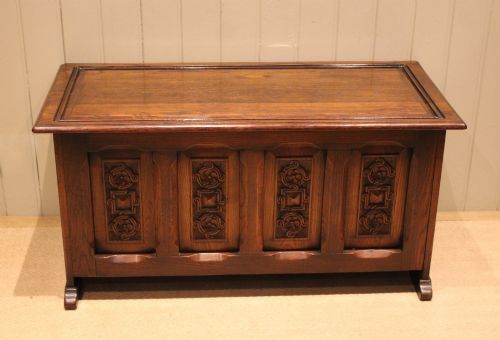
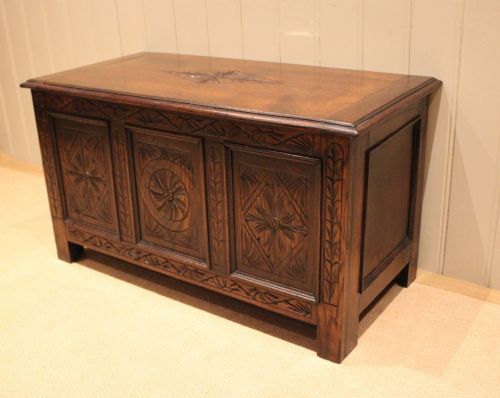
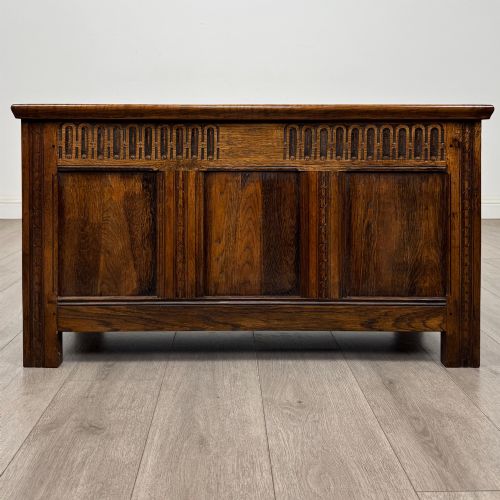
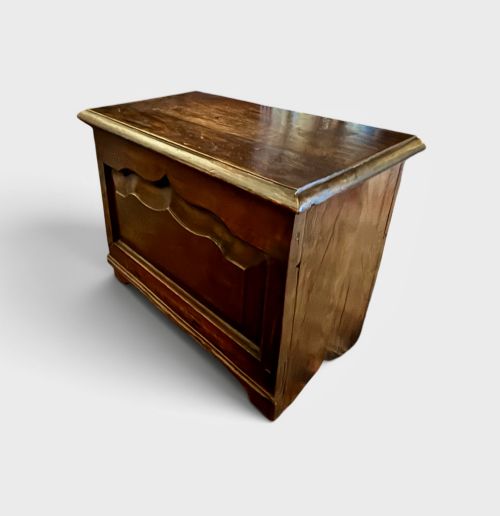
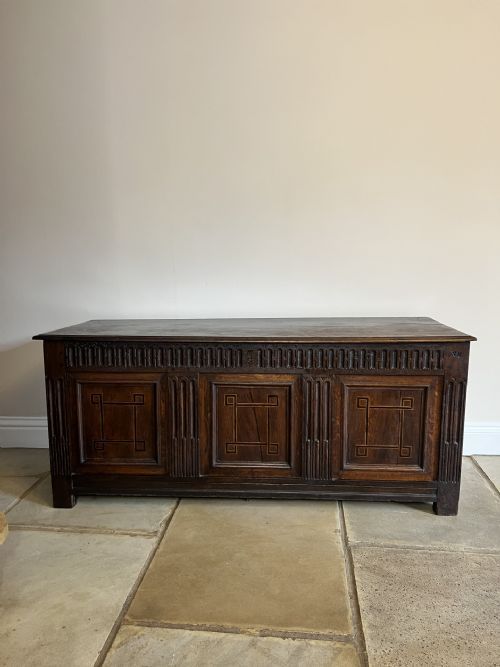

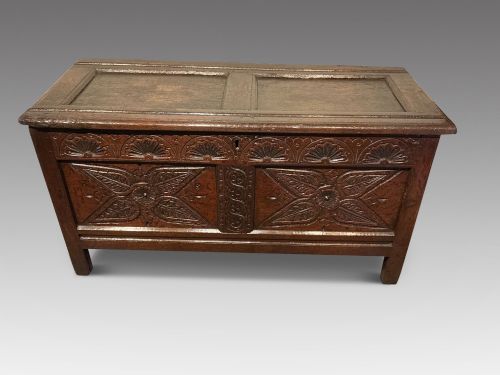
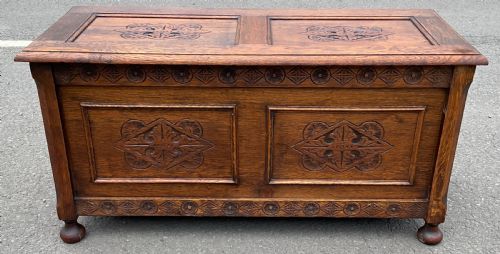
Carved Oak Bedding Box
A carved oak bedding box is a sturdy timber chest designed for household storage, offering centuries of traditional craftsmanship and enduring utility.
Carved Oak Bedding Box
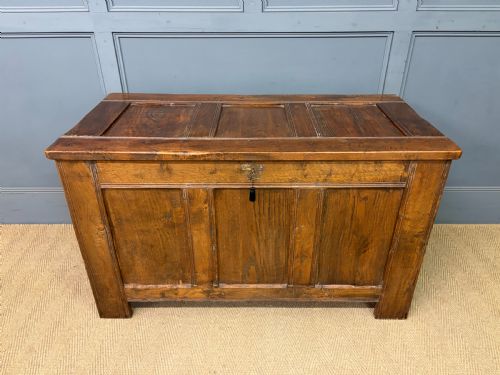
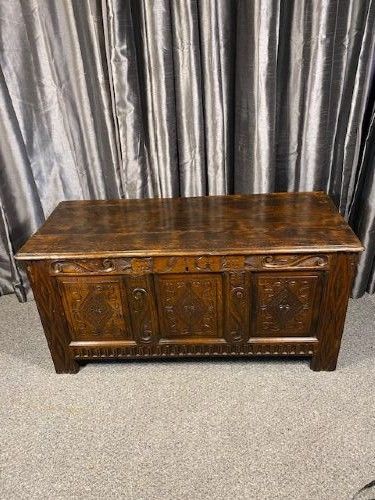
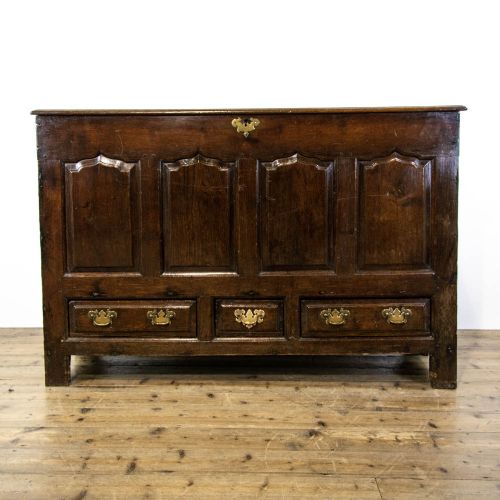
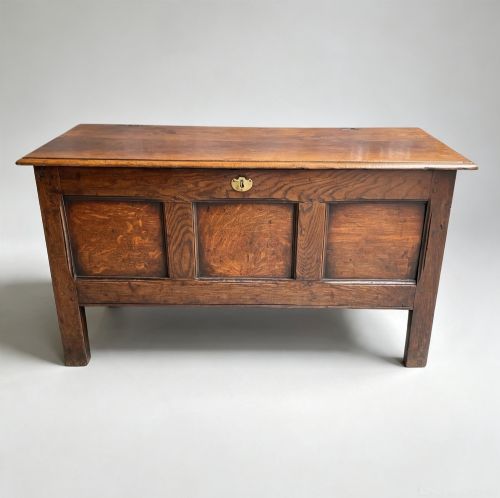
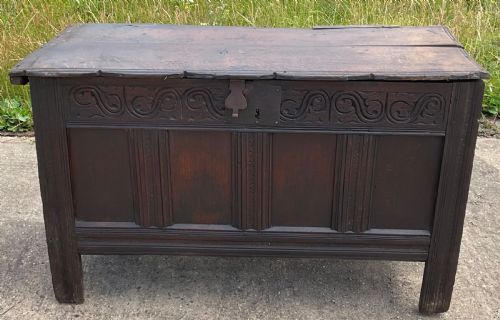
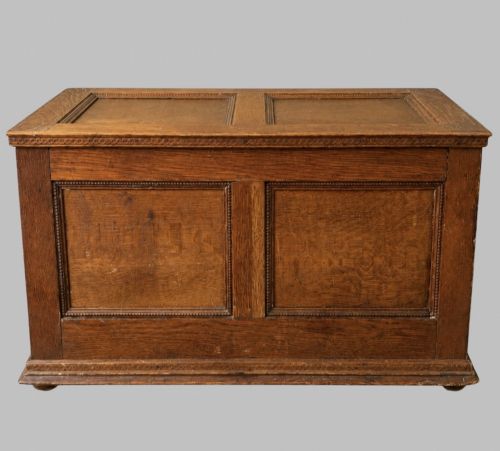
When you search for a carved oak bedding box, you are looking at substantial timber storage vessels that served British households for generations. These pieces appear in forms such as coffers, blanket chests, kists, and mule chests.
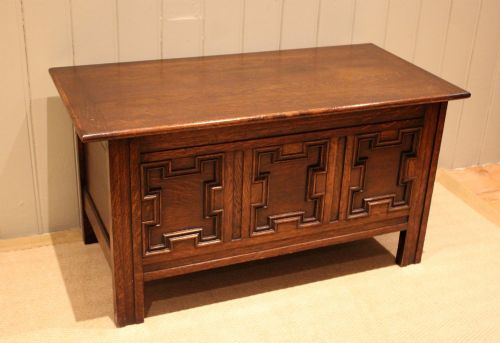
The versions you are most likely to meet on this page span from the seventeenth century through the eighteenth century, alongside later revival pieces from the early twentieth century. They range from plain panelled construction to heavily carved examples with regional British characteristics.
Materials and construction methods
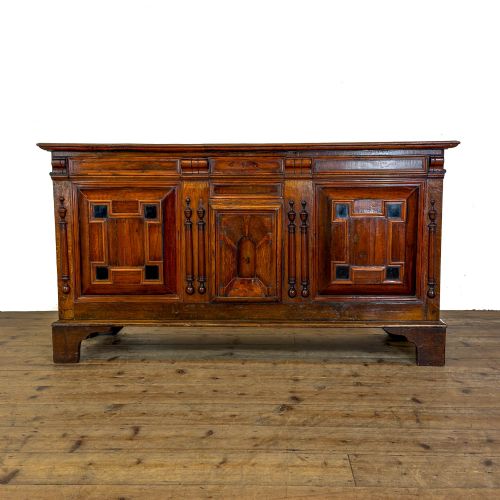
Makers built these chests primarily from solid oak, utilising joined and panelled construction methods to allow the timber to move naturally with changes in humidity. Iron and brass fittings, including hinges and locks, secure the lids and add functional detail.
Surface decoration relies heavily on hand carving, sometimes accompanied by wood inlay and marquetry or ebonised wood highlights. These techniques transformed plain storage trunks into decorative furniture for the home.
Many early chests still carry the faint scent of old wool and dried herbs tucked away by generations past.
Evaluating craftsmanship and integrity
The quality of a carved oak bedding box rests on the crispness and depth of the hand carving, the weight of the solid timber, and the integrity of the original construction. Earlier pieces often display tighter grain and more complex panel assembly than later revival iterations.
The survival of original hardware, feet, and lid boards elevates a piece, distinguishing items that retain their historical fabric from those heavily altered or restored over centuries of use.
The Carved Oak Bedding Box Glossary
- Coffer
- A heavy wooden chest traditionally used for storing valuables, documents, or textiles. These sturdy containers formed a central part of early household furnishings.
- Mule chest
- A storage chest featuring one or more drawers beneath the main compartment. This form bridges the traditional coffer and the modern chest of drawers.
- Kist
- A regional term of Scandinavian origin used primarily in northern Britain for a wooden storage chest. They often served practical domestic storage needs in rural homes.
- Marquetry
- Decorative patterns formed by fitting together thin pieces of wood veneer. This technique creates intricate surface designs on select panels.
- Joined work
- Furniture construction utilising mortise and tenon joints secured with wooden pegs. This method creates a rigid frame capable of holding large panels.
Carved Oak Bedding Box: Frequently Asked Questions
What is a carved oak bedding box used for?
These pieces served historically to store household textiles, blankets, linen, and personal valuables safely away from dampness and pests.
Today, they function well in modern interiors as end-of-bed storage, coffee tables, or hallway blanket chests while maintaining traditional character.
How do I tell seventeenth-century pieces apart from later revivals?
Seventeenth-century examples show hand- cleft and pit-sawn timber marks, vernacular construction methods, and period-specific joinery with wooden pegs. Surface wear and patination accumulate naturally over centuries.
Revival pieces from the early twentieth century often display mechanical saw marks, uniform timber thickness, and lighter overall weight despite adopting older styles.
What is the difference between a coffer and a mule chest?
A standard coffer opens only from the top lid and consists of a single deep compartment for storing bulky items.
A mule chest incorporates one or more drawers beneath the main storage box, offering easier access to smaller articles without lifting the lid.
How should I care for an antique oak chest?
Keep the wood away from direct heat sources and sudden temperature shifts to prevent the solid oak panels from splitting or warping.
Apply a microcrystalline wax occasionally to nourish the timber and maintain the natural lustre of the aged surface.