

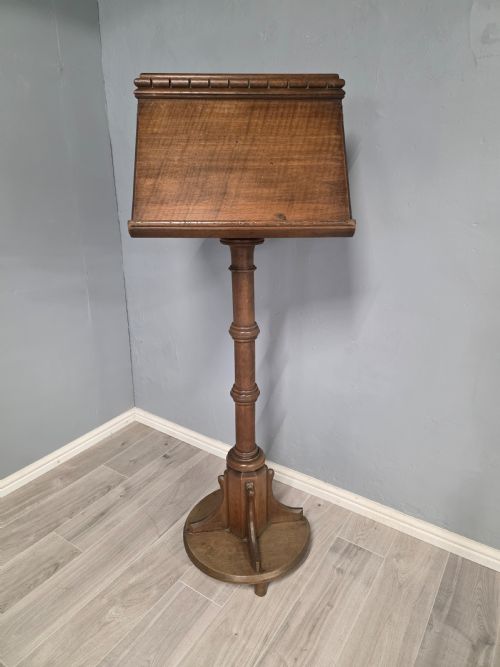


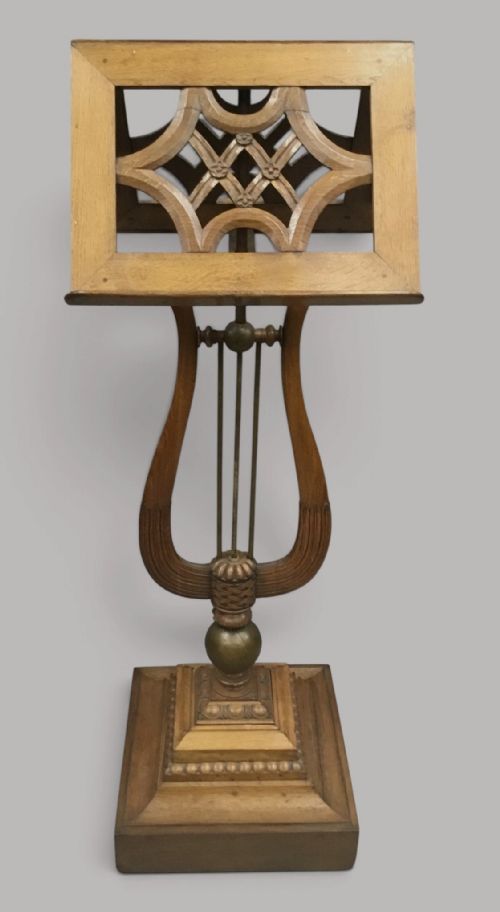


Carved Music Desk
A carved music desk is an adjustable stand or lectern designed to hold scores securely while musicians play.
Carved Music Desk
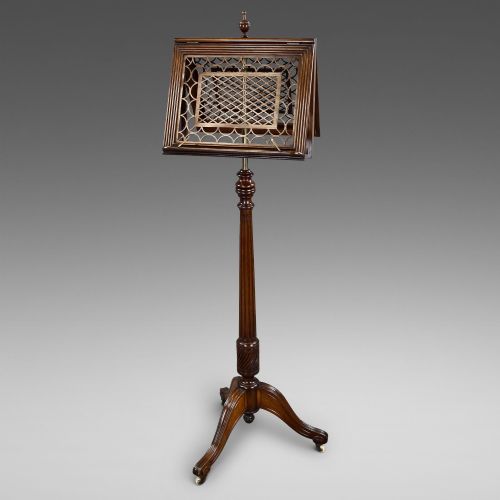
A carved music desk appears in various nineteenth-century guises, most commonly as a mahogany or rosewood duet stand intended for two players sharing a score. These pieces served domestic drawing rooms and larger musical salons alike.
The selection ranges from tripod music stands and duet stands to church lecterns, incorporating styles from George IV to Victorian Gothic Revival. Many examples feature adjustable mechanisms to suit the seated or standing performer.
How they were made
Cabinet makers utilised dense timbers such as mahogany, rosewood, walnut, and oak to construct these sturdy supports, often employing brass for adjustable brackets and fittings. F数据显示
Carving was applied to columns, tripod bases, and fretted music desks by hand, showing detailed floral or Gothic motifs depending on the prevailing style.
Carved Music Desk Retail Price Guide 2026
Typical asking prices for carved music desk among the pieces listed under this phrase on Sellingantiques today, from the lower quarter to the upper quarter. They describe what is for sale here now, not the wider market.
What varies in quality
The sophistication of the carved detail and the weight of the timber dictate the upper tier of quality, distinguishing standard utility stands from exhibition pieces. Finer models incorporate burr veneers, intricate fretwork, and solid brass adjustments that hold position without slipping.
Stability in the tripod base and the precision of the ratcheted desk mechanism separate superior examples from simpler iterations.
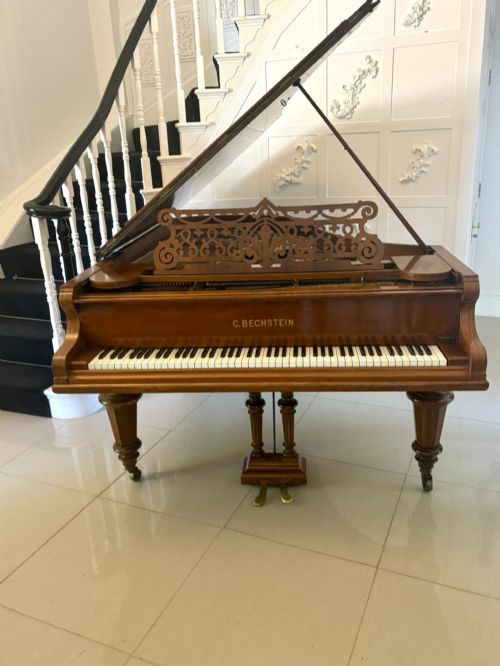
C.Bechstein
The Carved Music Desk Glossary
- Duet stand
- A music stand wide enough to accommodate two musicians reading from the same sheet of music. These typically feature adjustable double desks.
- Lectern
- A tall stand with a slanted top designed to hold a book or scores for a standing reader. They often appear in church settings or grand libraries.
- Tripod base
- A three-legged support structure commonly utilised on nineteenth-century music stands to ensure stability on uneven floors. These bases frequently terminate in carved scroll or claw feet.
- Fretted
- Woodwork pierced with decorative open patterns, often seen on the music rests of nineteenth-century stands to reduce weight and add ornamentation.
Carved Music Desk: Frequently Asked Questions
What is a carved music desk used for?
These pieces support sheet music or books at a readable angle for musicians and readers in a domestic or institutional setting. Their adjustable height and tilt accommodate different seating positions and lighting.
They function as both practical furniture and decorative objects in period interiors, often placed near pianos or in music rooms.
How do I date a music stand?
Dating relies on identifying stylistic markers such as Victorian Gothic Revival motifs, George IV proportions, or William IV turnings. The choice of timbers, such as rosewood or gonçalo alves, also points to specific nineteenth-century decades.
Hardware examination provides further clues, as brass mechanisms evolved in casting technique and complexity throughout the eighteen-hundreds.
Are duet stands different from normal stands?
Duet stands possess wider surfaces or dual desks designed specifically for two people reading a shared musical score. They require sturdier base construction to balance the extended width.
Single music stands focus on a single user and often utilise a lighter tripod footprint.
How do I care for antique timber stands?
Keep wooden stands away from direct sunlight and strong heat sources to prevent the rosewood, mahogany, or walnut from drying and splitting. Regular dusting with a dry cloth preserves the polished finish.
Avoid over-tightening adjustable brass screws and moving parts to protect the original nineteenth-century threads and joints.