




Carved Marble Woman
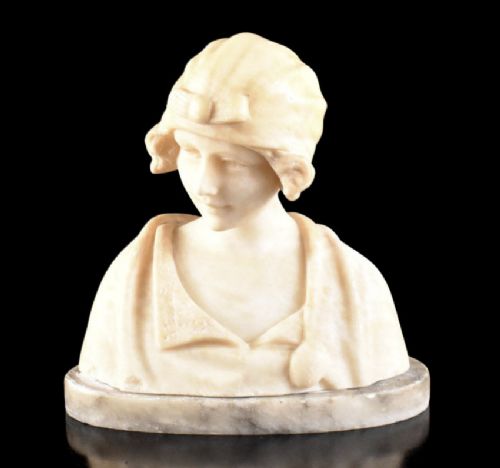
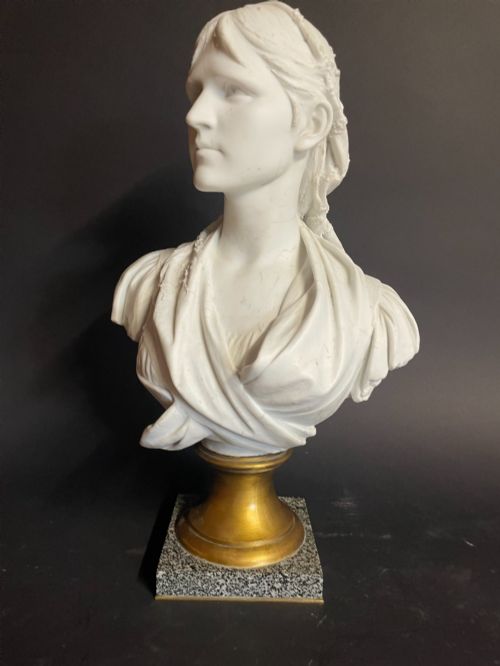
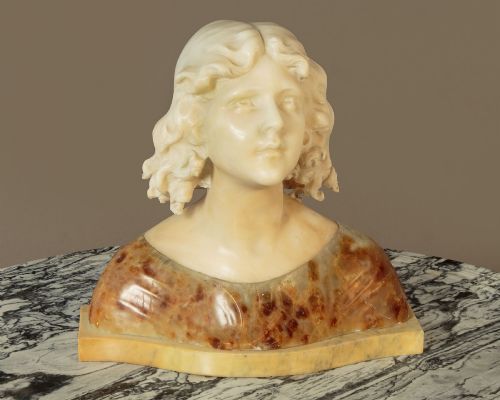
These carved marble woman sculptures and busts bring classical poise and detailed stone work straight into a room.
Carved Marble Woman
A carved marble woman search reveals a striking range of sculptural forms, from classical figures to nineteenth-century portraits. Buyers frequently encounter nineteenth-century Italian and French examples, capturing female subjects in marble and alabaster.
The selection on this page spans distinct historical periods, including eighteenth-century oil paintings alongside nineteenth-century and early twentieth-century sculptures. Busts of young women, reclining nudes, and veiled figures form the core of what is available.
Stylistic influences run from Neoclassical and Victorian Neoclassical through to Belle Epoque and Art Nouveau. Pieces range from large sculptural groups to intimate depictions of female figures with attributes like harps or wheatsheaves.
Materials and techniques
Makers shaped these pieces primarily from marble and alabaster, frequently mounting sculptural works on contrasting bases such as Vert de Mer marble. Artisans utilised hand-carving techniques to achieve fine details like veiling, drapery, and hair.
Certain listings incorporate mixed media or supplementary elements, pairing carved stone with gilded wood, brass, and granite details. Painters working in oil on canvas also captured female subjects alongside carved stone furniture.
Carved Marble Woman Retail Price Guide 2026
Typical asking prices for carved marble woman among the pieces listed under this phrase on Sellingantiques today, from the lower quarter to the upper quarter. They describe what is for sale here now, not the wider market.
Listings span periods from the eighteenth century to the early twentieth century, incorporating marble, alabaster, oil on canvas, gilded wood, and brass.
Distinctions in quality
The choice and preparation of the material also dictate the standard of a piece, seen in the translucency of the alabaster and the clean joinery of multi-coloured marble bases. Signature work by recorded makers elevates the standing of a sculpture.
Pugi·Greuze·Sir Godfrey Kneller
The Carved Marble Woman Glossary
- Alabaster
- A fine-grained stone, softer than marble, often used for nineteenth-century and turn-of-the-century sculptural figures. Its slight translucency makes it particularly suited for luminous skin tones.
- Carrara marble
- A type of white or blue-grey marble from the city of Carrara in Italy, prized by sculptors for its uniform grain and workability.
- Vert de Mer
- A dark green decorative marble often utilised for sculptural bases and pedestals, providing a strong visual contrast to white alabaster or marble figures.
- Neoclassical
- A style spanning the eighteenth and nineteenth centuries that draws inspiration from the art and culture of classical antiquity.
- Bust
- A sculpted or painted representation of a person from the chest or shoulders up, focusing attention on facial expression and headwear.
Carved Marble Woman: Frequently Asked Questions
What is a carved marble woman sculpture?
These pieces comprise three-dimensional representations of female figures carved from stone materials such as marble and alabaster. They range from small busts to large statues produced across the nineteenth and early twentieth centuries.
The selection includes mythological figures, allegorical representations like a female holding a wheatsheaf, and portrait studies of named or anonymous sitters.
How do I identify a nineteenth-century piece?
Nineteenth-century sculptures often reflect historical revival styles such as Neoclassical, Belle Epoque, or Victorian Neoclassical. Examining the clothing, hairstyle, and sculptural treatment helps indicate the period.
Signatures or inscriptions carved into the stone or base can also point directly to the maker and the active era of production.
Where were these alabaster sculptures made?
The evidence points strongly to French and Italian workshops active during the nineteenth and early twentieth centuries. Many pieces reflect the tastes of the Belle Epoque and Art Nouveau movements popular in Western Europe.
Italian studios specialised in Carrara marble production, while French makers frequently worked with alabaster for reclining figures and genre scenes.
How should I display a marble or alabaster bust?
These heavy stone objects require stable surfaces such as strong side tables, dedicated pedestals, or robust architectural consoles. Placing them away from high-traffic areas prevents accidental knocks.
Care should be taken with alabaster in particular, as it is a softer stone that benefits from stable indoor humidity and gentle dusting with a dry cloth.