

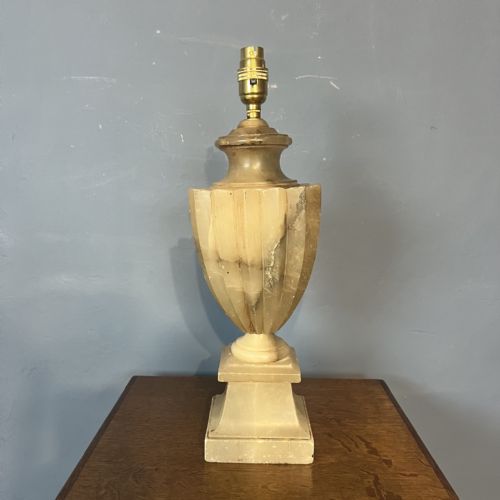
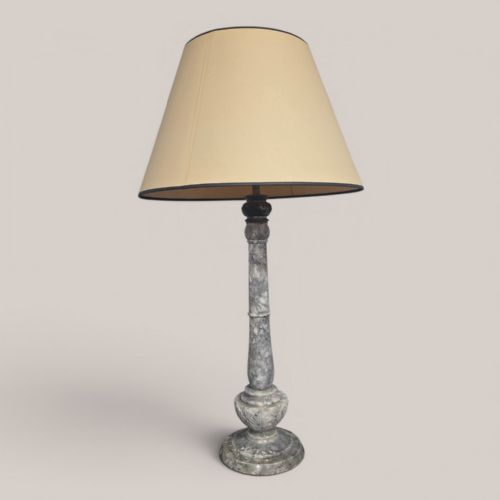
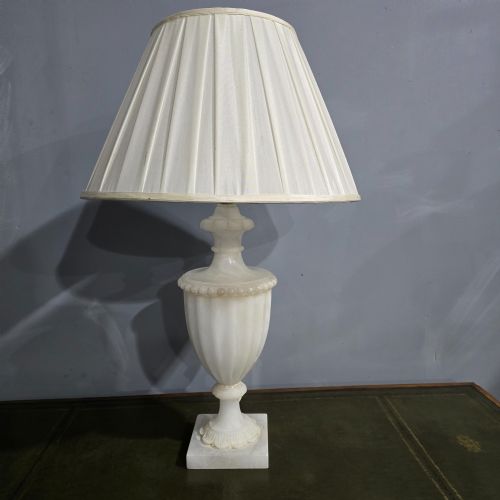


Carved Marble Lights
Carved marble lights bring substantial geological weight and classical dignity to a room.
Carved Marble Lights
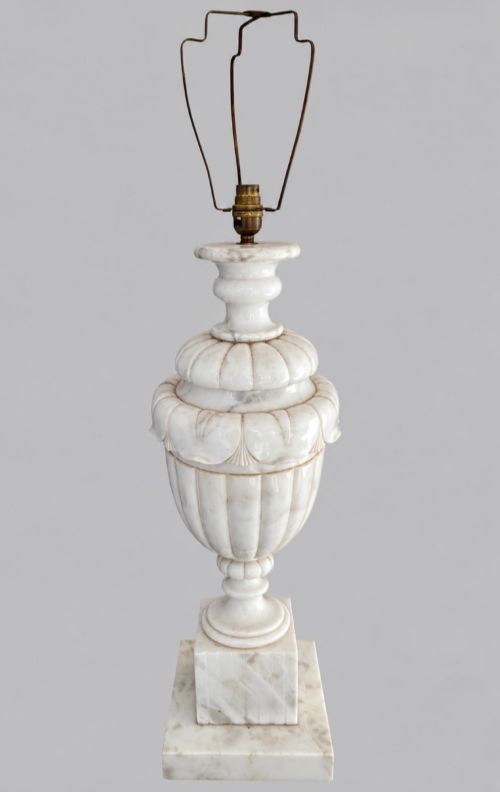
When you search for carved marble lights, you encounter heavy stone pillars and urns repurposed for illumination across the nineteenth and twentieth centuries. These pieces translate architectural stone into domestic hardware.
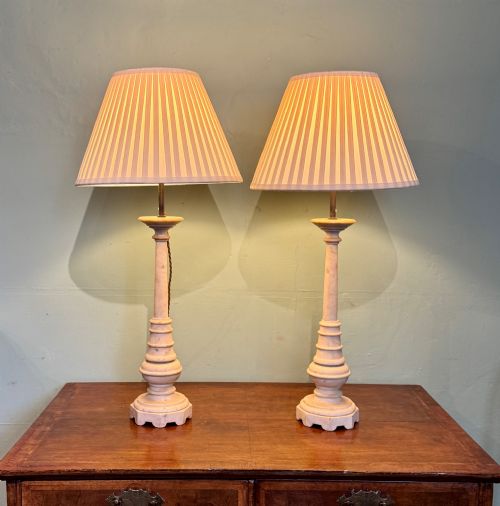
The selections here span table lamps, floor-standing standards, and chambersticks shaped from solid stone. Origins lean heavily toward French and Italian workshops operating from the Victorian era through the Art Deco period.
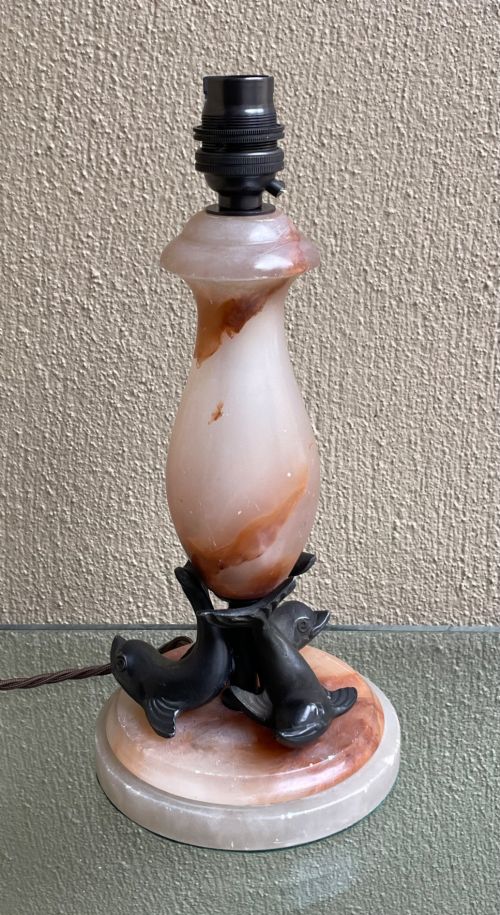
Alongside pure stone vessels, you will find standard lamps and table pieces incorporating related minerals such as alabaster and onyx. Certain examples combine the stone body with cast metal mounts or glass elements.
How they were made
Craftsmen shaped these luminaires from quarried blocks of marble, alabaster, or onyx using lathe-turning and hand-carving techniques. The resulting stone bodies were then fitted with brass, gilt bronze, or ormolu mounts to secure the electrical components or candle sockets.
Surface treatments range from high-polish finishes that reveal natural veining to matte treatments on translucent alabaster. Wiring and hardware additions reflect the specific electrification standards of the Edwardian and later decades.
Carved Marble Lights Retail Price Guide 2026
Typical asking prices for carved marble lights among the pieces listed under this phrase on Sellingantiques today, from the lower quarter to the upper quarter. They describe what is for sale here now, not the wider market.
What varies in quality
The division between ordinary and exceptional carved marble lights rests upon the purity of the stone and the ambition of the carving. Superior items display intricate figural motifs, such as dolphins or campana urns, executed with sharp relief rather than simple geometric turning.
Integration of the metal hardware dictates overall refinement, with fine ormolu mounts and heavy brass castings distinguishing the more costly examples. The subtlety of the natural veining and the uniform translucency of the alabaster further separate standard utility pieces from collector-grade works.
The Carved Marble Lights Glossary
- Alabaster
- A fine-grained, translucent stone frequently utilised for softer lamp bodies. It allows light to diffuse gently through the mineral itself.
- Ormolu
- Gilded bronze mounts applied to the stone body for decorative effect. This French technique adds metallic contrast to the cool marble.
- Cassolette
- A decorative vessel that often doubles as a lamp base. These derive from classical forms intended for burning perfumes.
- Campana
- An inverted bell-shaped vessel utilised as a structural base for various lamp designs. The profile echoes ancient Roman garden urns.
Carved Marble Lights: Frequently Asked Questions
How do I clean carved marble lights?
Dust the stone regularly with a soft, dry cloth to prevent particulate accumulation in the carved recesses. Avoid abrasive cleaners or excess water, which can damage unsealed surfaces and historical metal mounts.
For stubborn marks on polished marble, use a damp cloth with mild neutral soap followed immediately by dry buffing. Alabaster requires particular care because moisture penetrates the softer mineral very quickly.
Are these lamps safely wired for modern use?
Many older pieces retain historical wiring components that require professional rewiring to meet contemporary safety standards. A qualified electrician can replace vintage flex and lamp holders while preserving the original stone body.
Inspecting the internal channel through the stone ensures that modern cables pass through without friction or heat risk. Retaining original switches or plugs is sometimes possible if they pass modern insulation tests.
How do I identify the period of a stone lamp?
Dating relies upon stylistic markers such as Neoclassical revival proportions or Art Deco geometric simplifications. Metal mount styles and the type of threading used in the hardware provide additional clues to the decade of manufacture.
Victorian and Edwardian examples often feature heavier brass components and hand-cut threads, whereas later mid-century pieces show streamlined turning. Comparing the turning profile against documented furniture and lighting helps narrow the production window.
Where should I place a heavy stone lamp?
Position these heavy luminaires on sturdy furniture such as console tables, heavy desks, or directly on the floor for standard lamp formats. The substantial weight of solid marble requires a stable surface capable of supporting dense mineral mass.
Keep them away from high-traffic zones where accidental impacts might chip protruding carved edges or knock over tall floor standards. Adequate clearance protects both the stone and surrounding interior elements.