


Carved Mahogany Tier Table
A carved mahogany tier table provides layered display surface in rich timber, combining practical utility with formal architectural presence.
Carved Mahogany Tier Table
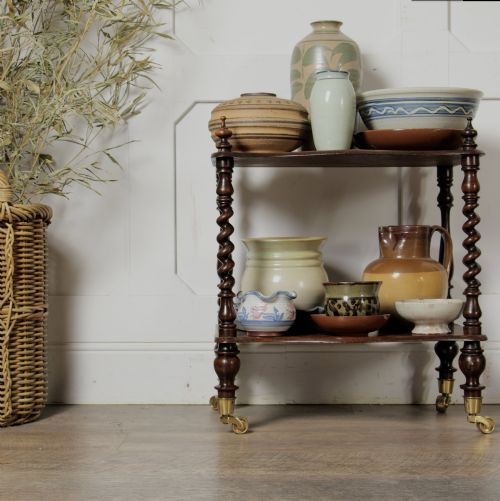
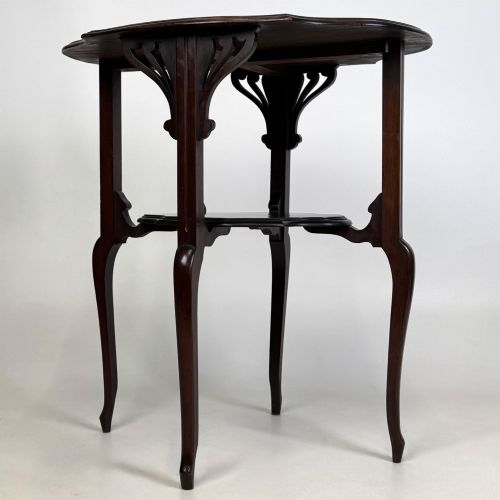
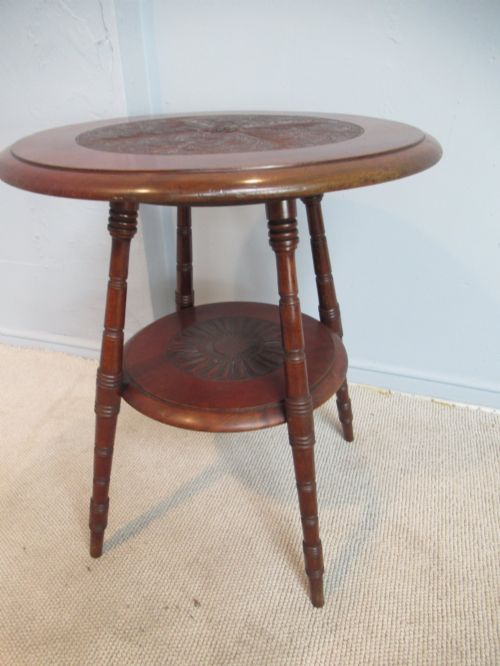
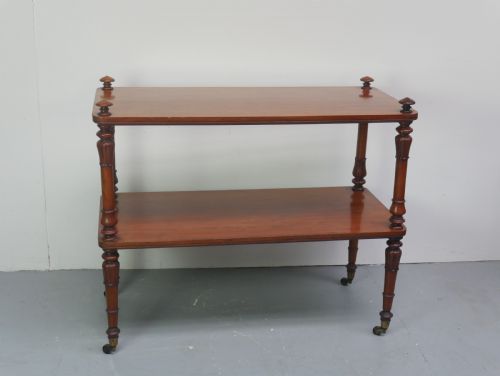
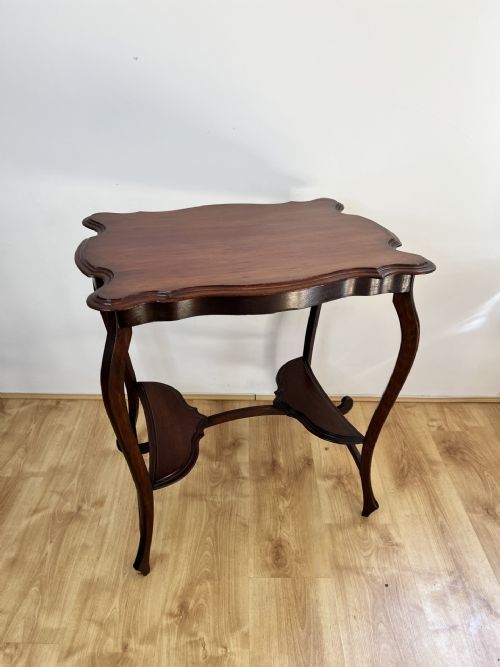
A carved mahogany tier table typically appears across the Victorian and Edwardian eras, encompassing forms such as dumb waiters, side tables, and etageres. These multi-level surfaces were designed for serving, display, and occasional use in formal reception rooms.
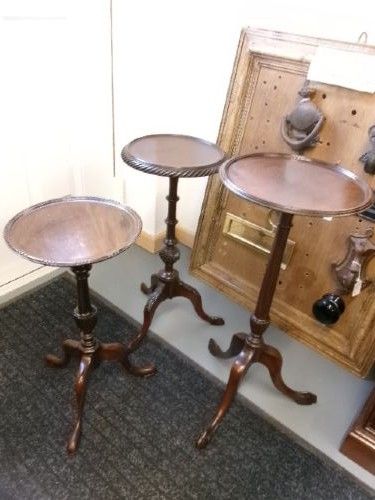
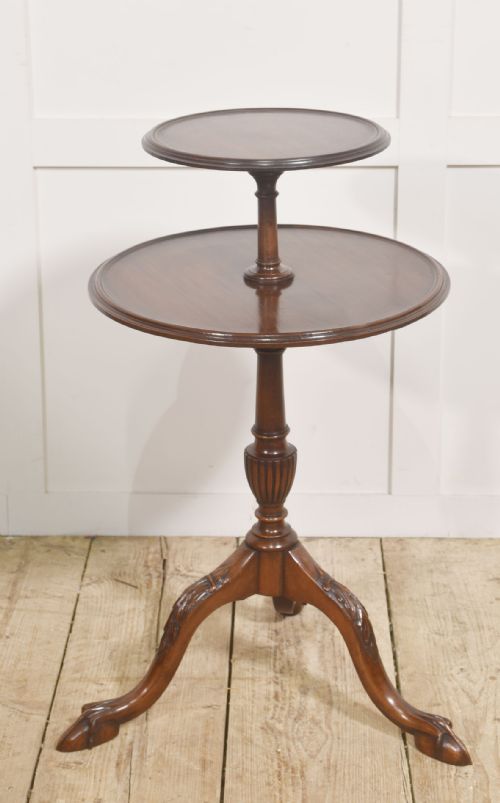
The pieces on this page span the nineteenth and early twentieth centuries, featuring revival styles including Chippendale and Regency. Buyers frequently encounter two-tier and three-tier tripod designs alongside revolving variants and stationary side tables.
Origins range from formal English workshops to regional cabinet makers, utilising dense hardwoods shaped into distinct tiers. Each format reflects the evolving domestic habits of the period, prioritising vertical display over expansive floor footprints.
Materials and Construction
Cabinet makers constructed these multi-level surfaces using solid mahogany and figured veneers, supported by turned pillars, tripod legs, or barley twist uprights. Secondary timbers and occasional brass mounts provide structural reinforcement and functional movement for revolving tiers.
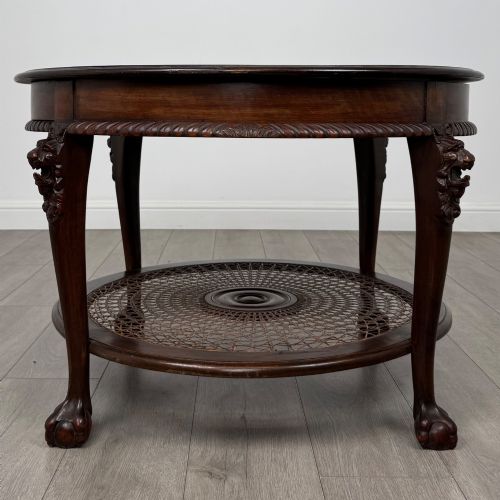
Carving was executed by hand, applying foliate motifs, reeding, and fretwork directly to the mahogany edges and pedestals. Joinery relied on traditional mortise and tenon methods, ensuring the multiple tiers remained stable under the weight of books, ceramics, and serving dishes.
Some Victorian revolving versions allowed diners to spin the afternoon biscuits past their neighbours without stretching across the linen.
Distinctions in Execution
Quality rests in the selection of the timber grain, the depth and crispness of the hand carving, and the stability of the tiered architecture. Superior examples display richly figured mahogany with harmonious colour across every shelf.
Lesser pieces often rely on mechanical stamping for ornament and show looseness in the joints connecting the tiers to the central column. Master craftsmanship reveals itself in balanced proportions and seamless rotation mechanisms where applicable.
The Carved Mahogany Tier Table Glossary
- Tier table
- A multi-level piece of furniture featuring two or more stacked surfaces held by upright supports. It allows for compact display and serving.
- Dumb waiter
- A tiered stand traditionally used for holding dishes or drinks without requiring a servant present. These often feature rotating or graduated circular shelves.
- Etagere
- A set of open shelves for displaying small objects, ornamentation, or books. The form emerged in France before becoming popular in British interiors.
- Tripod base
- A support structure resting on three feet, commonly found beneath circular pillar tables and dumb waiters. This design ensures stability on uneven floors.
- Fiddleback mahogany
- A highly figured timber showing wavy horizontal cross-grain patterns resembling the back of a violin. Cabinet makers reserved this premium wood for prominent surfaces.
Carved Mahogany Tier Table: Frequently Asked Questions
What is a tier table used for?
These tables served various functions in historic homes, from holding books and lamps to presenting tea and serving dishes.
The multiple levels allowed owners to maximise surface space in smaller sitting rooms without cluttering the floor.
How do I identify a Victorian tier table?
Victorian examples often display heavier proportions, darker finishes, and deeper hand-carved foliate motifs compared to earlier Georgian pieces.
Look for structural clues like turned pillars, tripod legs, and dense mahogany construction characteristic of nineteenth-century workshops.
Are these tables sturdy enough for daily use?
Solid mahogany construction and traditional joinery make these multi-level stands remarkably robust for holding everyday objects like table lamps.
Care should be taken not to overload upper tiers, particularly on revolving models where weight distribution affects stability.