




Carved Log Box
A carved log box brings texture and utility to the hearth, combining sturdy timber with decorative relief.
Carved Log Box
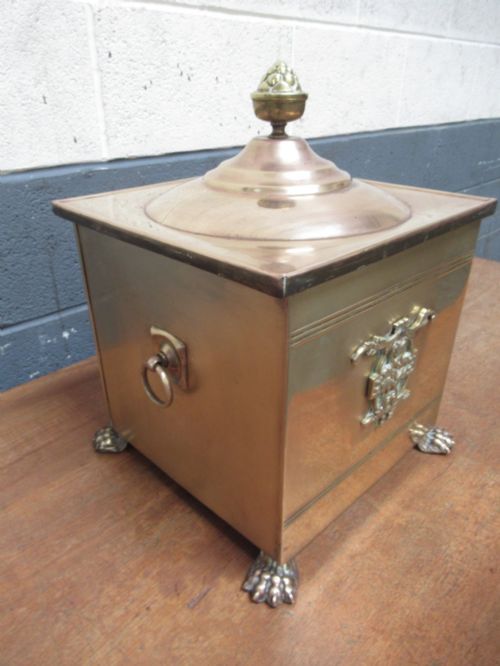
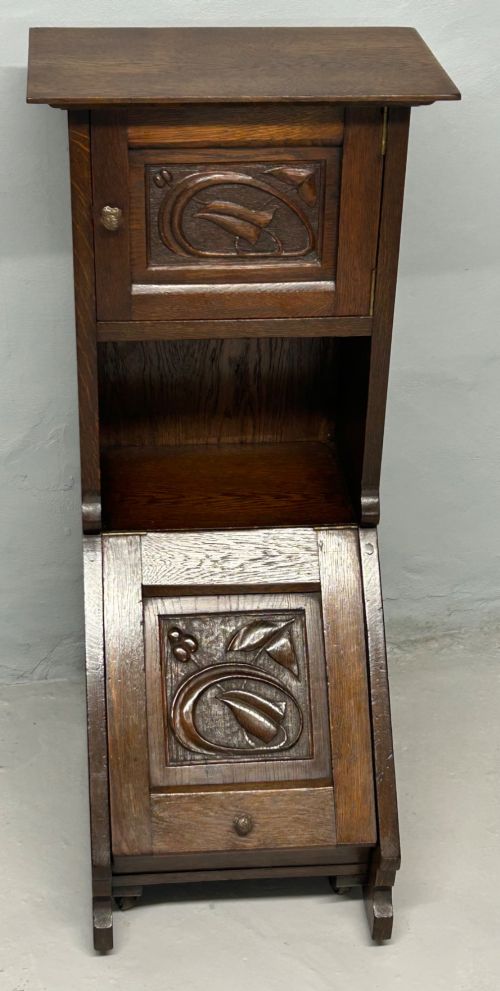
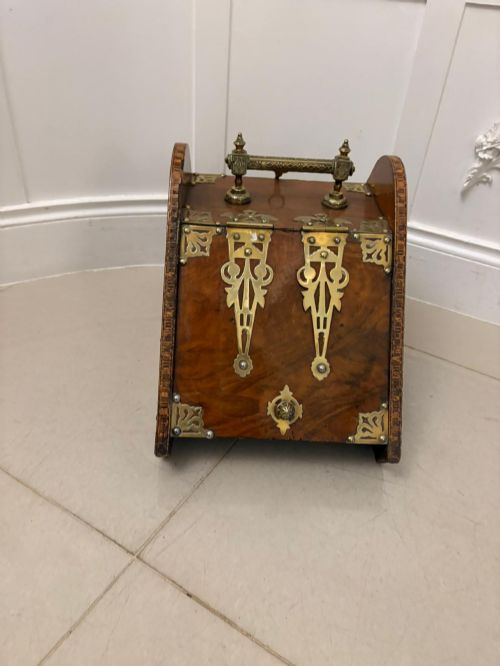
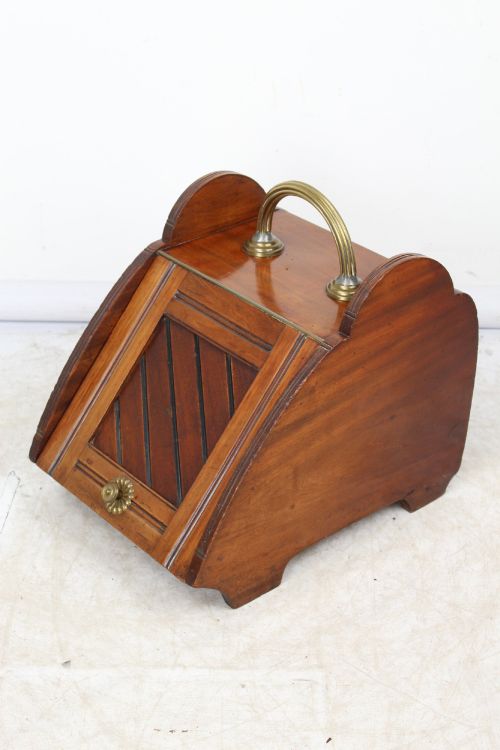
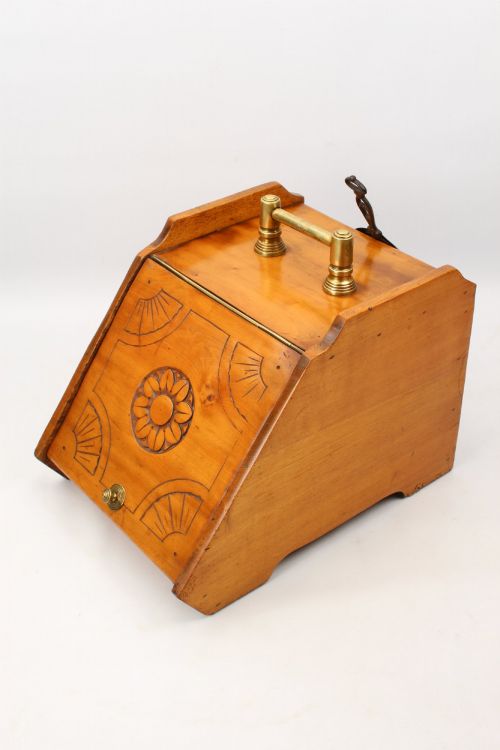
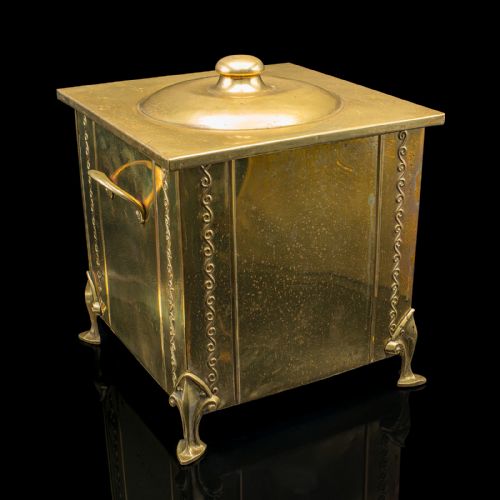
A carved log box serves primarily as a fireside storage vessel, often taking the form of a coal scuttle, purdonium, or coal box. These containers manage domestic fuel with varying degrees of ornamentation.
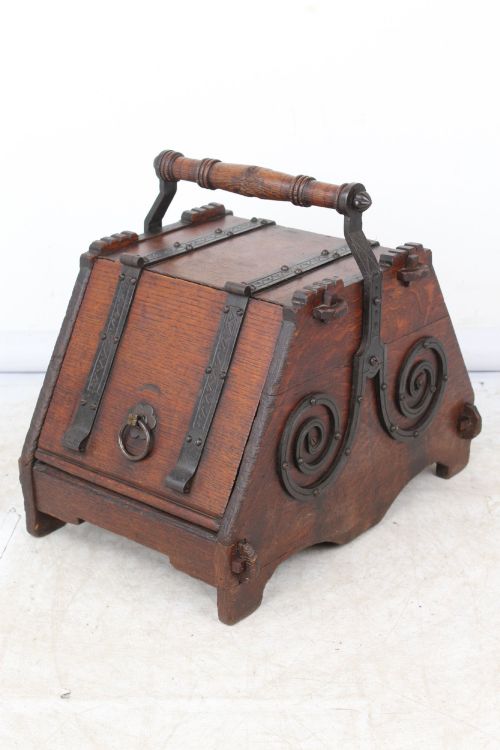
The pieces appearing here stem largely from the Victorian era and the turn of the twentieth century, with examples dating from eighteen fifty to nineteen hundred. Styles range from plain utilitarian timber to Gothic Revival and Black Forest designs.
Forms include dome-topped wooden containers and slipper boxes alongside traditional scuttles equipped with metal handles and shovels.
How they were made
Makers utilised solid timbers including oak, walnut, and mahogany to construct the body of each box. These woods provided the necessary durability for daily fireside use.
Metal components such as brass, copper, iron, and wrought iron were incorporated for hinges, handles, and decorative mounts. Embossed copper and brass fittings frequently accent the carved wooden surfaces.
Carved Log Box Retail Price Guide 2026
Typical asking prices for carved log box among the pieces listed under this phrase on Sellingantiques today, from the lower quarter to the upper quarter. They describe what is for sale here now, not the wider market.
Listings span the Victorian and Edwardian periods, utilising oak, walnut, mahogany, brass, and copper across various coal scuttle and box formats.
What varies in quality
The depth and clarity of the carved decoration distinguish standard production from finer workmanship. Relief work upon the front panels ranges from simple geometric borders to elaborate figural motifs.
The selection of timber grain and the integration of metal mounts dictate the overall visual weight. Superior examples coordinate brass handles and hinges with figured walnut or quarter-sawn oak.
Christopher Dresser
The Carved Log Box Glossary
- Purdonium
- A specialised coal cabinet or box designed to stand beside a fireplace, typically featuring a sloping front or drop-down door. This form conceals the fuel store within domestic interiors.
- Slipper box
- A covered container traditionally shaped with a slanted lid, utilised for storing fuel or household items. The design resembles a heeled shoe in profile.
- Black Forest style
- A decorative tradition characterised by naturalistic carved animals and foliage, originating in central Europe during the nineteenth century. These items frequently display deep relief work in wood.
- Gothic Revival
- An architectural and decorative style drawing inspiration from medieval forms, featuring pointed arches and heavy ornamentation. Pieces in this aesthetic often incorporate robust ironwork.
- Brass-mounted
- Fitted with brass hinges, handles, or decorative plates that reinforce the structure while adding metallic contrast. This method protects vulnerable edges from wear.
Carved Log Box: Frequently Asked Questions
What is a carved log box used for?
These boxes function as practical containers for holding coal, logs, and kindling near a fireplace. They keep solid fuel tidy while remaining decorative items in a room.
Historically, they sat beside hearths in sitting rooms and parlours for convenient access during cold months.
How do I identify a Victorian piece?
Victorian examples often feature dense hardwoods like oak and walnut combined with brass handles and hinges. Stylistic clues include Gothic Revival motifs and carved fronts.
Dates cluster around the latter half of the nineteenth century, matching the period's domestic heating habits.
What is the difference between a scuttle and a purdonium?
A scuttle typically resembles a bucket or traditional hod with an arched handle for carrying fuel from an outside store. A purdonium is usually a stationary cabinet with a sloping front designed to sit permanently by the hearth.
Both serve the same primary function of fuel containment but differ in their structural layout.
How do I care for wooden fireside boxes?
Keep wooden surfaces nourished with appropriate wax polishes to prevent the timber from drying out near heat sources. Metal mounts benefit from gentle cleaning to maintain their finish without disturbing the surrounding wood.
Positioning the box at a sensible distance from direct flames protects the antique construction from thermal stress.