

Carved Library Furniture
Carved library furniture brings together substantial timbers and considered design, offering practical storage and working surfaces built for sustained domestic use.
Carved Library Furniture
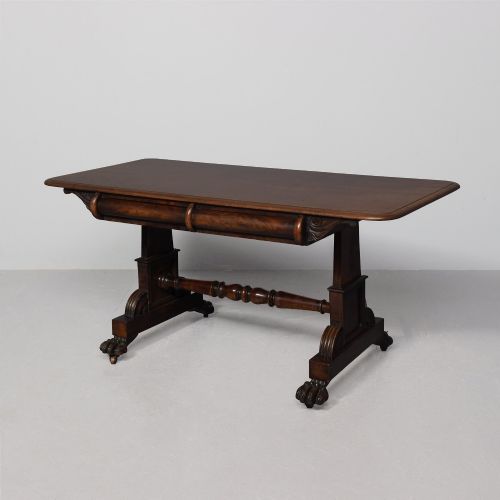
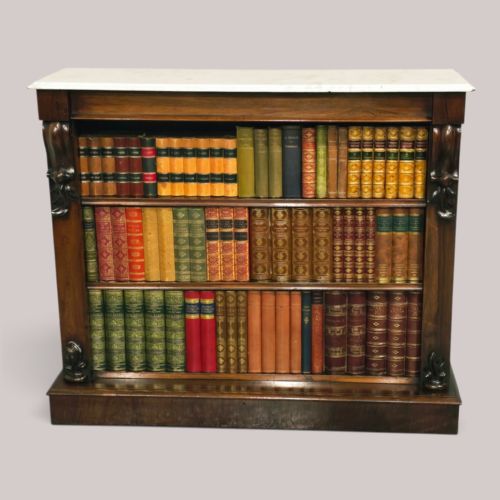
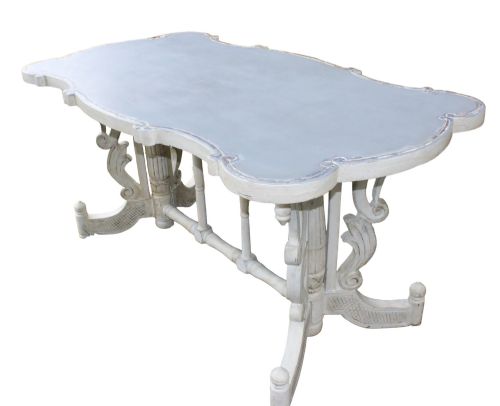
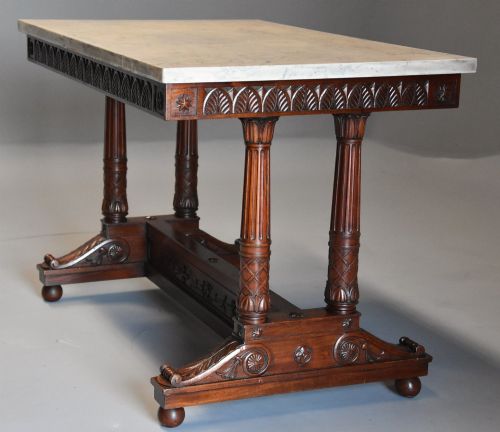
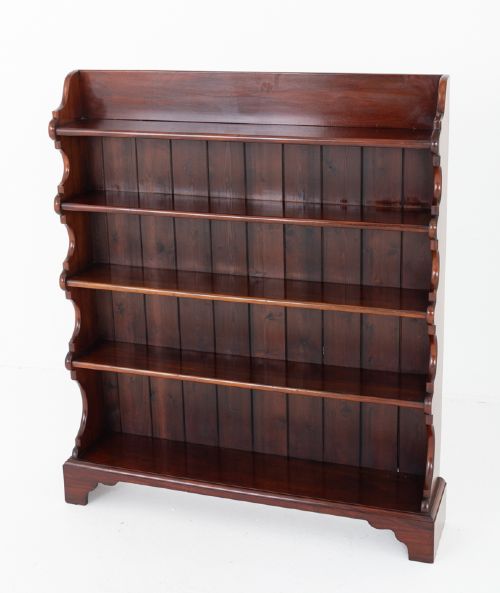
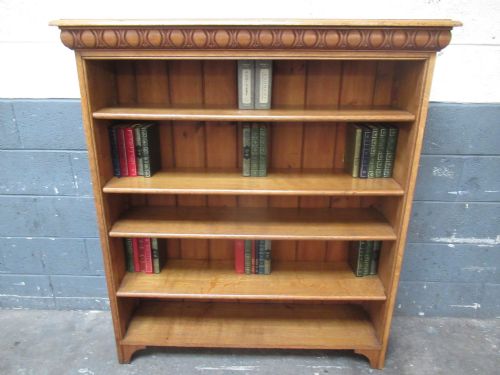
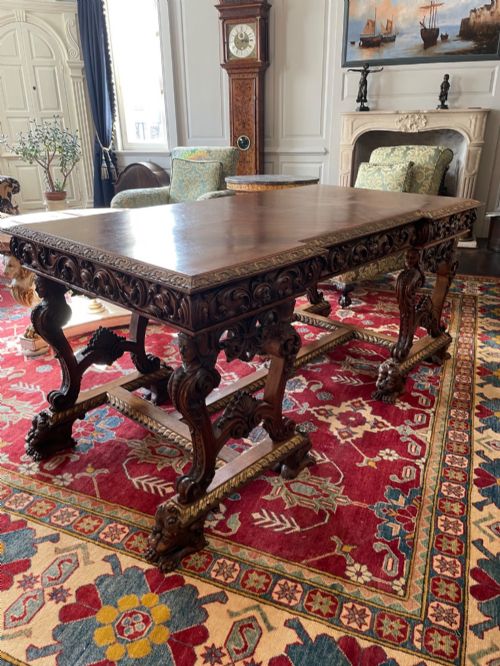
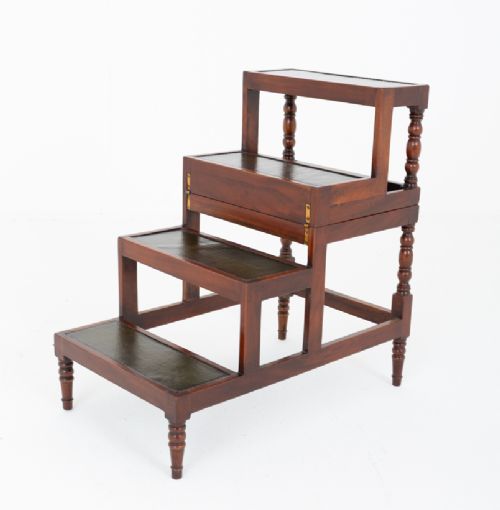
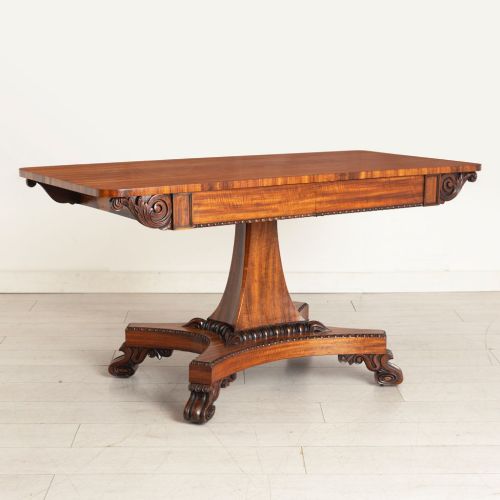
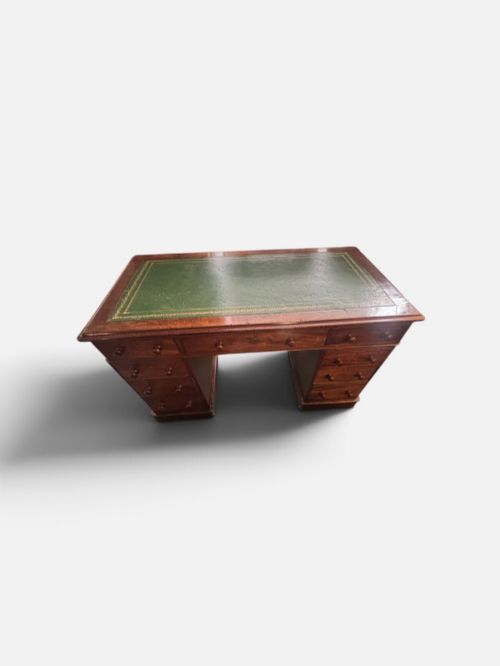
Carved library furniture encompasses substantial hardwood items designed for reading rooms and studies, spanning periods from the seventeenth century through to the early twentieth century. Buyers seeking these pieces encounter an array of functional forms, including breakfront bookcases, pedestal desks, swivel armchairs, and expansive centre tables.
The nineteenth century provides the highest volume of examples on this page, particularly in the form of Victorian mahogany and walnut bookcases alongside Regency library tables. Solid oak, rosewood, and exotic tropical hardwoods appear frequently alongside softer utility pieces from Edwardian and later workshops.
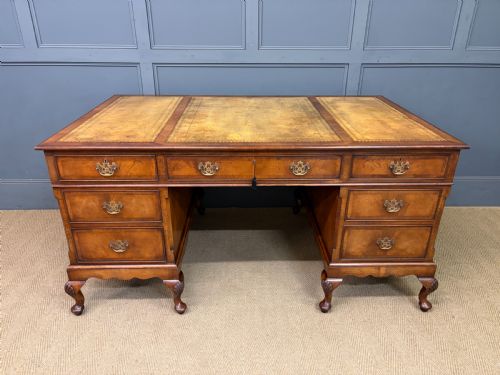
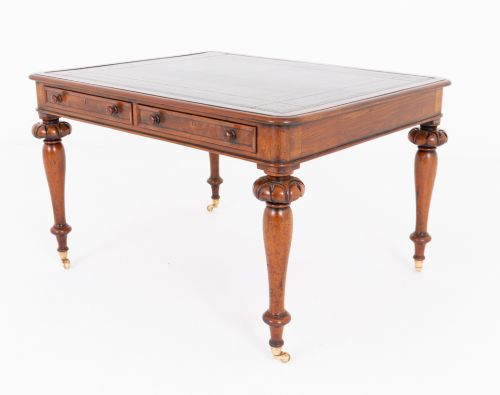
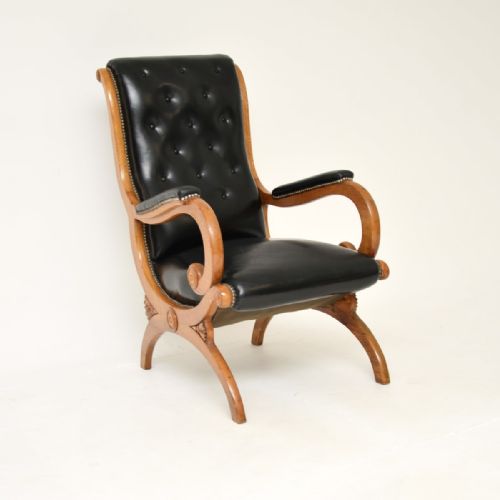
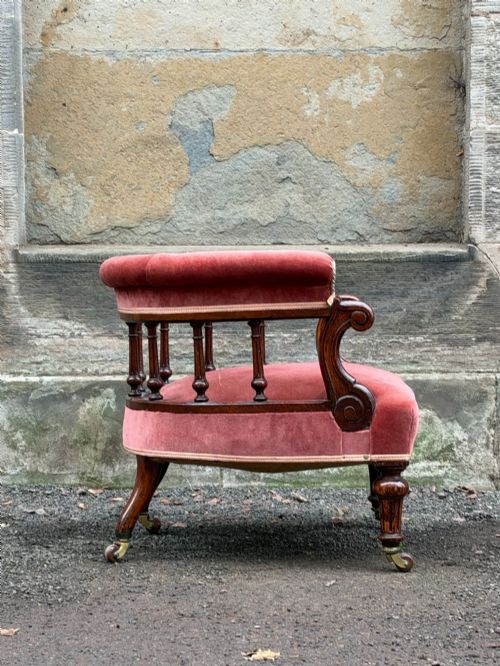
Seating spans from deep Gainsborough armchairs to revolving desk chairs and library armchairs framed in mahogany or walnut. Tables range from partners writing desks fitted with multiple drawers to heavy Spanish walnut tables originating from earlier centuries.
Materials and construction
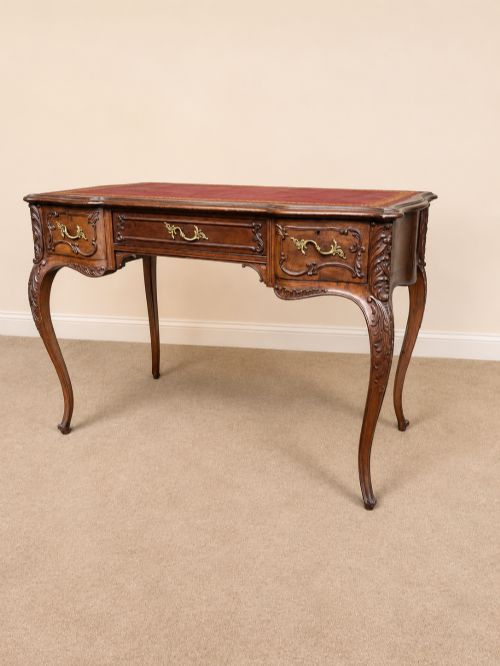
Makers utilised dense timbers such as mahogany, walnut, rosewood, and oak to construct these heavy items, often selecting figured veneers for desk surfaces and bookcase doors. Brass hardware, inset leather writing panels, and glazed doors complete the construction of the larger cabinets and tables.
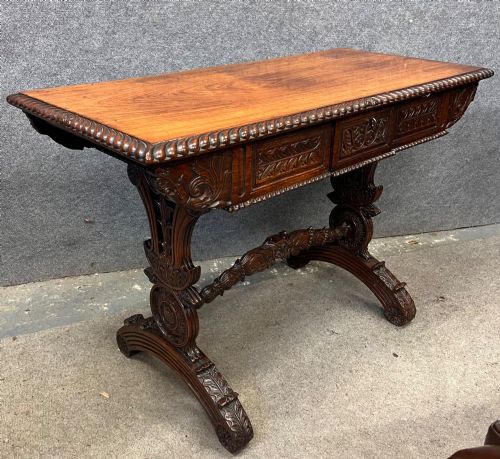
Carpenters joined structural elements using traditional techniques suited to heavy daily wear, incorporating adjustable shelving mechanisms and turned or reeded legs. Hand carving defines the decorative vocabulary, appearing on pediments, friezes, and chair frames across Georgian, Victorian, and revival pieces.
Carved Library Furniture Retail Price Guide 2026
Typical asking prices for carved library furniture among the pieces listed under this phrase on Sellingantiques today, from the lower quarter to the upper quarter. They describe what is for sale here now, not the wider market.
Green man carvings occasionally peer out from nineteenth-century dwarf bookcases, keeping a stern leafy watch over stray volumes.
Distinctions in standard
The upper tier of carved library furniture displays superior timber selection, evident in deeply figured walnut, rich mahogany grains, and dense tropical hardwoods like gonçalo alves. Finer examples maintain original patination and incorporate specialised workshop signatures or documented construction methods.
Execution of carved detail separates standard production from exceptional pieces, with crisply rendered foliage, masks, and scrollwork executed by skilled hands rather than mechanical replication. Structural integrity, such as smooth-running drawers on pedestal desks and original brass fittings, marks the distinction between ordinary survival and high craftsmanship.
Bowman Brothers London·Whytock and Reid·Williams and Gibton·Hindley and Sons·Gillows
The Carved Library Furniture Glossary
- Breakfront
- A large bookcase or cabinet where the central section projects forward from the flanking wings. This format provides visual depth and allows for varied internal shelving depths.
- Partners desk
- A double-sided writing table fitted with drawers and cupboards on both faces, allowing two people to work opposite one another. These large pieces typically feature inset leather tops.
- Revolving bookcase
- A freestanding bookcase designed to rotate on a central pivot base for easy access to volumes. Edwardian examples in solid oak appear frequently in domestic settings.
- Padauk
- A heavy, durable exotic timber with a reddish-brown hue that deepens with age. Nineteenth-century cabinet makers selected this wood for solid carved library tables.
Carved Library Furniture: Frequently Asked Questions
Are bookcase shelves adjustable?
Many library bookcases incorporate adjustable shelving supported by wooden ratchets, brass pegs, or metal pilaster strips. This allows owners to reconfigure shelf heights for volumes of varying sizes.
Earlier formats often relied on fixed shelves built into the carcase construction. Later nineteenth and twentieth-century examples frequently adopted adjustable mechanisms to accommodate growing collections.
What is a revolving bookcase?
A revolving bookcase is a compact, rotating shelving unit designed to stand beside an armchair or desk. The structure pivots on a concealed spindle base to allow easy retrieval of reference books.
Edwardian iterations in solid oak remain common, offering multiple tiers of open shelving within a small floor footprint. They suit tight spaces where standard wall bookcases cannot fit.
How do I care for leather desk tops?
Leather desk tops require regular dusting and occasional treatment with appropriate conservation waxes to prevent drying and cracking. Avoiding direct sunlight helps preserve the dyed colour and gold-tooled borders.
Spills should be blotted immediately with a dry cloth rather than wiped. Proper humidity control in the room prevents the underlying timber substrate from expanding and warping the leather surface.