


Carved Leg Easy Chair
A carved leg easy chair brings deep upholstery and sculpted timber together for fireside comfort.
Carved Leg Easy Chair
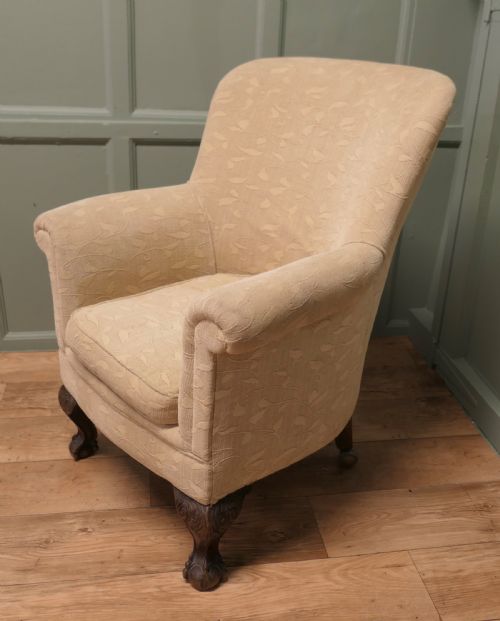
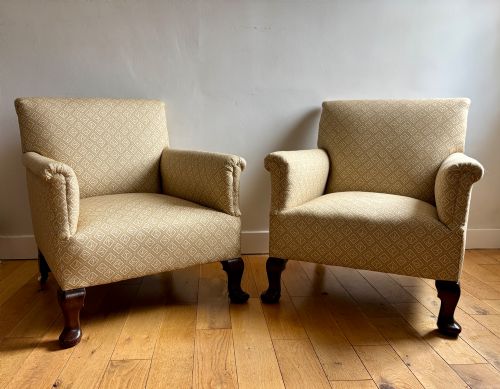
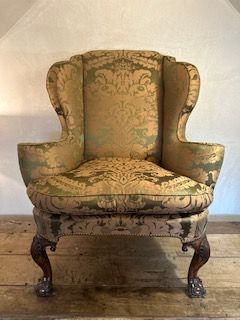
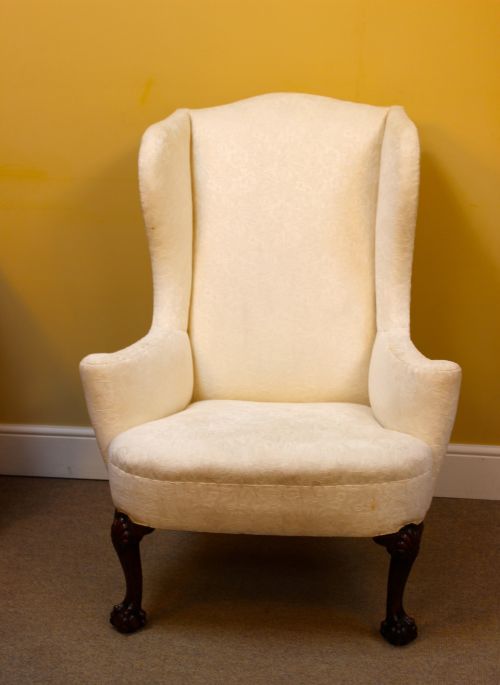
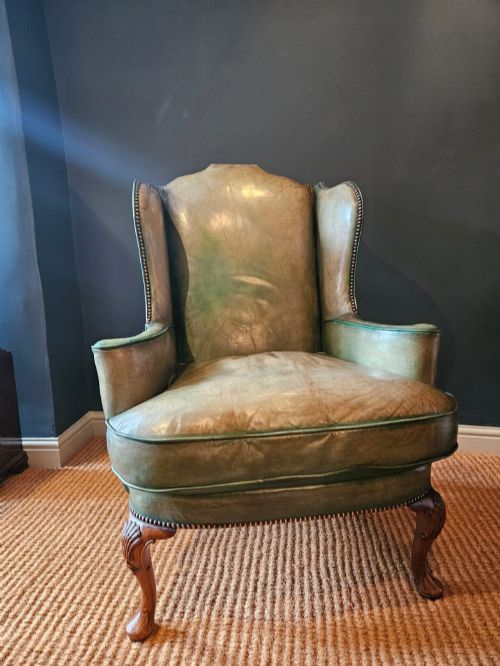
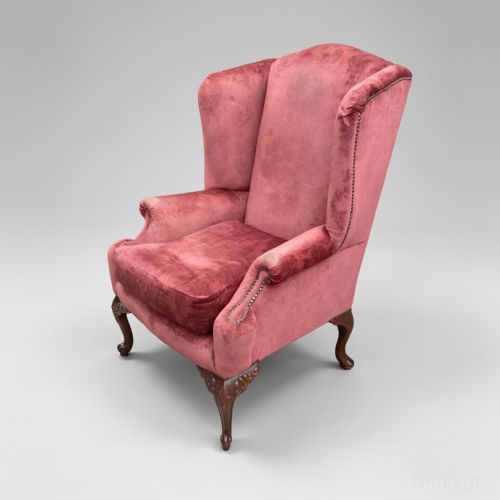
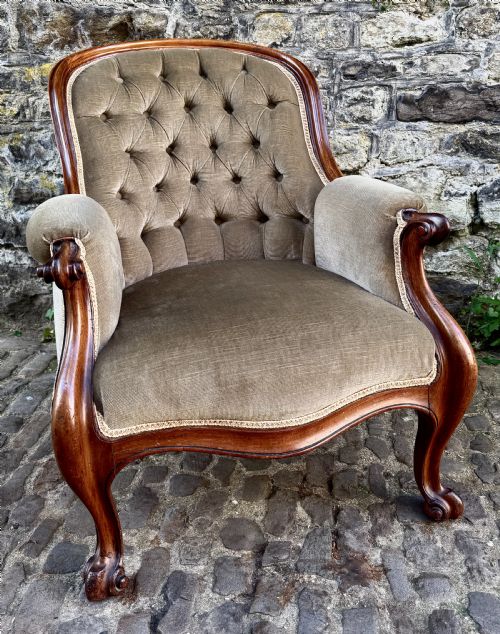
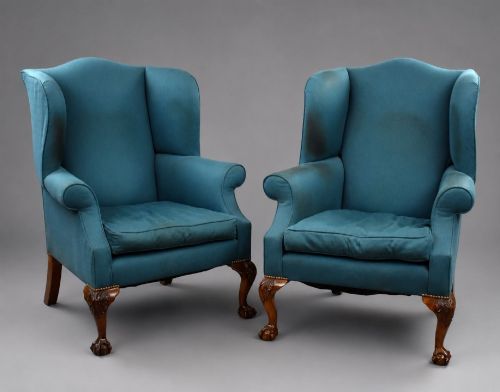
A carved leg easy chair is a heavy upholstered seat designed for relaxation, typically taking the form of a wingback or library armchair raised on ornamental timber supports. When you search for this phrase, you encounter substantial seating built primarily during the Victorian era and the nineteenth century, alongside revival pieces inspired by Georgian designs.
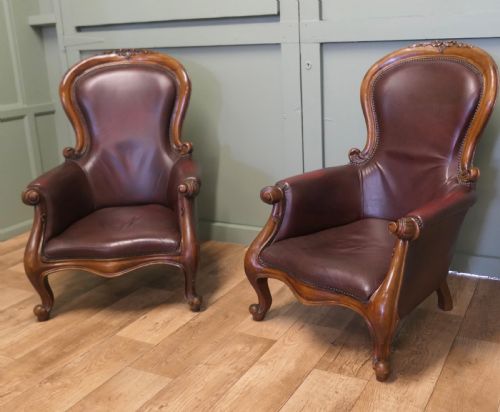
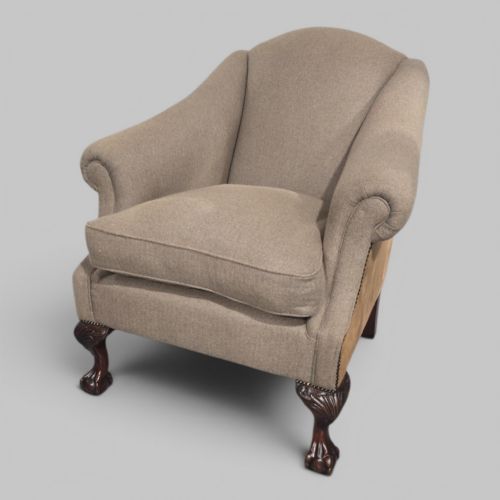
The most common examples on this page are Victorian mahogany and walnut armchairs featuring exposed cabriole or carved legs, often upholstered in leather, velvet, or calico. These pieces combine substantial padding with distinct period woodworking, ranging from simple nineteenth-century library chairs to grander revival models.
Differentiating quality across pieces
The standard of a carved leg easy chair rests on the crispness of the timber carving and the integrity of the underlying hardwood frame. Finer examples display deeply sculpted cabriole legs and substantial proportions executed by skilled makers rather than mass production workshops.
Upholstery materials also define the grade of a piece, with heavy full-grain leather or thick velvet indicating superior commissioning compared to standard textile coverings. Original frames that retain their structural firmness without excessive timber shrinkage represent the higher tiers of the range.
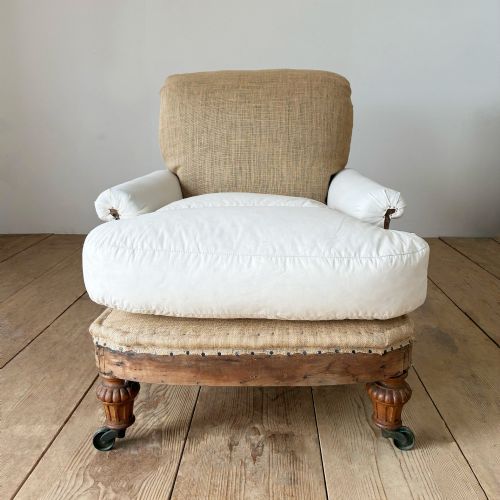
Several armchairs arrive ready in calico, practically begging for an adventurous textile choice before their next century of service.
Whytock and Reid·Gillows·Howard and Son
The Carved Leg Easy Chair Glossary
- Cabriole leg
- A furniture leg that curves outward and then tapers inward, mimicking an animal's curving leg. This form appears frequently on Georgian and Victorian armchairs.
- Wingback
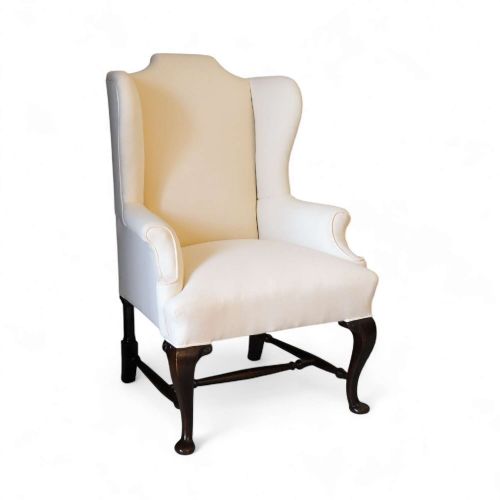
- An armchair featuring protective side panels designed to shield the occupant from drafts. These wings extend from the upholstered backrest down to the armrests.
- Calico stage
- An intermediate state of upholstery where plain cotton calico covers the internal stuffing before final decorative fabric is applied. It allows buyers to choose their own top covering.
- Spoon back
- A padded chair back shaped like the bowl of a spoon, commonly seen on Victorian seating. This contour supports the natural curve of the human spine.
- Claw and ball
- A carved furniture foot depicting an animal's talon grasping a spherical ball. This motif often terminates the legs of notable nineteenth-century library chairs.
Carved Leg Easy Chair: Frequently Asked Questions
How do I identify a Victorian armchair?
Victorian armchairs typically feature dark hardwoods like mahogany or walnut, heavier proportions, and deep buttoning or leather upholstery. Look for stylistic clues such as spoon backs or rosewood construction dating from the mid to late nineteenth century.
Examine the underside and joinery for nineteenth-century manufacturing marks or hand-turned elements. The presence of dense horsehair stuffing and traditional webbing further points toward a Victorian origin.
What is a wingback chair used for?
Wingback chairs were originally designed to trap fireplace heat and protect occupants from household drafts. The upholstered side panels served to keep warmth around the head and shoulders.
Over time, they transitioned into primary reading and library seats valued for their enclosed comfort. Today, they function as statement pieces in studies and living rooms.
Are these chairs comfortable for daily use?
Most of these armchairs were built for sustained relaxation, offering deep seat cushions and high supportive backs. Their generous proportions accommodate upright sitting as well as lounging.
Comfort depends largely on the condition of the internal webbing and padding. Many pieces have been updated with modern interior stuffing while retaining their historic wooden frames.
What does upholstery to calico stage mean?
Upholstery to calico stage means the chair has been fully rebuilt with internal springs, horsehair, and a plain calico cotton outer cover. The intricate framing and foundational work are complete.
This leaves the final decorative fabric choice entirely open to the buyer. You can match the chair to your existing room palette without paying for unwanted top fabric.