





Carved Lacquer Seat
These carved lacquer seat examples range from Chinese elm armchairs to Japanese-influenced English settees, offering rich textures and historic regional craftsmanship.
Carved Lacquer Seat
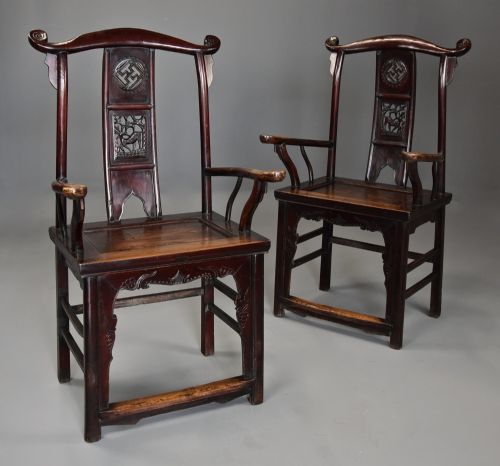
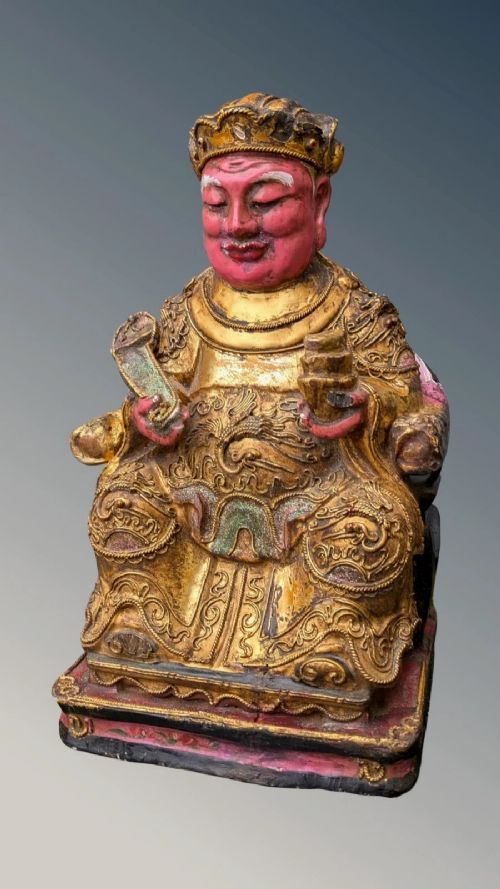
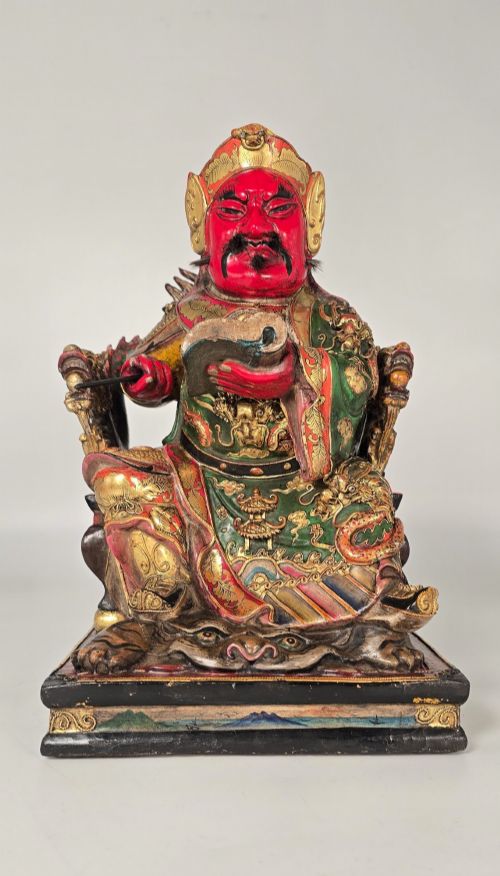
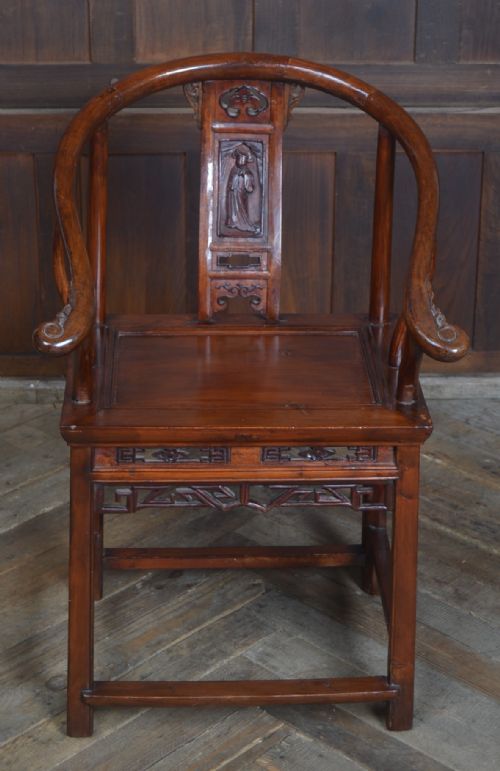
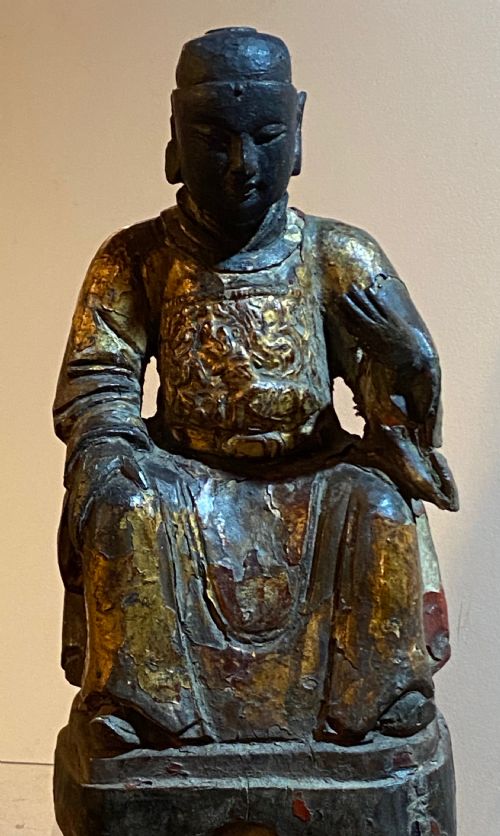
When you search for a carved lacquer seat, you find seating furniture and figures originating primarily from Chinese workshops, alongside Victorian and later European interpretations. The most common form met on this page is the elm armchair or bench finished in red or cinnabar lacquer, often retaining its original surface patina.
Pieces span from the eighteenth century through to the early twentieth century, incorporating Qing Dynasty forms, Queen Anne revival styles, and Indian ethnic designs. Armchairs, benches, and settees dominate the selection, alongside occasional corner seats and elbow seats featuring hand-painted details.
The selection reflects both traditional Asian export and domestic craftsmanship and European japanning techniques developed to mimic Eastern lacquerware. Buyers encounter robust elm and hardwood frames combined with decorative pigment, gold leaf, and cane work.
How they were made
Wood frameworks, typically constructed from native elm or dense Asian hardwoods, form the structural foundation of these seats. Artisans shaped these timbers into traditional forms such as yokeback armchairs and benches before applying decorative finishes.
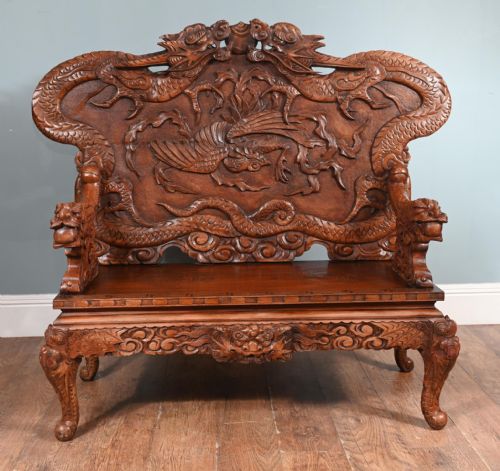
Layers of lacquer, sometimes pigmented in red or cinnabar, were built up over the wood or gesso ground and meticulously carved with figurative or dragon motifs. Artisans enhanced select details using hand painting and gold leaf application to accentuate the relief work.
Materials recorded across the inventory include elm, hardwood, cane, gesso, gold leaf, and pigment applied beneath traditional lacquer.
What varies in quality
The distinction between tiers rests upon the depth and precision of the carved lacquer relief and the preservation of the original surface patina. Superior examples display crisp detailing in figures and dragon motifs rather than flat or worn decoration.
Structural integrity of the underlying elm or hardwood frame and the survival of original red lacquer, pigment, or gold leaf dictate the desirability of a piece. Lesser examples exhibit heavy overpainting or replacement elements that obscure the historical surface.
The Carved Lacquer Seat Glossary
- Lacquer
- A durable resin finish applied in multiple coats to wood surfaces and traditionally carved when dry. It creates a smooth, protective shell that accepts rich pigments and gold leaf.
- Cinnabar
- A bright red mercuric sulphide mineral used to colour lacquerware. It produces the characteristic rich red tone seen on carved Chinese benches and armchairs.
- Japanning
- A European imitation of East Asian lacquerwork popular in seventeenth and eighteenth-century furniture production. It involves layering varnishes and paints on wood substrates to achieve a glossy, decorative sheen.
- Yokeback
- A traditional Chinese chair design featuring a curved toprail resembling a yoke. This ergonomic form supports the sitter's upper back and shoulders.
- Patina
- The surface sheen and coloration developed through age, handling, and wear. Original patina confirms the historical continuity of the lacquer and wood.
Carved Lacquer Seat: Frequently Asked Questions
How do I clean a carved lacquer seat?
Dust the surface regularly with a soft, dry cloth to prevent grit accumulation.
Avoid chemical polishes, water, and modern detergents, which can damage the historic lacquer layers and underlying wood.
Can I use these seats daily?
Sturdy elm and hardwood frames provide reliable daily support for regular seating use.
Place delicate surfaces away from direct sunlight and extreme temperature shifts to protect the lacquer from cracking.
What is cinnabar lacquer?
Cinnabar lacquer incorporates a red mineral pigment into the resin mixture before it is layered and carved.
This technique yields deep, sculptural red surfaces decorated with traditional motifs.
How do I identify the period?
Examine the joinery methods, wood species such as elm or dense hardwood, and the style of the carving. Qing Dynasty and Victorian revival pieces exhibit distinct decorative conventions that reflect their era of manufacture.