


Carved Jade Drops
These carved jade drops offer a striking mix of period craftsmanship and colour, bringing genuine character to any collection.
Carved Jade Drops
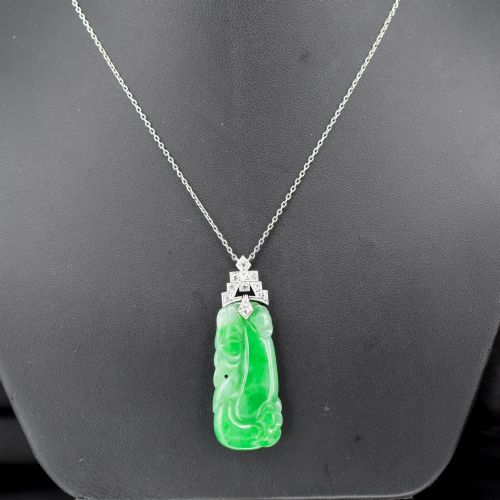
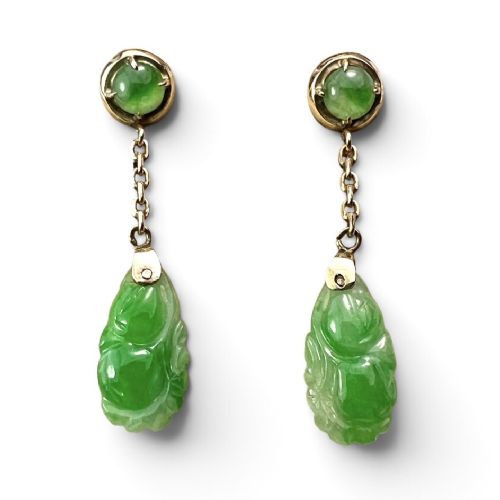
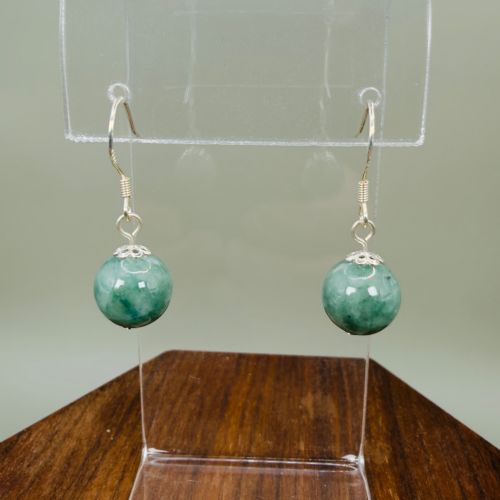
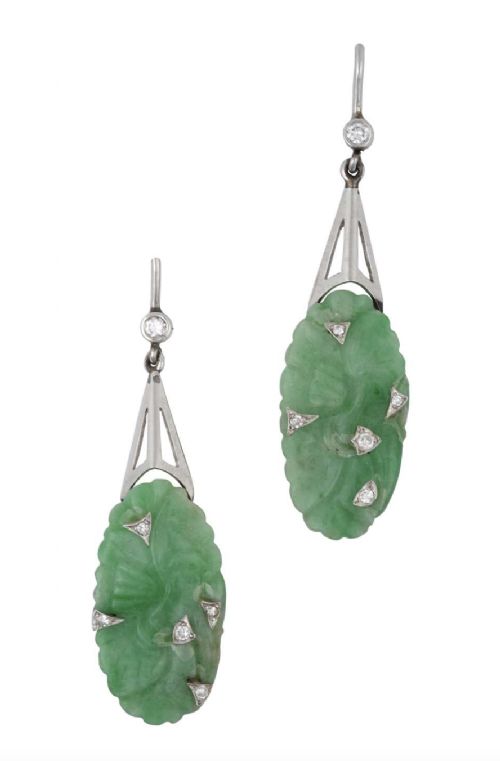
Carved jade drops encompass distinctive earrings and pendants shaped from hardstone and mounted in precious metals. The selection on this page centres on items originating from the Edwardian period, 1920, 1930, 1940, and 1950.
Buyers will encounter several principal forms across these decades. Earrings dominate the current offerings, alongside occasional pendants and necklaces featuring carved drops.
Design influences range from Art Deco and Chinese Export to Edwardian Chinoiserie. These varied styles reflect the global trade and aesthetic shifts of the early to mid-twentieth century.
How they were made
Makers shaped the central elements from jade and jadeite, occasionally utilising glass for alternative pieces. These stones were suspended from metals including platinum, sterling silver, silver, 14ct gold, 9ct gold, and 15ct gold.
Many mountings incorporate diamonds and pearls to accent the carved drops. Master jewellers balanced traditional stone carving with period setting techniques such as those seen in Art Deco and Edwardian workshops.
Materials span jadeite, jade, platinum, diamonds, pearls, glass, and multiple gold purities.
What varies in quality
The sophistication of the stone carving and the precision of the metalwork dictate the standard of each piece. Superior items display crisp detail in the jade alongside secure, well-balanced settings in platinum or gold.
The choice of secondary stones influences the overall character of the jewellery. Finer examples integrate matched diamonds or pearls that complement the tone of the primary jade drop without overwhelming the composition.
The Carved Jade Drops Glossary
- Jadeite
- A dense mineral species prized for its vivid green hues and translucency. It forms the primary material for many high-value carved drops.
- Art Deco
- A design movement spanning the 1920s and 1930s characterised by geometric lines and stylised motifs. Pieces from this era often feature symmetrical platinum or gold settings.
- Chinoiserie
- A Western stylistic tradition reflecting Chinese artistic influences. This aesthetic appears notably in Edwardian interpretations of Asian motifs.
- Platinum
- A dense, durable white metal favoured for fine Edwardian and Art Deco mountings. Its strength allows for delicate wirework and secure diamond settings.
Carved Jade Drops: Frequently Asked Questions
What periods do these pieces date from?
The selection spans the Edwardian era through the 1920s, 1930s, 1940s, and 1950s. Each decade brings distinct metal choices and stylistic touches.
Art Deco and Chinese Export influences are particularly common among pieces from the interwar years.
Are all the drops made of genuine jade?
Most items feature natural jadeite or jade, though occasional pieces utilise glass to achieve a similar decorative effect. Listings specify the exact material used for each drop.
Precious metal mounts in platinum, gold, or silver typically accompany the genuine stone examples.
How do I style antique earrings?
These drop earrings work well as focal points for evening wear or elevated daily attire. Their varied lengths suit different necklines and hairstyles.
Consider the metal tone of your other accessories to complement the platinum or gold settings.
What is the difference between Edwardian and Art Deco styles?
Edwardian pieces often showcase intricate platinum work with delicate lace-like patterns and diamond accents. Art Deco designs favour bold geometric lines and streamlined symmetry.
Both styles utilise carved jade drops but interpret them through contrasting aesthetic lenses.