
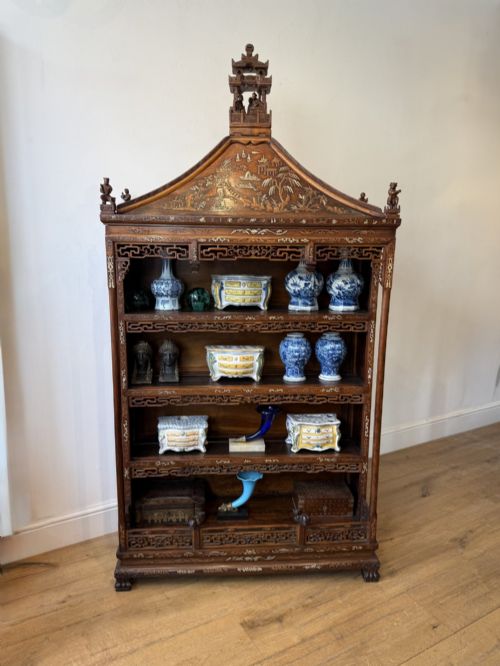


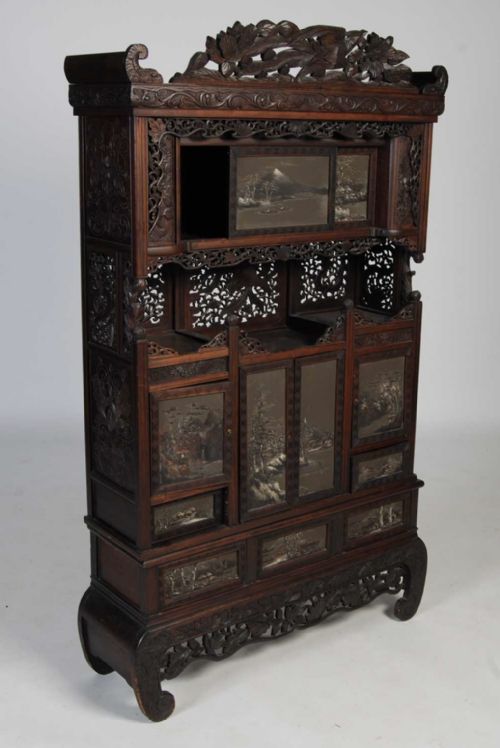


Carved Hardwood Shelf
A carved hardwood shelf offers a surface for display, bringing intricate detail and rich grain into a room.
Carved Hardwood Shelf
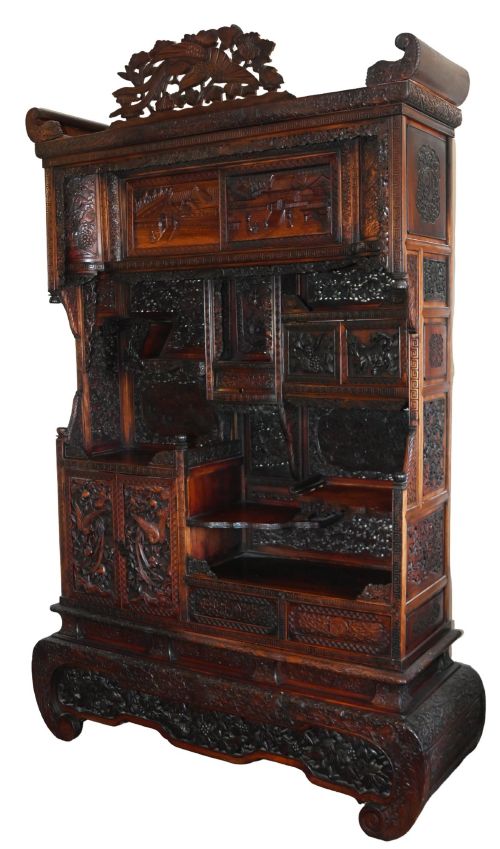
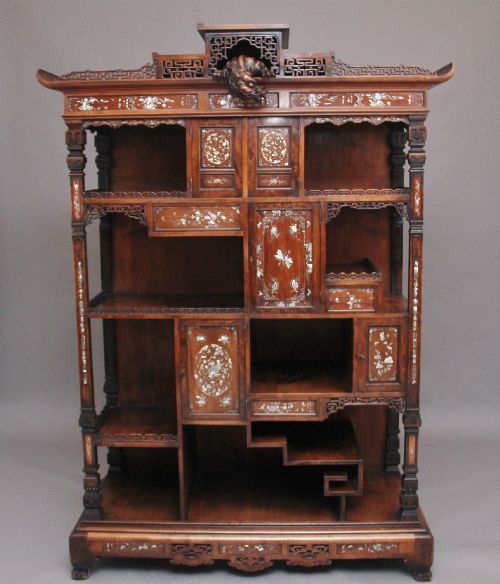
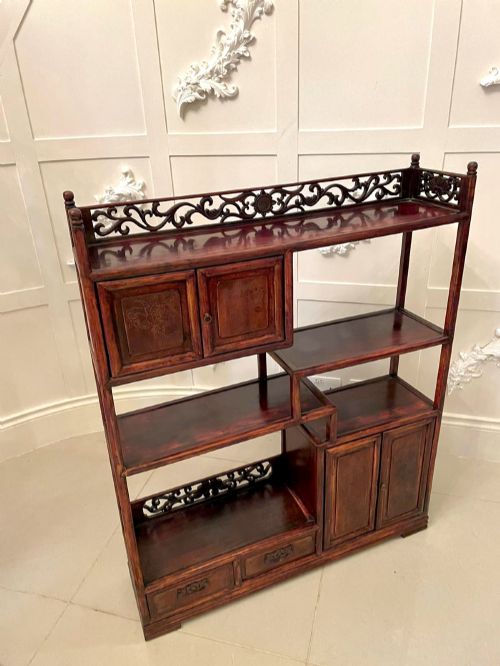
A carved hardwood shelf encompasses various wall brackets, display shelves, and cabinets found within the inventory, originating mainly from nineteenth and early twentieth century Chinese and Japanese workshops.
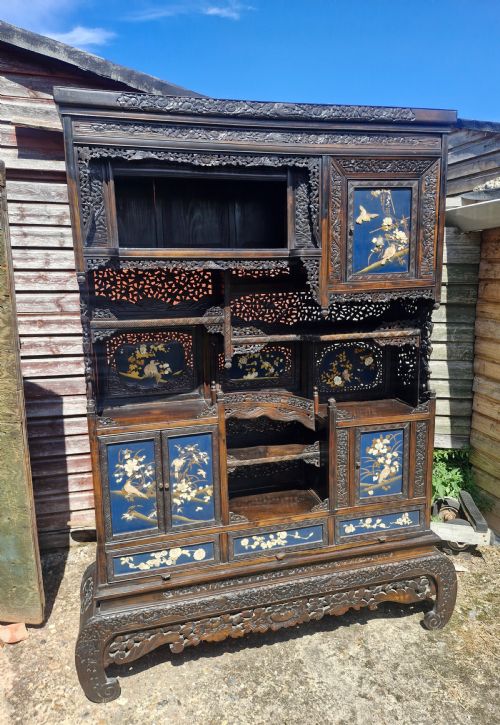
Buyers searching for a carved hardwood shelf will frequently encounter wall brackets, display cabinets, and shodana cabinets featuring intricate carving.
The selections span distinct cultural aesthetics including Qing Dynasty, Meiji Period, and Moorish Revival styles.
How they were made
Constructed from dense timbers such as rosewood and hongmu, these pieces rely on traditional joinery to support elaborate ornamentation.
Surface detailing incorporates bone inlay, mother-of-pearl, and lacquer work applied directly to the hardwood structures.
What varies in quality
Quality rests upon the depth and precision of the carving, distinguishing deeply undercut motifs from simpler surface incisions.
The integrity of the timber selection and the careful placement of bone or mother-of-pearl inlay further define the standard of the piece.
The Carved Hardwood Shelf Glossary
- Hardwood
- Dense, durable timber derived from angiosperm trees, providing the structural base for intricate carving. Rosewood and hongmu are notable examples.
- Shodana
- A traditional Japanese cabinet or shelving unit featuring asymmetrical compartments, sliding doors, and display areas. These pieces often showcase elaborate woodwork.
- Bone Inlay
- A decorative technique where small pieces of bone are set flush into the hardwood surface to create contrasting patterns. It appears frequently on eastern export furniture.
- Moorish Revival
- An architectural and decorative style drawing on Islamic design elements, characterised by geometric intricacy and horseshoe arches. Pieces in this style utilise hardwood inlay.
- Qing Dynasty
- The final imperial dynasty of China, spanning from the seventeenth to the early twentieth century. Furniture from this era is noted for deep carving and formal display function.
Carved Hardwood Shelf: Frequently Asked Questions
Where should I hang a wall bracket?
Wall brackets function best in spaces where they can hold small decorative objects without crowding the surrounding wall. Ensure the fixing matches the weight of the dense timber.
Positioning them at eye level allows the carved details and inlay work to be appreciated fully within the room.
How do I care for rosewood furniture?
Maintain hardwood surfaces by dusting with a soft, dry cloth to prevent dirt accumulation in the carved recesses. Avoid placing them near direct heat sources.
Occasional light treatment with appropriate natural wax helps preserve the lustre of the timber without building up a heavy residue.
What is a shodana cabinet?
A shodana is a Japanese display cabinet featuring multiple offset shelves, small cupboards, and sliding panels. They were designed for exhibiting treasured possessions.
The asymmetrical arrangement creates a balanced composition that highlights the craftsmanship of the Meiji period.
How do I identify Chinese export pieces?
Chinese export items often combine traditional domestic woodworking techniques with forms tailored for Western interiors. Look for dense hardwoods and profuse carving.
Motifs frequently reference classical Asian iconography adapted for international markets during the nineteenth century.