






Carved Hardwood Pedestal Display
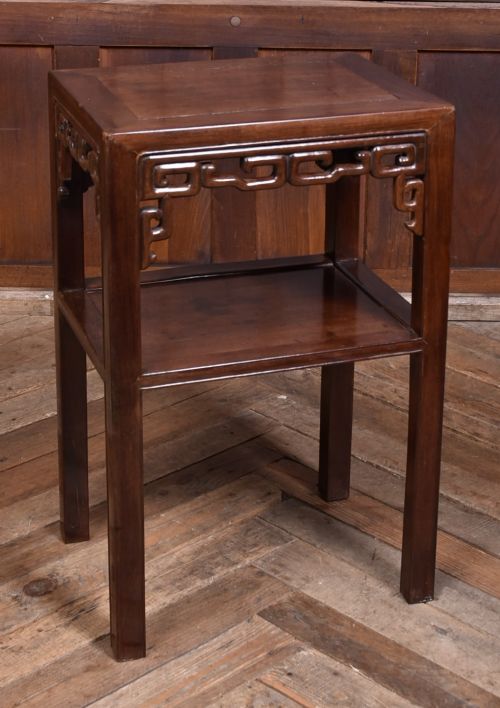
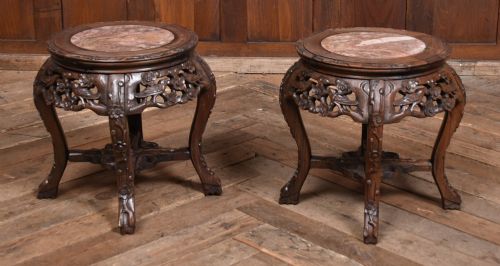
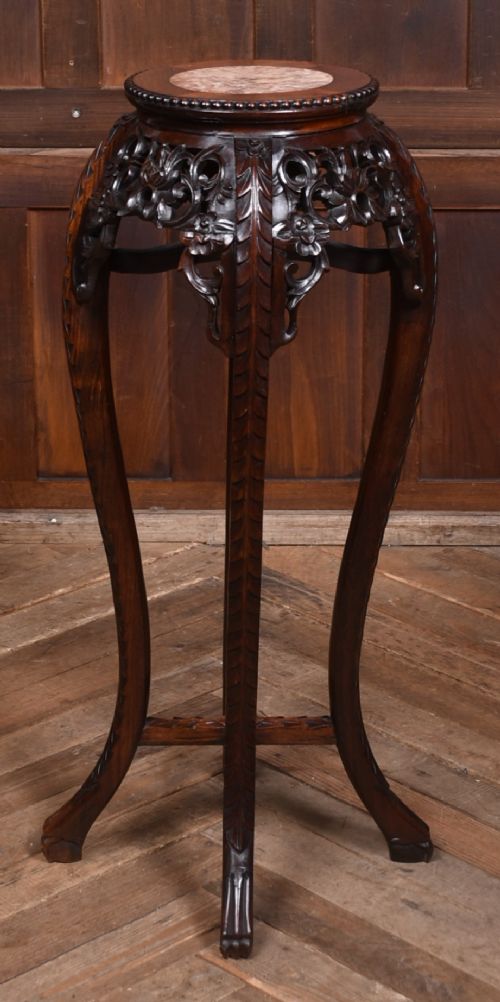
These carved hardwood pedestal display pieces elevate plants, vases and urns in interiors, offering dense timber construction and intricate oriental carving.
Carved Hardwood Pedestal Display
A carved hardwood pedestal display serves primarily as a raised platform for plants, jardiniere bowls, vases, and urns within a room. When searching this phrase, buyers encounter items produced across the nineteenth century and into the early twentieth century, spanning Victorian periods, the Qing Dynasty, and Arts and Crafts contexts.
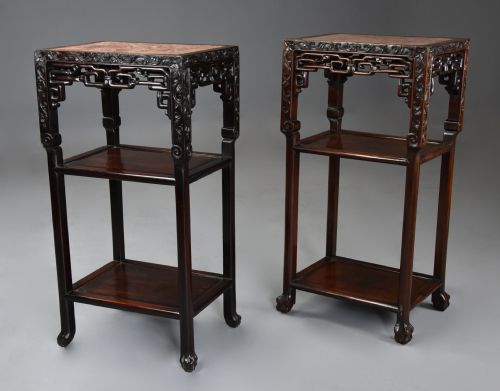
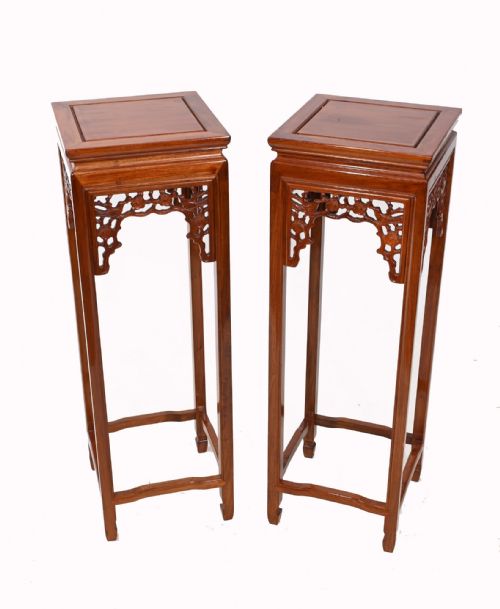
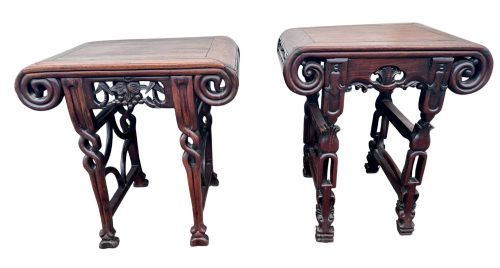
The dominant forms on this page include plant stands, jardiniere stands, occasional tables, bonsai stands, and torchères. Many examples originate from Chinese export workshops, utilising dense timbers like rosewood, padouk, and hongmu, frequently incorporating inset marble tops.
Makers and retailers such as Liberty of London also contributed to this international aesthetic, producing Japanese and Asian-influenced pieces for Western interiors. Buyers find single pedestals, matching pairs, and two-tier variants designed to hold heavy decorative objects securely.
Craftsmanship and Material Selection
Quality separates through the depth and crispness of the hand carving, where superior examples exhibit undercut details and symmetrical motifs without mechanical stiffness. The choice of timber also dictates standard, with tightly grained rosewood and dense hongmu representing finer production than lighter, plain timbers.
The integration of the marble insert influences the standard of the piece, as well-fitted, unblemished stone indicates superior workshop execution. Additionally, the survival of matching pairs maintains a higher tier of desirability compared to single survivors.
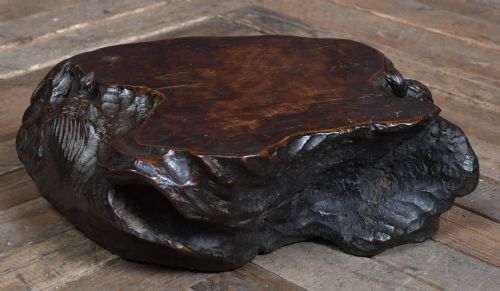
A diminutive turtle carved from hardwood patiently holds up a tabletop for display, proving that nineteenth-century artisans enjoyed hiding whimsical creatures in plain sight.
Liberty of London
The Carved Hardwood Pedestal Display Glossary
- Hongmu
- A dense, dark tropical hardwood used extensively in traditional Chinese furniture making. It translates literally to red wood and patinas richly with age.
- Padouk
- A heavy, durable timber with a reddish hue that darkens over time. It provides a stable base for intricate hand carving on nineteenth-century stands.
- Jardiniere
- A large ornamental pot or stand for holding plants or flowers. These vessels sit atop pedestals to raise greenery off floor surfaces.
- Torchère
- A tall ornamental stand or candlestick originally designed to hold a torch or lamp. In later periods, these served as elevated display pedestals for vases.
- Qing Dynasty
- The final imperial dynasty of China, lasting from sixteen forty-four to nineteen twelve. Pieces from this era often feature traditional motifs and exceptional hardwood joinery.
Carved Hardwood Pedestal Display: Frequently Asked Questions
What is a carved hardwood pedestal display used for?
These stands serve as elevated platforms for heavy decorative items such as ceramic vases, bronze urns, and potted plants. They place focal points at eye level within a room.
Historically, they protected expensive porcelain and plants from damp floors while adding architectural interest to empty corners or flanking larger furniture pieces.
How do I identify a Qing Dynasty stand?
Qing Dynasty stands typically utilise dense Asian hardwoods like hongmu or rosewood and feature traditional hand-carved floral or geometric motifs. They often incorporate inset marble tops designed to resist moisture from plant pots.
Examining the construction reveals traditional joinery methods without modern metal fasteners. The timber patination also develops a deep, mellow sheen over decades of handling.
Are marble top stands practical for everyday use?
The marble insert provides a smooth, water-resistant surface that tolerates damp plant pots and moisture without staining the surrounding wood. This makes them highly functional for indoor gardening.
Owners should use protective pads beneath heavy ceramic vessels to prevent scratching the stone. Regular dusting preserves the carved wooden apron beneath.
What is the difference between a jardiniere stand and a plant stand?
Jardiniere stands generally feature slightly broader tops designed to support heavy planter bowls filled with soil and foliage. Plant stands can encompass a wider variety of top shapes intended for smaller pots or display figures.
Both forms utilise sturdy hardwood frames to bear vertical weight safely. The distinction often depends on the original workshop designation rather than structural differences.