

Carved Hallway Seating
Carved hallway seating comprises robust wooden benches, settles and chairs designed to furnish entrance spaces with utilitarian strength and decorative presence.
Carved Hallway Seating
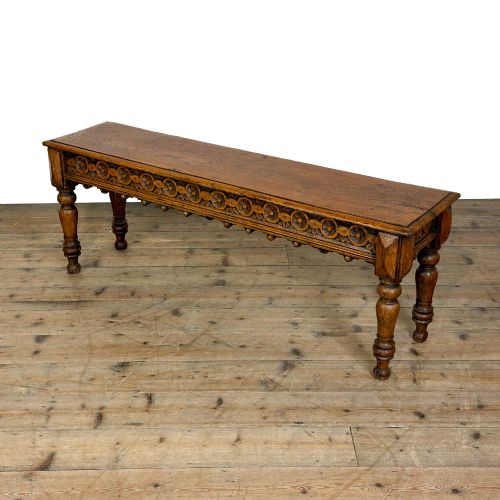
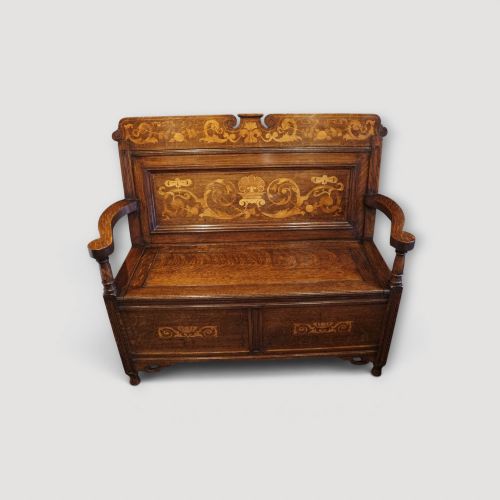
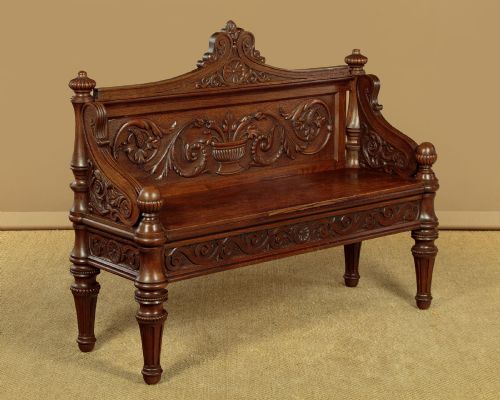
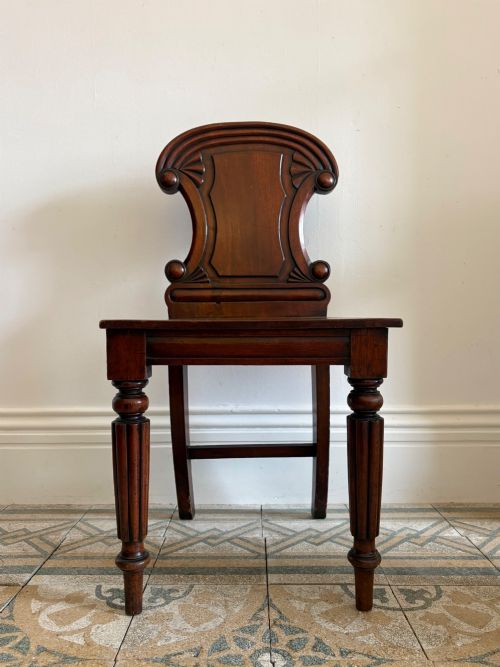
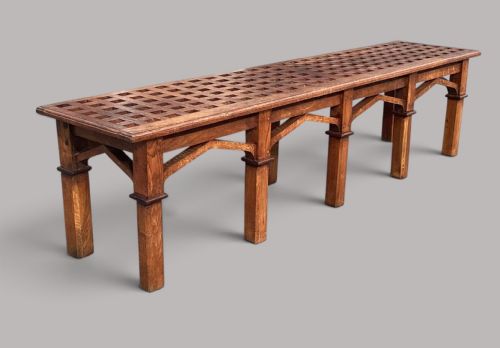
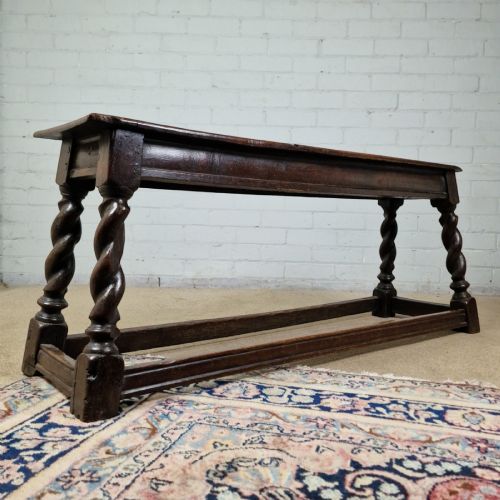
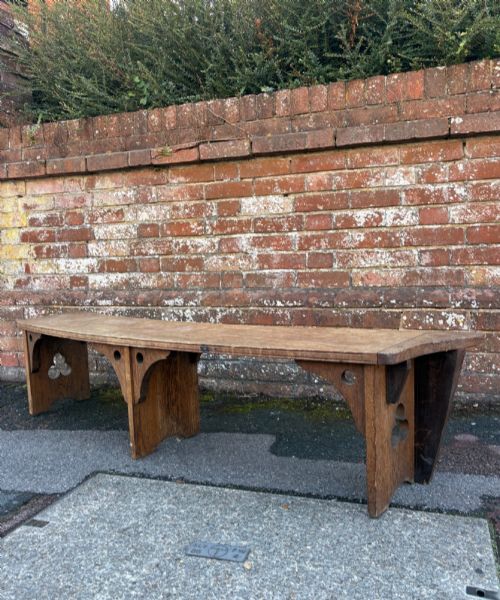
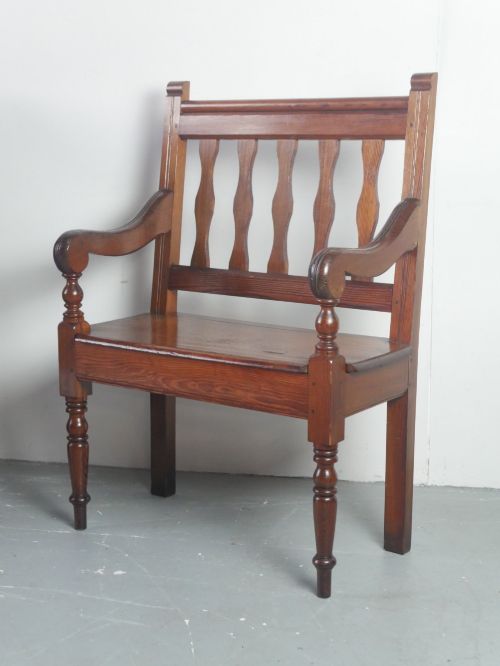
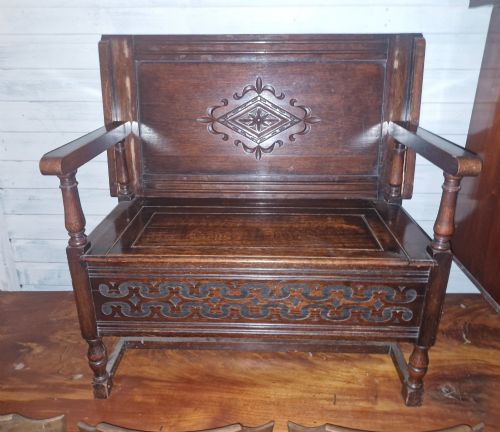
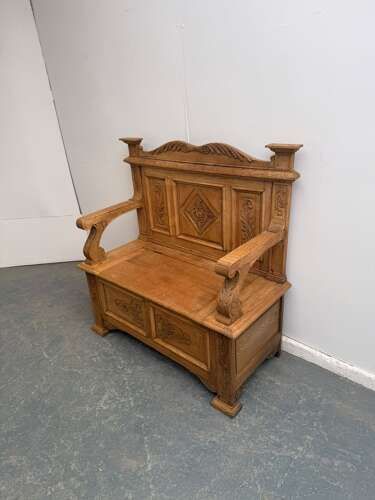
Carved hallway seating encompasses heavy wooden benches, settles, window seats and single chairs intended for entryways and reception spaces. These items frequently incorporate integrated storage such as lift-up seats or central cupboards, while others combine with coat hooks or stick stands.
The pieces available originate from various periods including the eighteenth, nineteenth and early twentieth centuries. Victorian and Edwardian examples predominate alongside earlier Georgian items and specific revival forms.
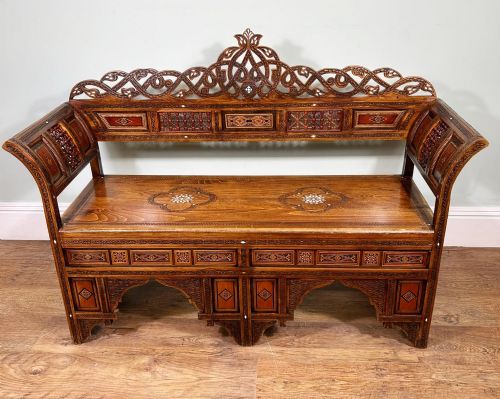
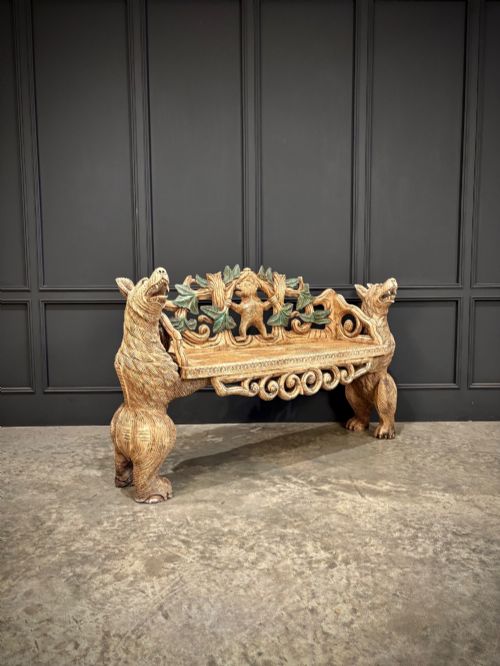
Makers utilised distinct regional designs, producing everything from plain English country benches to elaborate Gothic and Jacobean revival styles. Some incorporate international elements, including Syrian Damascus inlay and Black Forest carving.
Materials and construction
Oak and mahogany serve as the primary timber materials for these items, supplemented by occasional walnut. Joinery relies on traditional panelled construction, robust framing and supportive carved brackets.
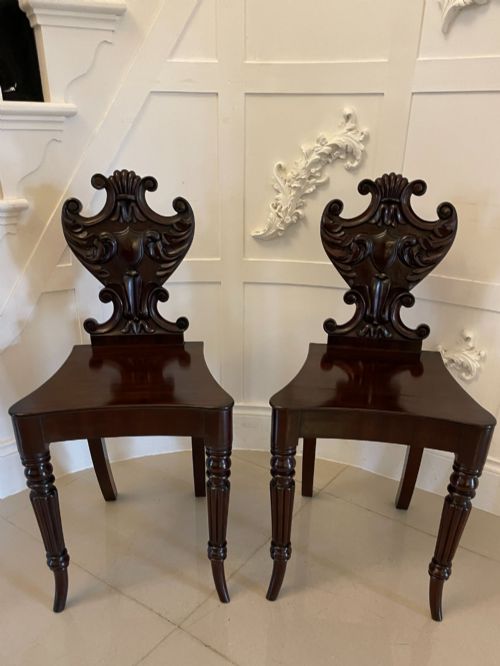
Decorative work involves hand carving, incised panels, heraldic shield backs, and surface inlays using brass, mother-of-pearl and contrasting woods. Upholstery and fabric appear on select window seats and benches alongside structural iron and brass mounts.
Look closely and you will find carved bears holding the bench arms steady.
Judgement of quality
Quality rests on the crispness of the hand-carved ornamentation and the selection of figured timber. Superior examples demonstrate thoughtful integration of structural support with decorative carving rather than superficial surface decoration applied to plain frames.
Proportion and stability separate standard utility items from pieces commissioned from notable makers or workshops. Original hardware, intact lift mechanisms and well-preserved surface finishes indicate higher execution standards.
GIllows·Jas Shoolbred·James Shoolbred & Co·Strahan & Co
The Carved Hallway Seating Glossary
- Settle
- A wooden bench with a high solid back and enclosed arms designed to block draughts in an entranceway. Many examples include a hinged seat providing concealed storage beneath.
- Hall Chair
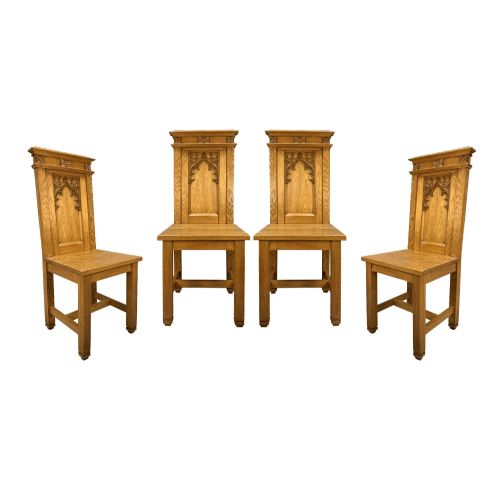
- A rigid wooden seat with a high carved or panelled back, usually lacking upholstery. These items were positioned in reception rooms for brief usage rather than prolonged sitting.
- Window Seat
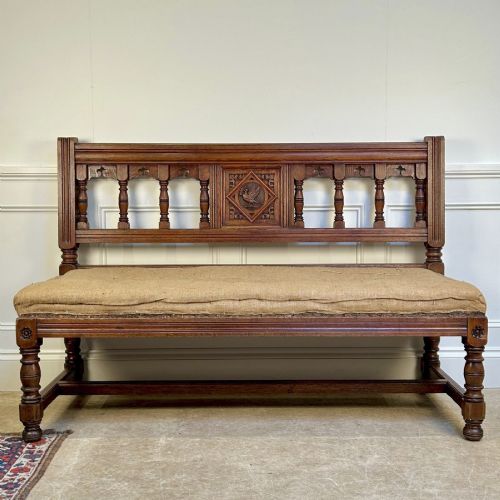
- A long bench or stool constructed to fit beneath a window recess. These pieces frequently feature carved mahogany or oak frames with padded upholstery.
- Gothic Revival
- A nineteenth-century architectural and decorative style inspired by medieval forms. Items show pointed arch motifs, trefoil carvings and heavy vertical proportions.
Carved Hallway Seating: Frequently Asked Questions
What is carved hallway seating?
Carved hallway seating covers wooden benches, settles and stiff-backed chairs designed for entryways and reception areas. These items provided functional seating for visitors while displaying the homeowner's taste through carved ornamentation.
Most examples date from the Victorian and Edwardian eras, drawing on earlier Gothic, Jacobean and Georgian design traditions. They range from simple oak benches to elaborate mahogany pieces with heraldic shields.
How do I live with antique hallway seating?
Placing these items in an entrance hall or landing creates a strong focal point while offering a practical spot for putting on shoes. Their narrow profiles allow them to sit flat against walls without blocking movement.
Maintenance involves treating wooden surfaces with appropriate wax and avoiding placement near direct heat sources. This preserves the original timber and prevents shrinkage in panelled joints.
How do I tell periods apart?
Different eras reveal themselves through wood choice, carving depth and stylistic revivals. Eighteenth-century pieces generally show simpler, heavier oak construction, whereas Victorian items often feature dense, elaborate Gothic or Jacobean carving.
Edwardian furniture frequently lighter forms, incorporating Arts and Crafts movement influences or inlaid details. Examining the construction of the seat box and interior framing also helps confirm the manufacturing period.