




Carved Half Moon Table
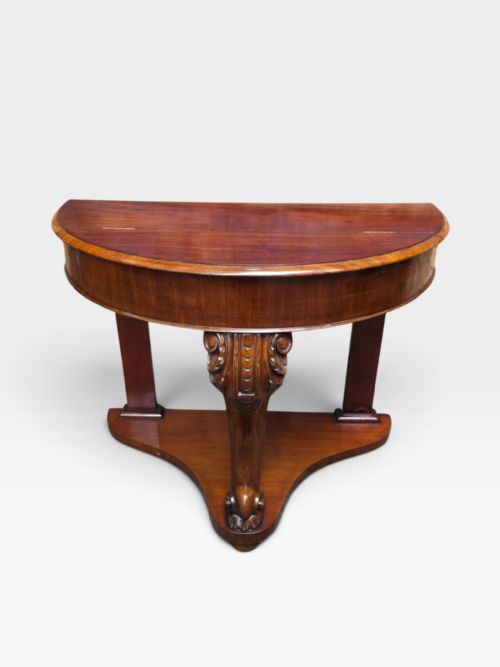
A carved half moon table brings architectural curve to a room, fitting tight against a wall while offering a generous flat surface on top.
Carved Half Moon Table
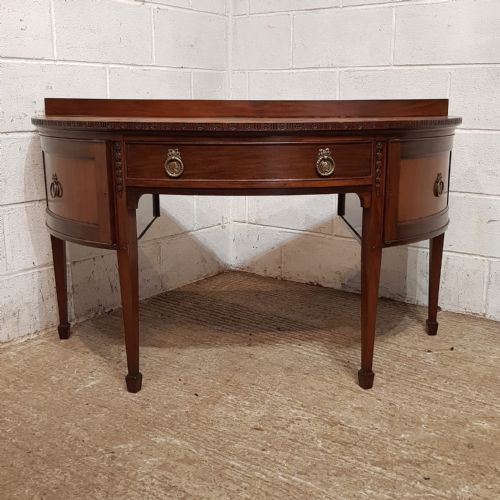
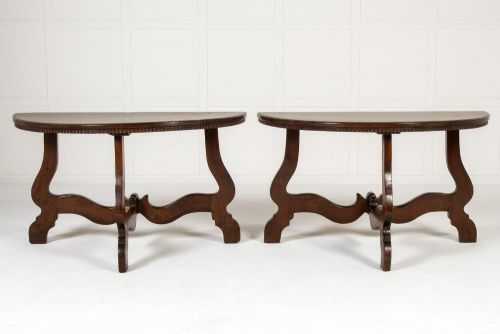
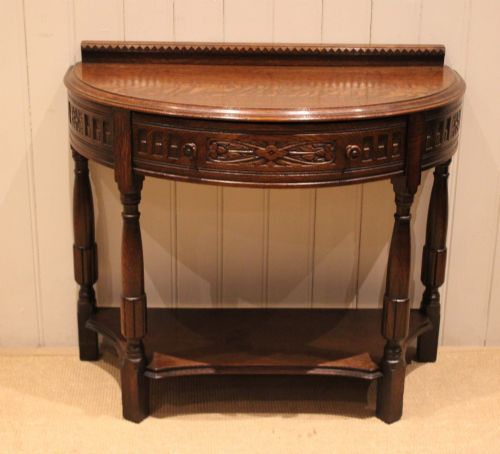
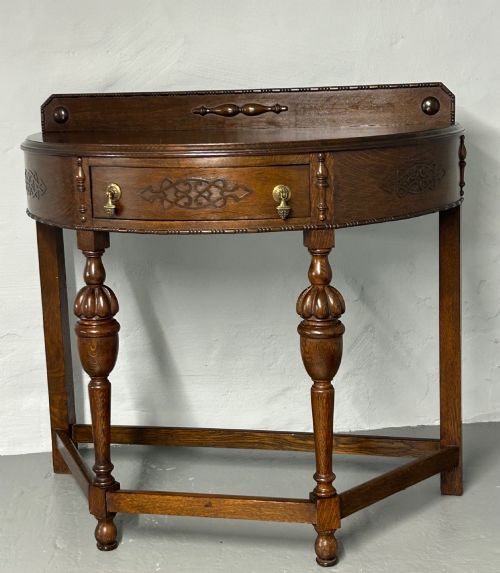
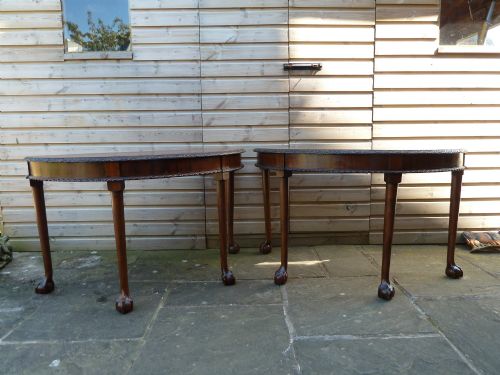
A carved half moon table, frequently catalogued as a demilune or console, appears across multiple centuries from the eighteenth through to the early twentieth. These pieces function primarily as hallway or salon furniture, designed with a flat rear edge to sit flush against the wall.
The selection ranges from simple oak and mahogany examples to elaborate Italian walnut pieces and Chinese hardwood furniture from the Qing dynasty. Formats include folding card tables, side cabinets, tea tables, and dedicated console tables.
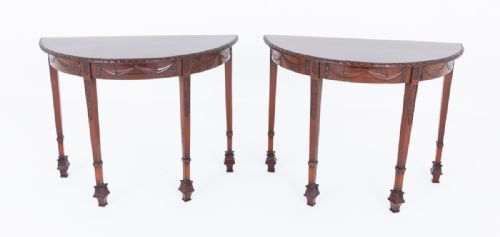
Revival styles dominate the later periods, drawing heavily on Georgian, Queen Anne, and Adams design idioms. Buyers encounter both single items and matched pairs intended for flanking doorways or fireplaces.
Materials and Construction
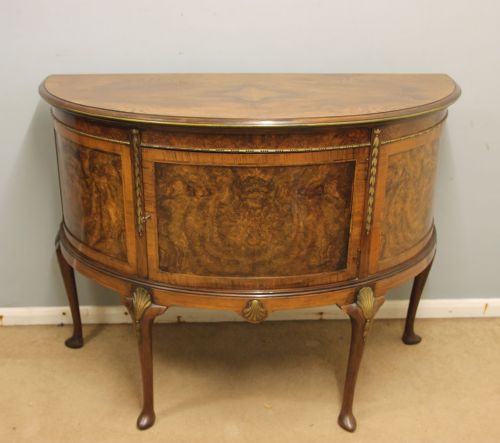
Makers relied on timber selection to define the visual weight of each carved half moon table, employing dense woods such as mahogany, walnut, burr walnut, and oak. Finer surfaces incorporate satinwood marquetry, red lacquer, giltwood, or painted decoration.
Structural elements frequently feature detailed carving, particularly on legs and friezes, alongside inlaid veneers. Tops are occasionally finished with inset marble, such as rouge marble, adding both colour and weight to the composition.
Canines take physical form in the evidence through carved wooden hounds serving as table supports.
Craftsmanship and Proportion
Quality rests in the crispness of the carving and the selection of figured timbers like burr walnut or flame mahogany. Superior examples display balanced proportions where the curve of the top integrates cleanly with the leg placement and frieze detail.
Secondary woods, joinery execution, and the preservation of original surface finishes separate standard production pieces from masterworks. The integration of specialised elements, such as hinged folding mechanisms on card tables or inset marble slabs, demands precise carpentry.
The Carved Half Moon Table Glossary
- Demilune
- Half-moon shape, describing furniture with one curved side and one straight edge for wall placement.
- Console table
- A table designed to be fixed against a wall, often supported by ornamental brackets or legs.
- Marquetry
- Decorative patterns formed by the insertion of contrasting pieces of wood or other materials into a veneer.
- Giltwood
- Wood that has been treated with gold leaf or gold paint to produce a metallic surface finish.
- Frieze
- The middle horizontal member of a classical entablature, often carved or decorated on these tables.
Carved Half Moon Table: Frequently Asked Questions
Where should I place a half moon table?
These tables suit narrow hallways, landings, and entrance foyers where depth is restricted. The flat rear edge allows the piece to rest securely against the wall without projecting too far into the floor space.
They also function effectively in living rooms or dining spaces beneath mirrors or windows, providing a surface for lamps and decorative objects.
How do I identify the wood type?
Examine the grain pattern and colouration across the flat surfaces. Mahogany presents a reddish-brown tone with a straight or ribbon grain, while walnut offers darker brown shades with varied figuring.
Burr walnut shows swirling, knotty patterns created from tree growths, and oak displays a distinct open grain with characteristic medullary rays.
How do I distinguish eighteenth-century pieces from later revivals?
Eighteenth-century examples often exhibit hand-cut joinery, native timber framing, and subtle signs of age in the patina. Later pieces from the nineteenth and twentieth centuries frequently reflect revival styles such as Queen Anne or Chippendale, utilising machinery alongside traditional hand-carving.
Examining the secondary woods on the underside and inside drawers provides further context for dating.