
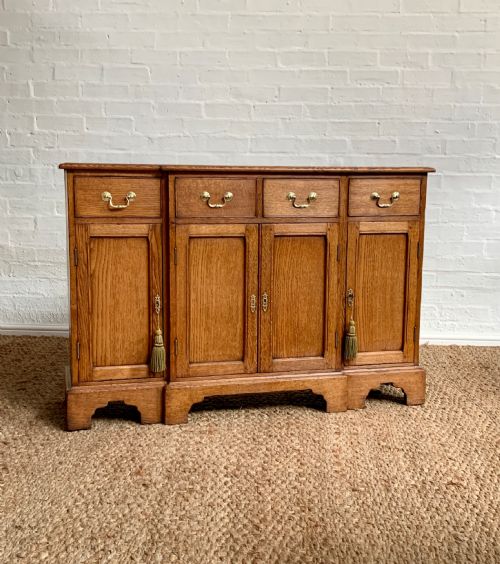
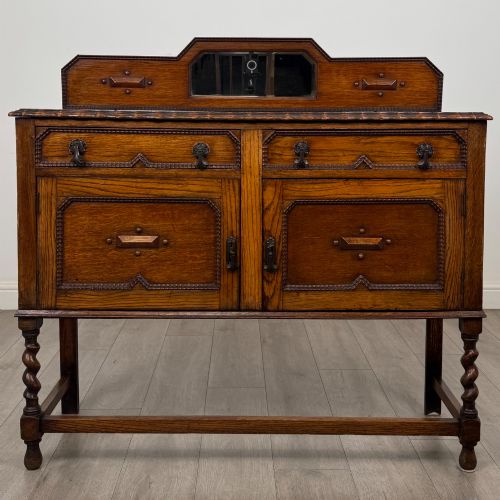
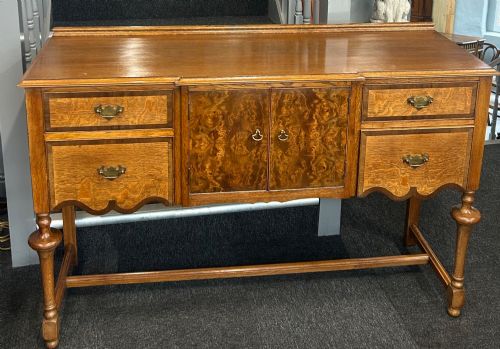


Carved Golden Oak Server
A carved golden oak server brings warmth and sturdy presence to a room, offering generous storage through solid craftsmanship.
Carved Golden Oak Server
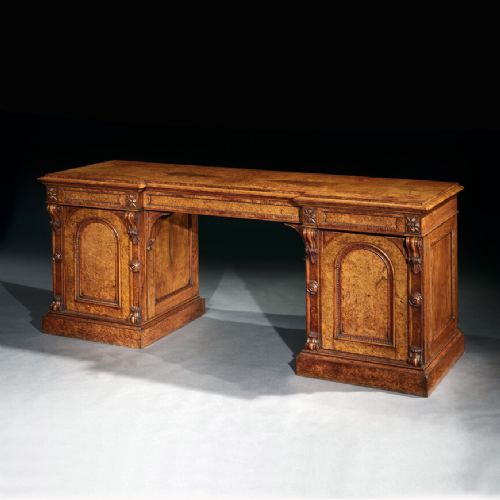
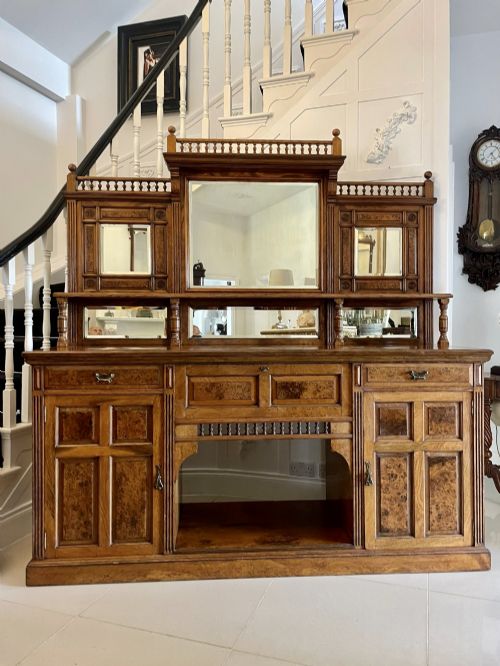
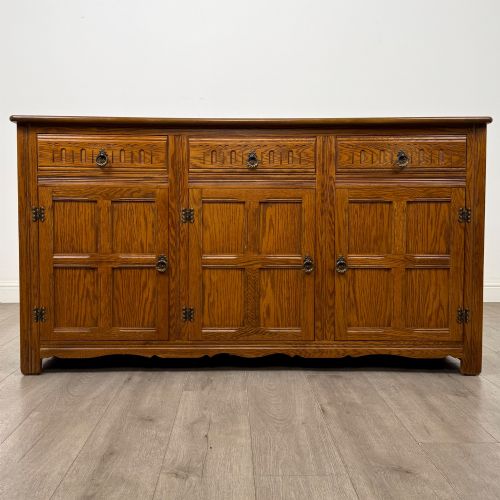
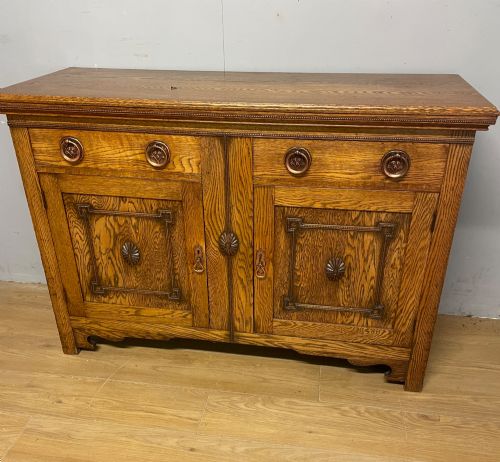
A carved golden oak server typically appears as a substantial sideboard, buffet, or hall table spanning the Victorian, Edwardian, and Arts and Crafts periods. These pieces serve as functional storage furniture, often incorporating cupboards, drawers, and sometimes mirror backs.
The versions most commonly found here date from the late nineteenth and early twentieth centuries, reflecting revival styles such as Jacobean and Gothic influences alongside straightforward Arts and Crafts design.
Makers utilised rich timbers, occasionally pairing oak with pollard oak or burr walnut to create striking grain patterns and textured surfaces suited to formal dining rooms and hallways.
Materials and construction
Makers constructed these servers primarily from solid oak, sometimes combined with contrasting pollard oak or burr walnut veneers to enhance the visual depth of the timber. Brass and copper hardware, including handles and hinges, frequently complement the rich brown and golden tones of the wood.
Traditional joinery methods ensure structural longevity, while hand-carved details, such as Green Man motifs or stylized foliage, demonstrate the cabinetmaker's skill in shaping seasoned timber.
Listings feature oak alongside contrasting pollard oak and burr walnut, spanning the Victorian, Edwardian, and Arts and Crafts periods.
Assessing quality and execution
Quality in these pieces rests upon the selection of timber and the crispness of the hand-carving rather than mere ornamentation. Superior examples display carefully matched grain patterns across doors and drawer fronts, alongside robust internal construction that uses solid secondary woods.
Hardware integrity and the retention of original brass or copper fittings further distinguish finer examples from standard production pieces, reflecting the care taken during manufacture.
The Carved Golden Oak Server Glossary
- Pollard oak
- Timber taken from trees that have been pollarded, producing a tightly clustered, richly figured grain pattern. This decorative wood is frequently used for drawer fronts and cabinet doors to create visual contrast.
- Arts and Crafts
- A design movement emphasising handcraftsmanship, simple forms, and traditional medieval construction methods. Pieces from this tradition often feature unpretentious oak surfaces and understated metal hardware.
- Jacobean Revival
- A nineteenth-century style that imitates the heavy, ornate furniture of the seventeenth century. Characteristic elements include geometric mouldings, turned legs, and deep relief carving.
- Credenza
- A long, low sideboard or cabinet traditionally used for displaying serving dishes and storing dining accessories. In later periods, the form adapted to various domestic rooms as general storage.
Carved Golden Oak Server: Frequently Asked Questions
What periods do these servers come from?
The pieces span from the late seventeenth-century revival styles up through the Victorian, Edwardian, and early twentieth-century periods. Most examples encountered date from the Victorian and Edwardian eras.
Craftsmanship during these decades shifted from heavily carved revival motifs to the simpler, honest construction championed by the Arts and Crafts movement.
How were these servers used originally?
These pieces functioned primarily in dining rooms and halls for storing tableware, linens, and serving dishes. Their top surfaces provided space for displaying silver or serving food during gatherings.
In grander settings, hall tables and mirror-backed sideboards also served as prominent decorative furniture to greet visitors near an entrance.
How do I care for golden oak furniture?
Maintain the timber by keeping it away from direct heat sources and sudden humidity changes to prevent the wood from splitting. Regular dusting with a soft, dry cloth preserves the natural sheen of the finish.
Avoid modern silicone polishes, opting instead for traditional beeswax occasionally to nourish the oak and protect the carved details.
How do I distinguish Arts and Crafts from Victorian styles?
Victorian servers often feature heavy, ornate carvings, dark finishes, and elaborate mirror backs reflecting revival influences like Gothic or Jacobean styles. They prioritize historical display and formal grandeur.
Arts and Crafts pieces emphasise structural simplicity, exposed joinery, and natural oak finishes, celebrating the texture of the material over applied ornamentation.