


Carved French Oak Chest
A carved french oak chest brings grounded weight and regional character into a room through deep-grained timber and robust joinery.
Carved French Oak Chest
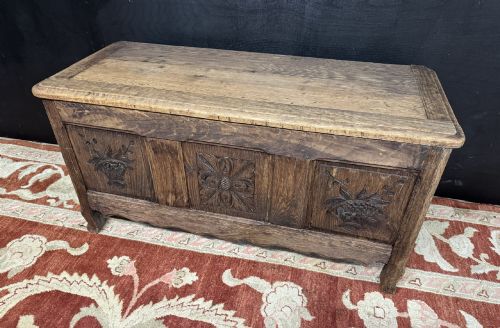
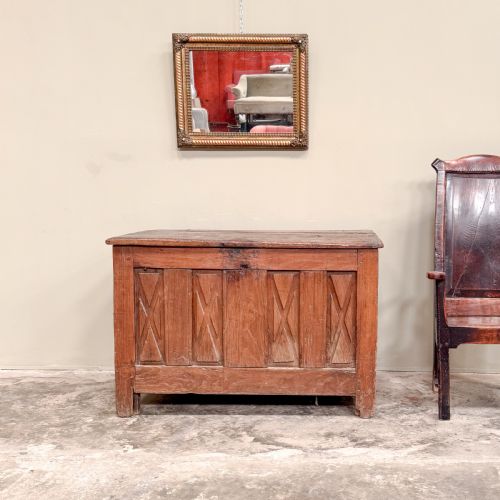
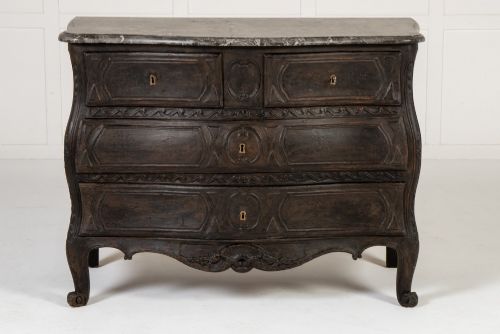
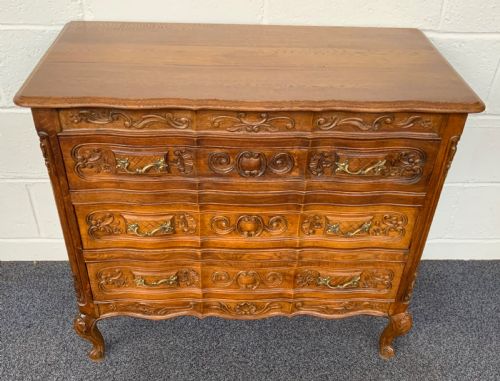
When you search for a carved french oak chest, you encounter sturdy storage pieces spanning from seventeenth-century coffers to twentieth-century commodes and chests of drawers. These items originate from various regional traditions, including provincial workshops and Breton folk art studios, often displaying distinct local carving motifs.
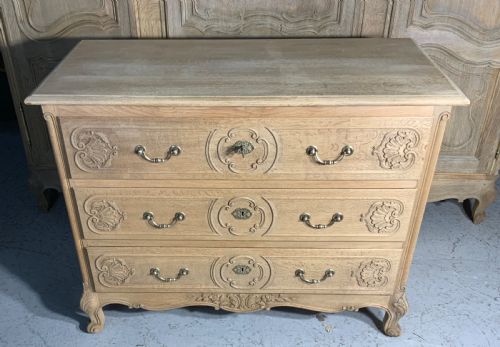
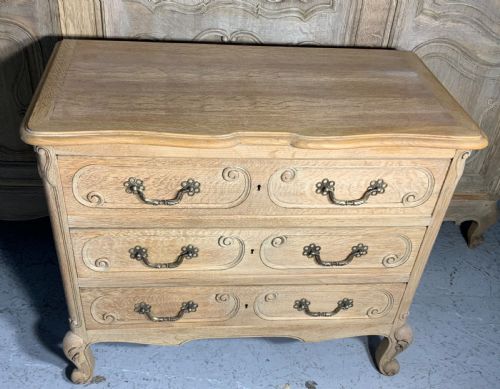
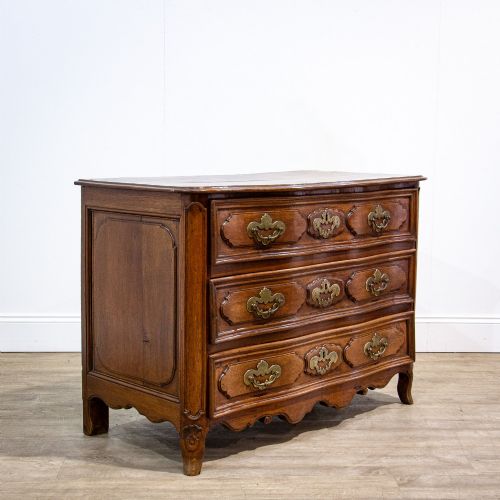
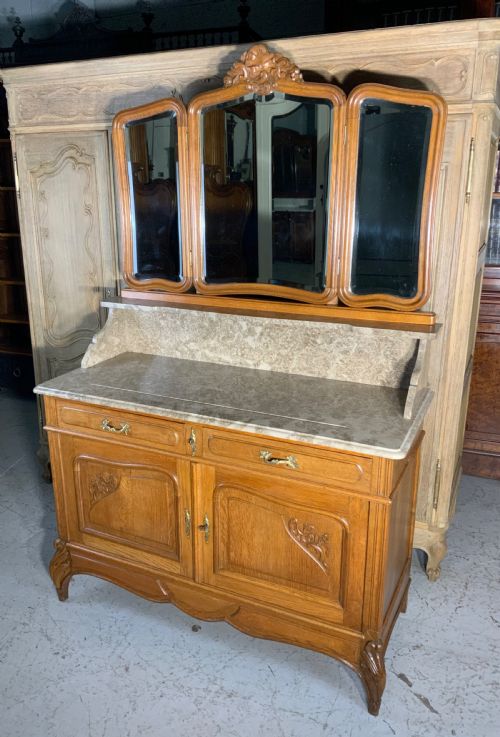
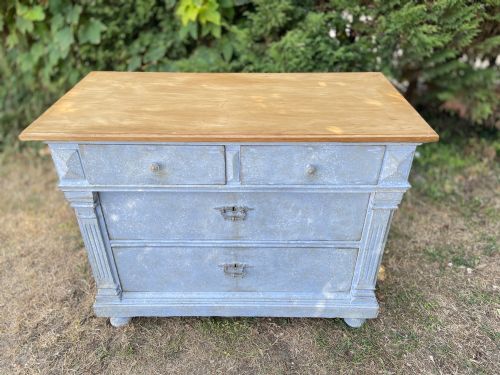
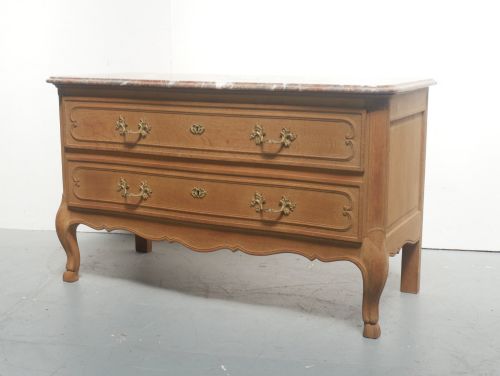
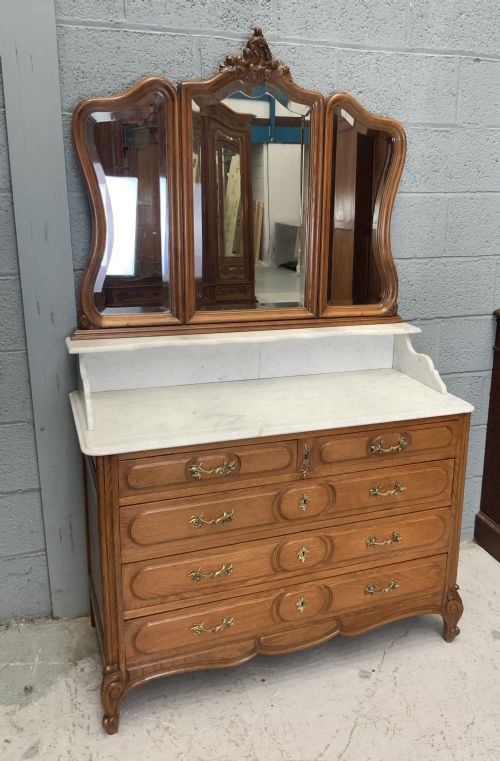
The most common examples on this page are chests of drawers and commodes from the eighteenth and nineteenth centuries, alongside heavy twentieth-century interpretations. You will also find specialised variants like marble-topped washstands, deed boxes, and two-piece cabinets that incorporate traditional oak panels.
Materials and construction methods
These pieces are constructed primarily from solid oak, occasionally supplemented by chestnut or fruitwood, utilising traditional pegged mortise and tenon joinery. Secondary materials such as brass handles, iron hardware, and inset marble tops appear frequently across nineteenth and twentieth-century iterations.
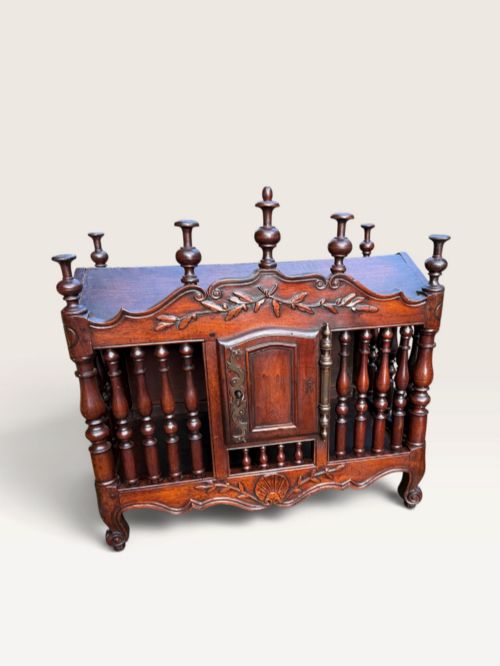
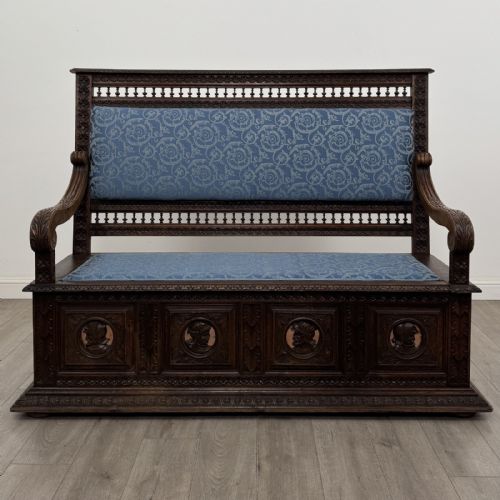
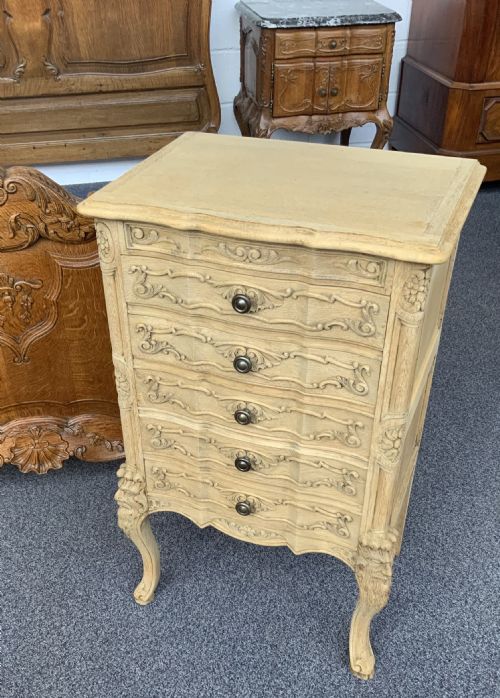
Makers shaped the heavy timber using hand chisels for relief panels and mouldings, while later pieces incorporate turned elements and geometric diamond-point detailing. Surface treatments range from natural scrubbed oak and bleached finishes to traditional painted coats and ebonised treatments.
Carved French Oak Chest Retail Price Guide 2026
Typical asking prices for carved french oak chest among the pieces listed under this phrase on Sellingantiques today, from the lower quarter to the upper quarter. They describe what is for sale here now, not the wider market.
Listings feature carved french oak chests spanning from the seventeenth century through the early twentieth century, incorporating marble, brass, and iron elements.
Assessing quality in regional furniture
Quality rests upon the crispness of the hand-carved relief work and the structural integrity of the heavy oak carcass. Superior examples demonstrate thoughtful integration of natural grain patterns with balanced proportions and original period hardware.
Lesser items may display mechanical uniformity in their surface carving or later alterations to the timber finish that obscure the original patination. The depth of the regional carving and the retention of period secondary woods like chestnut distinguish standard provincial output from finer maker-attributed work.
Tahan of Paris
The Carved French Oak Chest Glossary
- Commode
- A low chest of drawers or cabinet originating in France during the seventeenth century. These pieces typically feature multiple drawer tiers and often stand on short cabriole or bracket feet.
- Coffer
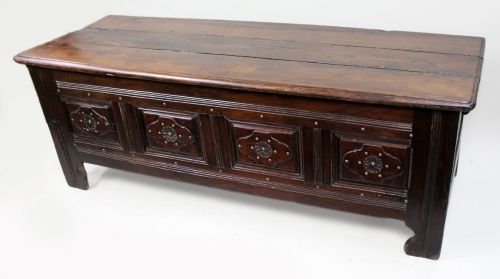
- A large, heavy storage chest with a hinged lid, traditionally used for linens and valuables before the widespread adoption of drawer chests. Early examples often display primitive hand-carved panels.
- Serpentine
- A furniture front or top shaped with a curving line, featuring a convex centre flanked by concave ends. This contour requires skilled woodworking to achieve.
- Bombe
- A swell-front or bulging profile characteristic of certain eighteenth-century commodes, where the vertical lines curve outward. It represents an ambitious feat of timber shaping.
- Bleached oak
- Timber treated to lighten its natural dark tone while retaining the prominent grain of the wood. This finish appears frequently on twentieth-century interpretations of provincial designs.
Carved French Oak Chest: Frequently Asked Questions
How do I date a carved french oak chest?
Dating relies on examining the construction marks, drawer dovetails, and the style of the relief carving. Eighteenth-century pieces typically show hand- cleft timber and pegged joints, whereas later iterations incorporate machine-sawn components.
Hardware and secondary woods like chestnut or pine also offer clues. Earlier provincial coffers feature rustic board construction, while nineteenth-century commodes adopt more standardised carcass dimensions.
What is the difference between a coffer and a commode?
A coffer is a deep storage chest accessed via a top-hinged lid, designed primarily for blankets and bulk textiles. A commode is a drawer-based chest intended for general room storage and display.
Commodes developed later in furniture history to provide organised access to clothing without lifting a heavy lid. Both forms utilise carved oak, but their internal mechanics and functional roles differ entirely.
How should I care for a scrubbed oak surface?
Scrubbed and bleached oak finishes require minimal intervention, avoiding modern synthetic polishes that can seal the porous grain. Dust the timber regularly with a dry cloth to prevent particulate buildup in the carved recesses.
If conditioning is necessary, apply a modest amount of natural beeswax formulated for antique wood. Keep these pieces away from direct heat sources and strong sunlight to prevent timber splitting.
Where were regional french oak chests made?
These pieces emerged from diverse provincial workshops across France, including distinct regional hubs like Brittany and Normandy. Local craftsmen adapted national stylistic trends, such as Louis XV or Gothic revival, to suit local timber availability.
As a result, provincial chests often display unique folkloric motifs and construction quirks specific to their geographic origin.