

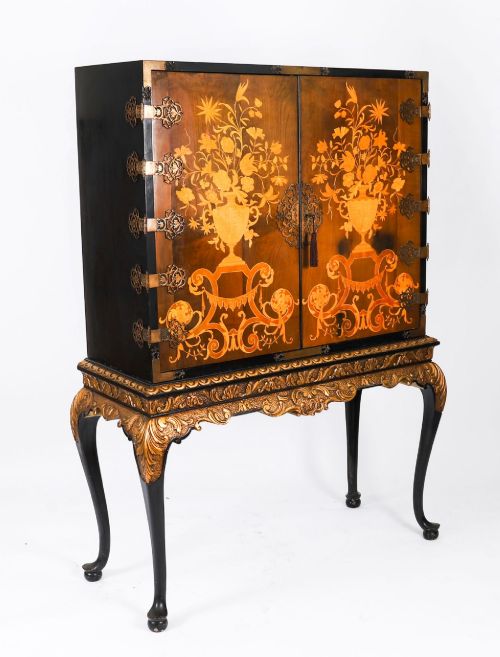

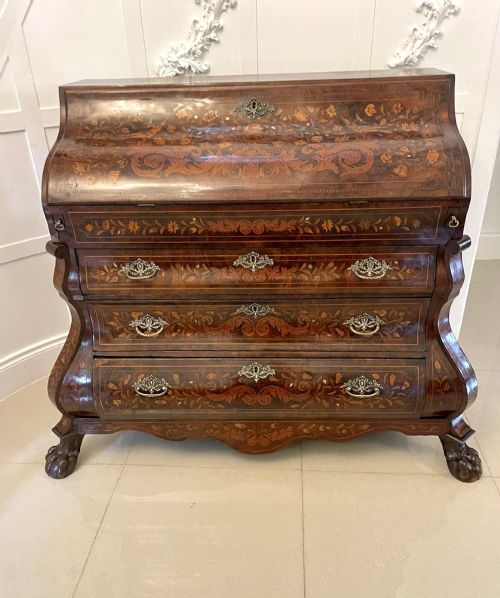
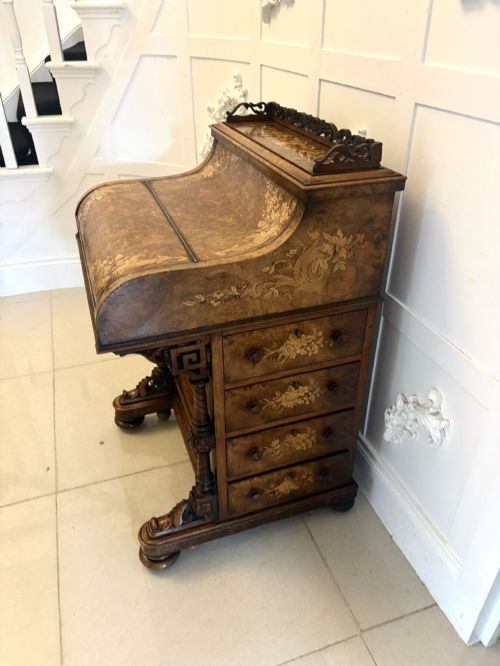

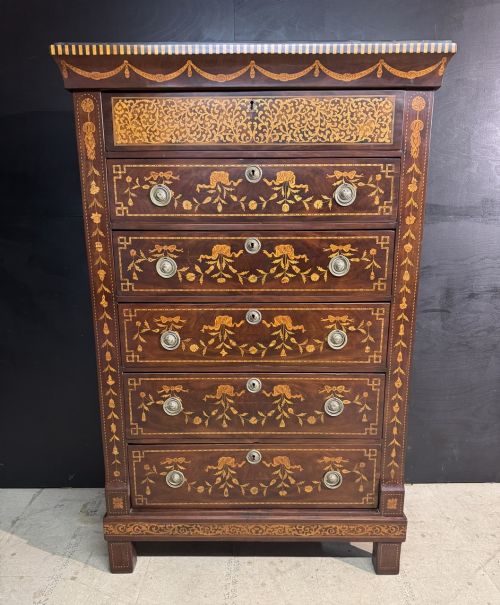
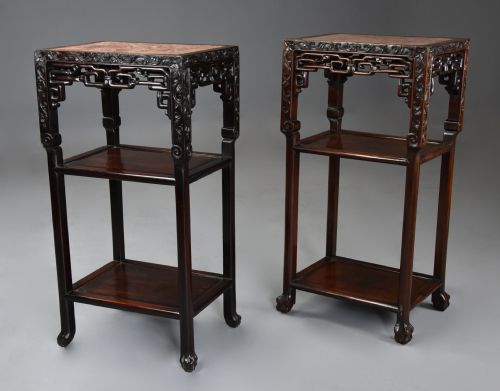
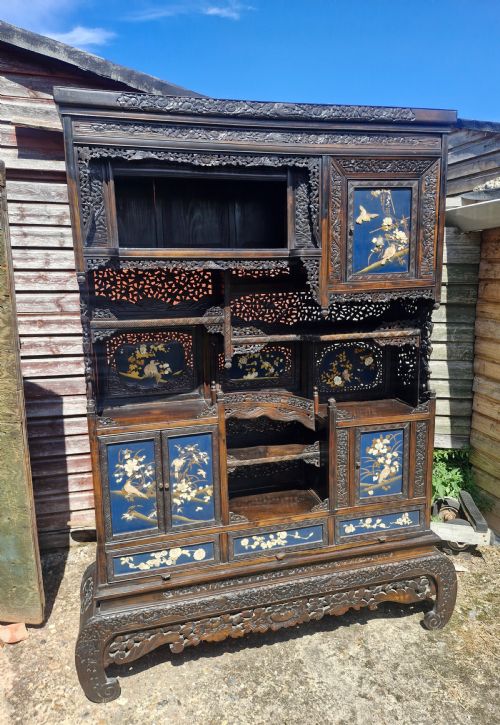
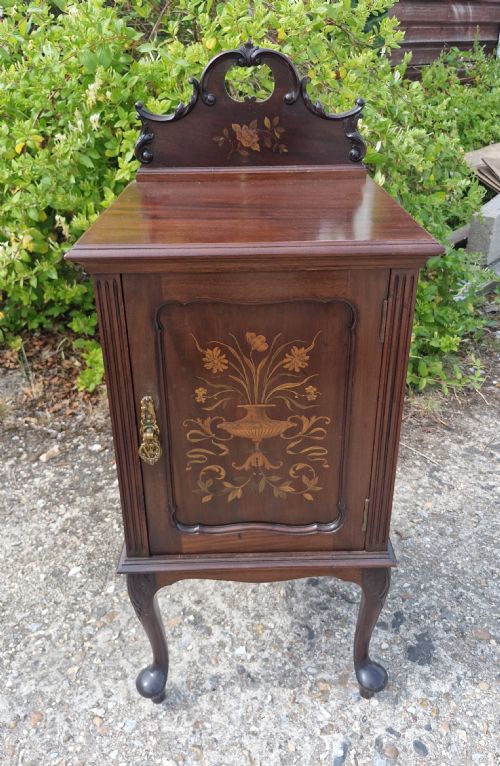

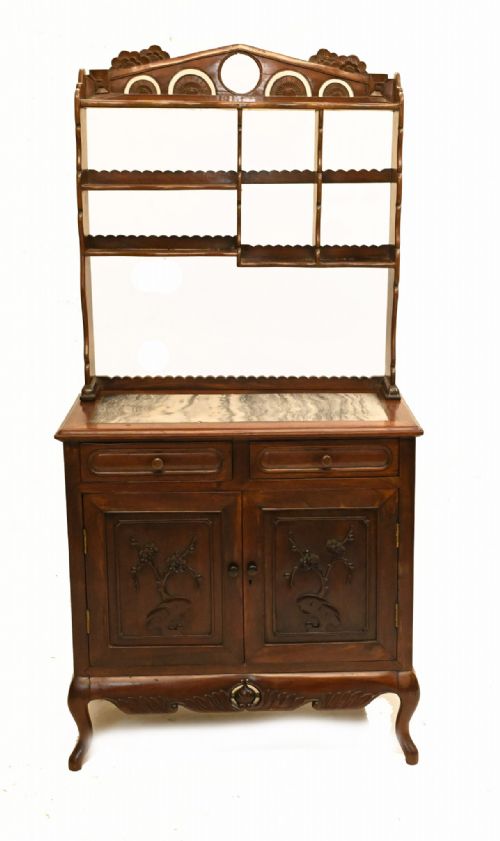
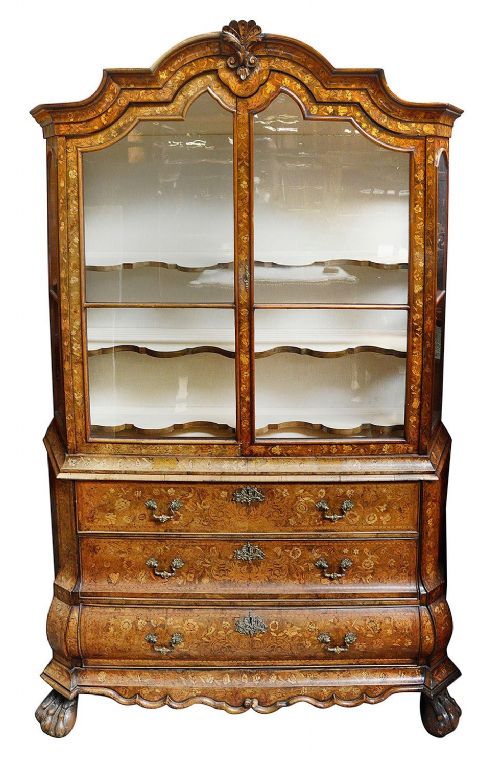


Carved Floral Cabinet
These carved floral cabinet examples bring together centuries of intricate botanical woodwork, offering both practical storage and striking decorative presence.
Carved Floral Cabinet
A carved floral cabinet encompasses a diverse range of forms, from display cabinets and sideboards to bedside tables and bureaus. These pieces emerge from various origins spanning European workshops, including Dutch and French traditions, alongside Chinese, Japanese, and Anglo-Indian designs.
Buyers most frequently encounter walnut display furniture featuring detailed marquetry, alongside sturdy oak sideboards and compact bedside cupboards. The selection reflects global craftsmanship ranging from eighteenth-century European floral inlays to nineteenth-century oriental hardwood carvings.
How they were made
Cabinet makers utilised a rich palette of primary timbers including oak, walnut, mahogany, fruitwood, and dense Asian hardwoods like padauk. These were frequently combined with intricate marquetry and parquetry using contrasting woods to render floral motifs across doors and panels.
Surface ornamentation relied heavily on hand carving, floral inlay, lacquer work, and glass panelling. Workshops employed traditional joinery techniques to construct robust carcases, housing shelves and drawers within bombe, serpentine, or breakfront shapes.
Carved Floral Cabinet Retail Price Guide 2026
Typical asking prices for carved floral cabinet among the pieces listed under this phrase on Sellingantiques today, from the lower quarter to the upper quarter. They describe what is for sale here now, not the wider market.
Several cabinets conceal intricate floral marquetry so detailed it includes tiny wooden butterflies amongst the petals.
What varies in quality
The standard of a carved floral cabinet rests on the precision of the botanical inlays and the depth of the hand carving. Pieces displaying tightly fitted marquetry using varied fruitwoods and walnuts demonstrate superior craftsmanship compared to simpler surface treatments.
Structural harmony also dictates value, particularly in how well the decorative floral elements integrate with the overall proportions of the bureau, display cabinet, or sideboard. Well-preserved original surfaces and balanced proportions elevate certain examples above standard production.
The Carved Floral Cabinet Glossary
- Marquetry
- A decorative technique where small pieces of veneer are fitted together to form pictorial patterns, often floral sprays on cabinet doors. This method requires considerable skill to align different wood grains and colours.
- Bombe
- A swelling, outward-curving profile characteristic of certain eighteenth-century Dutch furniture. This bulging shape demands advanced woodworking techniques to apply fitted marquetry across rounded surfaces.
- Vitrine
- A glass-fronted display cabinet designed to showcase porcelain and curiosities. These pieces often feature detailed woodwork and floral inlays framing the transparent panels.
- Shodana
- A traditional Japanese multi-tiered display cabinet featuring asymmetrical shelving and intricate carvings. These pieces utilise dense hardwoods to support numerous small display compartments.
- Breakfront
- A cabinet design where the central section projects forward from the flanking sides. This architectural arrangement creates depth and visual interest on sideboards and large bookcases.
Carved Floral Cabinet: Frequently Asked Questions
What rooms suit a carved floral cabinet?
These cabinets suit living rooms, dining spaces, and bedrooms depending on the specific form. Compact bedside tables and small table cabinets fit intimate spaces, while large display cabinets and sideboards anchor larger rooms.
Placing them away from direct heat sources and strong sunlight protects delicate wood veneers and floral marquetry from drying out or fading over time.
How do I care for antique marquetry?
Maintenance involves applying appropriate furniture wax sparingly to nourish the timber and protect the veneer. Gentle dusting with a soft cloth prevents accumulation in carved recesses.
Avoid using liquid cleaners or silicone polishes, as these substances penetrate old finishes and can loosen the delicate wood pieces that form the floral patterns.
How can I tell Dutch marquetry apart?
Dutch pieces from the eighteenth and nineteenth centuries often feature exuberant floral and bird marquetry executed in walnut, fruitwood, and floral combinations. They frequently employ bombe or serpentine forms with rich, dark patination.
Comparing the density of the floral work and the types of secondary woods used inside drawers helps distinguish authentic period pieces from later reproductions.
What is an Anglo-Indian cabinet?
Anglo-Indian furniture combines British furniture forms with traditional Indian carving techniques, typically executed in dense timbers like padauk or teak. These items display deeply carved foliage and botanical motifs across pedestals and cupboards.
The heavy weight of the hardwood and the distinct nature of the deep relief carving separate these pieces from European walnut and oak equivalents.