




Carved Fireside Log Box
A carved fireside log box keeps fuel ready by the hearth, combining sturdy utility with the rich craftsmanship of the Victorian era.
Carved Fireside Log Box
When you search for a carved fireside log box, you find heavy wooden fuel containers designed to hold logs or coal near the fireplace. The selections on this page span the Victorian and Edwardian periods, including rustic country styles alongside more formal domestic coal boxes and purdoniums.
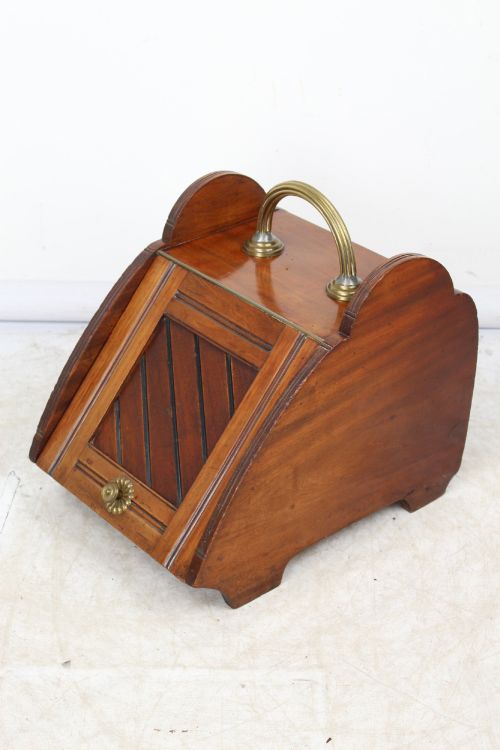
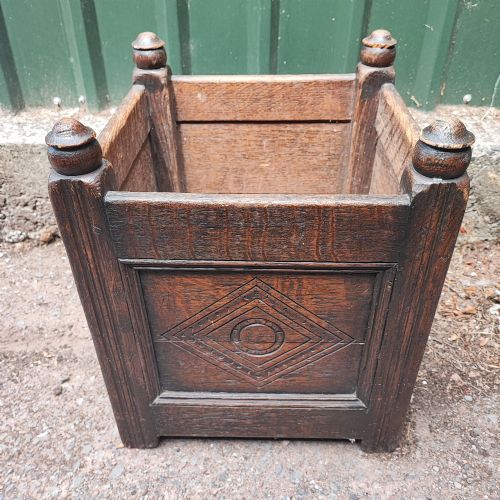
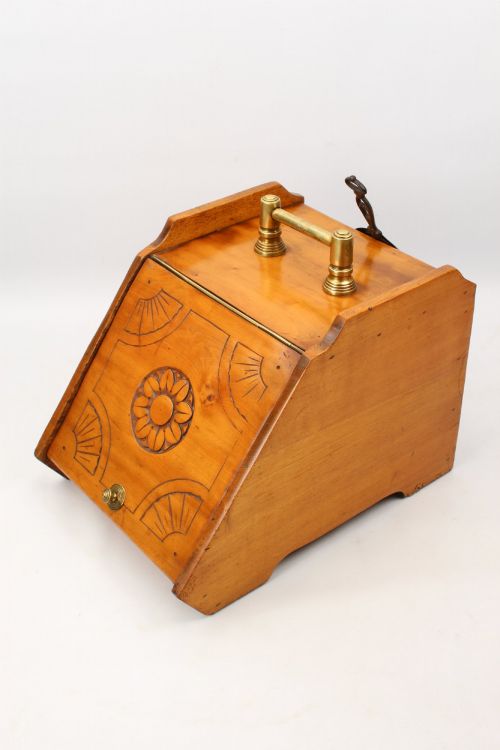
Most examples take the form of oak or walnut coal boxes and slipper boxes featuring carved fronts, drop handles, and often matching metal shovels. They function primarily as fireside storage, sitting beside the hearth to keep fuel close at hand while concealing it beneath a lidded compartment.
How they were made
These containers rely on solid hardwoods like oak, walnut, and mahogany, shaped and joined to bear the weight of heavy fuel. Woodcarvers worked directly onto the panels, adding floral or geometric motifs to the fronts of the boxes.
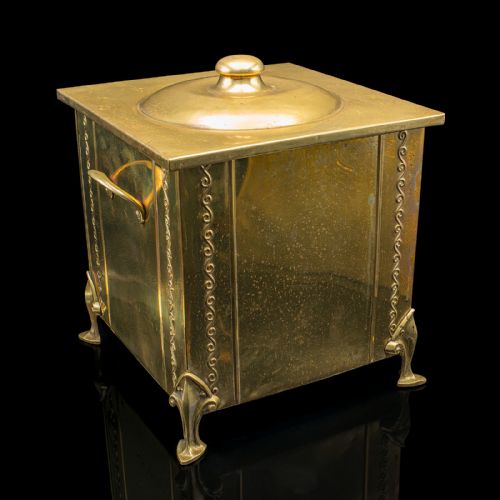
Metalwork played an essential structural and decorative role, with brass and copper used for handles, hinges, linings, and embossed scuttles. Iron fittings also appear, providing robust support for heavy lids and carrying handles.
Listings span the Victorian and Edwardian periods, utilising oak, walnut, mahogany, brass, copper, and iron.
What varies in quality
Quality shows in the depth and crispness of the wood carving, distinguishing standard production boxes from finely detailed artisan pieces. The choice of timber also dictates the character of the piece, with richly figured walnut and substantial oak standing apart from simpler utility items.
Hardware contributes heavily to the overall standard, where substantial brass handles and original metal linings reflect higher manufacturing costs. The integration of functional accessories, such as matching shovels and secure lids, marks out the better domestic examples.
The Carved Fireside Log Box Glossary
- Coal box
- A lidded wooden container designed specifically to store solid fuel near a fireplace. These often include internal metal linings to catch debris from coal or logs.
- Purdonium
- A specific type of Victorian coal container featuring a sloping front door that drops forward to release fuel. They frequently incorporate a compartment on top for a shovel.
- Slipper box
- A covered fuel container traditionally shaped with a low profile for storing coal or kindling. They typically feature hinged lids and sturdy metal carrying handles.
- Scuttle
- A metal or wood vessel equipped with a handle for carrying fuel to the hearth. Many Victorian examples pair copper or brass bodies with wooden lids.
Carved Fireside Log Box: Frequently Asked Questions
What is a purdonium?
A purdonium is a Victorian fuel container with a sloping front door that drops forward for easy access to coal.
They usually include a built-in compartment for a small shovel and were designed as a tidy alternative to open buckets.
How were these boxes used?
These boxes sat by the hearth to store logs, coal, or kindling within easy reach of the fire.
Their heavy lids kept fuel dust contained while the decorative carved exteriors complemented the formal sitting rooms of the period.
Are these pieces waterproof?
Many traditional coal boxes feature internal metal linings made of brass or copper to protect the wood from moisture and dirt.
These removable or fixed linings allowed owners to store unwashed coal without damaging the surrounding timber structure.
How do I date a coal box?
Dating relies on the predominant use of Victorian styles, oak and walnut timbers, and characteristic brass hardware.
Most surviving examples date from the late nineteenth century through to the Edwardian era, marked by characteristic carved panels.