






Carved Figural Pedestal
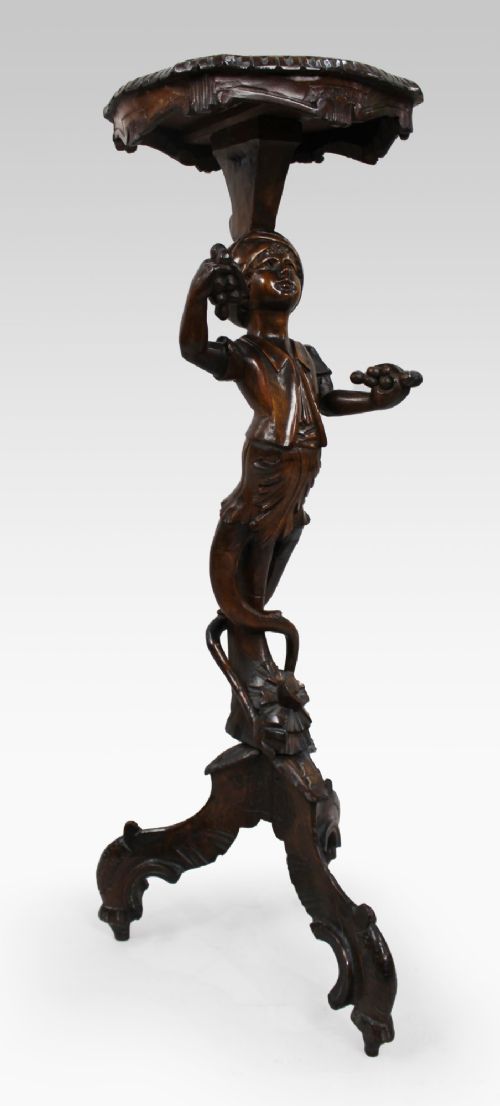
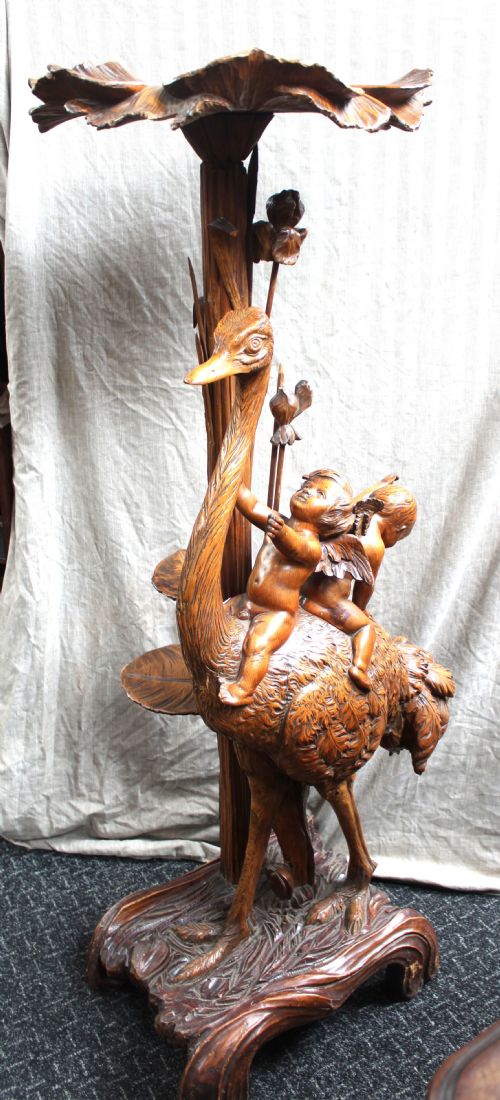
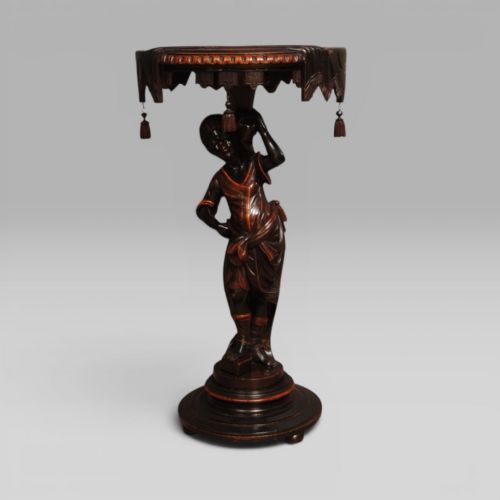
A carved figural pedestal holds a surface upon the shoulders or hands of a sculpted human or animal form, bringing dramatic presence to a room.
Carved Figural Pedestal
A carved figural pedestal combines functional display space with sculptural artistry, serving as a support for lamps, vessels or plants. These stands range from Italian Renaissance Revival and Venetian Baroque pieces to Anglo-Indian and African tribal works, spanning the nineteenth and early twentieth centuries.
You will most frequently encounter Italian and Venetian stands rendered in carved walnut or polychrome finishes, often depicting figures such as caryatids or blackamoor tables. Alongside these, the selection includes Burmese side tables, Swedish alabaster lamps, and figurative groups.
The primary forms take shape as tall pedestals, torchères, side tables, and figure stands designed to elevate objects of importance within an interior. Each piece relies on the tension between the supporting carved figure and the load it bears.
How they were made
Many Venetian and continental examples incorporate polychrome decoration and gilt applications over the carved wood, enhancing the theatricality of the figures. Other regional traditions utilise natural hardwoods or dense alabaster, relying on the inherent grain and texture rather than applied pigments.
Carved Figural Pedestal Retail Price Guide 2026
Typical asking prices for carved figural pedestal among the pieces listed under this phrase on Sellingantiques today, from the lower quarter to the upper quarter. They describe what is for sale here now, not the wider market.
Some figures appear to shoulder the weight of history quite literally, carrying tabletops with expressions of stoic determination.
What varies in quality
The distinction between ordinary and exceptional carving lies in the anatomical precision and expressive depth of the figural work. Finer examples display fluid musculature, crisp detailing in hair and drapery, and a balanced integration between the support figure and the top.
The integrity of the polychrome and gilt surfaces also dictates distinction, where surviving original finishes show harmonious ageing rather than heavy restoration. Structural stability under weight remains paramount, separating robust cabinetmaking from decorative pieces that have suffered joint fatigue.
The Carved Figural Pedestal Glossary
- Caryatid
- A sculpted female figure serving as an architectural support in place of a column or pillar. These figures often appear on nineteenth-century pedestals bearing structural weight.
- Polychrome
- The practice of decorating architectural elements or sculptures in a variety of colours. This technique is frequently found on Venetian blackamoor tables and stands.
- Torchère
- A tall ornamental stand designed to hold a candelabrum or lamp. In these listings, they function similarly to figural pedestals and plant stands.
- Baroque Revival
- An architectural and decorative style drawing inspiration from the seventeenth-century Baroque period. Makers utilised this aesthetic to create ornate, theatrical furniture during the nineteenth century.
Carved Figural Pedestal: Frequently Asked Questions
What did people use a carved figural pedestal for?
These pieces served primarily to display decorative objects, lamps, or urns in prominent rooms of a house. By elevating the display surface on a sculpted human or animal form, they combined utility with dramatic visual art.
In grand nineteenth-century interiors, they acted as focal points in hallways, drawing rooms, and salons. Their surfaces held heavy bronzes, clocks, or trailing plants.
Today, they function well in contemporary spaces as standalone sculptures that also provide a practical tabletop surface for lighting or floral arrangements.
Placing them in corners or flanking doorways allows the carved figures to command the room effectively.
How do I tell Italian pieces from Anglo-Burmese ones?
Italian and Venetian pieces often feature classical motifs, polychrome paintwork, gilt highlights, and figures derived from Renaissance or Baroque traditions. Walnut is the predominant timber for these continental workshops.
Anglo-Burmese and Anglo-Indian items utilise denser native hardwoods and distinct regional iconography, such as camels or localized fauna. The carving style reflects Eastern craftsmanship rather than European classical revivals.
Examining the underlying timber and the stylistic vocabulary of the carved figure usually clarifies the geographic origin.
Regional finishing techniques, such as unpainted dark hardwood versus bright polychromy, provide further distinction between the traditions.
How should I care for a polychrome wooden stand?
Keep polychrome and gilt pedestals away from direct sunlight and strong heat sources to prevent the painted surfaces from cracking or fading. Dust them gently with a soft, dry cloth without applying modern chemical polishes.
Maintain a stable room humidity to protect both the underlying hardwood and the delicate layered finishes. Excessive moisture can lift the gesso and paint layers from the wood substrate.
Handle the top surfaces with care, using protective pads beneath heavy objects to avoid scratching the historical finish.
Periodic inspection of the joints where the figure meets the base ensures stability over time.
Are alabaster figural lamps fragile?
Alabaster is a softer, more porous stone than marble, making it susceptible to scratching, chipping, and staining from liquids. Handle alabaster figural groups and lamp bases with clean hands and sufficient support.
Cleaning requires a dry or barely damp microfiber cloth, avoiding acidic cleaners that can etch the stone surface. The material allows light to diffuse softly, which explains its popularity in twentieth-century lighting.
Display these pieces away from high-traffic zones where they might receive accidental knocks.
Securing electrical components in older alabaster lamps requires professional rewiring to meet modern safety standards.