

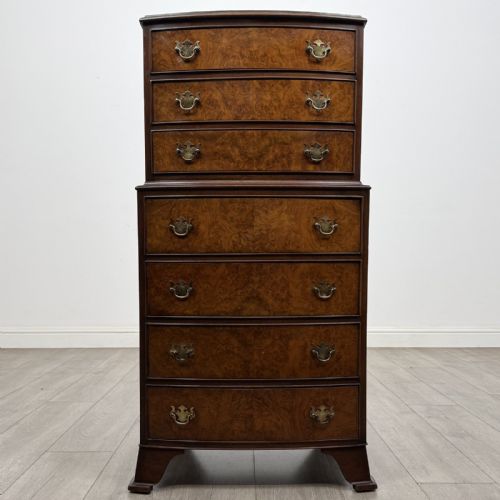
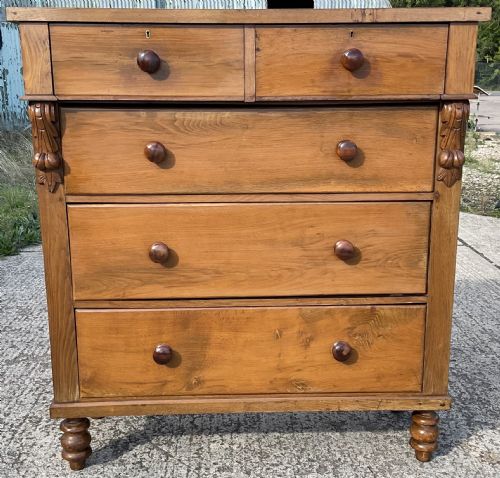
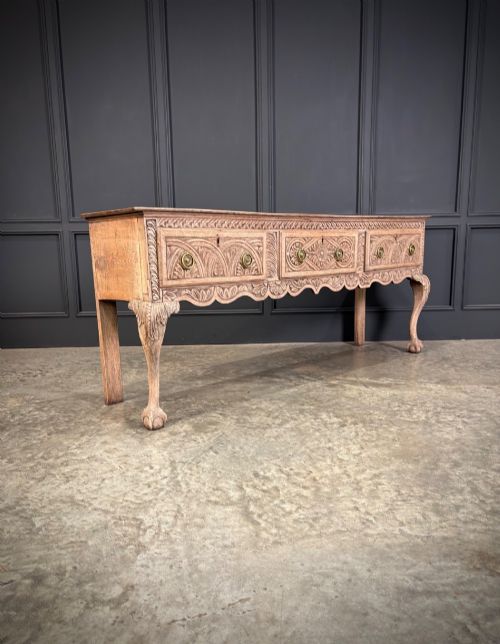
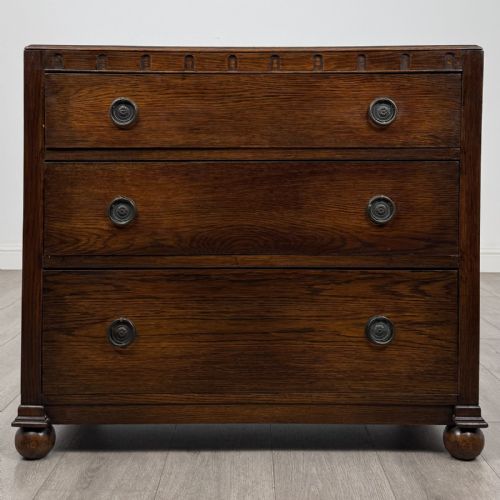


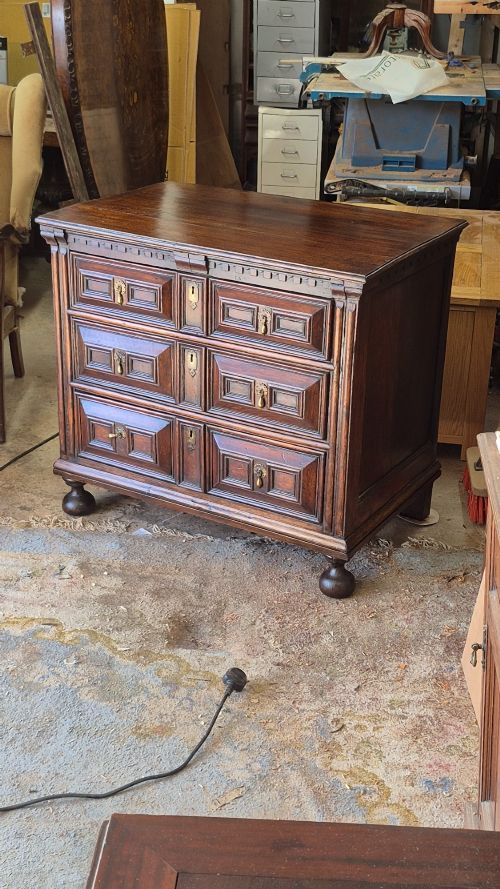


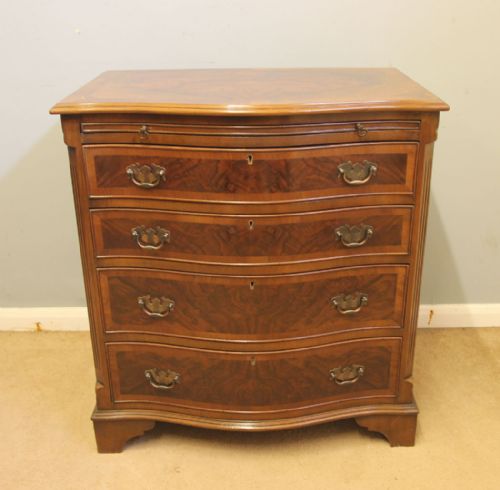

Carved Feet Dresser
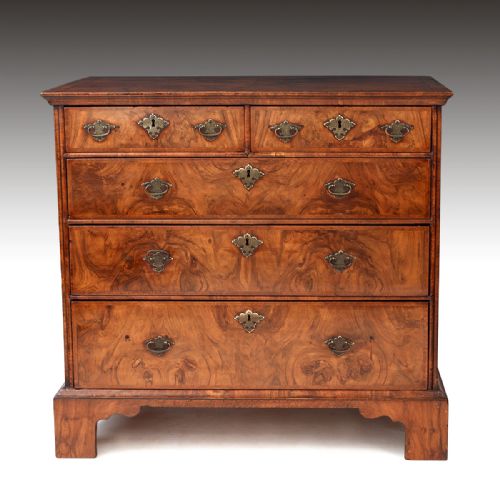
A carved feet dresser or chest of drawers brings substantial timber and period character to a room.
Carved Feet Dresser
When searching for a carved feet dresser, buyers encounter sturdy storage furniture primarily constructed in oak, walnut, and mahogany across several centuries. The forms span from early oak pieces through William and Mary and Georgian designs to later Victorian examples.
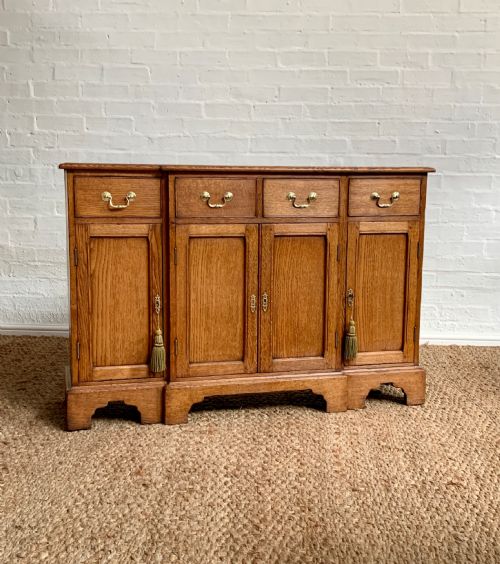
The inventory on this page consists heavily of chests of drawers alongside sideboards and dresser bases, dating from the 17th century up to the 20th century. These pieces combine practical storage with distinct period joinery and foundational supports.
Evaluating the standard
Quality rests in the crispness of the carving on the feet and framing, alongside the depth of the timber's patina. Untouched condition and original surfaces elevate a piece significantly.
The sophistication of the marquetry and the precision of the drawer construction distinguish higher tier examples from standard utilitarian storage.
Carved Feet Dresser Retail Price Guide 2026
Typical asking prices for carved feet dresser among the pieces listed under this phrase on Sellingantiques today, from the lower quarter to the upper quarter. They describe what is for sale here now, not the wider market.
Listings incorporate timber varieties ranging from native oak and walnut to imported mahogany, satin birch, and rosewood.
The Carved Feet Dresser Glossary
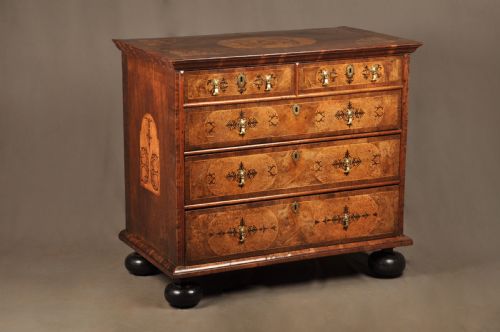
- Bun foot
- A rounded, flattened wooden foot shaped like a small bun, commonly seen on William and Mary and later period furniture.
- Marquetry
- The art of applying decorative veneer pieces in wood to form intricate patterns and pictures on a surface.
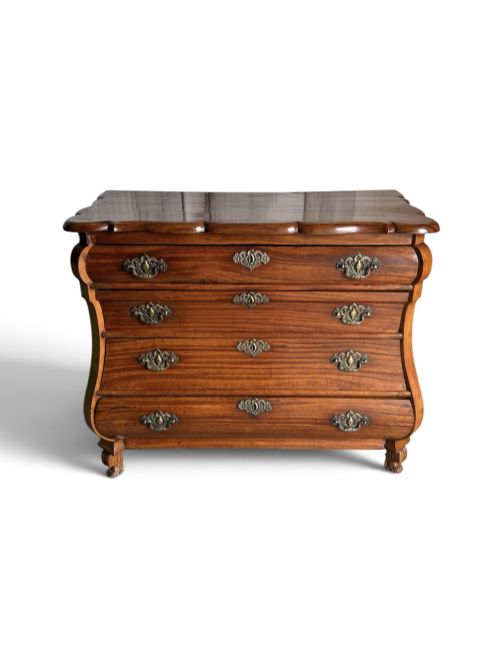
- Bombe
- A swollen or bulging convex shape characteristic of certain continental European chests and furniture forms.
- Serpentine
- A curved line of furniture frontals featuring a convex centre flanked by concave curves.
Carved Feet Dresser: Frequently Asked Questions
What periods do these pieces date from?
The selection spans from the late 17th century through the Georgian and Victorian eras up to the 20th century.
Earlier items display heavy oak construction and geometric moulding, while later pieces favour mahogany and satinwood.
How were these dressers and chests used?
They served primarily for storing garments, household linens, and valuables within domestic chambers and living spaces.
Surface tops also provided space for displaying objects or serving food in dining contexts.
Where do these pieces originate?
The listings include British, Dutch, Swedish, and Italian examples reflecting regional cabinet making traditions.
Imported tropical timbers like mahogany and satinwood often indicate global trade influences in period design.
How do I care for antique timber?
Keep wooden furniture away from direct heat sources and sudden humidity changes to prevent timber splitting.
Apply traditional wax sparingly and polish with a soft cloth to maintain the original surface sheen.