


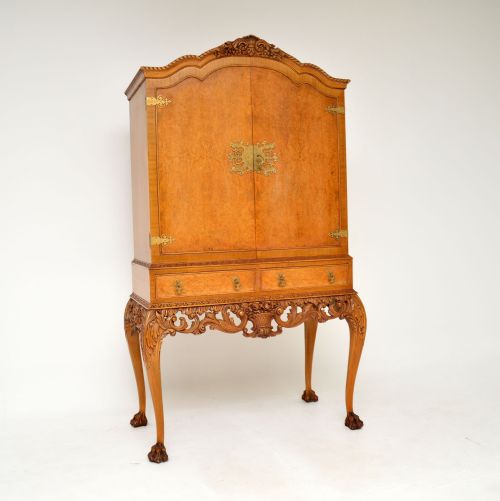
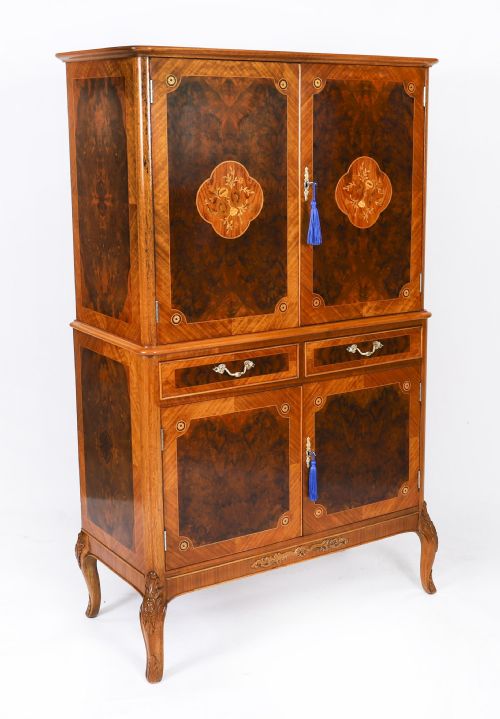
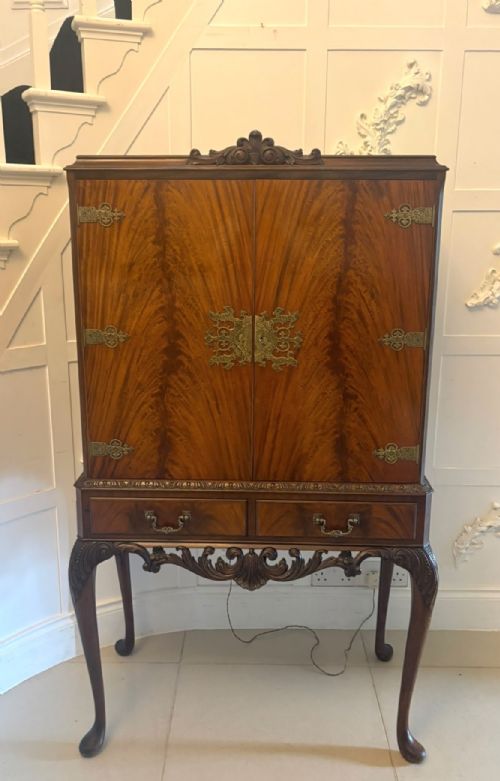
Carved Drinks Cabinet
A carved drinks cabinet brings period craftsmanship into the modern home, offering fitted storage for bottles and glassware.
Carved Drinks Cabinet
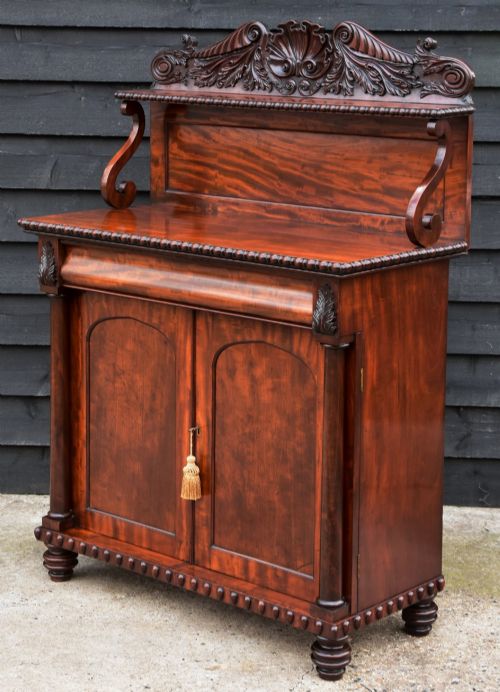
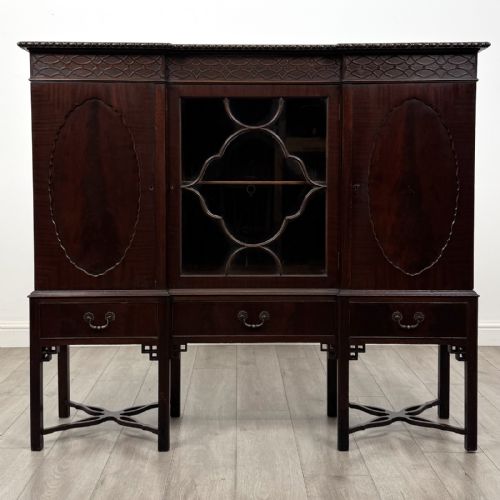
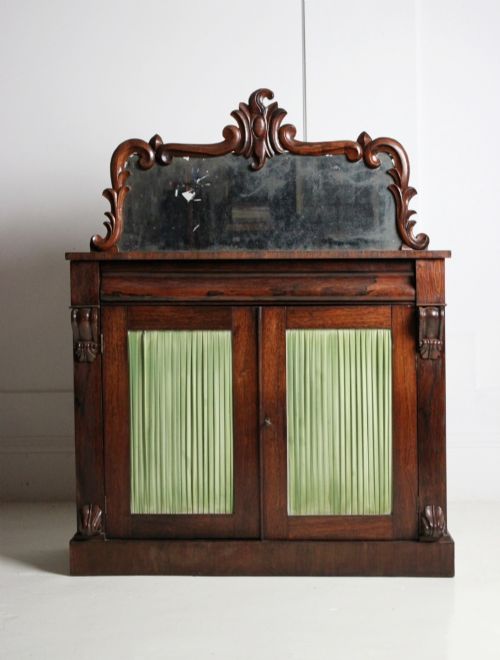
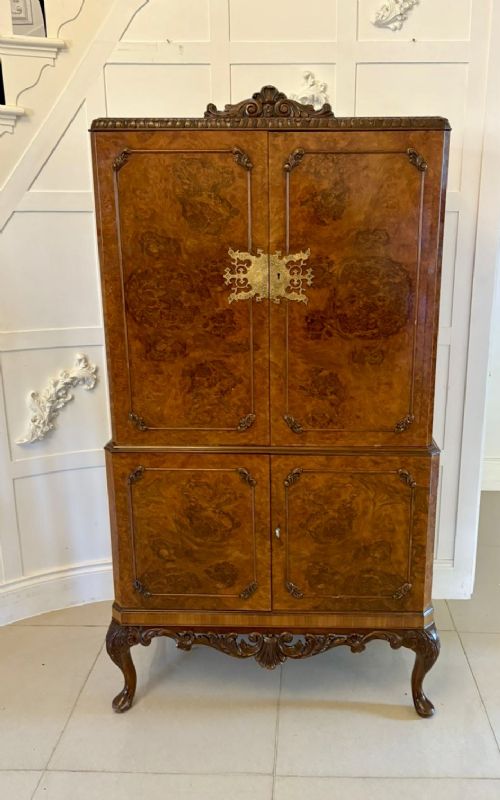
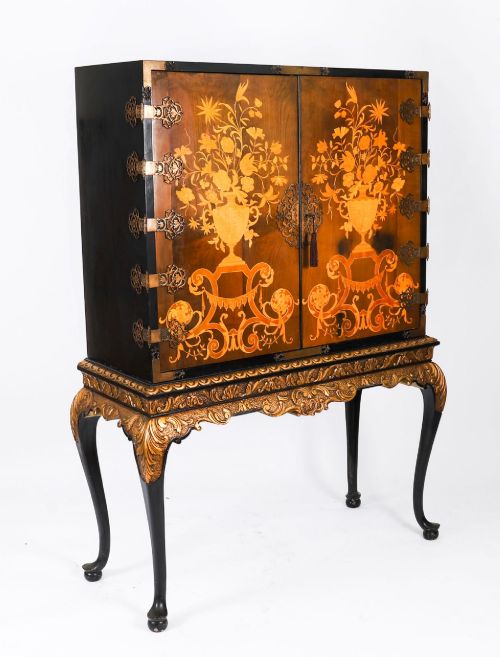
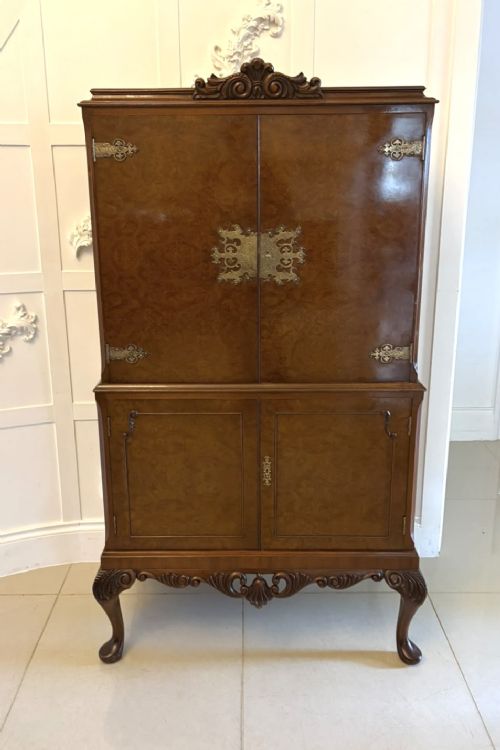
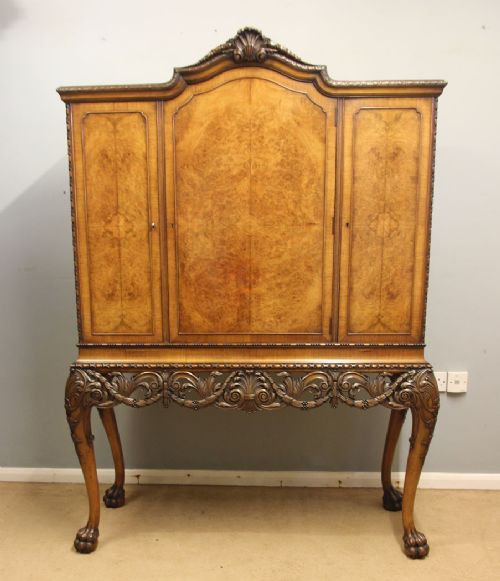
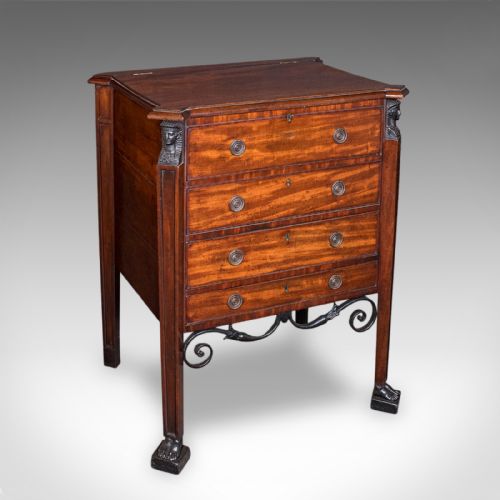
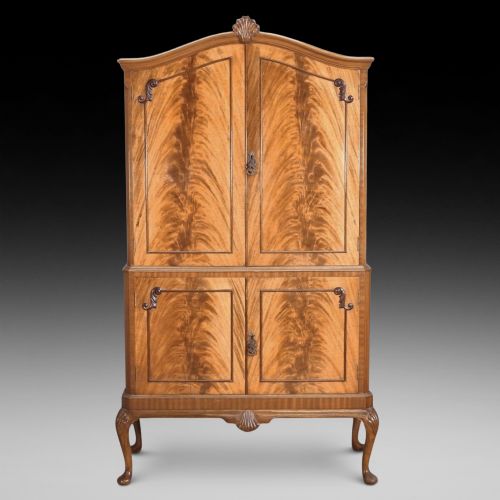
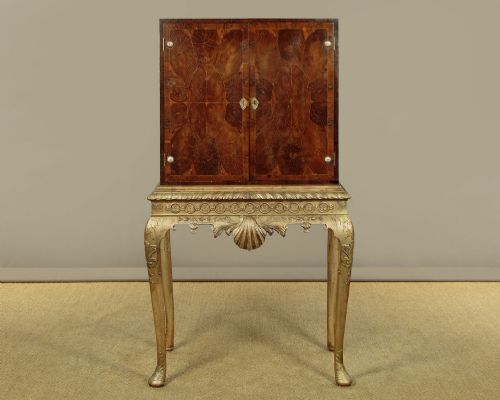
A carved drinks cabinet functions as a dedicated piece for entertaining, and when you search for this phrase you encounter selections primarily drawn from the 1920s and 1930s alongside Victorian and Regency pieces. The selection spans cocktail cabinets, side cabinets, cabinets on stand, and chiffoniers.
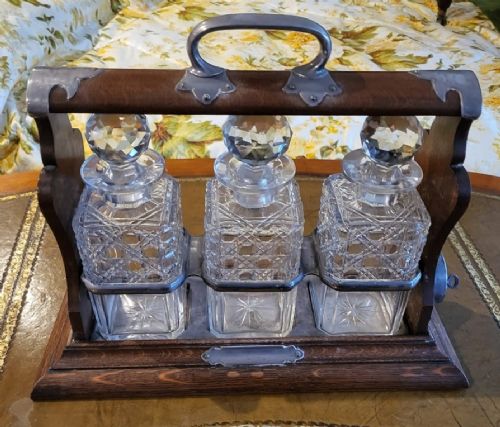
The 1920s and 1930s examples often employ burr walnut and feature fitted interiors for dry bars and cocktail storage. Earlier Victorian and Regency iterations appear as mahogany or rosewood side cabinets, chiffoniers, and brass-mounted tantalus pieces.
Revival styles heavily influence the design vocabulary across these dates. Queen Anne style, Jacobean style, Chippendale style, and Egyptian taste emerge frequently within the evidence.
Materials and construction
Cabinet makers utilised choice hardwoods including mahogany, walnut, burr walnut, oak, rosewood, and teak. Selected pieces incorporate marquetry, green lacquer, or silver gilt stands.
Metal hardware plays a functional and decorative role in the construction. Brass mounts, brass bindings, and mirrored glass panels frequently accent the woodwork.
Carved Drinks Cabinet Retail Price Guide 2026
Typical asking prices for carved drinks cabinet among the pieces listed under this phrase on Sellingantiques today, from the lower quarter to the upper quarter. They describe what is for sale here now, not the wider market.
A Ceylon veranda gin cabinet proves that even colonial tropical heat required proper mahogany and teak storage for spirits.
Distinctions in quality
The grade of timber selection dictates much of the character, particularly where figured veneers like burr walnut or flame mahogany are employed. Rich grain patterns and carefully matched panel layouts separate standard examples from finer commissions.
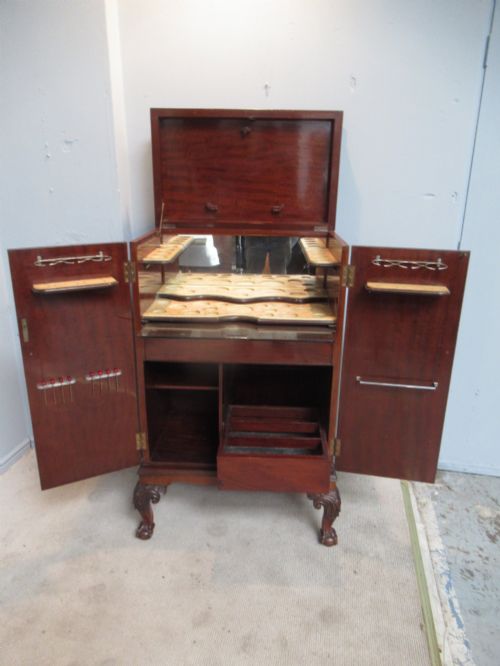
Internal complexity and maker attribution elevate certain pieces significantly. Fitted pull-out trays, revolving mechanisms, specialised interior lighting, and cabinet work attributed to makers like Epstein set specific items apart.
Epstein·Harrods
The Carved Drinks Cabinet Glossary
- Burr walnut
- A figured wood veneer taken from the wart-like growths on walnut trees. It produces highly decorative, swirling grain patterns prized in cabinet making.
- Tantalus
- A locking beverage stand holding decanters visible behind a metal bar. The design prevents guests from accessing the contents without a key.
- Cellarette
- A fitted chest or box used for storing wine bottles. 19th-century versions often incorporate brass banding and internal dividers.
Carved Drinks Cabinet: Frequently Asked Questions
What is a carved drinks cabinet?
A carved drinks cabinet is a dedicated piece of furniture designed to store bottles, decanters, and glassware. These pieces range from 1920s burr walnut cocktail chests to 19th-century mahogany chiffoniers.
They combine decorative woodwork with practical interior fittings such as pull-out trays, mirrored backs, and specialised shelving for entertaining.
How do I date a drinks cabinet?
Dating relies on identifying the prevailing style, construction timber, and hardware. Pieces from the 1920s and 1930s often showcase burr walnut veneers and Art Deco influences, while 19th-century examples tend to use solid mahogany or rosewood.
Revival styles such as Queen Anne or Jacobean also provide clues, though makers in the 20th century frequently adopted historical motifs.
What is the difference between a chiffonier and a side cabinet?
A chiffonier is a specific type of 19th-century sideboard that typically includes enclosed lower cupboards and often an upper shelf or superstructure. They were built in mahogany, rosewood, and oak.
A side cabinet is a broader term encompassing various low storage units used for serving and display across multiple periods and revival styles.