
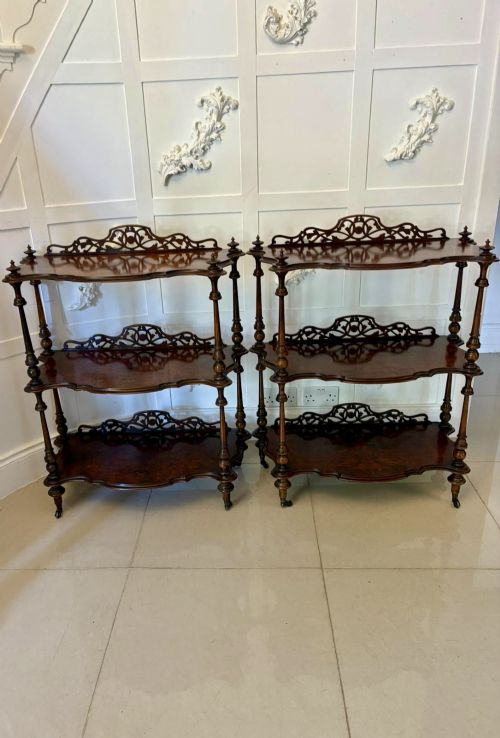
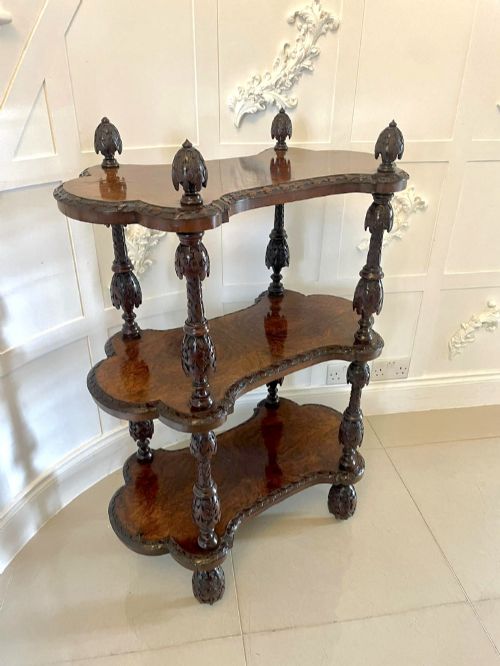
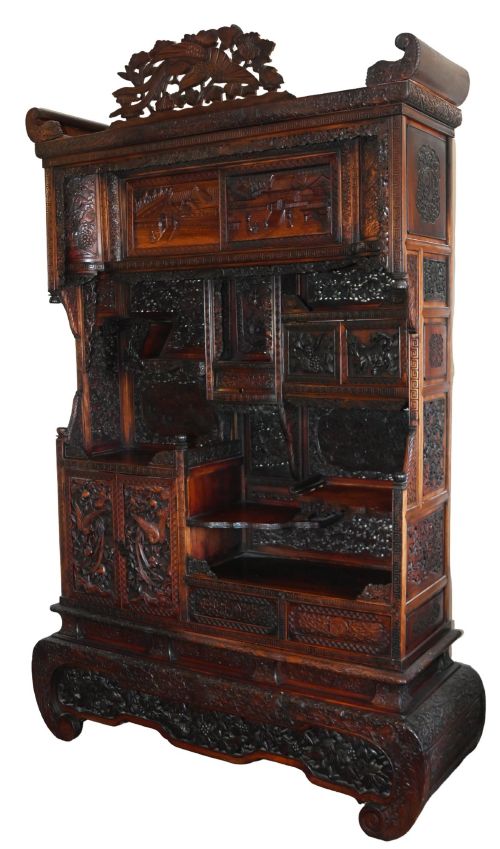
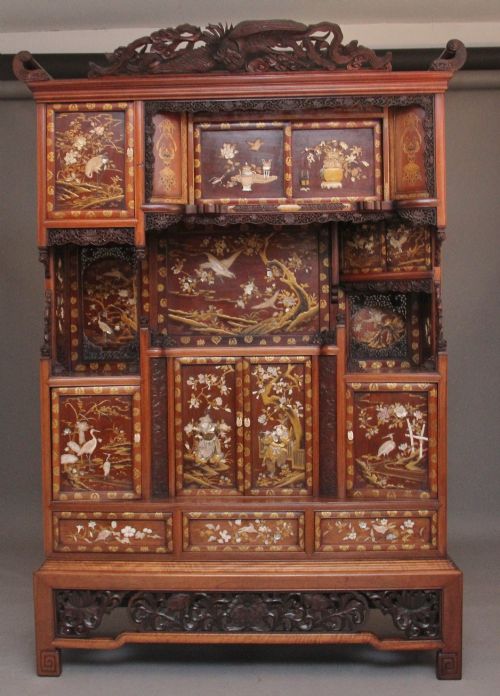
Carved Display Shelf
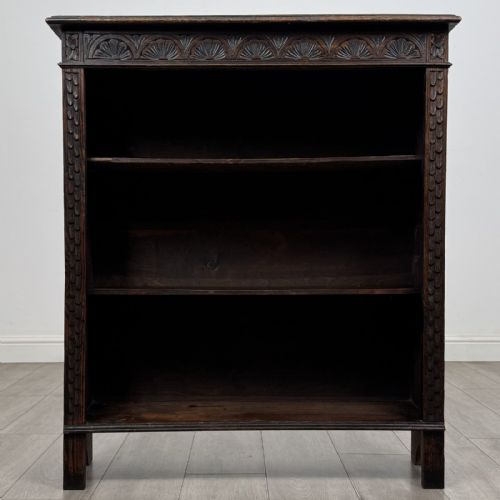
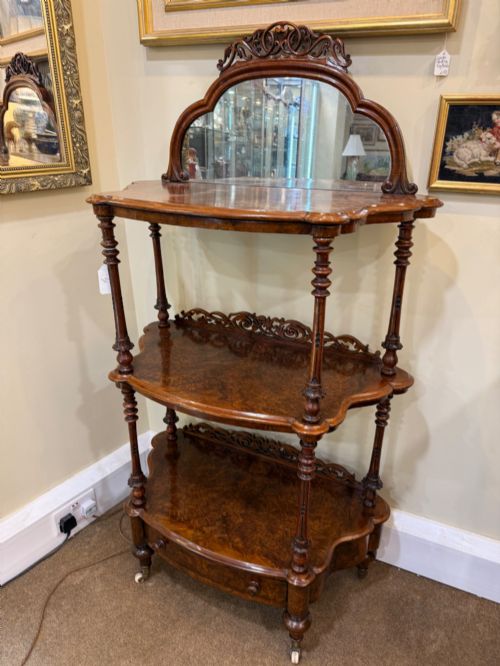
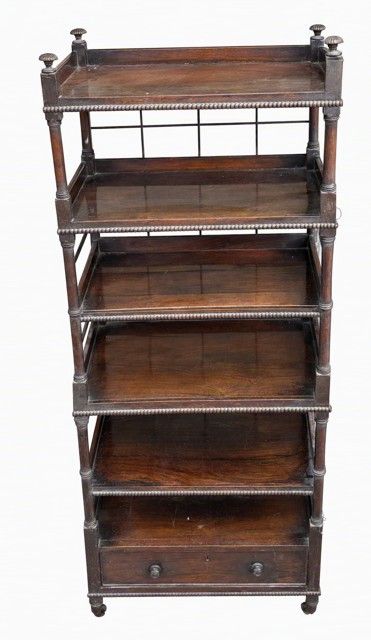
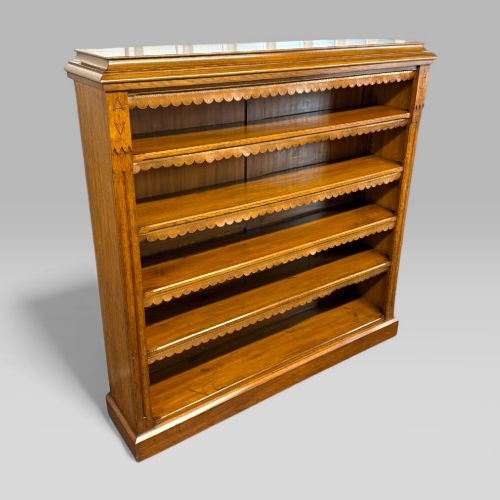
A carved display shelf organises your rooms with timber tiers designed to hold cherished objects from the Victorian and Edwardian eras.
Carved Display Shelf
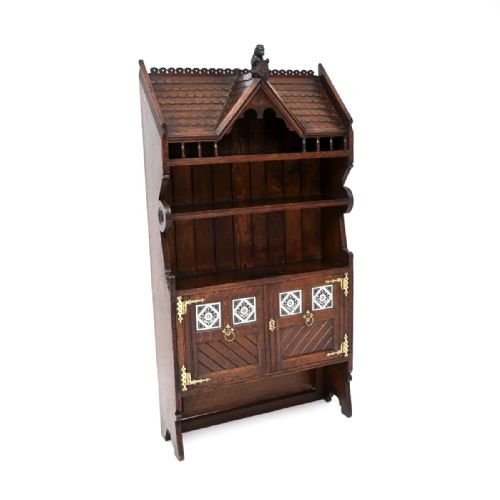
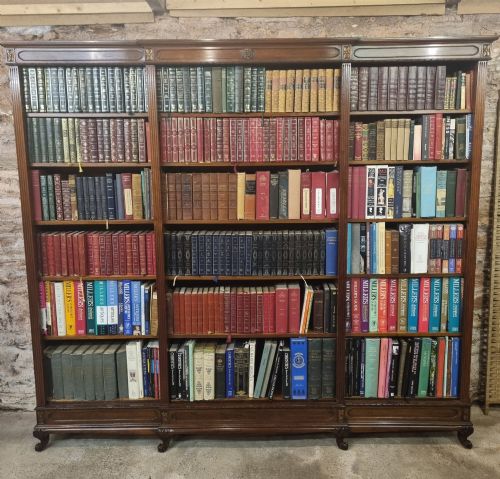
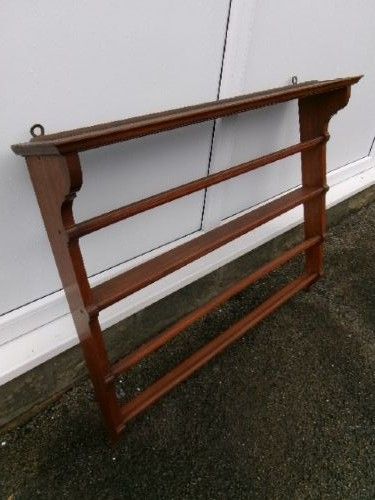
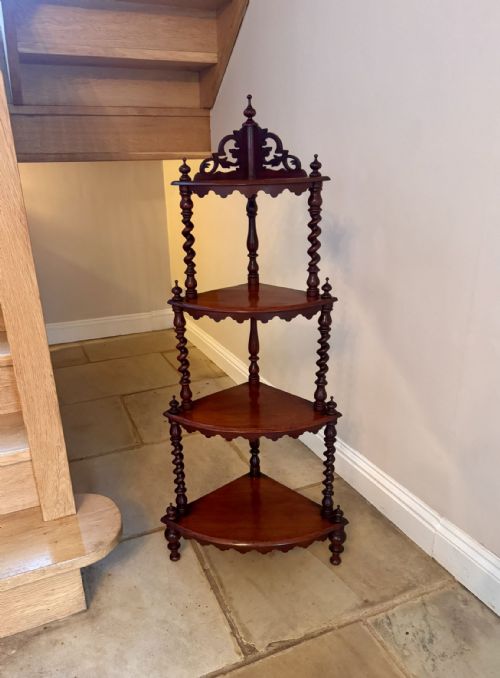
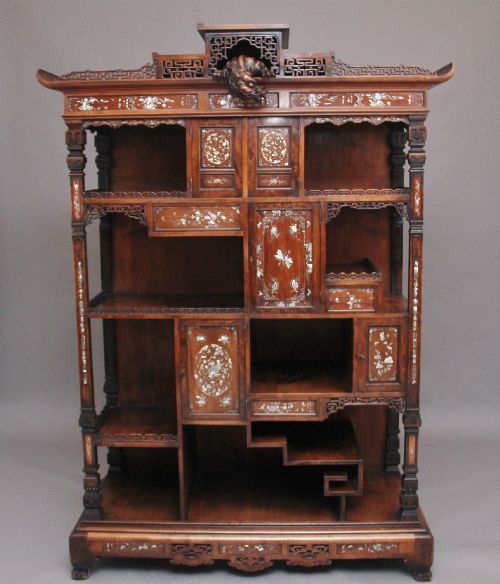
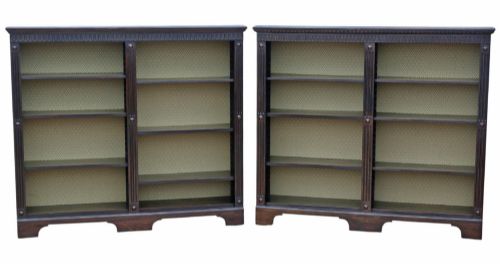
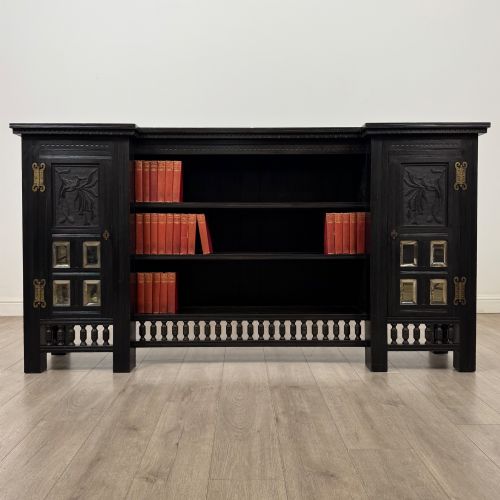
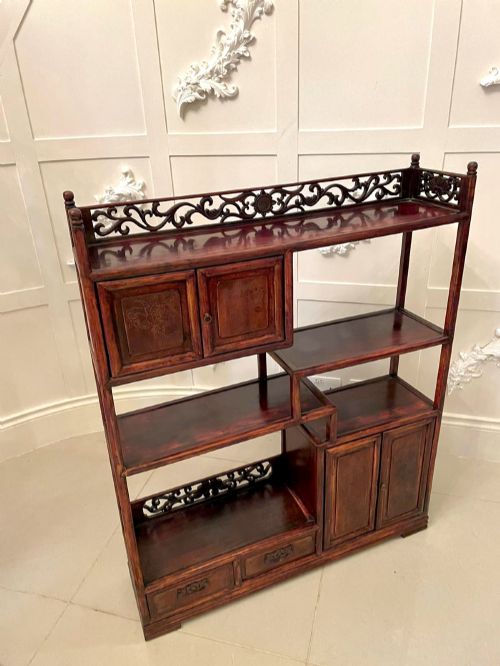
A carved display shelf encompasses wall brackets, corner units, open bookcases, and multi-tiered whatnots designed to present objects securely in domestic spaces. These pieces emerge in styles ranging from Jacobean Revival and Arts and Crafts to Aesthetic Movement and Meiji Period designs.
The most common forms on this page include Victorian burr walnut whatnots, Edwardian oak bookcases, and mahogany wall hanging shelf racks. Makers utilise diverse timber types to construct both freestanding cabinets and wall-mounted display furniture.
Originating across the nineteenth and early twentieth centuries, these shelves reflect changing tastes in display, moving from formal freestanding etageres to practical wall-mounted brackets and open bookcases.
Materials and construction techniques
Cabinet makers construct these pieces using hardwoods such as oak, walnut, burr walnut, mahogany, rosewood, and hardwood. Timber selection dictates the weight and decorative potential of each shelf, with burr walnut and rosewood reserved for finer decorative furniture.
Joinery methods include adjustable shelf mechanisms, pierced fretwork, and carved edges that demonstrate the joiner's skill. Brass fixtures and glass elements appear alongside timber components in cabinets and wall units.
Cherub wall brackets bring watchful wooden angels to your corners.
Assessing quality in display furniture
Quality rests in the crispness of the carving, the selection of figured timbers like burr walnut, and the integrity of the structural joinery. Pieces featuring intricate pierced fretwork or adjustable shelf mechanisms generally demand closer attention to detail from the maker.
The distinction between standard utility shelving and exhibition pieces lies in the depth of ornamentation and the harmony of proportions. Makers who incorporate brass hardware or specialist woods elevate simple storage into decorative focal points.
John Moyr Smith·Bowman Brothers·Trevor Page·Gabriel Viardot
The Carved Display Shelf Glossary
- Whatnot
- A freestanding piece of furniture with multiple tiers for displaying ornaments or books. These typically date from the Victorian period.
- Etagere
- A French display stand with several open shelves for small objects. This form appears across nineteenth and twentieth-century examples.
- Shodona
- A Japanese cabinet or display shelf style influenced by Eastern design aesthetics. These pieces often feature tiered shelving and intricate woodwork.
- Fretwork
- Ornamental perforated carving in timber panels or brackets. This technique provides light and texture to wall display shelves.
Carved Display Shelf: Frequently Asked Questions
What is a whatnot shelf?
A whatnot is a multi-tiered freestanding piece designed specifically for holding ornaments and small decorative objects in Victorian parlours.
These versatile stands allow collectors to exhibit ceramics, silver, and glassware across several open levels.
How do I hang a wall bracket?
Wall brackets and hanging shelves require secure fixings into wall studs or masonry to support the weight of the timber and displayed items safely.
Ensure the mounting hardware matches the weight capacity of your chosen antique bracket.
Where should I place a display shelf?
Display shelves suit living rooms, studies, and hallways where they provide vertical storage without dominating the floor space.
Keep wooden shelves away from direct heat sources and strong sunlight to preserve the finish of walnut and mahogany timbers.
How do I date a carved shelf?
Dating relies on identifying stylistic markers such as Victorian Gothic revival motifs, Edwardian inlaid mahogany, or Aesthetic Movement ebonised finishes.
Examining the construction methods, such as adjustable shelf tracks and timber fixings, also helps narrow the manufacturing period.