
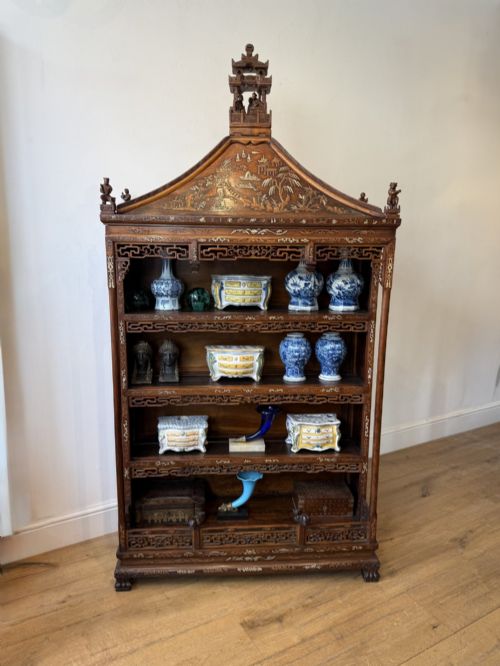


Carved Curio Cabinet
A carved curio cabinet is a glazed display piece designed to hold small treasures, bringing architectural detail and visual interest to a room.
Carved Curio Cabinet
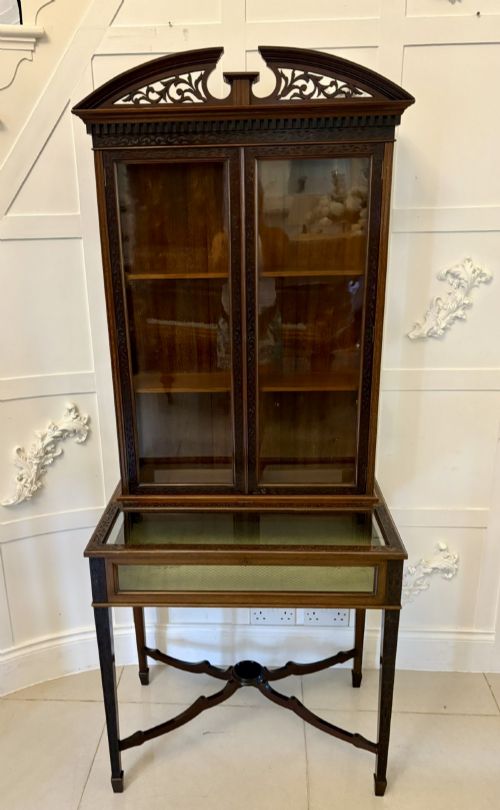
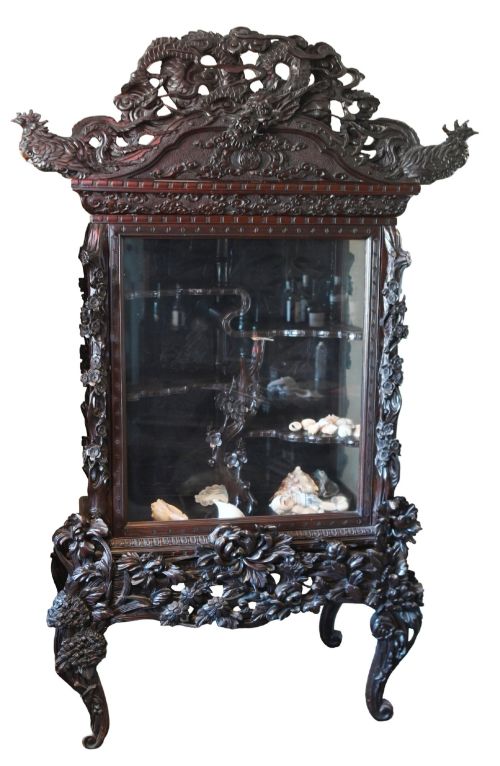
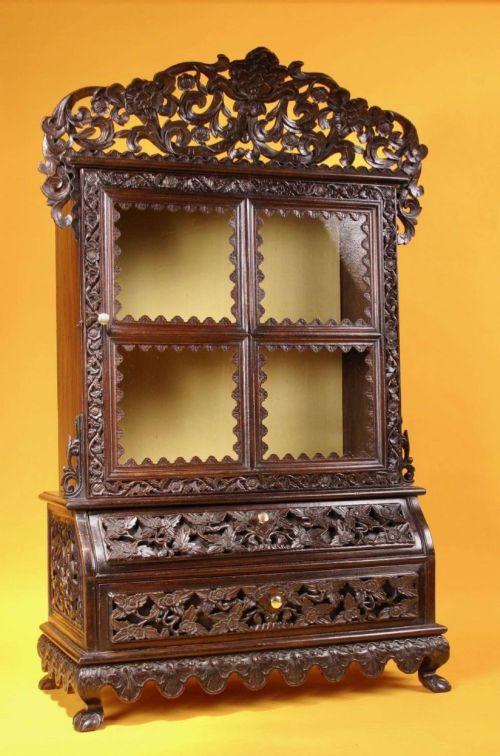
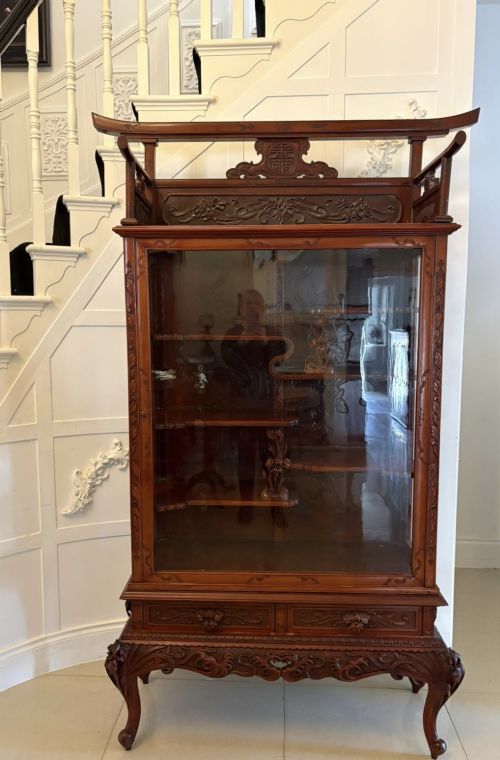
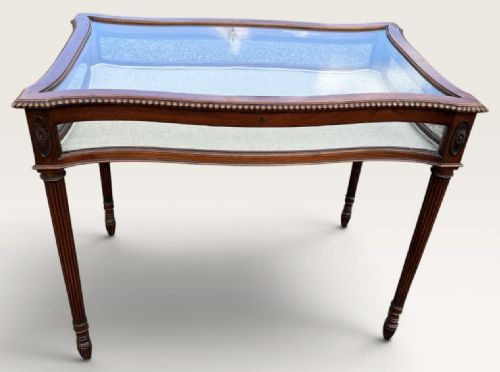
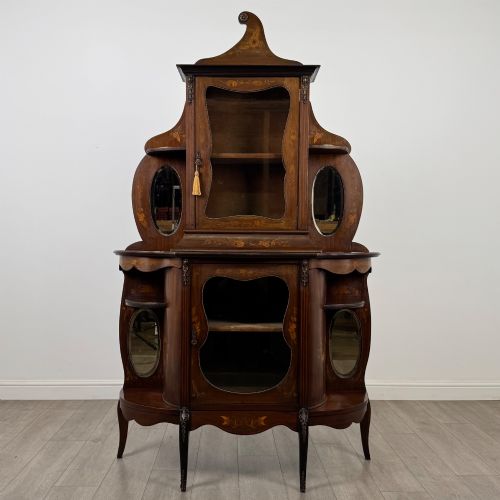
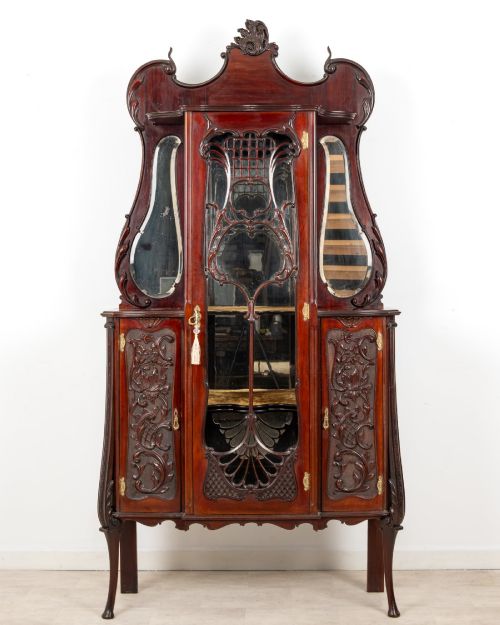
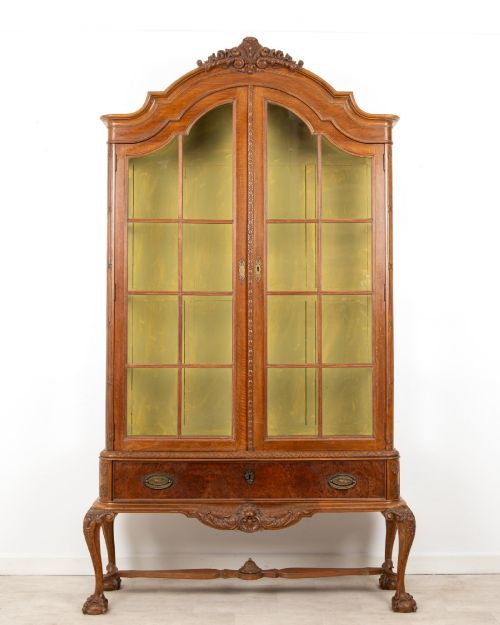
When you search for a carved curio cabinet, you encounter a selection of glazed display pieces spanning the nineteenth and early twentieth centuries. These works include freestanding display cabinets, wall-mounted vitrines, and lower bijouterie tables designed to show off collections.
Mahogany and hardwood dominate the selection, appearing alongside Japanese red lacquer and walnut. Many examples incorporate glass panels, mirrored backs, and fabric linings such as velvet to highlight the objects placed within.
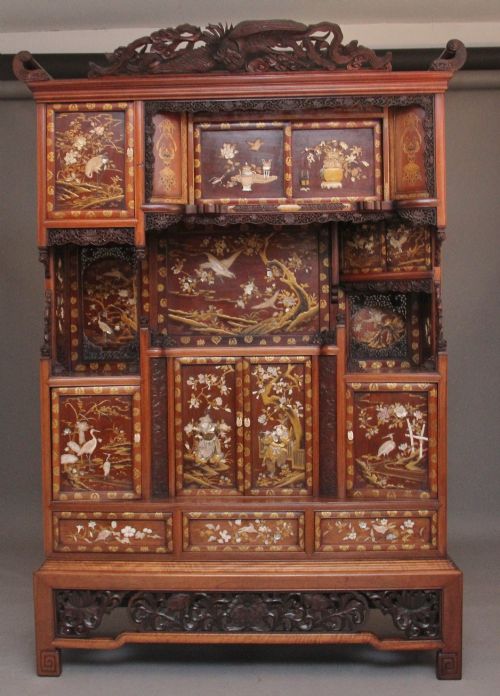
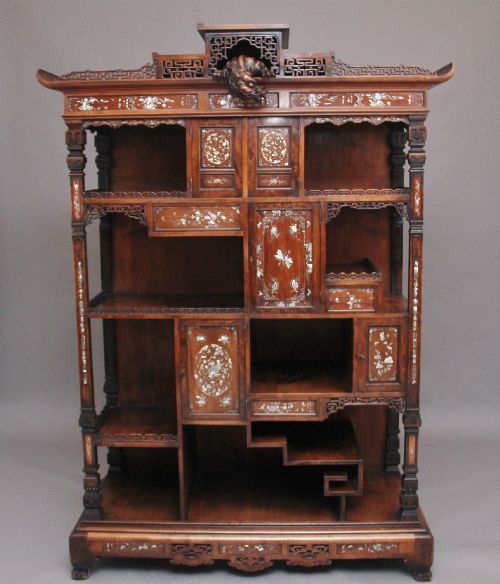
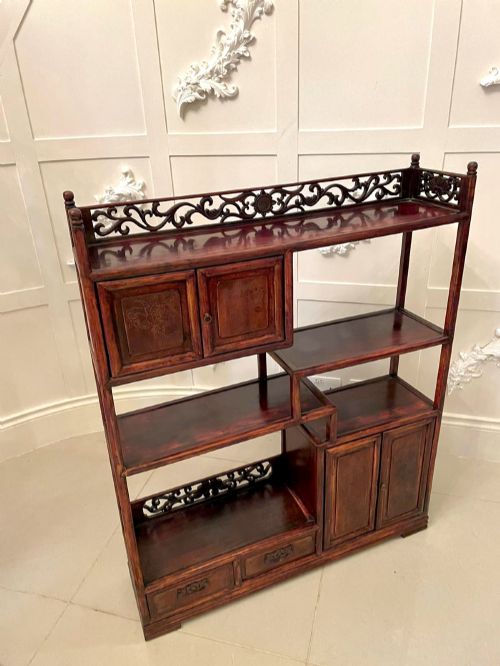
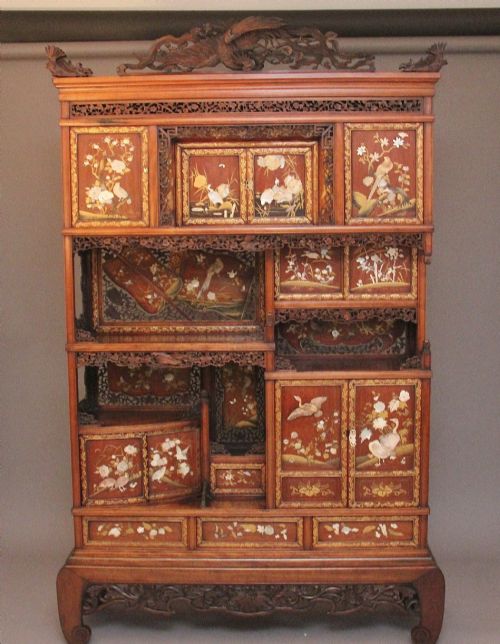
The aesthetic range stretches from Victorian and Edwardian British iterations to Chinese carved hardwood cabinets and Japanese Meiji period shodona pieces. Buyers find both monumental floor-standing vitrines and compact wall cabinets suited to various room proportions.
How they were made
Cabinetmakers utilised dense timbers like mahogany, walnut, and exotic hardwoods to construct robust carcasses capable of supporting heavy glass doors and internal shelving. Carved ornamentation, whether in a Chippendale revival style, floral Art Nouveau, or intricate Chinese motifs, was executed directly into the solid wood.
Surface treatments involved careful polishing, gilding, or the application of red lacquer as seen on Japanese export examples. Interior spaces frequently integrated mirrors to reflect light through glazed sides, supported by brass hardware on doors and display tables.
Materials appearing across these selections include glass, brass, mirror, lacquer, and velvet, paired with timber carcases in both freestanding and wall-hung formats.
What varies in quality
The standard of carving distinguishes routine production from exceptional craftsmanship, with crisply undercut foliage and balanced symmetry showing the hand of a skilled artisan. Subtleties in timber selection, such as richly figured mahogany grain or carefully matched walnut veneers, elevate the presence of the cabinet.
Construction integrity manifests in the joinery of the frame and the precise fit of glazed doors and hinged tabletops. Superior pieces maintain structural rigidity while incorporating delicate decorative elements like inlaid banding, giltwood accents, or specialised fabric linings.
Waring & Gillow
The Carved Curio Cabinet Glossary
- Bijouterie table
- A glass-topped display table designed specifically for small ornaments, medals, and jewels. These pieces often feature hinged lids lined with velvet or fabric.
- Shodona
- A traditional Japanese display cabinet featuring asymmetrical shelving and cabinetry. They often showcase intricate woodwork originating from the Meiji or Taisho periods.
- Vitrine
- A glass cabinet or wall-mounted case intended for the display of curiosities and porcelain. The term derives from the French word for glass.
- Hongmu
- A category of dense, heavy Chinese hardwoods used in fine traditional furniture. The term translates literally to red wood.
- Vernis Martin
- A type of simulated Japanese lacquerwork developed in France during the eighteenth century. It involves layers of translucent varnish applied over painted decoration.
Carved Curio Cabinet: Frequently Asked Questions
What is the difference between a vitrine and a shodona?
A vitrine is a European glazed display cabinet typically built with symmetrical glass panels for viewing porcelain and curiosities from multiple angles. A shodona is a Japanese display cabinet featuring characteristic asymmetrical shelving and compartments designed for artistic objects.
While both serve to exhibit collections, the European vitrine relies on classical or revival architectural motifs, whereas the Japanese shodona emphasises naturalistic carving and varied display tiers.
Where should I place a wall hanging display cabinet?
Wall hanging display cabinets work effectively in smaller rooms or hallways where floor space is limited, positioning small collections at eye level. They are frequently mounted above sideboards or in sitting rooms to showcase delicate ceramics and glassware.
Ensure the wall construction can support the combined weight of the hardwood carcass, glass panels, and your collection before installation.
How do I care for the fabric lining inside a cabinet?
Many display cabinets feature velvet or fabric-lined interior bases that cushion delicate objects and enhance the display. Gentle vacuuming with a soft brush attachment helps remove dust without disturbing the material.
Keep the cabinet away from direct sunlight to prevent the fabric and timber finishes from fading over time.
Are bijouterie tables secure for everyday use?
Bijouterie tables provide a functional surface with a glazed compartment underneath for viewing items while keeping them protected from dust. The hinged glass tops allow easy access when rearranging contents.
Because they feature glazed panels on top and sides, placing them away from heavy household traffic prevents accidental impact to the glass.