
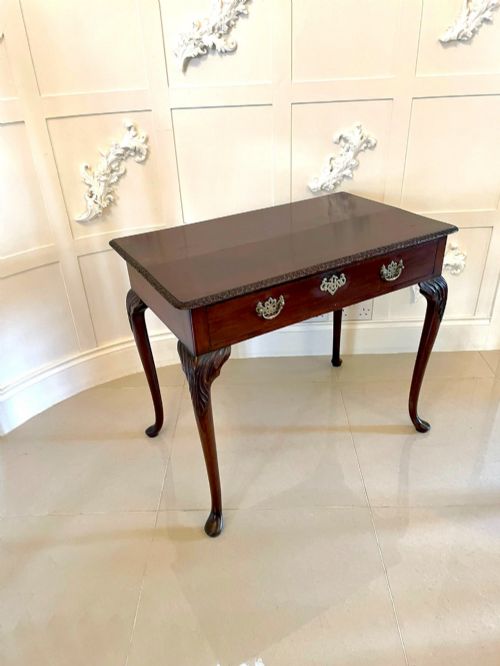
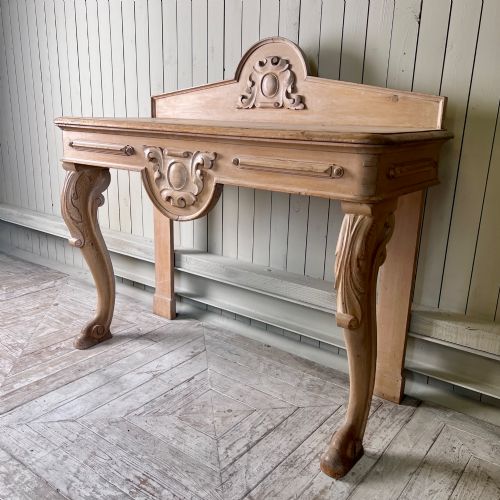
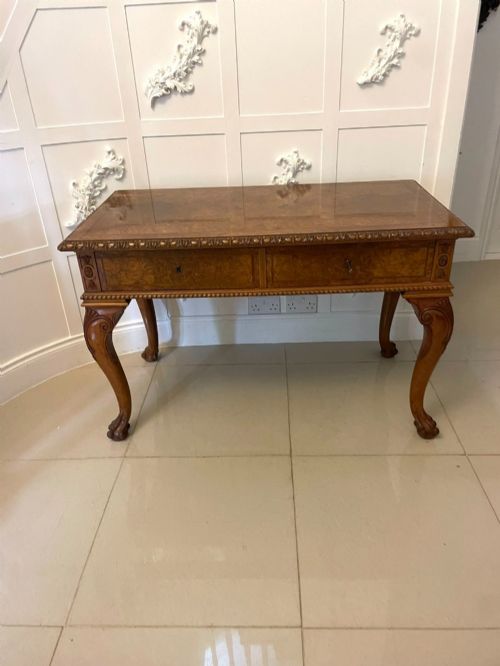
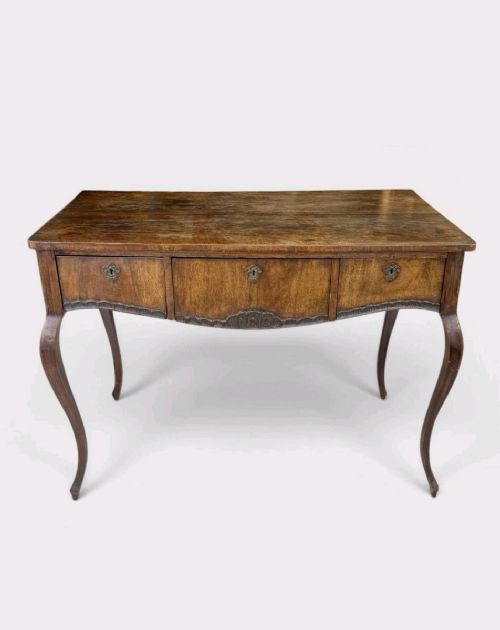
Carved Cabriole Hall Table
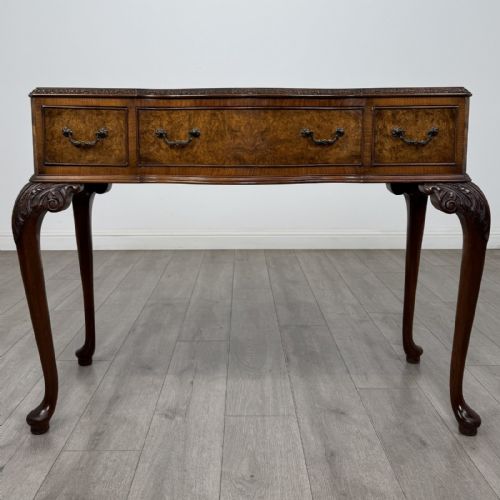
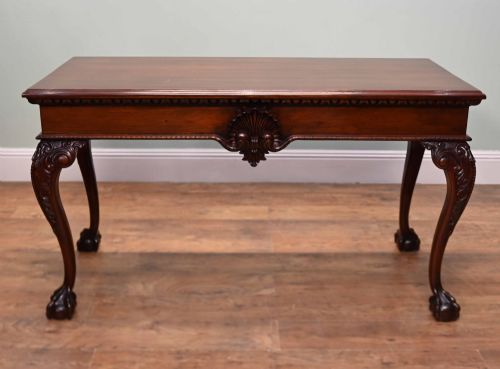
A carved cabriole hall table brings architectural presence and fluid curves to an entryway, uniting sturdy walnut or mahogany timber with graceful, swept legs.
Carved Cabriole Hall Table
A carved cabriole hall table serves as a functional anchor for an entrance, hallway or reception room, offering a flat surface for daily objects. These pieces appear across multiple eras, stretching from eighteenth-century originals through nineteenth-century revivals up to twentieth-century interpretations.
The most common examples on this page follow Georgian, Victorian or Edwardian traditions, often channelling Queen Anne Revival or George II aesthetics. They manifest as console tables, side tables, lowboys, or serving tables rather than rigid dining furniture.
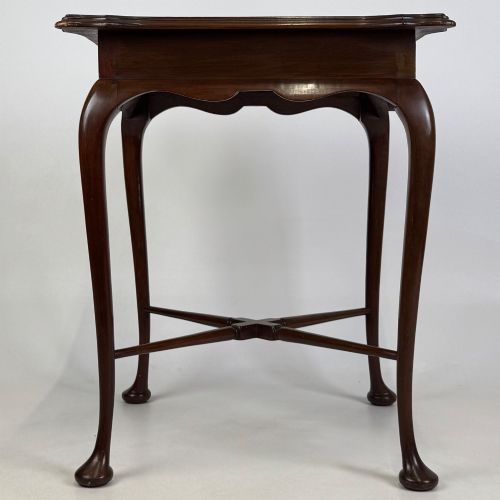
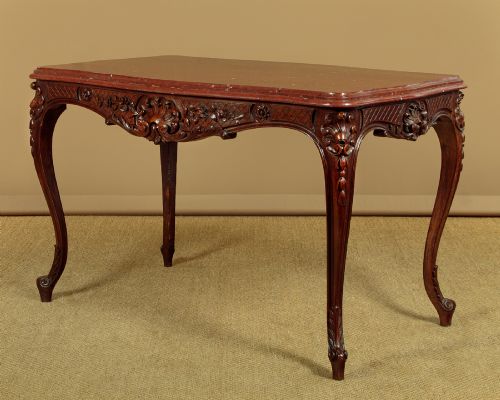
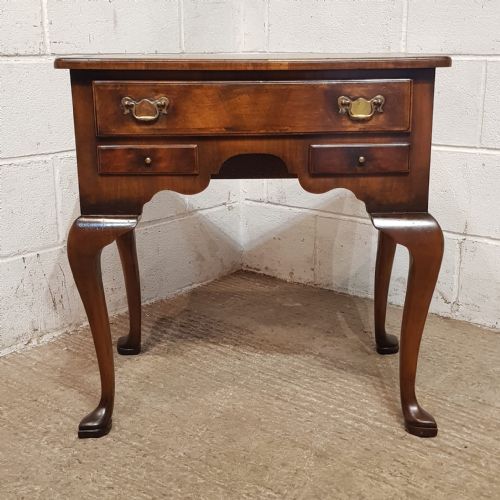
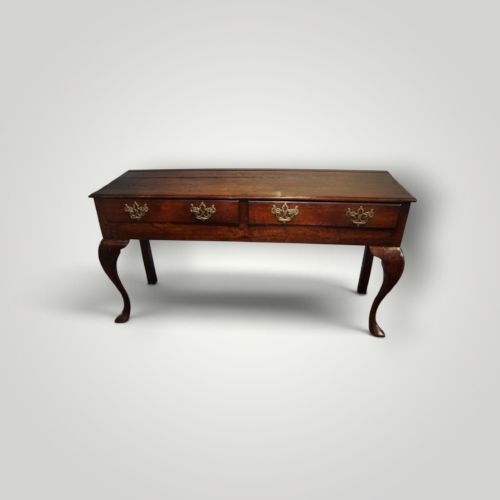
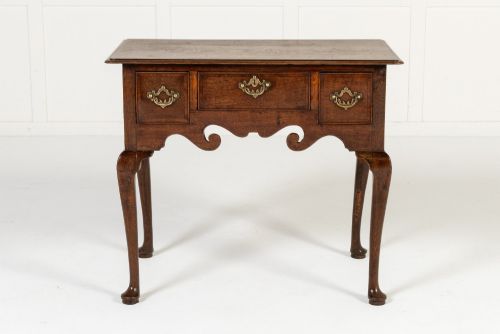
Makers frequently turned to walnut, burr walnut veneer, and mahogany, occasionally pairing the wooden frames with rouge marble tops. The defining element across the selection remains the characteristic cabriole leg, which sweeps outward at the knee and tapers inward toward the foot.
Materials and construction
Cabinetmakers relied heavily on dense hardwoods like mahogany, oak, and walnut, selecting figured grains and burr walnut veneer for decorative impact on tabletops and aprons. These timbers provided the structural integrity required to support carved ornamentation and overhanging marble slabs.
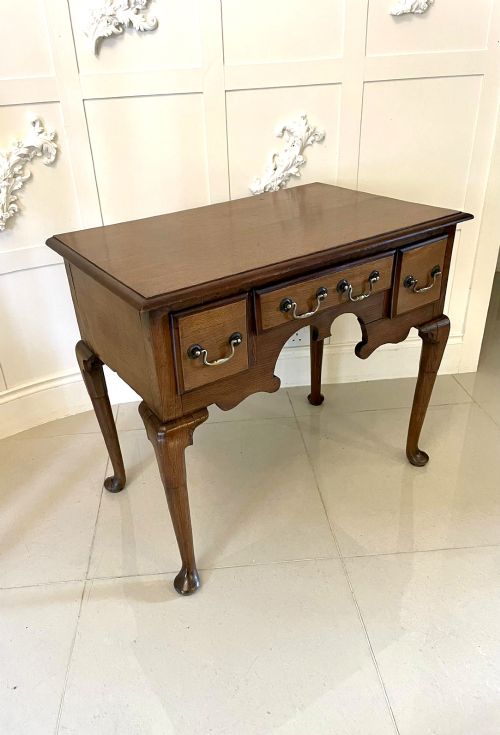
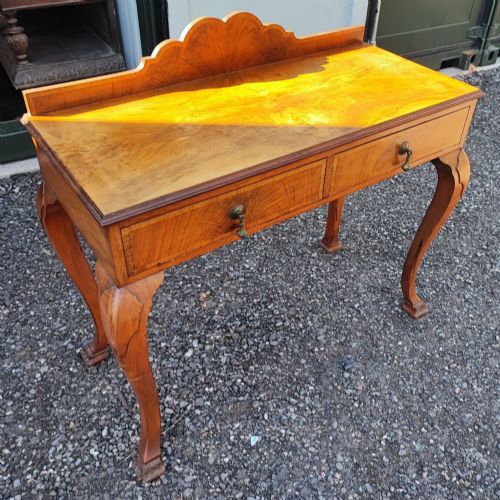
The distinctive leg shape required skilled carving and joinery, often integrating subtle curves and relief work directly into the wood of the frame. Brass hardware appears on drawer pulls for multi-drawer side tables and lowboys, while polished marble inserts offer a contrasting cool surface on select console variants.
Listings span eighteen-century originals through Victorian interpretations and nineteen-twenties revivals, utilising mahogany, oak, walnut, burr walnut veneer, brass, and marble.
What separates the finest examples
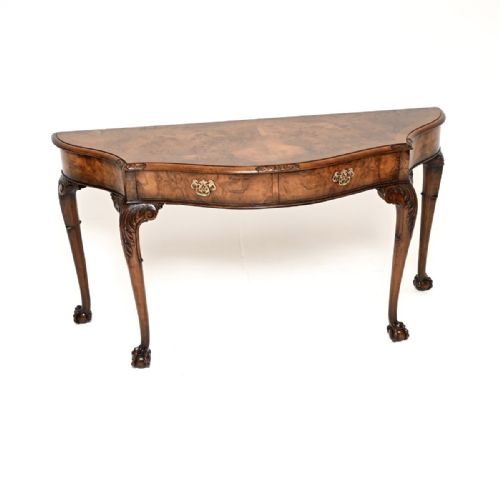
Quality rests in the crispness of the carved details and the choice of timber veneer, where deeply figured burr walnut or rich mahogany displays superior natural grain patterns. The harmony of the cabriole curve dictates the aesthetic success of the piece, requiring balanced proportions between the knee and the foot.
Construction methods also divide standard production from exceptional work, visible in the tight tolerances of drawer joints on lowboys and the seamless integration of marble inserts within wooden frames.
The Carved Cabriole Hall Table Glossary
- Cabriole leg
- A furniture leg that curves outward at the knee and inward toward the ankle, mimicking animal limbs. It is a defining feature of Queen Anne and Georgian design.
- Lowboy
- A small oak, walnut or mahogany table with drawers, resembling a low dressing table or side table. These compact pieces date frequently from the eighteenth century.
- Console table
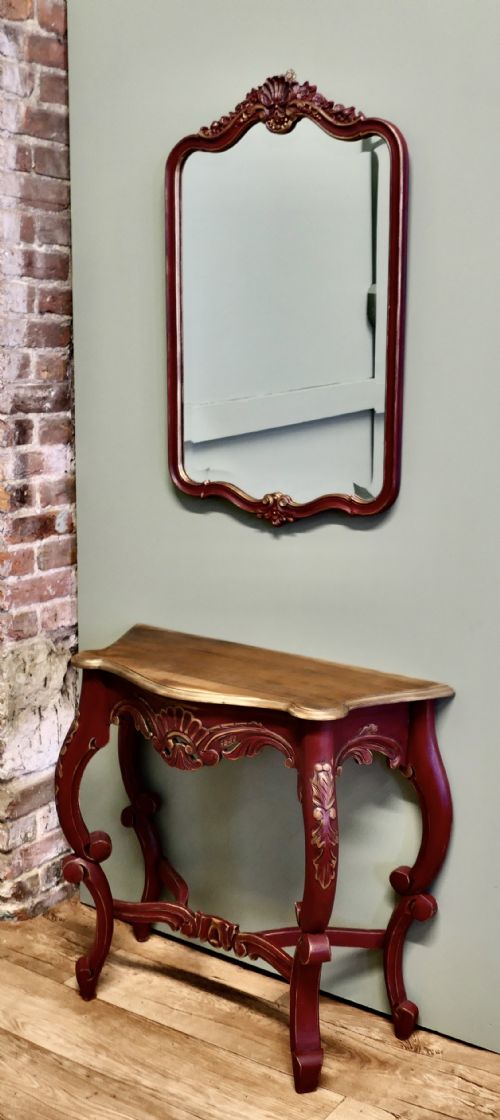
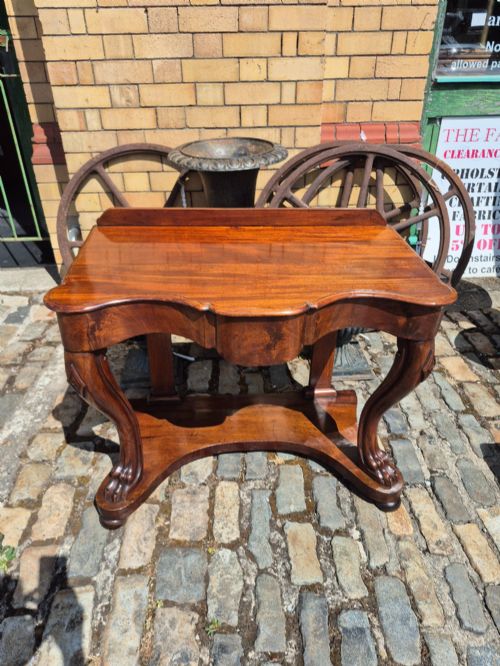
- A table designed to be fixed against a wall or supported by front legs, often used in hallways. They frequently feature decorative carved aprons and marble or wooden tops.
- Burr walnut veneer
- Thin slices of decorative walnut wood cut from tree growths, displaying complex swirling grain patterns. It was utilised on tabletops to create striking visual textures.
- Demi-lune
- A half-moon shape characteristic of certain console and card tables designed to sit flush against a wall. This profile saves floor space in narrow hallways.
Carved Cabriole Hall Table: Frequently Asked Questions
Where should I place a hall table?
These tables fit naturally in entrance halls, corridors, or narrow reception spaces where a shallow surface is practical. Their compact depths allow them to sit against walls without obstructing pathways.
They function well beneath mirrors or paintings, providing a convenient drop zone for keys and correspondence while establishing an immediate decorative statement upon entry.
How do I identify a Georgian piece?
Georgian and eighteenth-century examples typically exhibit authentic timber patination, hand-cut joinery, and traditional construction methods such as pegged mortise and tenon joints. Oak and solid mahogany are common materials for this era.
Revival pieces from the Edwardian period or the nineteen-twenties often mimic these earlier silhouettes but display twentieth-century manufacturing signatures and standardised internal hardware.
What is the difference between a lowboy and a console table?
A lowboy is traditionally a low table equipped with one or more drawers, originating primarily in the eighteenth century as a dressing or side table in oak or walnut.
A console table is engineered specifically to stand against a wall, sometimes relying on the wall for structural stability or featuring a half-moon top, and often serves purely decorative display purposes.
How do I care for a walnut surface?
Walnut and burr walnut furniture benefits from regular dusting with a soft, dry cloth to prevent grit accumulation on the polished wood. Avoiding direct sunlight and maintaining stable indoor humidity protects the veneer from drying or cracking.
Occasional application of appropriate wax polish maintains the lustre of the timber without building up a heavy, sticky residue over the carved details.