
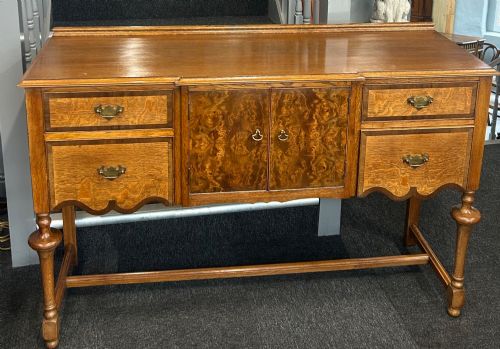
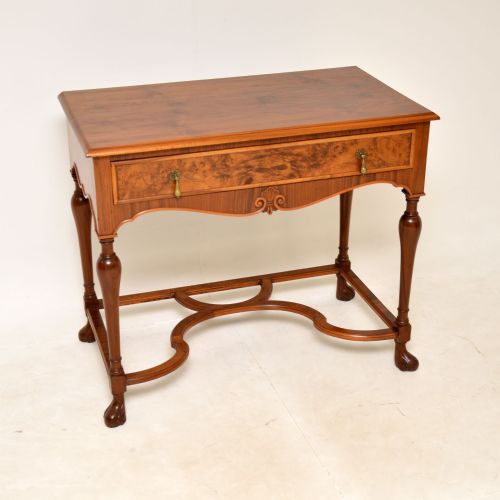
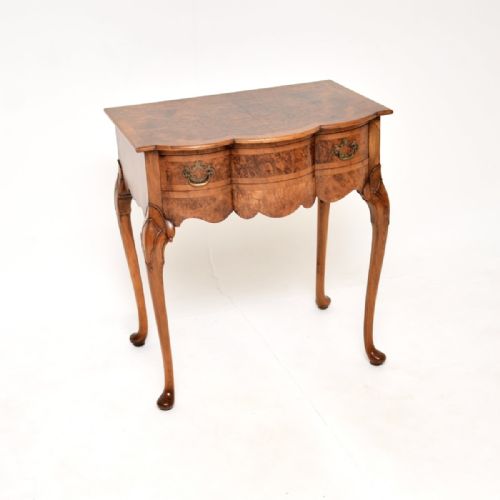
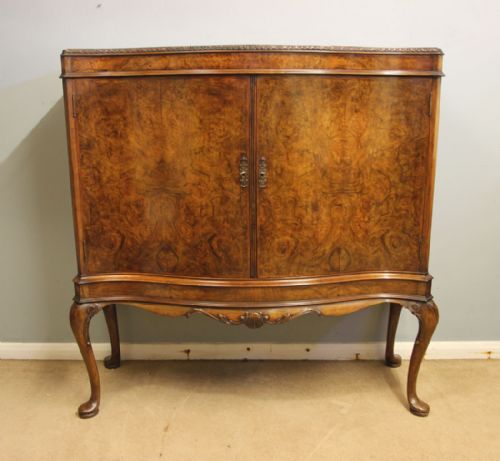


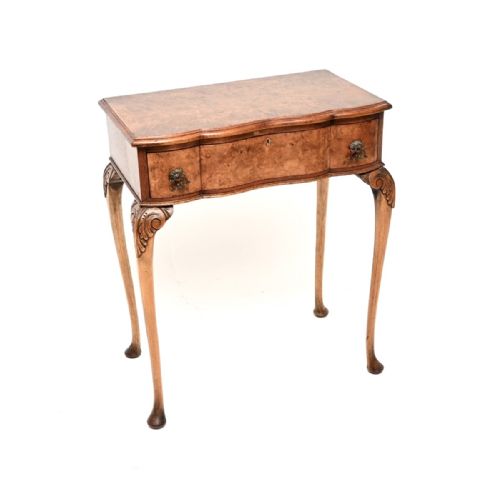
Carved Burr Walnut Server
A carved burr walnut server is a grand dining room or drawing room piece built to display and store.
Carved Burr Walnut Server
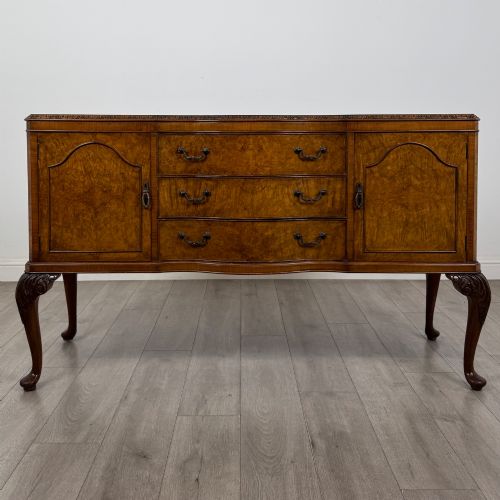
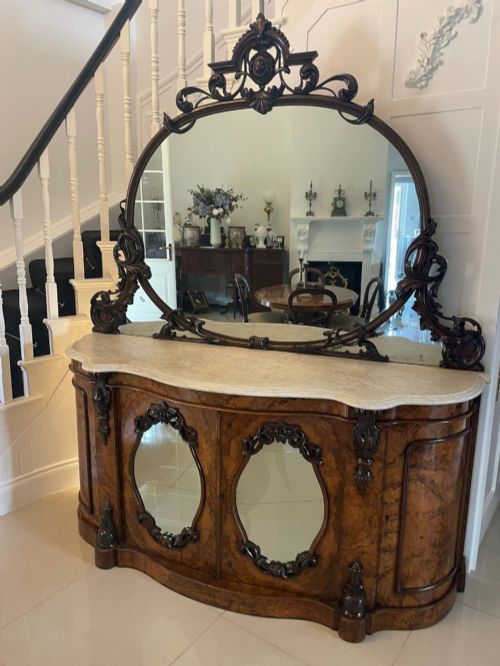
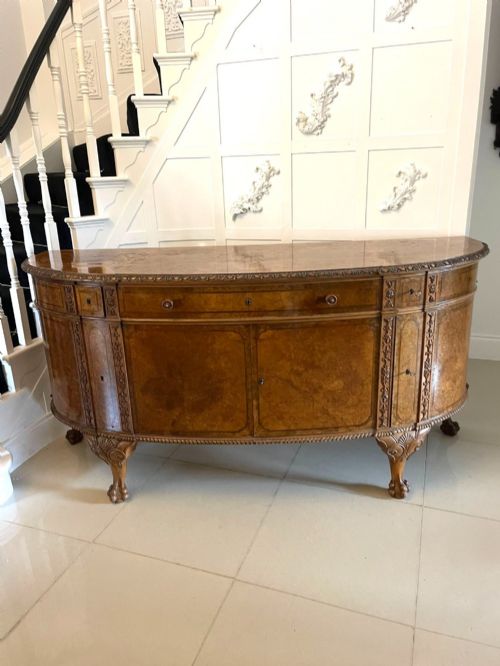
A carved burr walnut server is a substantial storage and display piece found primarily in dining rooms and drawing rooms. When searching for this phrase, a buyer encounters a range of forms including sideboards, console tables, credenzas, lowboys, and cocktail cabinets.
The pieces appearing on this page span several periods, reaching from the eighteenth century through the Victorian, Edwardian, and Art Deco eras. Buyers are most likely to meet twentieth-century examples, particularly from the 1920s and 1930s, alongside nineteenth-century Victorian and Edwardian pieces.
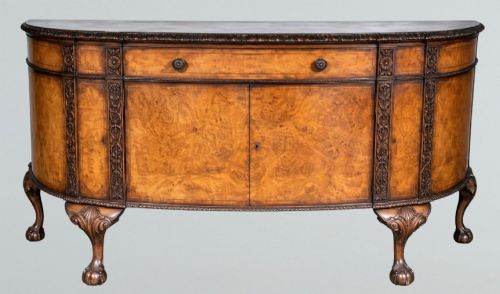
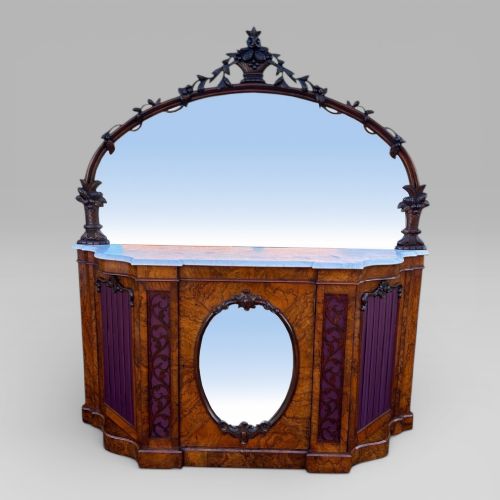
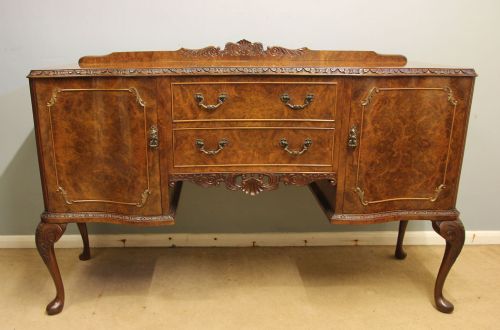
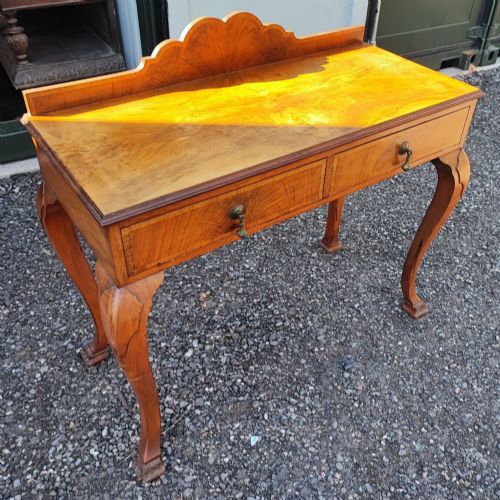
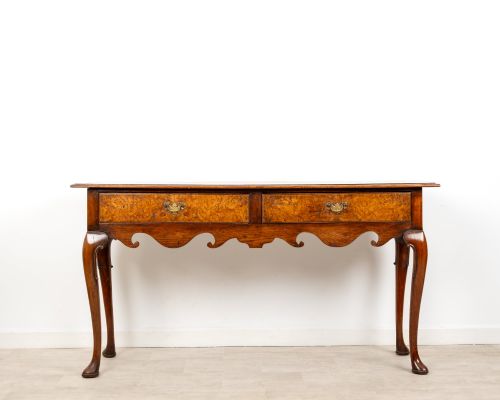
Makers and workshops utilised various styles such as Queen Anne Revival, William and Mary, and Neoclassical designs. Forms vary from simple side serving tables to large bow-fronted sideboards, mirror-backed credenzas, and specialised music or drinks cabinets.
How they were made
Craftsmen used burr walnut veneer over solid hardwood and oak carcases to create the distinctive swirling grain patterns characteristic of these servers. Supplementary materials such as marble, brass, and glass frequently appear on tops, hardware, and cabinet doors.
Carving was applied by hand to solid timber mounts, frames, and mirror backs, particularly on Victorian and Queen Anne style revivals. Surfaces were finished to highlight the rich natural figure of the walnut timber.
Recorded object types include lowboys, credenzas, console tables, cocktail cabinets, and music cabinets alongside traditional sideboards.
What varies in quality
The distinction between standard pieces and those of the highest grade lies in the selection and matching of the burr walnut veneer across large surfaces like doors and tabletops. Superior examples display balanced, symmetrical grain patterns that demand expert timber preparation.
Construction methods and the weight of secondary timbers such as oak dictate the structural integrity of each server. Finer pieces incorporate substantial brass fittings, heavier marble tops, and more intricate, deeply carved woodwork rather than applied mouldings.
Epstein·Hille of London
The Carved Burr Walnut Server Glossary
- Burr walnut
- A veneer sliced from the knotty growth of a walnut tree, yielding highly decorative, swirling grain patterns. This material is chosen for its ornamental appearance on prominent surfaces.
- Credenza
- A sideboard or buffet piece, often featuring a mirror back and display cabinets. These units originated in dining spaces to hold silver and glassware.
- Lowboy
- A small seventeenth or eighteenth-century dressing or serving table with one or more rows of drawers. They typically stand on slender cabriole legs.
- Console table
- A table designed to stand against a wall, frequently secured with brackets. They appear as serving tables in formal entertaining rooms.
Carved Burr Walnut Server: Frequently Asked Questions
What is a carved burr walnut server used for?
These servers function primarily as dining room or drawing room furniture designed for serving food, storing cutlery, and displaying silver or glassware. Many variants include dedicated spaces for drinks, serving trays, or music storage.
Larger credenzas and sideboards incorporate cupboards and drawers to keep entertaining essentials close at hand. Console tables and smaller servers offer surface space for lamps and decorative objects.
How do I distinguish a Victorian server from a 1930s piece?
Victorian examples often feature heavy carved mirror backs, elaborate serpentine shaping, and dark marble tops. They lean towards traditional revival styles such as William and Mary or heavy classical ornamentation.
Twentieth-century pieces from the 1920s and 1930s frequently adopt cleaner Queen Anne Revival lines or streamline into Art Deco forms. The construction inside the drawers and the thickness of the walnut veneer also help indicate the era of manufacture.
Where should I place a server in my home?
A server fits naturally against a dining room wall to act as a station for serving meals and holding tableware. They also serve well in hallways and drawing rooms as console tables for display.
Because these pieces vary in size from compact lowboys to large bow-fronted sideboards, measuring the wall space and clearance for opening cabinet doors is essential.
Are these servers made of solid walnut?
Most servers use burr walnut veneer applied over a secondary wood carcase, typically oak or solid hardwood. This technique allows craftsmen to display the highly decorative burr grain across large flat surfaces without risking the warping that solid burr timber would cause.
Solid walnut and carved elements appear on the frames, legs, and mouldings, while the structural interior often relies on sturdy oak.