





Carved Bedroom Bench
A carved bedroom bench brings practical luxury to the foot of a bed, offering a refined seat shaped by 19th-century and Edwardian hands.
Carved Bedroom Bench
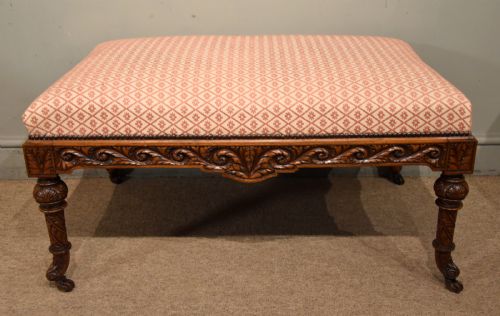
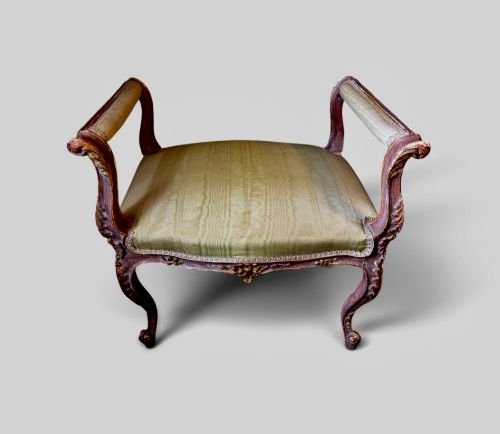
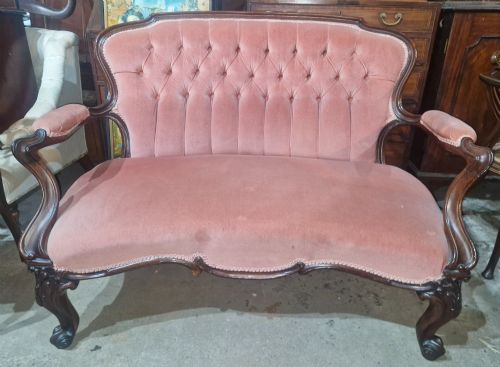
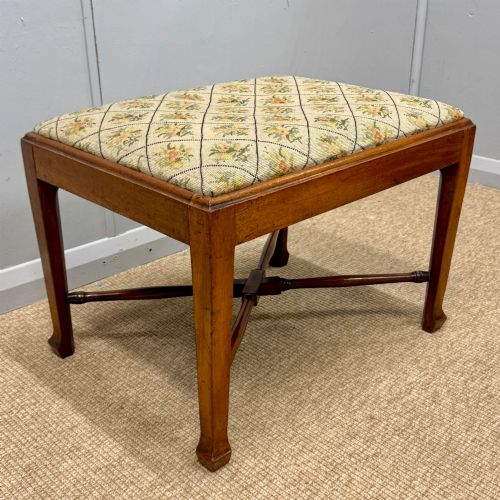
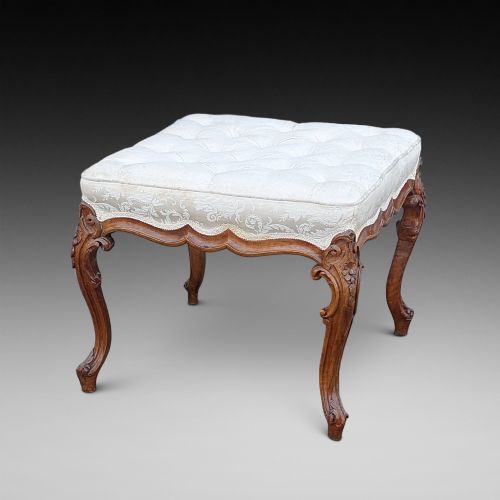
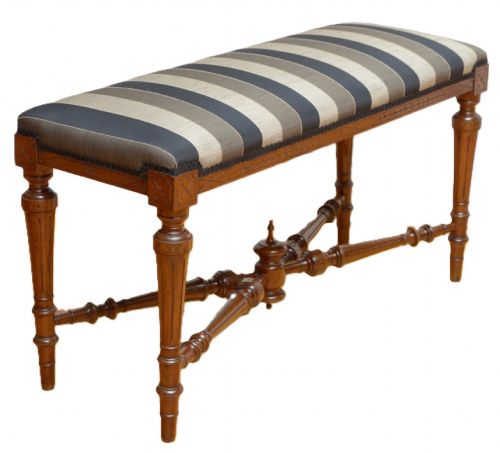
A carved bedroom bench covers a variety of low seating designed for private quarters, most frequently appearing on this page as Victorian and Edwardian window seats, dressing stools, and long footstools. These pieces serve practical functions at the base of a bed or beneath a window, utilising forms that range from simple rectangular frames to elaborate French-inspired window seats.
The selection draws on decades from the nineteenth and early twentieth centuries, capturing periods such as the Victorian era alongside Edwardian and later revivals. Buyers encounter walnut and mahogany frames paired with various upholstery types, including velvet, fabric, textile, and needlepoint.
Makers and designers of the past adapted classical idioms, resulting in styles that span from French Régence and Louis XVI to Chippendale Revival and Queen Anne. The resulting inventory provides functional domestic furniture built to accommodate bedroom and dressing room layouts.
How they were made
Construction relies heavily on dense hardwoods such as walnut, mahogany, and oak, which provide the structural integrity required for carved legs and stretchers. Artisans shaped these timbers using traditional joinery, applying detailed hand-carving to cabriole legs, twisted rope supports, and cross stretchers.
Surface finishes include giltwood and gilded applications, alongside polished wood grains that highlight the natural warmth of the timber. Upholstery techniques combine traditional webbing and stuffing with contemporary or period-appropriate fabric covers like velvet, linen, and needlepoint.
The inventory spans the Victorian era, the Edwardian period, and various 20th-century revivals including Louis XVI and Chippendale styles.
What varies in quality
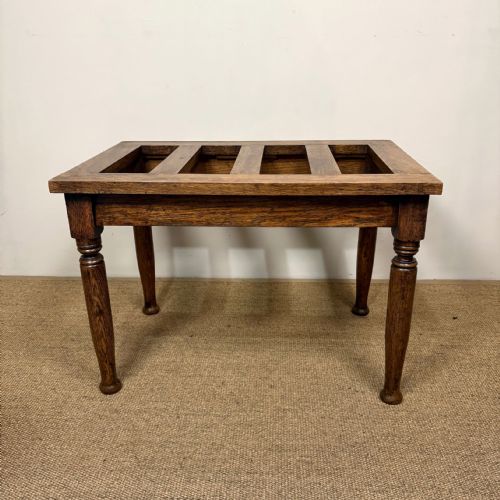
The standard of a carved bedroom bench rests upon the crispness of the timber carving and the architectural proportion of the frame. Superior examples display deeply defined hand-carved details on cabriole or fluted legs, whereas simpler pieces rely on plain turned wood.
The selection of primary timber significantly influences the tier of the piece, with richly figured walnut and mahogany frames sitting above standard hardwoods. Furthermore, the integration of supportive elements like cross stretchers and high-grade upholstery fabrics defines the overall caliber of the construction.
James Shoolbred
The Carved Bedroom Bench Glossary
- Cabriole leg
- A furniture leg that curves outward at the knee and tapers inward toward the foot, often ending in a pad or claw shape. This design was popular during the Victorian and revival periods.
- Window seat
- A long, upholstered seat designed specifically to fit the recess of a window. These pieces frequently feature carved wooden frames and end arms.
- Cross stretcher
- Wooden supports intersecting between the legs of a stool or bench to provide structural stability. They often feature central turnings or carved details.
- Giltwood
- Wood that has been coated with a thin layer of gold leaf or gilt paint. This decorative finish appears frequently on French-style seating.
- Dressing stool
- A low, backless seat intended for use at a dressing table or vanity. They are typically upholstered to match bedroom furnishings.
Carved Bedroom Bench: Frequently Asked Questions
Where should I place a window seat?
A window seat fits naturally beneath a low window or at the foot of a bed, providing a convenient spot for resting.
These pieces also serve well in hallways and dressing rooms as auxiliary seating.
How do I care for antique upholstery?
Protect delicate fabrics like velvet and needlepoint from direct sunlight to prevent fading and fibre degradation over time.
Regular gentle vacuuming with a soft brush attachment helps remove dust without damaging the textile.
What is the difference between a window seat and a dressing stool?
Window seats are generally longer and often include raised ends or arms designed for relaxed reclining.
Dressing stools are compact and backless, built specifically for short periods of sitting at a vanity.
Can these benches support daily sitting?
Solid hardwood frames joined with traditional techniques provide strong structural support for everyday use.
Checking the stability of the legs and stretchers ensures the piece remains reliable for sitting.