

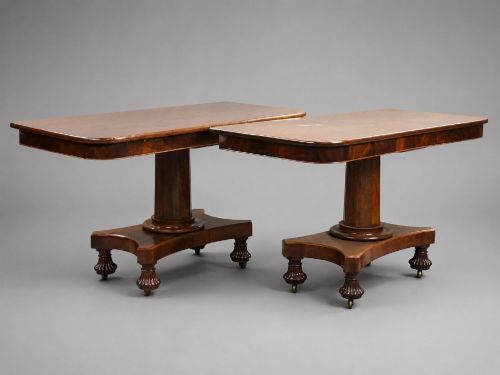


Carved Base Card Table
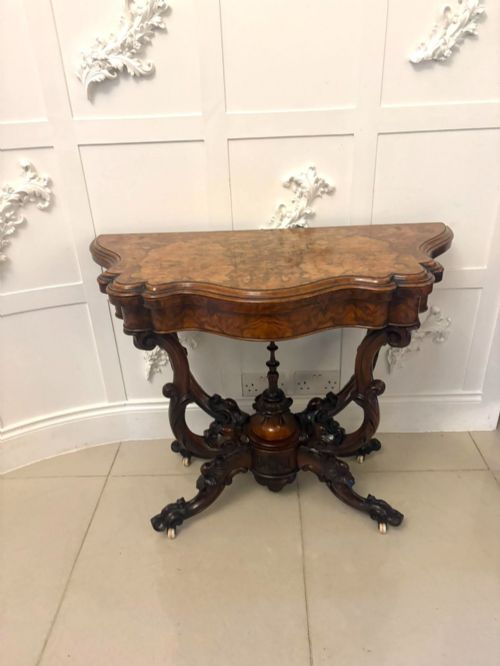
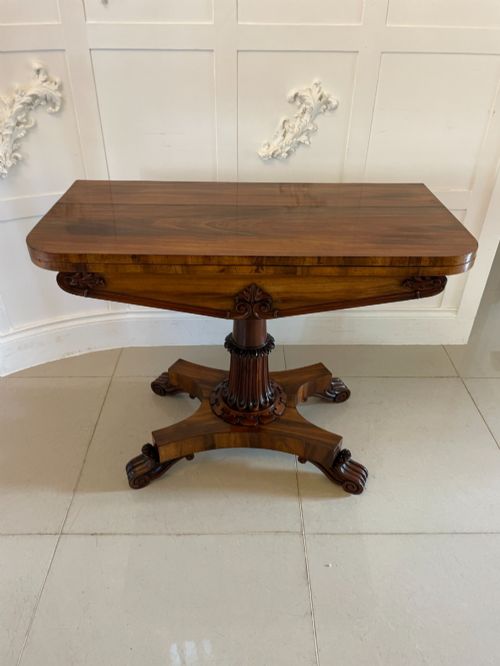
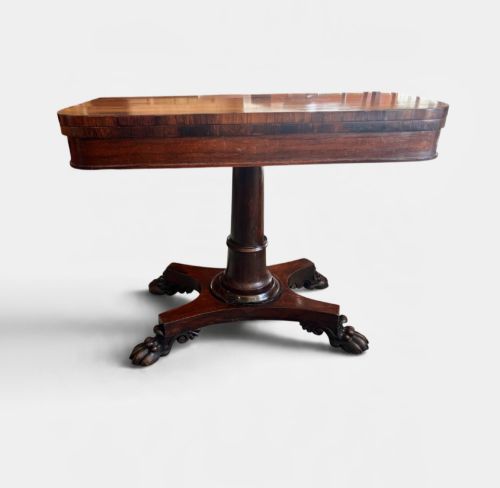
A carved base card table brings architectural timberwork to the evening parlour, offering a fold-over playing surface supported by carved pedestals.
Carved Base Card Table
A carved base card table combines a folding top for games or tea with a substantial pedestal stand resting upon a carved wooden foundation. These tables appear across the nineteenth century, bridging the Regency, William IV, and Victorian periods.
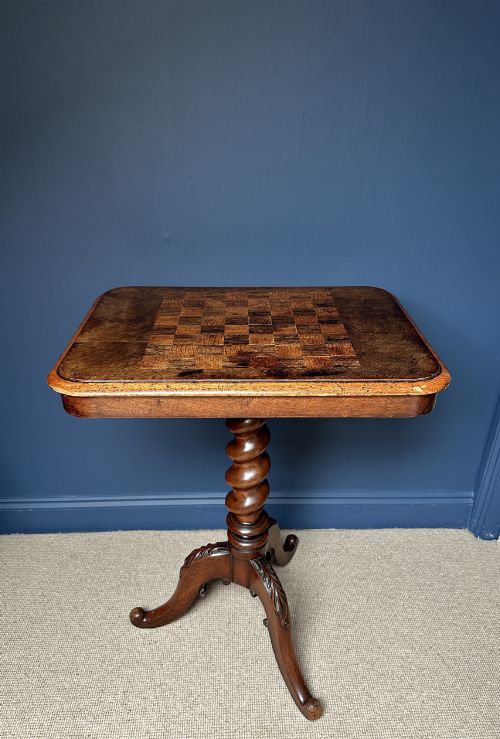
The form frequently emerges in rosewood, mahogany, and burr walnut, functioning as a console or side table when closed. Examples span standard rectangular profiles to butterfly shapes and oval tops, often featuring rotating or tilt mechanisms.
Makers shaped these surfaces to accommodate cards, chess, and general parlour entertainment within middle and upper-class homes. The carved base distinguishes these pieces from simpler turned legs, adding sculptural weight to the centre of the room.
Assessing Quality and Execution
The depth and definition of the carved base separate standard production from superior workshop output. Crisp execution in foliage and figurative details like dolphins indicates skilled hand-chiselling rather than hasty machine moulding.
Timber figure and grain alignment across the fold-over leaves demonstrate the maker's care in selecting veneers. Smooth movement in the pivoting mechanisms and tight joinery at the hinges reveal structural integrity underneath.
Carved Base Card Table Retail Price Guide 2026
Typical asking prices for carved base card table among the pieces listed under this phrase on Sellingantiques today, from the lower quarter to the upper quarter. They describe what is for sale here now, not the wider market.
Listings feature rosewood, mahogany, and burr walnut across the Victorian, Regency, and William IV periods.
The Carved Base Card Table Glossary
- Fold-over top
- A hinged wooden surface that doubles the area of the table when opened for games or dining. This mechanism conceals a small storage well beneath the leaves in many examples.
- Pedestal base
- A central column supporting the weight of the table top above a platform or feet. It often incorporates heavy carving to anchor the visual balance of the piece.
- Veneer
- A thin layer of figured timber applied over a secondary wood foundation. Burr walnut and burr yew varieties create decorative grain patterns across the top surfaces.
- Console table
- A furnishing designed to stand against a wall, frequently sharing the silhouette of a card table when closed. These pieces often feature decorative carving on the front apron and legs.
- Tilt-top
- A mechanism allowing the primary surface to rotate into a vertical position when not in use. This design saved floor space in smaller nineteenth-century rooms.
Carved Base Card Table: Frequently Asked Questions
How were these tables used?
These pieces served multiple functions in the nineteenth-century parlour, operating primarily as side tables or console tables against the wall during the day. When evening arrived, the hinged top swung open to create a baize-lined surface for card games, chess, or social entertainment.
Beyond gaming, households utilised them for serving tea or displaying decorative objects. Their dual nature made them essential furniture for hosting guests.
What woods appear most often?
Rosewood and mahogany dominate the earlier nineteenth-century examples, offering a dark, uniform grain that suited formal Regency and William IV interiors. Cabinet makers later favoured walnut and burr walnut as Victorian tastes shifted toward lighter, highly figured brown timbers.
Specimen woods and exotic timbers also emerge in select tables, showing intricate contrasting grains. Secondary woods like pine or oak frequently form the internal framing beneath these decorative surfaces.
How do I spot a Regency period table?
Regency pieces often display classical architectural restraint combined with dark rosewood or mahogany finishes. Look for carved elements inspired by marine motifs, such as dolphins or bold pedestals resting upon platform bases with scroll feet.
Proportions tend to be clean and geometric, preceding the heavier, more rounded flourishes of the later Victorian era. Brass inlay and brass paw feet also point firmly toward early nineteenth-century workshop practices.
Can these tables fit modern rooms?
The compact footprint of a closed card table makes it practical for modern living spaces as a hall console or sofa-back table. The folding top remains fully functional, allowing the piece to expand when extra surface area is required.
Placing them away from direct heat sources protects the antique timber and delicate veneers from splitting. Their sturdy pedestals provide reliable support for daily use in contemporary homes.