



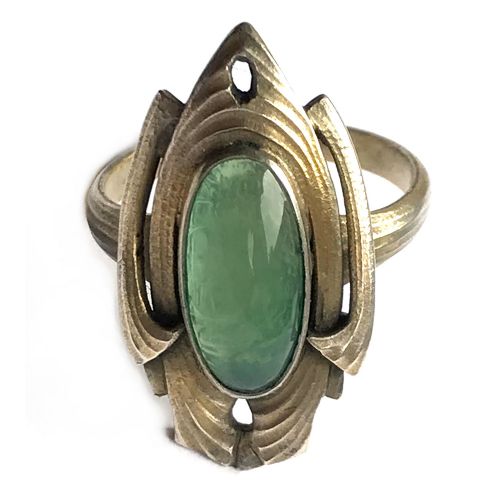


Carved Agate Jewellery
Carved agate jewellery brings together centuries of lapidary skill, offering wearable history crafted from banded chalcedony and hardstones.
Carved Agate Jewellery
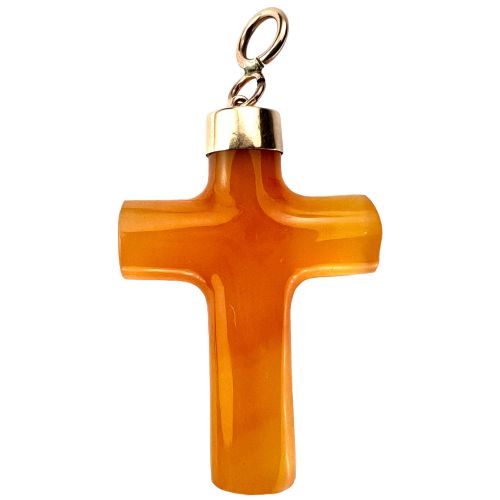
Carved agate jewellery comprises rings, brooches, earrings, pendants, and lockets shaped from banded chalcedony and related hardstones. These pieces span multiple eras, notably the Victorian period, Georgian era, Art Deco, Art Nouveau, and mid-twentieth century Italian design.
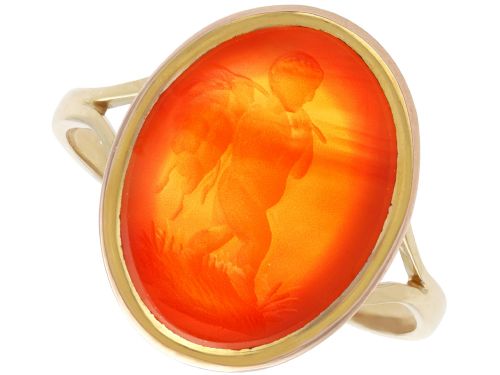
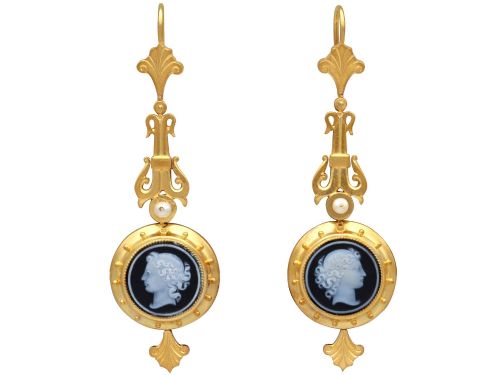
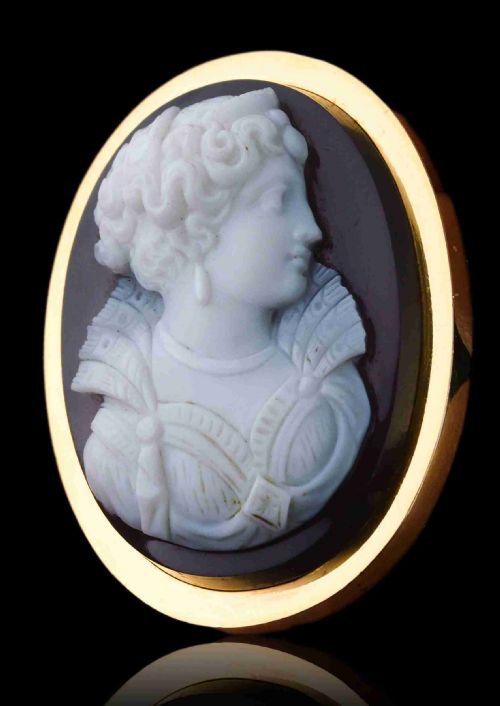
You are most likely to encounter Victorian pieces on this page, particularly gold cameo brooches and intaglio rings. Examples frequently utilise yellow gold or rose gold alongside the carved stone to create distinct profiles.
How they were made
Lapidaries shaped these pieces from natural hardstones such as agate, chalcedony, and onyx, often exploiting the natural colour layers within the stone to create contrasting reliefs and intaglios. The carving technique requires immense precision to define portraits, classical motifs, and heraldic designs within tight millimeter tolerances.
Goldsmiths set these carved hardstones into mounts of nine-carat, eighteen-carat, or twenty-two-carat yellow and rose gold, occasionally incorporating silver gilt, diamonds, or pearls to complement the stone work.
Carved Agate Jewellery Retail Price Guide 2026
Typical asking prices for carved agate jewellery among the pieces listed under this phrase on Sellingantiques today, from the lower quarter to the upper quarter. They describe what is for sale here now, not the wider market.
Current listings demonstrate a prevalence of Victorian pieces, alongside Georgian, Art Deco, and mid-century Italian items set in gold.
What varies in quality
The sophistication of the lapidary work dictates the quality of each piece, distinguishing shallow, rudimentary incisions from deeply sculpted cameos with expressive detail and clean separation of layers. The choice of metal mount also plays a role, with heavier gold weights and higher carat standards indicating superior original manufacture.
Integrity of the stone surface and the precision of the bezel setting influence the overall standard, separating carefully preserved items from those with heavy wear or poorly executed later repairs.
The Carved Agate Jewellery Glossary
- Agate
- A form of cryptocrystalline quartz, notable for its banded appearance and hardness, frequently utilised in antique rings and brooches.
- Cameo
- A method of carving where the relief subject stands out from a background of a different colour, often executed in hardstone or shell.
- Intaglio
- A design carved into the surface of a gemstone so that an impression can be made when pressed into sealing wax.
- Chalcedony
- A cryptocrystalline variety of silica, encompassing stones like agate and onyx, valued for its smooth texture when polished.
- Hardstone
- A general term for semi-precious stones used in carving, including agate, chalcedony, and jasper.
Carved Agate Jewellery: Frequently Asked Questions
How do I date carved agate jewellery?
Dating relies on the style of the metal mount, the form of the gold work, and the specific motifs carved into the stone. Georgian and Victorian pieces often display distinct claw settings or closed-back mounts.
Later pieces from the Art Deco or mid-century periods show geometric lines or distinct Italian stylistic markers that separate them from nineteenth-century examples.
What is the difference between a cameo and an intaglio?
A cameo is carved in relief so the subject projects outward from the background layer. This technique takes advantage of contrasting colour bands within agate.
An intaglio is carved into the stone so the design depresses inward, traditionally used as a personal seal.
Can I wear carved agate jewellery every day?
Agate is a durable hardstone that resists daily wear well, but older gold mounts require careful handling. Rings and brooches benefit from removal during physical tasks to protect the stone and setting.
Regular checks by a jeweller ensure the claws or bezels holding the hardstone remain secure.
How should I clean antique hardstone jewellery?
Cleaning requires warm soapy water and a soft brush to remove dust from the carved recesses of the stone. Harsh chemical dips risk damaging the gold and altering the polish of the chalcedony.
Dry the piece thoroughly with a soft cloth after washing to protect any historic metalwork.