





Carriage Clock Travel Case
A carriage clock travel case protects a portable timepiece designed for transit during the Victorian and Edwardian periods.
Carriage Clock Travel Case
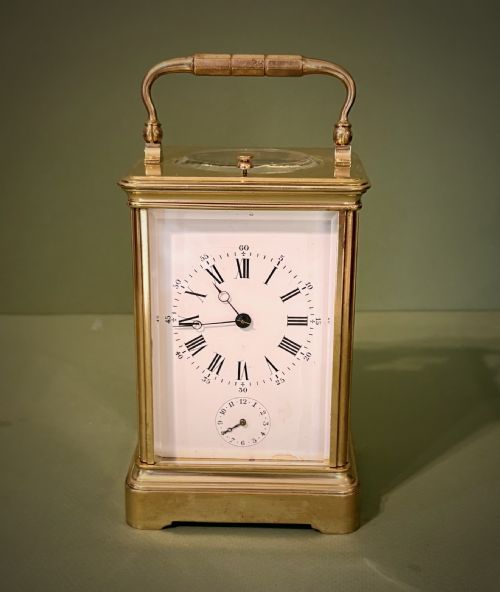
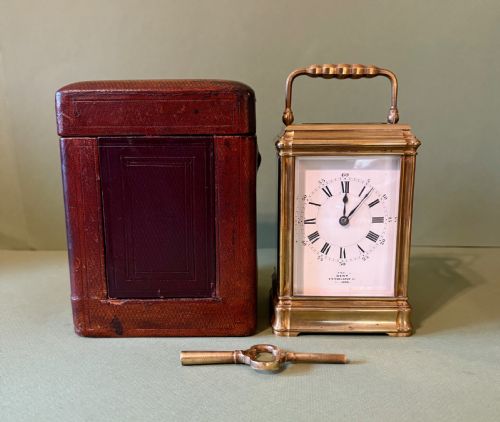
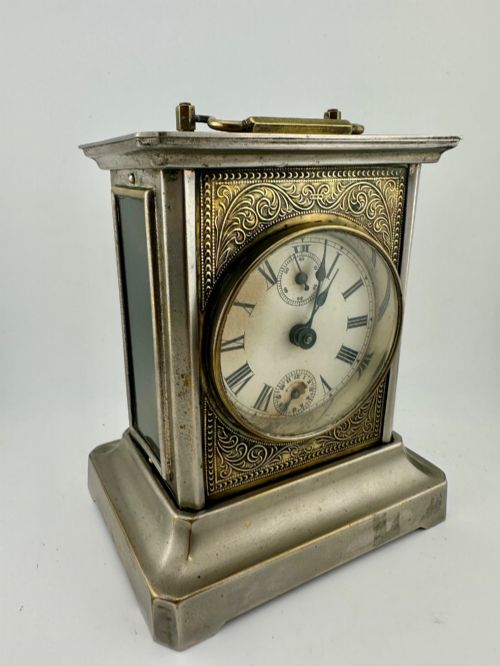
A carriage clock travel case houses portable timepieces originating primarily from the nineteenth century and the Edwardian era. These items enclose French and English brass or gilded brass mechanisms intended for mobility on journeys.
The selections here span periods from the eighteen-sixties to nineteen-hundred, incorporating styles such as French nineteenth century, Rococo Revival, and Art Deco. Pieces frequently appear alongside protective outer boxes or fitted housings.
Materials and construction
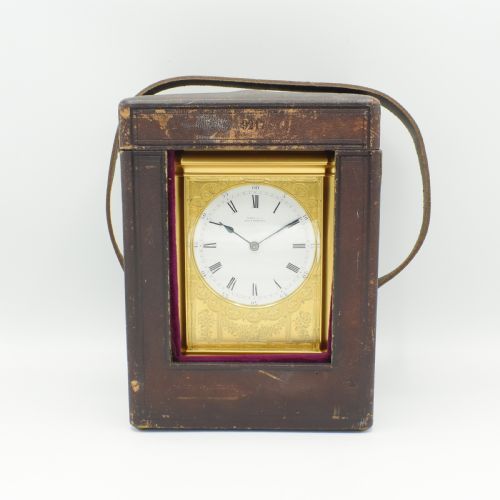
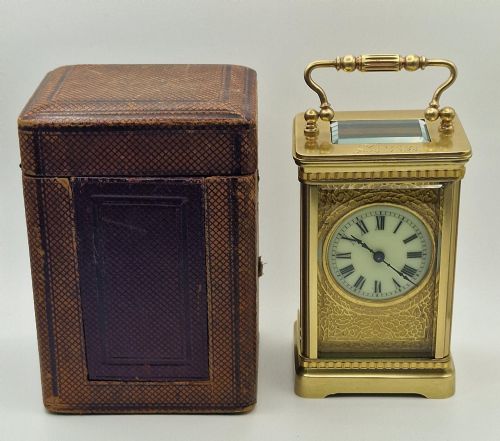
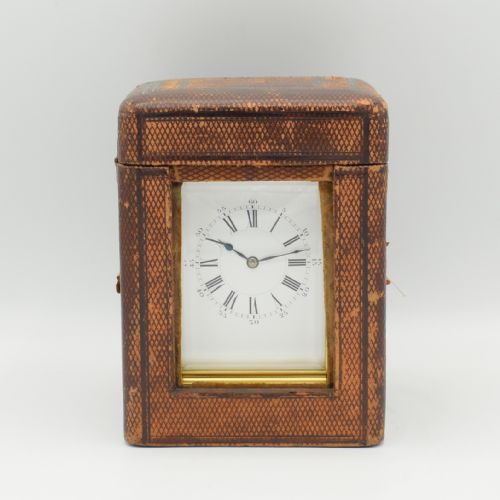
Makers utilised brass, gilt brass, and silver for structural cases, often combining them with bevelled glass panels to reveal the movement within. Leather served widely for outer travel cases designed to shield these delicate instruments during transit.
Enamel dials and panels frequently decorated the face or sides, while steel components functioned within the eight-day striking, repeating, or alarm mechanisms.
Carriage Clock Travel Case Retail Price Guide 2026
Typical asking prices for carriage clock travel case among the pieces listed under this phrase on Sellingantiques today, from the lower quarter to the upper quarter. They describe what is for sale here now, not the wider market.
Listings feature brass, gilt brass, leather, and glass, spanning the Victorian and Edwardian periods.
Distinctions in craftsmanship
Quality rests upon the crispness of hand engraving across the brass or gilded case and the complexity of the movement, such as petite sonnerie or grande sonnerie complications. Signed pieces from notable makers demonstrate superior precision compared to unsigned examples.
The presence of an original matching travel case or box substantially elevates a piece, as does intact enamel work and original gilding on the metalwork.
Henri Jacot·Drocourt·Antoine Redier·Margaine·Pickford of London·Richard Co·Delépine
The Carriage Clock Travel Case Glossary
- Gorge case
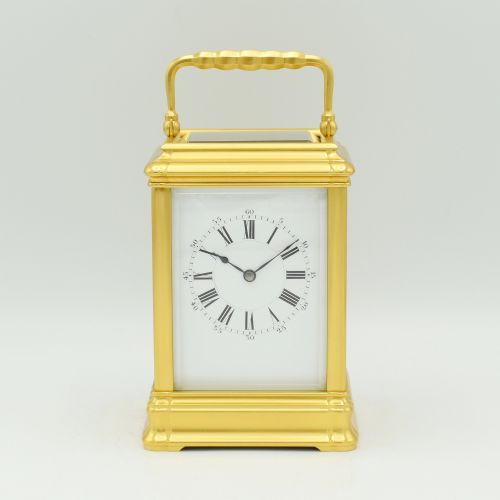
- A specific brass carriage clock case style characterised by stepped mouldings at the top and base. This design is frequently associated with French makers.
- Repeater
- A mechanism that chimes the hours and quarters upon depressing a button on the case. This function allowed time checks in the dark during travel.
- Petit sonnerie
- A striking system that automatically chimes the hours and quarters as each quarter passes. It represents a higher grade of clockwork complexity.
- Alarm
- A complication enabling the clock to sound at a pre-set time. These systems frequently appeared in nineteenth-century travel clocks.
- Gilt brass
- Brass treated with a thin layer of gold or gold-coloured wash to impart a bright metallic finish. This finish appears commonly on French carriage clock cases from the period.
Carriage Clock Travel Case: Frequently Asked Questions
What is a carriage clock travel case?
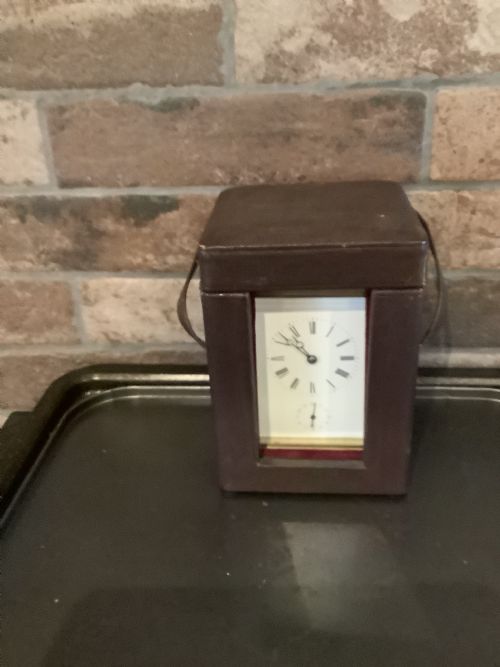
A carriage clock travel case is an outer protective container, usually made of leather, designed to hold a portable clock securely during journeys.
These housings protected fragile glass panels and delicate brass mechanisms from knocks while travelling by coach or rail during the Victorian era.
How do I identify the period of these clocks?
Dating relies on stylistic clues, case architecture, and maker signatures recorded on the movement backplate or dial.
Nineteenth-century examples often feature heavy gorge cases and elaborate engraving, while later Edwardian pieces show simpler cast forms or distinct dial layouts.
Did all carriage clocks come with travel cases?
Many portable timepieces were supplied with dedicated leather cases, though originals frequently separated from the clocks over time.
Surviving examples with their matching travel housings remain particularly sought after by collectors.
How should I care for a antique travel case?
Leather travel housings require gentle maintenance with appropriate conservation waxes to prevent drying and cracking over the years.
Keeping the housing in a stable environment away from direct sunlight preserves both the leather exterior and the velvet or silk interior lining.