

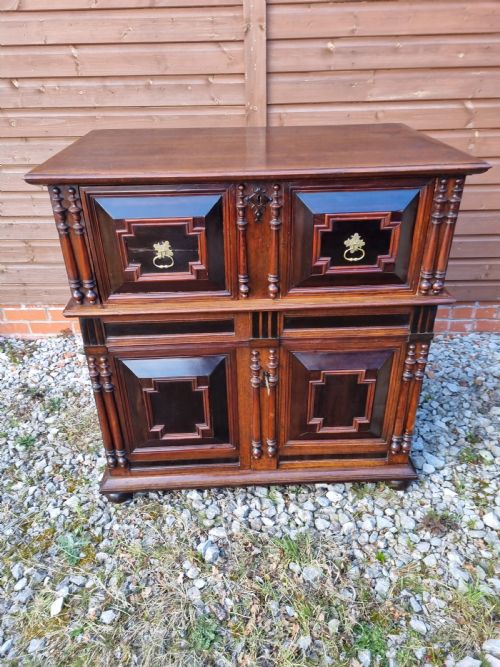
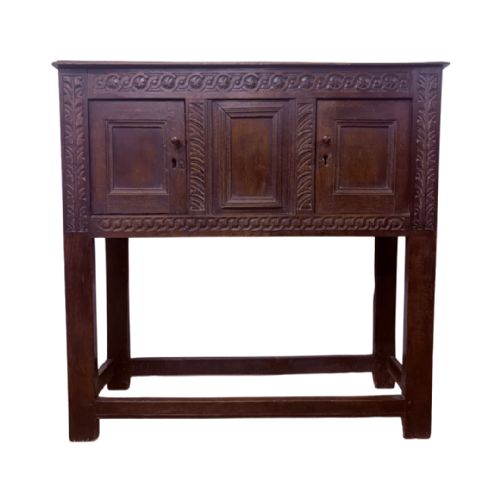
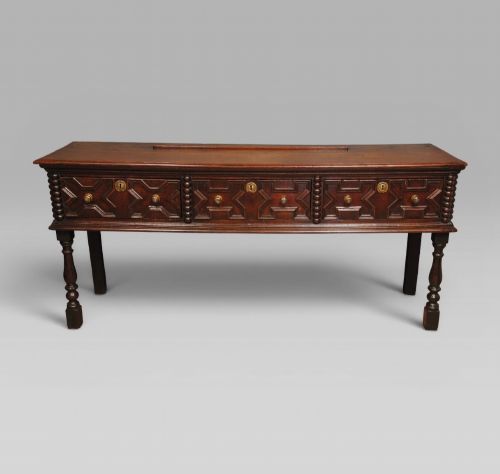
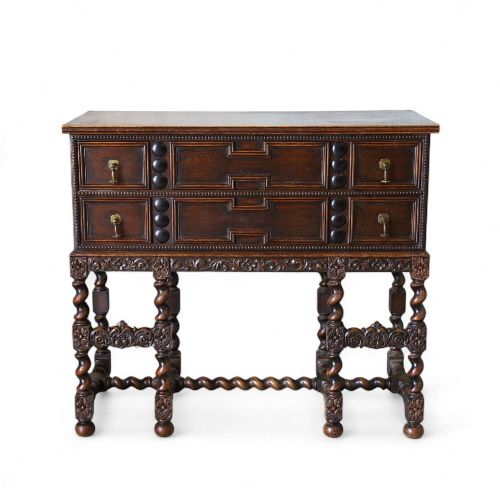

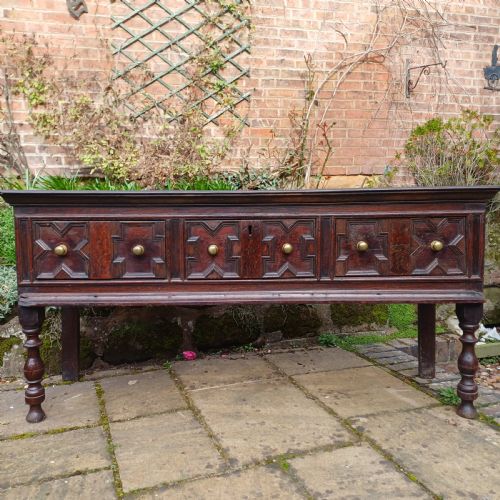


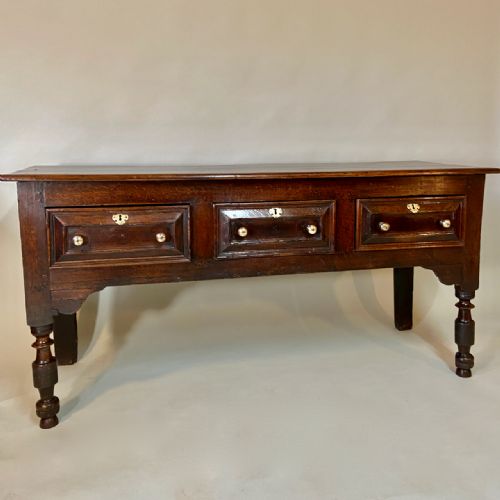
Carolean Sideboard
These pieces give you a carolean sideboard or related seventeenth-century form, bringing heavy timber and robust joinery straight into a room.
Carolean Sideboard
A carolean sideboard encompasses sturdy oak dresser bases, servers, and cupboards dating from the seventeenth century alongside later revival interpretations. When exploring carolean sideboard options, buyers encounter joined timber forms that served practical storage needs in substantial historic interiors.
The selection ranges from seventeenth-century originals featuring geometric mouldings to nineteen-thirties revival pieces incorporating traditional motifs like barley-twist supports. These heavy case pieces anchor a dining space or hallway with undeniable historical presence.
How they were made
Makers relied on English oak as the primary structural timber, often enhanced with contrasting secondary woods such as ebony, sycamore, snakewood, and fruitwood for inlay and decoration. Panels were panel-and-frame constructed to allow for natural wood movement over centuries.
Surface enrichment relied on geometric moulding, chip carving, and painted finishes rather than complex veneers. Support structures utilised robust turned elements, including barley-twist legs, which anchored the heavy upper sections.
Carolean Sideboard Retail Price Guide 2026
Typical asking prices for carolean sideboard among the pieces listed under this phrase on Sellingantiques today, from the lower quarter to the upper quarter. They describe what is for sale here now, not the wider market.
Current listings feature English oak reinforced with decorative details in ebony, sycamore, snakewood, and fruitwood.
What varies in quality
The degree of decorative ambition separates standard utility pieces from exceptional examples, with intricate geometric mouldings and contrasting fruitwood or snakewood inlays marking out superior craftsmanship. Original surface patination and untouched construction details carry greater weight than heavy restoration.
Revival iterations from the nineteen-thirties vary according to the fidelity of their carving and the quality of the oak timber selected. Pieces retaining their original brass hardware and uncompromised structural joinery sit firmly at the upper end of the scale.
The Carolean Sideboard Glossary
- Dresser base
- A low wooden storage unit with drawers or cupboards beneath a flat top, used historically for food preparation and serving. These form the direct ancestors of the modern sideboard.
- Court cupboard
- An enclosed historic cabinet featuring upper and lower tiers, often recessed, used for displaying plate and storing valuables. They represent some of the most substantial case furniture of the period.
- Geometric moulding
- Raised wooden profiling applied to drawer fronts and doors in repeating angular patterns. This technique creates texture and shadow play across flat surfaces.
- Barley-twist
- A decorative turning technique resembling a spiralling rope, commonly utilised for table and furniture legs during the seventeenth century and later revivals.
- Snakewood
- A dense, heavily figured exotic timber utilised for contrasting decorative inlay and highlights on high-status seventeenth-century case pieces.
Carolean Sideboard: Frequently Asked Questions
What is a carolean sideboard?
A carolean sideboard refers to seventeenth-century oak serving pieces, low dressers, and cupboards, alongside later revival interpretations sharing that heavy seventeenth-century aesthetic.
These forms evolved to handle storage and display in historic households, utilising robust joinery and prominent timber grain.
How do I date an oak sideboard?
Dating relies on examining construction methods, tool marks, timber selection, and hardware integration across the piece.
Seventeenth-century originals show hand-riven timbers and traditional joinery, whereas nineteen-thirties revival pieces display twentieth-century machining beneath their historic styling.
Where should I place a dresser base?
A dresser base suits dining rooms, large hallways, or living spaces where its long surface and deep drawers provide practical storage.
Keep such heavy timber pieces away from direct heat sources and dramatic humidity fluctuations to protect the old oak.