






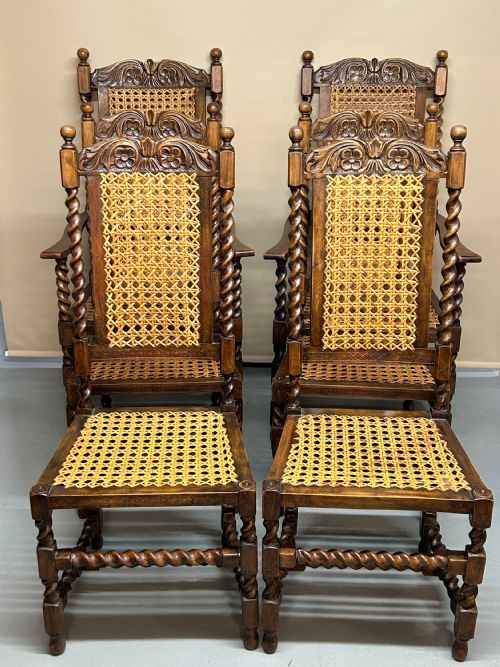
Carolean Side Chairs
Carolean side chairs embody seventeenth-century craftsmanship, offering carved walnut or oak frames and high backs that bring distinguished historical presence to any interior.
Carolean Side Chairs
Materials and construction
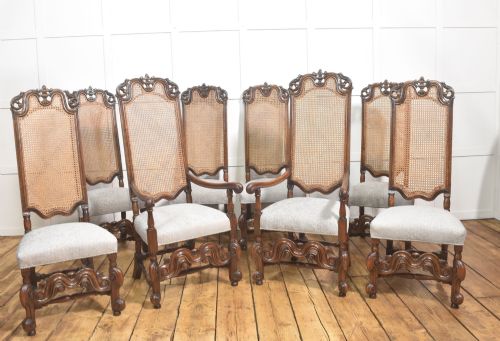
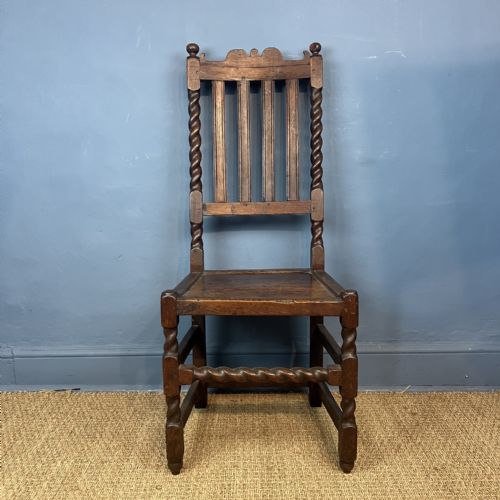
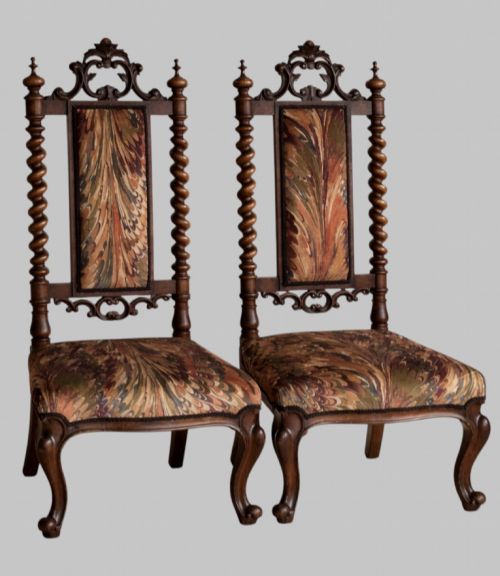
Construction relies heavily on native timbers, predominantly oak and walnut, shaped through joined framing and decorative carving. Many examples incorporate turned supports such as barley twists, alongside pierced cresting rails.
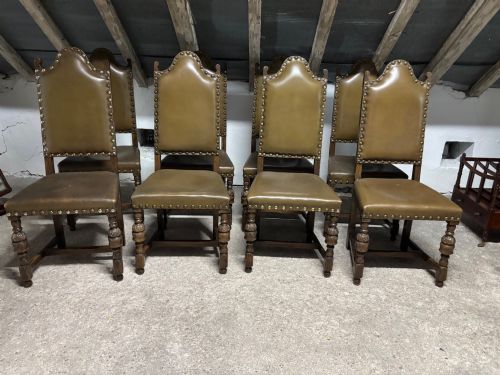
Seating surfaces and back panels utilise cane, rattan, leather, velvet, and upholstery fabric. Caning provides a taut, breathable lattice secured through traditional drilling and weaving techniques into wooden frames.
Carolean Side Chairs Retail Price Guide 2026
Typical asking prices for carolean side chairs among the pieces listed under this phrase on Sellingantiques today, from the lower quarter to the upper quarter. They describe what is for sale here now, not the wider market.
Listings feature oak, walnut, beech, cane, leather, and velvet across seventeenth-century and revival periods.
Judging quality in carolean side chairs
Quality rests upon the crispness and depth of the hand carving on the crest rails and stiles, distinguishing assertive workmanship from softer, repetitive machine work. The integrity of the timber joints, whether pegged or tenoned, dictates the structural stability of the high-backed frame.
The grade of secondary materials, from closely woven cane to substantial walnut or oak timbers, marks the distinction between standard utilitarian production and ambitious cabinetwork.
The Carolean Side Chairs Glossary
- Carolean
- Pertaining to the reign of King Charles II from 1660 to 1685, a period noted for lavishly carved and scroll-ornamented wooden furniture.
- Caning
- A seating or panel technique using woven rattan or cane material to create a durable, flexible grid.
- Barley twist
- A decorative turning technique resembling a spiralling rope, frequently utilised on chair legs and vertical supports.
- Back stool
- An early form of chair without arms, essentially functioning as a stool fitted with an upright backrest.
- Stile
- The upright vertical member forming the outer edge of a chair back or frame.
Carolean Side Chairs: Frequently Asked Questions
Are these chairs comfortable for daily dining?
High-backed seventeenth-century designs prioritise upright posture and formal presentation over modern cushioning. They offer firm structural support suited to formal dining arrangements.
Original caned or upholstered versions vary in give, so adding subtle squabs can improve long-term seating comfort.
How do I distinguish original seventeenth-century pieces from Victorian revivals?
Original pieces display authentic timber oxidation, hand-cut joinery marks, and wear patterns consistent with centuries of use. Seventeenth-century oak and walnut age with a distinct dry patina.
Victorian and later revival pieces often feature machine-cut elements, standardised turnings, and cleaner internal construction methods characteristic of nineteenth-century workshops.
How should I care for historic cane and wood?
Maintain timber frames by applying occasional appropriate wax polish to nourish the grain and prevent drying. Avoid placing chairs near direct heat sources.
Keep cane panels lightly dusted and periodically humidified if kept in dry indoor environments to prevent snapping.